Becky: Halloween (1978)
If you are looking for a film to watch on the 31st October, there really is no better place to start than John Carpenter's Halloween. With one of the best and creepiest film scores, a seemingly unstoppable villain and the Scream Queen herself, Jamie Lee Curtis, Halloween is still surprisingly unsettling, particularly the masked opening sequence. It's also the film that sets the rules for your standard slasher film; anyone who has sex, smokes or drinks whilst babysitting is almost certainly guaranteed to get stuck with the pointy end of the Shape's kitchen knife. Compared to the gore and spectacle of later horrors, Halloween can seem rather tame but if you wanted to see where the modern slasher hit its stride, than look no further than the babysitter killer, Michael Myers.

If you haven’t already seen it, do so immediately. If you’re a horror fan and you haven’t already seen it – for shame! This is one film you simply cannot not see, if you’ll excuse the double negative. Released in 1973, it has been a legend ever since, regularly appearing in Top 100 lists as well as paving the way for countless more exorcism films- a few of which are also on this list. As a mother enlists the help of two local priests in order to save her possessed daughter from the demons within, this film is more unnerving than scary, and shocking rather than especially gory. It also isn’t, and never has been, a film you’ll forget about in a hurry.
B: Night of the Living Dead (1968)
Night of the Living Dead is the daddy of all zombie movies, kickstarting the sub-genre and was groundbreaking in so many ways, tying in political and social issues in with all the flesh-consumption. The context of the film adds to the incredibly tense atmosphere with radio and television broadcasts suggesting everything from radiation to mass assassination. It may as well have COLD WAR PARANOIA stamped across its decaying, half-chewed forehead. Shot mainly in one house, it's incredibly claustrophobic and all the more effective for the lack of showy special effects. Perhaps most importantly, as with all good horrors, this is a human drama, a story of survival despite social differences and conflicting attitudes which is what makes its infamous ending all the more brilliant and tragic. He's coming for you Barbara…

Without a doubt one of the weirdest, most psychologically bizarre films ever dreamt up, The Wickerman is the cult classic to end all cult classics. When a police sergeant is sent to a remote Scottish island in search of a missing girl, he finds far more than he bargained for in the island’s sinister pagan inhabitants, and particularly in their leader, Lord Summerisle – a character the film’s star, Christopher Lee describes as his all-time favourite role. Downright odd and decidedly creepy, this is well worth a watch any night of the year, let alone Halloween.
B: 28 Days Later (2002)
28 Days Later is one of many horror films about the perils of scientific experimentation and although (as many a film geek will happily point out) the sprinting Infected aren't actually zombies, they certainly give their more cumbersome predecessors a run for their money on scare-factor. With its iconic scenes of a deserted, ruined London to the ridiculously tense finale, Danny Boyle's film is simply brilliant from start to finish, despite the notable shift for the last act of the film. It's helped in no small part by the fantastic performances given by Cillian Murphy, Naomie Harris and Christopher Eccleston as some of the survivors, each reacting to the collapse of civilisation in their own unique way. It also gets points for some of the best graffiti seen in a film: 'The end is well and truly fucking nigh' indeed.
J: The Omen (1976)
Just to be absolutely clear, we’re referencing the original on this list. Not that we have anything in particular against more recent remakes- apart from the fact that the original is better, of course. Born with an alarming ‘666’ birthmark, strange incidents begin to occur around Damien, the son of American Ambassador Robert Thorn’s, who adopted the child at birth after his own was stillborn, without the knowledge of his wife, Katharine. As the death toll around the child rises, local photographer Jennings begins to notice tiny hints in photographs, which could hold the key to not only future deaths, but the reason why they might be occurring around Thorn’s son. A classic story with an undisputed legacy stretching far out into the genre, this godfather of creepy child films would suit just about any Halloween film night.
B: Hocus Pocus (1993)
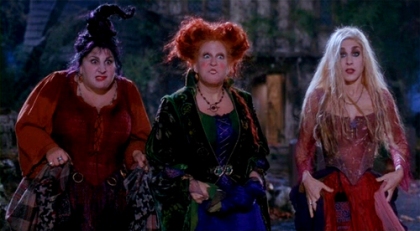
Ok, so this isn't strictly a horror film, but it is most definitely a Halloween film and it remains one of the most beloved out there. Starring Bette Midler, Kathy Najimy and Sarah Jessica Parker as the Sanderson sisters, witches first killed back in the 17th century but brought back when a virgin lights the Black-Flamed Candle. What follows is a riot of fish-out-of-water comedy, witch-themed songs, talking cats and a particularly loveable zombie. Midler gets all the best lines: 'I've always wanted a child and now I think I'll have one… ON TOAST' but Najimy and Parker also get their fair share of comedy moments. It's one of those rare films that can be enjoyed by adults and kids alike and for me, this is the first film I watch once we get into Halloween season. In fact, I can probably pinpoint my first viewing of this film as the moment that I completely fell in love with All Hallow's Eve.
J: Poltergeist (1982)
Another top ranking horror film in the list, Poltergeist was produced and co-written by movie world legend Steven Spielberg. The basic plot outline sees a family’s home invaded by ghosts after the disappearance of their young daughter. Sure, it’s probably not the scariest film of all time, certainly not in 2012, but it’s definitely worth seeing for the sheer legacy born from it. Ever heard a reference to houses built on ancient burial sites? Poltergeist. Creepy TVs and electrical noises? Poltergeist. Modern haunted houses story? Yep, Poltergeist again. Watch for the first time with another horror fan so that you can nudge each other excitedly every time you recognise a familiar trope or key camera technique.
B: Cabin in the Woods (2012)
Sometimes a film comes along that is so original, so entertaining and so much fun that you just want to run up and hug the film-makers. Ok, my enduring love for Joss Whedon probably helps, but Cabin in the Woods is, quite simply, one of the best films of 2012. Initially shelved due to financial difficulties, it looked as if CitW would never be seen on the big screen but fortunately it arrived and brought with it the best love letter to the horror genre since Scream. The first two acts of the film are both generic and enigmatic with the doomed college kids manipulated into all the horror cliches we know and love by a mysterious corporation. Then there's the final act, which really has to be seen to be believed. Future blockbuster horrors are really going to have to up their game.
J: Jeepers Creepers (2001)
B: Psycho (1960)
The screeching violins may now be employed for every comical 'oh look he's a bit mad' moment in television and everyone knows about Norman Bates and his curious relationship with his mother, but Psycho still remains one of the true originals and best. Alfred Hitchcock took a big gamble in Psycho, killing off his main star, Janet Leigh, fairly early in the film (a trick that is still repeated now) and having a shy, charming yet still alarmingly bonkers serial killer as the villain. The effects may not have aged particularly well (Abergast's tumble down the stairs in particular) but the almost constant tension from the very beginning make this truly a horror film for the ages. It's also notable for the fact that it is the first film to ever feature a flushing toilet on screen. Not quite as terrifying as Norman's wig but there you go.
 J: The Fog (1980)
John Carpenter’s film, his first commercial success after the runaway hit Halloween, is a firm fan favourite. The residents of Antonio Bay, a lonely Californian town, are busy putting together celebrations for the town’s centennial, when life around town takes a turn for the sinister, culminating in the onset of a thick, creepy fog sweeping in from the sea in a way which can only be described as unnatural. As the local death toll mounts, the locals must figure out who and what is seeking revenge, with all signs seemingly pointing towards the local church. A great achievement in suspense and score, The Fog provides the perfect edge-of-your-seat tension, as well as giving plenty of reasons to leave the 2005 remake well alone.
B: Scream (1996)
By the 90s, the horror genre was in a bit of a bad way after the originality of 70s slashers became oft-imitated but never bettered and the 80s video nasties controversy saw censorship go a bit overboard. Then came Wes Craven's Scream, the first majorly self-referential horror film, deeply embedded in the history of the genre, whilst pushing it into new and more creative places. Kevin Williamson's script took many of the now-established cliches and weaved them into an innovative and entertaining slasher that rejuvenated the genre for the rest of the decade. Whilst the franchise has become another sad case of diminishing returns, Scream remains an enduring fan favourite. Just remember the rules; don't have sex, don't drink or smoke and never, ever say you'll be right back.
J: Blair Witch Project (1999)
Slated by many though it is, The Blair Witch Project is unarguably the mother of all found footage films. Easily paving the way for around a quarter of the films on this list, the psychological horror follows a group of intrepid students as they report on local legend, the Blair Witch. Naturally, their report leads them to spend several lonely nights alone in the woods. Naturally things start to go awry, with the group dynamic becoming progressively more fraught just as the proverbial noises begin to go bump in the night, and naturally, this being part of the old school of found footage- we never really see anything particularly interesting. It is, however, a tense ride none the less, and worth giving the time of day, or indeed night to for the sense of legacy alone. Especially if you’re a found footage freak like me.
B: The Mist (2007)
Like some of the other films featured on this list, The Mist sees a group of mismatched individuals taking refuge in cramped location to avoid a dangerous menace. In this case though, it's perhaps not what is outside that is the most terrifying. Frank Darabont's film is arguably the best adaptation of a Stephen King story (sorry Kubrick) and goes for character development and atmosphere instead of shock factors and outright gore. The performances really sell this film, particularly Thomas Jane as the put-upon central everyman and Marcia Gay Harden, who is chilling as the town's religious zealot, Mrs Carmody. The analysis of human nature and its extremes are the main focus, rather than the bloodthirsty creatures residing in the mist (though of course, they don't help). It also features one of the bravest and most gut-wrenching endings I have ever seen. Seriously, Seven has got NOTHING on The Mist.

J: The Ring (2002)
A meta-fictional modern classic that falls heavily on the side of post modernism, the 2002 US film version tells the tale of Rachel, a journalist investigating the death of her young cousin after she watched a mysterious tape. Her journey takes her to a variety of locations, including a creepy island, a lonely cabin in the woods and a mental asylum. Breaking down the fourth wall with its suggestion that film footage can have far more of a sinister effect beyond the screen than just to scare you, Gore Verbinski’s The Ring may not always be wholly satisfying, but its intriguing story line and innovative concept make the whole franchise a set of films to remember.
B: Alien (1979)
Ridley Scott's Alien is well-deserved of its classic status, a sci-fi horror that abandons the more stereotypical shiny spaceships in favour of a gritty, sweaty and downright unpleasant mining ship, The Nostromo. Despite its titular status, the alien remains largely unseen for the majority of the film, instead dropping from ceilings or jumping out of vents. The latter in particular, never fails to make me jump, no matter how many times I've seen it. Then of course there is the iconic chest-bursting scene, the worst case of indigestion ever committed to celluloid, and still one of the most effective examples of body horror in film. And then there's Sigourney Weaver; her Ellen Ripley isn't the most likeable character of the crew, nor the most prevalent, but her humanity is what makes her such a compelling heroine, singing to herself to keep calm while trying to defeat the acid-blooded menace that just killed her entire crew. Saving the cat was a bit of an odd decision though.
J: Paranormal Activity (2007)
Speaking of found footage, no recent horror movie list would be complete without at least a nod to the Paranormal Activity franchise. With the first film released in 2007, several more have since followed- the most recent being Paranormal Activity 4 this year. In the first movie, young couple Katie and Micah use a camcorder in an attempt to figure out what is haunting their home and more specifically, what is haunting Katie. Brilliantly exploiting modern human fears of unexplained noises in the night, the franchise is a great example of the modern American horror film’s post 9-11 obsession with the idea of the home under threat. An idea worth thinking about as you sit there on the edge of your seat, marvelling at how scary an ordinary bedroom can suddenly become when the lights are turned out.
B: 30 Days of Night (2007)
Vampires have undergone a bit of a transformation recently, thanks in no small part to the atmosphere-destroying Twilight Saga, but whilst teenage girls with little interest in horror pine over the sparkly ones (seriously, glitter??), we'd like to go back to what vampires are supposed to be; nasty, evil and brutal killers. 30 Days of Night is a really interesting take on the vampire genre, set in a town which has to go without sunlight for one month of the year, making it the perfect place for Danny Huston's head vamp and his cronies to set up shop. While the timeline of the film is a bit obscure (it seems to go from having been a couple of days to the end of the month in a couple of scenes), there's no denying that the film is a well-crafted, suspenseful and tragic tale of a group of people attempting to survive a massacre.
 J: Insidious (2010)
A more recent release brought to us last year by the makers of Saw and Paranormal Activity, this film is a particular favourite of mine. Referencing old horror movies and techniques throughout, this truly terrifying movie about a haunted family chased from house to house by demons encapsulates all the very best points of its creators’ other projects. As in Paranormal Activity, we have a haunted house set-up, but crucially, as in Saw, Insidious holds nothing back, showing us every demon, ghost and ghoul in full. Incredibly, even when you’ve seen the monsters several times, I guarantee you’ll still be scared. Watch for double takes galore and a refreshingly modern, yet cleverly nostalgic horror experience that won’t leave you for days.
B: Frankenstein (1931)
Though this version of Frankenstein bears little resemblance to the novel on which it is based (a fact which irks me as Mary Shelley's Frankenstein is my favourite book), I cannot deny my affection for this iconic horror film. As one of the jewels in the crown of Hollywood's early horror era that also saw films like The Mummy and Dracula, Frankenstein is an enduring classic, referenced constantly and instantly recognisable. It employs many of now-standard tropes such as the Gothic castle, a rather impractical lack of lighting and your traditional mad scientist but it still remains, over 80 years later, an enduring classic. And, lest we forget, without this film, we would not have Mel Brooks' Young Frankenstein (which is one of the best comedies ever. But that's for another list). IT'S ALIVE!!
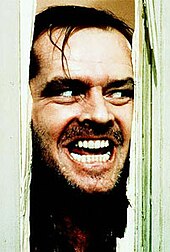 J: The Shining (1980)
A Stanley Kubrick classic, The Shining, based on the Stephen King novel of the same name, has well earned its position as ‘classic’ psychological horror. After taking a job as a caretaker in an isolated, off-season hotel, writer Jack Torrance, famously played by Jack Nicholson, descends into madness as he and his family are trapped inside the haunted building during a snowstorm. Worthy of a watch for any horror fan or indeed any film fan, The Shining is both beautifully and innovatively shot, as well as genuinely spine-tingling. On the count of three… Heeeeeeere’s Johnny!!
B: Horror of Dracula (1958)
Like many adaptations of Bram Stoker's novel, Horror of Dracula plays fast and loose with its source material, taking what it can use and abandoning the rest. It's the first of a series of films by the excellent Hammer House of Horror and is widely regarded as one of its best. With Christopher Lee donning the infamous red and black cloak, Peter Cushing as the vampire's nemesis, Abraham Van Helsing and enough bloody glorious Technicolor, it's one of the most memorable of Dracula adaptations and set up many of the tropes that would later be mimicked and mocked in films such as Dracula: Dead and Loving It. That it is over sixty years old and has aged far better than its more recent relative, Francis Ford Coppola's Dracula, is a testament to Hammer's reputation as a quality purveyor of foggy, Gothic creature features.
J: The Last Exorcism (2010)
A more recent exorcism focused movie outing, this film differs from its, let’s face it, many ancestors, in that it combines the big ideas associated with religious imagery along with the more personal, psychological nature of the found footage technique. Directed by German filmmaker Daniel Stamm, The Last Exorcism focuses on Reverend Cotton Marcus, a priest who, having misplaced his faith, has become famous for performing what appear to be exorcisms. After agreeing to take part in a documentary aiming to expose the fakery behind exorcism rituals, Marcus chooses the case of Nell, a Louisiana farm girl allegedly butchering animals in her sleep. As the case builds, Marcus is forced to re-think his beliefs. Featuring some truly inspired contortion scenes, an interesting plotline and some great performances, The Last Exorcism is something of a must see for fans of the genre.
B: The Texas Chainsaw Massacre (1974)
The narrative of a group of teens going on a nice summer's drive before extreme violence ensues is a story so often used that it is easy to forget that The Texas Chainsaw Massacre is one of the original and best films of that type. There is a very good reason why it ranks so highly on various Scariest Movie lists and it has more to do with the audience watching than it does the film itself. Because of Tobe Hooper's masterful direction, a lot of the horror in TCM isn't actually seen, but is rather suggested through a series of clever edits and sound effects. You may think you've seen someone's arm severed by a chainsaw but you don't see it on screen. It's a wonderfully grimy and nasty film that never fails to make me feel a little sick.
J: REC (2007)
Right, frankly I’m going to go out on a limb with this film. I’m more than prepared, as both a devout horror fan and fellow Buffery-er, to stand here before you and claim this to be one of the greatest horror films of all time. There, I’ve said it. Be sure to watch it in the original Spanish for a found footage zombie treat so scary you’ll want to turn it off, or at the very least put a light on. The film depicts a young TV reporter’s attempt to break the big time with a report accompanying the local fire brigade to an emergency at a local apartment block. But all is not what it seems, and before our protagonists can so much as blink, let alone get away, the building has been locked down and quarantined. They must try to get to the bottom of what’s going on, try to help each other, and above all- try to survive. An absolute treat, but not one for the faint hearted.
B: The Descent (2005)
For a person with slight claustrophobia issues and a real dislike of dark, scary caverns, Neil Marshall's The Descent was quite simply horrific for me from start to finish. It probably didn't help that I first watched it on my laptop, on my own, in a power cut, but nevertheless, that film is downright creepy. Following a group of friends on a spelunking expedition gone wrong, The Descent is remarkable in many ways, not least for featuring a cast of women who's main role isn't actually to get their kit off. The underground setting also allows for some particularly creative scares, taking full advantage of the lack of light and already terrifying rocky crevices. It's also relentless, taking off at a fast pace and never really letting you catch your breath. It certainly put me off spelunking for life.

J: The Descent II (2009)
Yes, we know The Descent is already on the list, but frankly both films deserve their place on this Halloween run-down. The sequel, which, in a welcome departure from regular film franchise fare actually has a free standing story of its own, sees the first film’s Sarah, played with competence and true star quality by Shauna Macdonald, heading back down into the caves at the behest of local authorities in order to uncover what really happened down there. Just as jumpy, claustrophobic and disturbingly cynical as its predecessor, the franchise earns its accolade of the very best in British horror all over again.
B: Saw (2004)
The Saw franchise may have gone on to increasingly bigger and not-better things, it cannot be denied that the first film was a startlingly original and twisted horror. Morally skewed characters are always more interesting than their easily categorised counterparts and you find your loyalties shifting between the two main characters constantly. Through the central two-hander with Cary Elwes and writer-actor Leigh Whannell and several jaw-wrenching flashbacks, it introduced the world to the fiendish games of Jigsaw. Perhaps Saw's greatest draw though is that it not only asks horrible, catch-22 style questions of its characters, but also of its audience. Would you saw through your own foot to save your life? And again, like many others on this list, the film is made all the more fantastic thanks to its completely unexpected and truly brilliant ending.
J: Final Destination (2000)
Whilst later sequels have been questionable to say the least, the original Final Destination film provides an interesting concept in the idea of ‘Death’ as vengeful, almost human figure, and the ways in which we can therefore cheat it. After a handful of students find themselves the sole survivors of a disastrous plane accident, by virtue of a ghostly premonition by one of their number, they must become increasingly clever in order to escape the death they avoided the first time around. The film’s genius lies in the fact that, whilst the idea of Death needed to patch up its broken design when humans evade its plan is a very human, very ordered idea, inanimate objects in the characters’ surroundings become its weapons of choice in the increasingly inventive death set pieces. And when you’re sat alone at night in a cluttered room, that suddenly seems a very novel, and very scary idea indeed. (B: Also, Final Destination 2 is one of the best horror sequels ever. I'll never look at lorries carrying logs the same way again.)

B: Nightmare on Elm Street (1984)
For me, Nightmare on Elm Street is the film that everyone used to watch when their parents weren't looking, the kind of film that cropped up at sleepovers when you definitely weren't allowed to watch it. Didn't stop us though. But sleepovers are really not the best place to watch this particular film, what with Freddie Kreuger being some kind of freaky dream-master able to kill you in your sleep. What I love about this film is the sheer 80s-ness of it from the clothes, the hair and the soundtrack. Then of course, there's an early appearance by Johnny Depp who gets a weird, bed-sucking, fountain-of-blood type death. So that's cool. Though the franchise has gone on and on (and on... and on...), the original is still a great watch, particularly if you're not supposed to be watching it in the first place.
Honourable Mentions
Because we couldn't include everything we wanted to, there's just a quick list here to point you in the direction of some of our other favourites:
The Fly, Invasion of the Body Snatchers, Rosemary's Baby, Don't Look Now, The Birds, Cloverfield, My Bloody Valentine 3D, The Thing, The Cabinet of Dr. Caligari, Nosferatu, Dawn of the Dead... We could go on forever...
Think we've missed anything? Please leave us your suggestions below; we're always looking out for new horrors that need a quality cushion to hide behind.
So whatever you're doing to celebrate the 31st, have a fantastic night and scare yourselves silly. Trick or treat!
- Jen and Becky
J: The Last Exorcism (2010)
A more recent exorcism focused movie outing, this film differs from its, let’s face it, many ancestors, in that it combines the big ideas associated with religious imagery along with the more personal, psychological nature of the found footage technique. Directed by German filmmaker Daniel Stamm, The Last Exorcism focuses on Reverend Cotton Marcus, a priest who, having misplaced his faith, has become famous for performing what appear to be exorcisms. After agreeing to take part in a documentary aiming to expose the fakery behind exorcism rituals, Marcus chooses the case of Nell, a Louisiana farm girl allegedly butchering animals in her sleep. As the case builds, Marcus is forced to re-think his beliefs. Featuring some truly inspired contortion scenes, an interesting plotline and some great performances, The Last Exorcism is something of a must see for fans of the genre.
B: The Texas Chainsaw Massacre (1974)
The narrative of a group of teens going on a nice summer's drive before extreme violence ensues is a story so often used that it is easy to forget that The Texas Chainsaw Massacre is one of the original and best films of that type. There is a very good reason why it ranks so highly on various Scariest Movie lists and it has more to do with the audience watching than it does the film itself. Because of Tobe Hooper's masterful direction, a lot of the horror in TCM isn't actually seen, but is rather suggested through a series of clever edits and sound effects. You may think you've seen someone's arm severed by a chainsaw but you don't see it on screen. It's a wonderfully grimy and nasty film that never fails to make me feel a little sick.
J: REC (2007)
Right, frankly I’m going to go out on a limb with this film. I’m more than prepared, as both a devout horror fan and fellow Buffery-er, to stand here before you and claim this to be one of the greatest horror films of all time. There, I’ve said it. Be sure to watch it in the original Spanish for a found footage zombie treat so scary you’ll want to turn it off, or at the very least put a light on. The film depicts a young TV reporter’s attempt to break the big time with a report accompanying the local fire brigade to an emergency at a local apartment block. But all is not what it seems, and before our protagonists can so much as blink, let alone get away, the building has been locked down and quarantined. They must try to get to the bottom of what’s going on, try to help each other, and above all- try to survive. An absolute treat, but not one for the faint hearted.
B: The Descent (2005)
For a person with slight claustrophobia issues and a real dislike of dark, scary caverns, Neil Marshall's The Descent was quite simply horrific for me from start to finish. It probably didn't help that I first watched it on my laptop, on my own, in a power cut, but nevertheless, that film is downright creepy. Following a group of friends on a spelunking expedition gone wrong, The Descent is remarkable in many ways, not least for featuring a cast of women who's main role isn't actually to get their kit off. The underground setting also allows for some particularly creative scares, taking full advantage of the lack of light and already terrifying rocky crevices. It's also relentless, taking off at a fast pace and never really letting you catch your breath. It certainly put me off spelunking for life.

J: The Descent II (2009)
Yes, we know The Descent is already on the list, but frankly both films deserve their place on this Halloween run-down. The sequel, which, in a welcome departure from regular film franchise fare actually has a free standing story of its own, sees the first film’s Sarah, played with competence and true star quality by Shauna Macdonald, heading back down into the caves at the behest of local authorities in order to uncover what really happened down there. Just as jumpy, claustrophobic and disturbingly cynical as its predecessor, the franchise earns its accolade of the very best in British horror all over again.
B: Saw (2004)
The Saw franchise may have gone on to increasingly bigger and not-better things, it cannot be denied that the first film was a startlingly original and twisted horror. Morally skewed characters are always more interesting than their easily categorised counterparts and you find your loyalties shifting between the two main characters constantly. Through the central two-hander with Cary Elwes and writer-actor Leigh Whannell and several jaw-wrenching flashbacks, it introduced the world to the fiendish games of Jigsaw. Perhaps Saw's greatest draw though is that it not only asks horrible, catch-22 style questions of its characters, but also of its audience. Would you saw through your own foot to save your life? And again, like many others on this list, the film is made all the more fantastic thanks to its completely unexpected and truly brilliant ending.
J: Final Destination (2000)
Whilst later sequels have been questionable to say the least, the original Final Destination film provides an interesting concept in the idea of ‘Death’ as vengeful, almost human figure, and the ways in which we can therefore cheat it. After a handful of students find themselves the sole survivors of a disastrous plane accident, by virtue of a ghostly premonition by one of their number, they must become increasingly clever in order to escape the death they avoided the first time around. The film’s genius lies in the fact that, whilst the idea of Death needed to patch up its broken design when humans evade its plan is a very human, very ordered idea, inanimate objects in the characters’ surroundings become its weapons of choice in the increasingly inventive death set pieces. And when you’re sat alone at night in a cluttered room, that suddenly seems a very novel, and very scary idea indeed. (B: Also, Final Destination 2 is one of the best horror sequels ever. I'll never look at lorries carrying logs the same way again.)

B: Nightmare on Elm Street (1984)
For me, Nightmare on Elm Street is the film that everyone used to watch when their parents weren't looking, the kind of film that cropped up at sleepovers when you definitely weren't allowed to watch it. Didn't stop us though. But sleepovers are really not the best place to watch this particular film, what with Freddie Kreuger being some kind of freaky dream-master able to kill you in your sleep. What I love about this film is the sheer 80s-ness of it from the clothes, the hair and the soundtrack. Then of course, there's an early appearance by Johnny Depp who gets a weird, bed-sucking, fountain-of-blood type death. So that's cool. Though the franchise has gone on and on (and on... and on...), the original is still a great watch, particularly if you're not supposed to be watching it in the first place.
Honourable Mentions
Because we couldn't include everything we wanted to, there's just a quick list here to point you in the direction of some of our other favourites:
The Fly, Invasion of the Body Snatchers, Rosemary's Baby, Don't Look Now, The Birds, Cloverfield, My Bloody Valentine 3D, The Thing, The Cabinet of Dr. Caligari, Nosferatu, Dawn of the Dead... We could go on forever...
Think we've missed anything? Please leave us your suggestions below; we're always looking out for new horrors that need a quality cushion to hide behind.
So whatever you're doing to celebrate the 31st, have a fantastic night and scare yourselves silly. Trick or treat!
- Jen and Becky


