Thursday, 25 February 2016

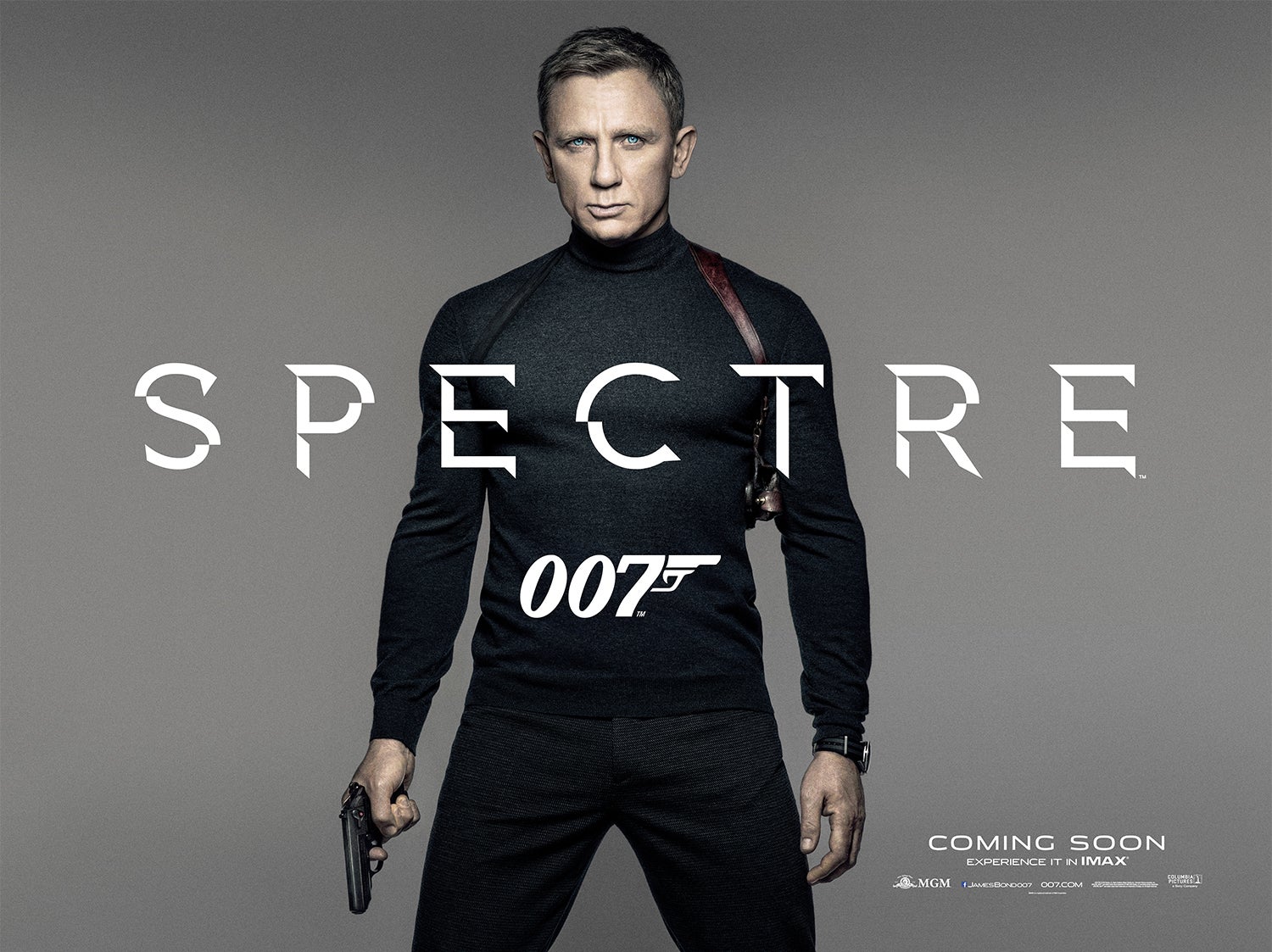
DVD REVIEW: Spectre

Beware: this review contains spoilers...


For someone who calls himself a 007 geek, I didn't see Spectre at the pictures. This was double strange considering I loved Skyfall, and Daniel Craig is my second favourite Bond*, but the marketing didn't grab me at all and the early opinions from people I trusted were anything but glowing. But now it's out on home video, I decided to give it a chance.

Everything seemed back to normal at the end of Skyfall - a new M, Moneypenny, and a chance for Bond to get back in the saddle for some new adventures away from Quantum. Oops. After a decent pre-credit sequence in Mexico during the Day of the Dead celebration, Bond finds himself grounded in London while MI6 merge with MI5, and new boss C wanting to shut down the 00 program. Thing is, Bond was in Mexico to kill someone on the orders of Judi Dench's M (making a post-death appearance on a VHS), but this person again seems to be a part of something bigger. Spectre.

Spectre is the weirdest film. Imagine a corridor at EON: from the left comes someone carrying the script to Thunderball, from the right another person carrying the script to Moonraker. They collide, and both scripts are hopelessly entangled without rhyme or reason. It follows the previous exploits of Craig's 007, with the hard-edged action barely stepping back from the parody line, but has a bunch of weird comedy moments straight out of the Roger Moore back catalogue. However, Craig doesn't really seem like he wants either, and just looks very bored throughout the whole thing.

The scenes involving women are worse; Bond's lover/companion Lea Seydoux is pretty unconvincing. Craig and Seydoux themselves have less romantic chemistry than Hayden Christensen and Natalie Portman, and Seydoux's tired "I don't want to be rescued, I can handle myself" shtick is worse considering she keeps being Bond's Olive Oyl, with Dave Bautista's Mr Hinx a quite good Bluto. Bautista is probably the most interesting character in the film, especially after gouging someone's eyes out at the Spectre AGM. Being served a worse fate than ol' no-eyes is Monica Bellucci, the supremely talented actress who is ickily seduced by Bond in his old ways of fucking women to get information and not really caring if they get killed or not (the latter is funnily addressed at one point). And Moneypenny is back at being Bond's info stooge, although we do see she has a life outside MI6, and when I say life, I mean someone else in her bed.

And then there's Christoph Waltz. Yes, of course he is Ernst Stavro Blofeld, although previously he was Franz Oberhauser who mysteriously died along with his father. Turns out orphaned Bond grew up with them, and, well - you remember that bit in Robin Hood: Prince of Thieves where Christian Slater tells Kevin Costner that he hates him because their father liked him more? This is basically the whole deal with Blofeld, who not only has a fluffy white cat but ends up at the end with a big facial scar and cloudy eye. And Waltz is terrible. So boring. It's a horrible waste - he's such a fine actor, and he's just given these dreadful cliched lines and weird plot which basically amounts to him taking away Bond's memories. Spectre itself never really figures in the plot, just being placed as a shadowy organisation whose other head honcho is a dead giveaway from the moment we meet him.

Oh, and the action sequences are so dull. There's a in-helicopter fight that goes on for ages, a car chase with Bond's brand new Aston Martin that feels like it's going at 10mph, and, well I've forgotten what else. Everything seems half-hearted, be it Thomas Newman's okay (I guess) score (although maddeningly he's still using that ten-year old Bond theme arrangement by David Arnold) or the cinematography. Remember Deakins and that silhoutte fight? The fire on the Scottish moors? All we get here is an oddly yellow filter and little else to recommend. Oh, and that fucking Sam Smith song? DIRE.

The funny thing is, I enjoyed it for a while, in the same way I enjoy Octopussy. But after a while it just grinds on you, especially as it goes on forever - two and a half hours is far too long for something this half-baked. The third act in particular is absolute rubbish, and the denouement is a damp squib. The best thing about Spectre is that it finally begins with the gunbarrel, but from there everything is downhill.

The rumours are flying about that Spectre will probably turn out to be Daniel Craig's last venture as James Bond. As someone who adores Craig's Bond, this is a terrible prospect, that after such success he could go out on such a bloody awful note. A lot of people disliked Skyfall, but at least it felt fresh, it felt different. It felt like it wasn't afraid to try new things, and it's hard to believe both Skyfall and Spectre have the same director. There was a track on the Skyfall soundtrack called 'Old Dog, New Tricks' - reverse that and you have Spectre. Same old shit, different day.

*After DALTON, of course.

- Charlie

Follow @AssortedBuffery on Twitter
Or like our Facebook page

Monday, 22 February 2016

TV REVIEW: The X-Files - Mulder and Scully Meet the Were-Monster


Mulder's having a bit of a mid-life crisis after his return to the X Files, finding many of his cases solved and decidedly on the normal side of para-. When Scully tells him of a new case in which several victims appear to have been killed by what looks like some kind of horned monster, Mulder begrudgingly goes along to investigate. Whilst there, he finds himself confronted with something that tests his faith in all its forms. Scully attempts to go about investigating the episode as normal as her partner chases lizard monsters into the night.

Darin Morgan's episodes, too few as they were, have always demonstrated a beautiful understanding of both what audiences loved about the show and the relationship between Mulder and Scully at its heart. The X-Files could be gloriously silly at times like the classic vampire episode, Bad Blood. There's a similar atmosphere going on here as perspectives shift and beliefs are challenged. Focusing this through the prism of Mulder's waning faith proves to be an inspired move. What happens when a man usually so quick to believe anything loses his desire to do so, but is then confronted with an actual kind of monster?

In short, hilarity. Morgan takes advantage of having an audience so well-versed in the usual codes and signifiers of the show to spin it about, turn it upside down and mess with it completely. And so we get a monster who lives on the edge of human society (not unlike a creature Morgan himself once played, Flukeman), but finds himself forced into becoming a human after he's bitten by one. Rhys Darby's genteel performance as Guy is a highlight of the episode, giving us a sympathetic creature who just wants to be left to his own devices (as long as they're not smartphones).

The episode becomes about Guy's ability to defy Mulder's expectations. Previous X Files cases have taught everyone's favourite conspiracy theorist that monsters will be monsters. They will kill or feed or violate because that's their nature. As Guy tells his story, Mulder's desperate to mould Guy to his expectations and have him be responsible for the murders because that's what Mulder understands. His shaky faith means he can't think outside the box, but it's Guy that proves his newfound cynicism wrong; monsters exist. They've always existed and Mulder finds his desire and his need to believe back again by the end of the episode. 

It may be riotously funny all the way through, but the episode works so well precisely because it's using the comedy to do the character work at the same time. As well as renewing Mulder's faith in his life's work, it's also continuing with the focus on how Mulder and Scully are coping with their respective lives as they grow older. Even his inability to use his smartphone properly is used as another way of showing how at odds Mulder is with the world, as well as slaking his incurable thirst for the bizarre (and let's all take a moment to appreciate Mulder putting his head in a fox). 

Scully is sidelined somewhat in this episode, but that feels fitting too; it's a running joke that Scully sees all of these amazing, paranormal/supernatural things and still remains cynical. To have her miss all the monstrous action and catch the human bad guy at the heart of it all feels so perfectly X-Files, precisely because it is. It also has to be her that gets Mulder back in the game, despite her own continuing cynicsm about the things in which he believes. She knows what's best for him, as she always has done.

Though it's playing a lot more humourously, Mulder and Scully Meet the Were-Monster is operating on a similar level to last week's Founder's Mutation in its exploration of how they fit together. Their dynamic is messed with; Mulder begins the episode woefully cynical about his life's work with Scully encouraging him to take on the monster case. It's not long before they're back to normal though in a powerhouse of a comedic performance from Duchovny as he goes through the usual Mulder and Scully back-and-forth by himself whilst Anderson gets to pull all the reaction faces she can manage, landing the big one liner at the end: "No! I think you're bat-crap crazy."

The best X-Files episodes, whether they were mythology-based, freak of the week or a bit of both, always made use of the relationship at its heart, their differences and their strengths together. Mulder and Scully Meet the Were-Monster might be silly, but it's also incredibly astute about why we're all tuning back in to see these characters once more, why the show still works and how these characters are affected not only by their own experiences, but also our experiences of them. Darin Morgan weaves it all together into what might be the most quintessentially X-Files episode of the revival so far. It's wonderful.

- Becky

You can read Becky's review of previous episode, Founder's Mutation, here.

Follow @AssortedBuffery on Twitter
Or like our Facebook page

FEATURE: Angel - She

Previously on Angel: Cordy's got a nice new flat and it's haunted, but with a nice ghost. Wesley's now hanging around and helping it out when he can. Angel's finding this whole interacting with humans thing a little hard to handle.


Cordelia's housewarming party gives us a brief insight into Angel's lack of social skills, Wesley's even worse and Phantom Dennis is still awesome. Realising that Wesley's hanging around because he needs a job, Angel welcomes him as an associate in the Investigations and he's on hand as Cordy has a vision of a man being burned alive from the inside out. Complete with exploding eyeballs. Yum. Angel finds himself in the middle of a transdimensional battle, aiding the demon princess Jhiera, who is attempting to free the women of her world, kept as slaves by men, who perform an operation equivalent to a lobotomy to ensure the women remain well-behaved.

Angel has already shown on several occasions so far that is a willingness to take on some of the darker aspects of life than Buffy could do with its lighter fare and She is a classic example of this. In its exploration of female slavery and mutilation at the hands of men, it continues the feminist slant of its sister show, but with more intent to explore the violence of it (though Buffy would tackle this later on). Jhiera's quest to free the women of her society is a fierce cry of independence follows nicely on from last week's exploration of female body violation in Expecting. Like Cordelia's experience, women are abused by the men of their race, forced into subservience. 

The men of her race remove the part of the woman's body that controls their desires and sexual power in order to more subdue them and keep them in their subservient place in society. The parallels to Female Genital Mutilation, an ongoing issue in our own society. Not only is there a physical destruction, but also one of identity as the women who have undergone the procedure refer to themselves as "it" once their bodies have been violated and they have become more malleable. Their sense of self is lost in the process. It's not a graphic horror in this episode, but it's an insidious one and sadly something that remains just as relevant to the way in which women are treated in our own society. 

The balance of the darker elements of the episode are met with some great moments of levity. Not only does Angel give a little speech on Manet's La Musique, he also hints that he is the eponymous creature in Baudelaire's Le Vampire, part of his collection Les Fleurs du mal. I love little references to what Angel got up to during his time as a vampire and it's always amusing when he gets to show off his considerable arts knowledge. This is especially amusing when contrasted to his sheer inability to use mobile phones. However, the crowning comedy moment has to be Angel and Wesley's imagined and real dancing skills respectively. It's just glorious. And I love that we got the end credits too.

With the now solid three member team of Angel Investigations, it's fitting that Wesley's first episode actually employed is such a good one. The writing team of Noxon and Greenwalt write a screenplay that sparkles with characteristic wit but also with an incisive exploration of violence against women. It's helped by a fierce performance from Bai Ling as Jhiera, one of the more memorable additions to the guest characters. I also like that she isn't given any leeway by Angel, despite the obvious support he has for her cause; you don't kill innocent people on Angel's turf, nor do you let his friends die.

It's a great little episode, this one, full to the brim of ideas, anger and charm. Not only do we get an allegory of the way in which women can be controlled and harmed by their own society, but also a look at Angel's code of conduct when it comes to his friend. Oh, and Wesley and Angel's dancing of course. Who could forget that?

Quote of the Week:

Cordelia [to Angel]: I was so glad you came. You know how parties are? You're always worried that no one's gonna suck the energy out of the room like a giant black hole of boring despair. But, there you were in a clinch!

Inventive Kill: Incinerated from the inside out, leading to inadvertent popping of the eyeballs. They didn't show that on Channel 4 back in the day.

LA Who's Who: This episode marks the second appearance of Sean Gunn.

- Becky

You can read Becky's look at the previous episode, Expecting, here.

Follow @AssortedBuffery on Twitter
Or like our Facebook page

Friday, 19 February 2016

FEATURE: Buffy the Vampire Slayer - The I in Team

Previously on Buffy the Vampire Slayer: Buffy's big secret is out and she's now working with the Initiative of which Riley is a part, as is Psychology professor Maggie Walsh. She's involved in something called 314 which has got the demon world a'rumbling. Elsewhere, Spike has discovered he can hit demons whilst Willow is embarking on a new friendship with fellow witch, Tara.


Right. Deep breath. 

Buffy has been spending a lot of time with the Initiative, training and basically beating them to a pulp within 28 seconds. Maggie Walsh is impressed, Riley's in love and the Scoobies are disappointed, especially Willow who feels disconnected from her best friend. Behind the door of 314, we find that Walsh is working on an impressive Frankendemon's monster, composed of tech and demon body parts. When Buffy starts asking a few too many questions about what's going on in the tin foil set below the ground, Walsh concludes she's a bit too dangerous and decides to have her killed off. There's also this weird bit where she watches Riley and Buffy have sex, thus sparking all kinds of odd Oedipal associations that the episode doesn't really need.

But wait, I'm not done with this plot summary - it continues! During one of their patrols, an Initiative team, led by Riley pals Graham and Forest, run across Spike. They fail to capture him, but do manage to shoot him with a tracer. Having recently spurned Giles' friendship following the demon incident, Spike is forced to return to the Scoobies for help and they flush the tracer down the loo. As part of Walsh's cunning plan to rid herself of the Buffster, she sends her down to the sewers, chasing two escaped demons, falsely described as pushovers and has her take a prototype combat camera. Rookie mistake! 

I'm still not done. Riley returns to the Initiative tin foil base under the ground to report a lack of Hostile 17 only to be confronted with a falsely tearful Maggie Walsh saying that Buffy has been killed. But what's this? Buffy's alive! And she's the conveniently placed combat cam to relay a message to Walsh stating that now you've pissed off a Slayer and that's a bad thing yada yada yada. Riley's angry and walks away to go be nice to Buffy. Walsh is all upset with that Oedipal thing, yelling after Riley and generally losing her cool a bit. Then she goes into 314 and gets skewered by the now awakened Frankendemon's monster, Adam. 

And breathe.

The big problem with this episode is, if you hadn't guessed from the above plot summary and my textual hypventilation, is that there is way too much going on. The season has mostly focused on individual episodes with a little ongoing arc thrown in, but The I in Team is all arc, all the time to get the season to the point where it needed to be and the Initiative acting as the enemies once again. As a consequence, everything is too rushed for the impact these things should have had to land properly and by the time Riley's dramatically storming away, we still don't really care that he is.

It does form a quasi-two parter with the next episode, Goodbye Iowa, but we needed even more threaded in. Buffy working with the Initiative, much like her relationship with Parker, is over in about five minutes, but the show wants it to have more of a consequence than the allotted screentime deserves. For it to truly work, we'd need Buffy working well within the Initiative as a reworked status quo, further fracturing her away from her gang and for a more permanent damage to be done.

However, there are some positives to take away from it, mainly in the clever way the title is used to explore the ongoing fracturing working throughout the series. Mostly, it has been on the Scoobies' inability to adapt to having more separate lives since the end of high school. Willow's feeling it particularly keenly, but Giles, Buffy and Xander have all had their own time in the isolation spotlight too. They're all working as that "I" in the team, operating individually unless forced by circumstances beyond their control to work together, but even then, it's often been as a split force.

The Scooby Gang aren't the only team fracturing under the pressure of Buffy and the Initiative. We've had grumblings from Forest before about the importance that Buffy has in Riley's life over his own as a best friend, but that's crossing into the professional line too when Riley picks his girlfriend as his number two and not Forest. Likewise, Walsh's individual ambitions are responsible for Riley breaking off from his work and disobeying a direct order for what appears to be the first time in his life.

So, much like Hush, it's a big episode, both on an individual basis and for the longer, ongoing arcs but, unlike Hush, it's not very good at doing it. The earlier episode also had the great narrative hook of taking place mostly in silence, but even had you replaced all the dialogue, the episode is excellent at spinning the complex plates that the writers have in the air at that point in the season. In The I in Team, it feels like they suddenly realised they needed to start wrapping the season up, but a bunch of stuff needed to happen in order for them to do that. 

As a consequence, those plates spin off all over the place, whirling way too fast for us to really catch them as an audience (I started well with that allegory and promptly lost it by the end - I'm sure you all know me well enough by now to know what I mean).

Quote of the Week:

Buffy: You said it was big. You told me... but you never said it was huge!
Riley: I don't like to brag.
[They're talking about the Initiative tin foil base underground. Minds out of the gutter, guys.]

Inventive Kill: Adam uses the arm skewers, recently taken from the Polgara demons that Buffy helped to capture, to mercilessly murder Maggie Walsh.

Demonology 101: The episode marks the first appearance of Adam, who goes on to be the season's Big Bad. And we all thought it was gonna be our Maggie.

- Becky

You can read Becky's look at previous episode, A New Man, here.

Follow @AssortedBuffery on Twitter
Or like our Facebook page

Tuesday, 16 February 2016

FEATURE: Angel - Expecting

Previously on Angel: Cordelia moved to LA to begin an acting career, but was stymied by her lack of talent and everything going a bit wrong. She's got the apartment down, but since Doyle's death, she's yet to get back on her dating game. And she's not dating Wesley. We know how that went down.


Cordelia's starting to get a hold of her LA life, gathering a group of friends and heading out on a hot date with Wilson Christopher, man about town and general studmuffin. She brings him back to her apartment, Phantom Dennis does the protective ghost bit and then she sleeps with Wilson. And then she wakes up to find she's pregnant. And not just a little bit pregnant. Full term, about to pop demon spawn pregnant. Wesley and Angel immediately spring into action to work out whether Wilson is a parasitic procreating demon or if something bigger turns out to be behind it. Meanwhile, Cordelia's maternal instinct kicks in and she decides she's going to her babies no matter what.

Originally, Tim Minear wanted to play the episode from a more comedic angle, but Whedon insisted on playing it straight so it goes for more of a body horror angle. It's basically the bit in The Fly when Geena Davis realises she could be giving birth to a weird human/fly hybrid and has the nightmare about giving birth to a giant larva manifested in one episode. They even manage to work an Alien reference in there with some floor-melting acid for amniotic fluid. It's also sort of where the episode doesn't quite work.

There's still a few bits in there that are played a little too silly to fit in with the straighter horror angle they were going for. Cordy drinking blood out of the fridge and grossing out Angel is still played for laughs when it could've been made a lot freakier. The actual gory horror of the episode, where you think the scares would take hold, is marginal, leaving it more to the audience's imagination and without anything majorly graphic. The thing is, with body horror, that graphic quality is what you need. You need to see the demonic babies inside Cordelia and freak out with Wesley. Normally I'd advocate the power of suggestion over most things, but it doesn't really work here.

There is one bit of the psychological horror aspect that does land and it's in the way in which the women are impregnated. The idea of a group of predatory males using their powers to seduce women is horrible (anyone who has ever been to a nightclub has seen this happen. I've even been circled before. Men are weird, guys). It's especially nasty in a world where pick-up artistry is a thing that has events and gathers men around to share secrets on how to seduce women. They're usually led by a vaguely demonic looking man too, so it's an idea that works all round.

There's also the idea of how invasive these men are within the lives of the women they sleep with. Cordy's despair at waking up to discover she's pregnant is heartbreaking, made even moreso by the knowledge that she's still only supposed to be 18/19 at this point. She's a character that's gone through a lot already and she's someone we no longer want to see suffer, such is the power of Charisma Carpenter's performance and the writing that took her on this journey. The scene isn't played with Cordelia's usual over-emotive hysteria either; it's just a simple, weighty despair.

Another mixed bag of an episode then and one which never quite knows which way it's supposed to be going. However, all is redeemed with that final scene in which Cordelia acknowledges that Wesley and Angel are the two people to whom she can trust her life. It's a really adorable moment, especially with how they're both fussing over her to make sure that she's ok, but it's also an important one. The characters really do feel settled and more like the family dynamic we're used to from Buffy; Wesley and Angel have their own little nerdy demon hunter dynamic going on now too.

Quote of the Week:

Wilson: You shouldn't sneak up on people like that in here. That's how accidents happen.
Angel: Speaking of accidents, I'm a friend of Cordelia Chase.
Wilson: This is a private club. Featured word: private.
Angel: Hey, you don't talk to me, I'll kick your ass. Featured word: ass.

LA Who's Who: You may recognise Ken Marino, Cordelia's baby daddy, from such things as Role Models and Wet Hot American Summer.

- Becky

You can read Becky's look at previous episode, Somnambulist, here.

Follow @AssortedBuffery on Twitter
Or like our Facebook page

Monday, 15 February 2016

TV REVIEW: The X-Files - Founder's Mutation


After the breakneck, slightly maddening quasi-pilot that was last week's My Struggle, Founder's Mutation finds us in far more familiar, freak-of-the-week territory. Dr Sanjay, a scientist working for the DOD, finds himself plagued with a high pitched noise and, after an episode during a board meeting, he commits suicide by jamming a letter opener into his ear, but not before writing "Founder's Mutation" on his hand. Now Mulder and Scully are back on the X Files, they're sent to investigate. It seems like a routine suicide, but as they dig deeper, it seems they have stumbled on to a secretive mutation experiment and Mulder begins to hear a very high pitched noise.

X-Files vet James Wong is back on writing and directional duties for the episode and the old school feeling starts almost immediately alongside the narrative. The cold open with Sanjay's death is wonderfully familiar, an enigma of a scene that sets up the episode's central mystery with an eery atmosphere and some nastily graphic ear-piercing. It also acts as a settler for the current season. Mulder's ongoing 'project' theory lurks behind much of the narrative, but the focus remains on the mystery at hand and its effects on the returning FBI agents.

In getting back to episodic basics, Founder's Mutation is a huge step up in maintaining the balance between moving the season forward and capturing the factors that made the series so popular in the first place. The central mystery is not without its bumps, but it's a considerable step-up from the info dump that served as the first episode. Now that dynamics have been established, the show feels a little more settled. 

Like much of classic X-Files episodes, the horror resides very much in the real world as well as in the paranormal, playing on maternal fears, paranoid conspiracies and the horrible knowledge that a child has been born with a life-limiting mutation. Of course, it's not without some classic ickiness either. Exploding eyeballs, self-Caesarian sections and letter openers as suicide methods all make an appearance and there's a kind of glee in the goriness to it that sits nicely in the narrative. 

However, where the episode really flies is in its examination of the characters at the heart of The X-Files. Much of their dynamic in the first episode was based on their sudden reunion, Scully reluctantly drawn back in and Mulder recklessly jumping back into doing what he does best. Here, it's much on the toll that their work has taken on them, particularly in denying them the kind of life with their child that other people enjoy. Thwarted parenthood was a wider theme in the episode, but the scenes with Mulder and Scully talking about their own lost child was 

Their respective 'what if...' moments with their son, William, are the episode's best moments, a heartbreaking glimpse into what could have been. There's no one happy family unit still, but there are two parents getting to spend time with their child. It's interesting that the flashbacks still keep them separated, their different expectations of parenthood and their respective fears of how it could end are perfect for their characters. Anderson has always been fantastic at conveying Scully's loss with a simple flicker of emotion, but it's Duchovny who tugs at the heartstrings here, a man denied growing up with his sister and fearful of losing his son in the same way.

It may be a little rocky still, but there's no denying that everyone involved in The X-Files return still understand what is needed to make the show tick and that we're all a sucker from some tragic Mulder and Scully emoting.

- Becky

You can read Becky's review of previous episode, My Struggle, here.

Follow @AssortedBuffery on Twitter
Or like our Facebook page

FILM REVIEW: Deadpool


Deadpool is a character that has been infamously ill-served by his previous onscreen incarnation during the disaster movie that was X-Men Origins: Wolverine. It's been a real fight to get him back in to the cinema and it's testament to the tenacity of the film-makers, star Ryan Reynolds (seizing his second Wade Wilson-based chance with aplomb) and the fans who loudly clamoured for the film to be made after test footage was "leaked." 

To try and describe the plot, even in summary, in a linear fashion defeats the purpose of the film somewhat, throwing you into the action almost immediately and allowing Deadpool to take over and tell you his story. Suffice to say, there's an origins story in there, a brief history of where Wade Wilson came from, how he got his skills and how he came to be the sort-of-hero-but-not-really Deadpool.

There's a curious tension at the heart of the film as Rhett Reese and Paul Wernick wrestle with the need to present a fairly standard origin story and to reflect the nature of Deadpool's metafictional existence within the comics. This is, after all, the character who decided to kill off the entire Marvel universe and then their fictional ancestors. Fortunately, Reese and Wernick find creative ways to combine the two, poking fun at just about everything and referencing everything else. The opening credits are the most inventive use I've seen of a movie standard for some time, encapsulating that central conflict between tradition and chaos instantly and setting the audience up for the kind of clever yet puerile humour the film thrives on.

What is clear immediately is how much fun Ryan Reynolds is having, getting to wisecrack, kick butt and generally make a nuisance of himself all the way through the film. As capable as he is at the comedic side of things, it's underpinned at all times by a sincerity that is needed to make the character work, something that could've fallen by the wayside in someone else's hands. The film needs the emotional beats of Wade Wilson to land alongside the one liners of Deadpool. Reynolds makes both look easy. I imagine it probably also helped to take a dig at his other, less successful comic book projects.

He's aided at all times by a supporting cast all in excellent form. Morena Baccarin sparks well with Reynolds as his love interest, Vanessa, capable of going toe-to-toe at all times with the charisma of her co-star. The X-Men he deals with, Colossus (voiced by Stefan Kapicic, who is adorable) and Negasonic Teenage Warhead (a hilariously sullen Brianna Hildebrand) both provide excellent comic relief as well as acting as the representation of the wider X-universe. Gina Carano proves, once again, someone needs to give that woman an action franchise. The weak spot is probably Ed Skrein's villain, Ajax, feeling a bit like a budget Nicholas Hoult in his English-accented swaggering, but when Deadpool is both hero and anti-, it's not surprising that Ajax is a little two-dimensional.

Where the film really excels is in its glorious black humour, layered on thick at all times. Reese, Wernick, Reynolds and director Tim Miller utilise pretty much everything in the comic arsenal, from silly physical comedy, creative swearing to referential wisecracks and back again. It won't be for the faint of heart, but there's a little bit of everything in there, including Monty Python references (which, no, I wasn't expecting). There's also a solid appreciation of the audience in the jokes as well; whether you found the characters through comics or movies, there are nods there to cater for you. Some are more blatant than others but knowing there will be things you missed for laughing too hard guarantees it's a film requiring multiple viewings. Even the soundtrack is a joy.

If anything, and this is a small niggle, it could have gone further into the anarchic freedom that its comic-based counterpart enjoys. For the uninitiated audience, I understand why the origin story hallmarks have to be in place and the film manages to achieve the balance between familiarity and tearing up the rule book for the most part. Yet there are moments that are crying out to be undercut by a bit of fourth wall breaking or some ironic narration as the film strays too far into adhering the conventions its attempting to skewer. The middle section, Deadpool's origin, in particular suffers for this, slowing down the film's breakneck pace just enough to feel a little rougher than the rest of the film's central oxymoron of controlled chaos.

Currently smashing box office records all over the place and proving superhero fatigue is on the side of mythical, Deadpool manages to not only be the film we were expecting it to be (no mean feat in today's safety first blockbuster climate) but also leave fans hungry for more. 

- Becky

Follow @AssortedBuffery on Twitter 
Or like our Facebook page

Monday, 8 February 2016

TV REVIEW: The X-Files - My Struggle

This review contains spoilers...


Opening with a Mulder exposition of his own personal obsession and the history of alien conspiracy theories, the My Struggle once again asks the question of "are we truly alone?" Coupled with the unchanged opening credit sequence, it is a glorious statement of intent; it's a continuation of the story that we loved (and that infuriated us) with the characters we fell in love with. Mulder and Scully are separated and pursuing their own lives, but are dragged back in by an online talking head, Tad O'Malley, a conservative conspiracy nut who also happens to be a Mulder-Scully fanboy. As they begin to investigate, it appears that they're amongst something far bigger and more dangerous than they ever expected. Again.

The length of time since the end of the series and the last movie, I Want to Believe, is a big one, so it's natural that there's some strangeness to the relationships. They've shifted and changed, but the episode seems torn as to whether it wants to brave that rockiness or not. It's a new pilot episode, re-establishing the mythos, the relationships and the world in which it all operates, but in doing so, it's trying to do too much. In both trying to emphasise that displacement and trying to make the episode run as smoothly as possible, Carter creates something mightily uneven.

The scene with Mulder and Skinner in the old X Files office is the best example of this alongside the clash between Scully and Mulder on his porch; it's thudding exposition set-up for the new story whilst trying to recall the past. The personalities and the relationships should be enough, but Carter doesn't seem to have enough confidence that we all remember how these patterns work. A character shouldn't need to say "the truth is out there" for us to know that Mulder still wants to believe. 

A lot of the episode naturally gets by just through the sheer thrill of seeing Mulder and Scully back on screen together. Duchovny and Anderson slot back into their roles with ease, like pulling on a slightly irritating jumper and a sharp power suit respectively. Duchovny's sardonic humour is the same as ever, delivered with the lazy charm that he's made his own over the years, whilst Anderson starts utilising her full range of reaction faces almost immediately. Her expression after being mansplained by O'Malley was everything. The pair's chemistry is instantly present and correct too and though the episode is a little clunky in its explanations of their history between I Want to Believe and the present day, there's a weight to their every interaction that conveys a lot.

What it does to the mythology is a brave move and a pretty clever one too, utilising a War on Terror, post-Snowden/Wikileaks world to tap back into the atmosphere of distrust and paranoia that the series initially thrived on. As O'Malley and Mulder explain to Scully how it all fits together, the episode suddenly takes off and everything slots into place. It re-energises a mythology famously impossible to follow (I'm not sure we'll ever straighten everything out) and provides the new fight, the new struggle that brings Mulder and Scully back together. It's a big mess, of course, but what would The X-Files be with sense? 

The final scene with the infamous Cigarette Smoking Man (replete with the effects of his eponymous habit) is a cracking slice of dark humour to end My Struggle with. It's another echo of its pilot episode, but handled with more deftness than the rest of the episode combined. It's that scene that gives me hope for the rest of the series. The awkward reintroduction is now out of the way, we can get down to trusting no one.

- Becky

Follow @AssortedBuffery on Twitter
Or like our Facebook page