Friday, 31 May 2013

FEATURE FRIDAY: Theatre Preview, Blind Date


There’s a new interactive theatrical experience in town. Blind Date, now on at London’s Charing Cross Road Theatre, promises a fusion of theatre, comedy, improvisation and social experiment, any one of which would be pretty appealing as a stand-alone concept. Perhaps with the exception of the social experiment part.

The show, arriving in London fresh from sold-out runs across the pond in New York and Toronto, will see protagonist/comedienne/improviser Mimi (Rebecca Northan) go on a different blind date every night.  Mimi, a lovable minx of a Parisian clown, shows up night after night, bless her, only for her date to stand her up each time. Where could she possibly find a stand-in at such short notice? The audience, of course! As Mimi explores the ups and downs of each blind date, often with hilarious results, we can’t help but fall in love with her as well.


An exciting and innovative piece of theatre, Blind Date is set to be just as “fearless…and very funny” (New York Times) this side of the Atlantic, perhaps even more so given the traditional British stiff upper lip and general reluctance to make fools of ourselves. Stand by for an “irresistible, cheeky and charming evening” (New York Daily News). Whether or not you are Mimi’s chosen ‘date’, you’re promised a fun an interactive night, perfect for an evening out with friends, or even on a date of your own.

You’ll have to hurry though, as Blind Date is on at the Charing Cross Road Theatre for a limited 7 week season only starting from Tuesday 28 May.


Jen

Follow @AssortedBuffery on Twitter
Or like our Facebook page.
You can read my own blog here or follow me on twitter here

TV REVIEW: Game of Thrones - Second Sons

A delayed review this time to cope with the two week gap instigated by the American HBO network, Second Sons nevertheless starts to ramp up the action for the two final episodes of the season.


The last three episodes in the series have been largely more about character developments, slowing down the action to ensure we know where each piece of the considerable Game of Thrones chess board is at the current time. However, it also meant that the pace was a little off and whilst the quality of the drama cannot be disputed, it did feel as if it was time for the show to actually go somewhere. Thankfully, Second Sons upped the ante just that little bit and though it may not have been action-packed, there was enough progression to pull us all back in again.

There were three major threads running through this episode, devoting screentime to those in King's Landing, Dragonreach and Yunkai with each dealing with some fairly big developments. Dany (Emilia Clarke) is preparing for war with Yunkai and is attempting to build her army up with the addition of mercenaries calling themselves the Second Sons. Clarke has grown from strength to strength in her performance and I just loved her cool composure in the scene with the three captains, including Daario (Ed Skrein) who eventually joins with the Khaleesi. She had one of the big moments in the Dracarys scene earlier in the season and her takedown of Yunkai promises to be just as eventful.

Perhaps the sweetest scene that the show has seen for a long time was the one between Tyrion (Peter Dinklage) and Sansa (Sophie Turner) preparing for their ill-advised and obligatory wedding. The oddest couple around, both seem determined to make the best of their situation and Dinklage and Turner played the awkwardness of the situation beautifully. This was then contrasted with the wonderfully catty scene between Cersei (Lena Headey) and Margaery (Natalie Dormer), both of whom seem to typify all those 'mother-in-law' jokes that went out of fashion back in the 70s.


More of a ritual humiliation than a matrimonial ceremony, the wedding was an affair in which words were barely spoken, but there was enough subtext there to get the point across. And of course it gave us another chance to really hate Joffrey (Jack Gleeson). Has there ever been a television character so universally hated as Joffrey? He's not in the series a whole lot any more, but that just seems to intensify my dislike. It's a good job he was then contrasted with Drunk Tyrion, who may be my favourite version of Tyrion and I like the character a great deal. In the most awkward family wedding in the history of awkward family weddings, a depressed, drunk groom was exactly what was needed. But then, his scene with Sansa was so wonderfully tender and gentlemanly that it further emphasised how complex the Imp is. 

The other character I've found myself disliking with great intensity is Melisandre (Carise Van Houten) and like Joffrey's fleeting yet memorable appearance, she cropped up in this episode to remind us just how evil she is, taunting poor Gendry (Joe Dempsie) with some standard nudity before applying some leeches to places leeches shouldn't be applied to. The melding of Gendry (Joe Dempsie) with the book character of Edric Storm (non-book people, don't look him up - spoilers abound) has been an inspired choice that means Gendry gets just a little bit more to do. It's a good move for the series and increases my confidence in Benioff and Weiss; they may have made some big changes, but the television story is working as a cohesive whole. Not an easy thing to do when you're tackling something as big as A Song of Ice and Fire.

Despite opening with an encounter with a White Walker, this season has been relatively low on the undead, though of course the constant threat remains. Therefore, the final scene was a (un)welcome return for the pesky little blighters in a scene that served as a chilling reminder of the biggest scare north of the Wall. With the sweet Gilly (Hannah Murray) and Sam (John Bradley) opening the scene, it was left to some squawking ravens to set the tone. The scene was genuinely chilling whilst also allowing for Sam to finally have his hero moment. I love the developing relationship between Sam and Gilly and I'm hoping we'll get to see a bit more of them, if not in this season, then definitely in the next.

This episode was also notable for the characters it did not feature, presumably because we're setting up for some pretty big moments for the last couple of episodes. Certainly, Jon Snow (Kit Harington) and Ygritte (Rose Leslie) are closing in on Castle Black with the wildlings and the Starks are on their way to the Twins for a big wedding. I also missed my favourite odd couple Jaime (Nikolaj Coster-Waldau) and Brienne (Gwendolyn Christie) after their bearscapade last week, but they've probably had more screen time than any other combination this season so a break was perhaps needed.

The Rains of Castamere airs on Sunday/Monday (depending on which side of the pond you happen to be) and tension and anticipation is already high. The ninth episode of the season has been traditionally the biggest, darkest instalment and this one has a lot to live up to after the masterpiece that was Blackwater (where of course, The Rains of Castamere was first sung). Something tells me it might just match up.

- Becky

You can read Becky's review for the previous episode, The Bear and the Maiden Fair, here.

Follow @AssortedBuffery on Twitter
Or like our Facebook page.

Wednesday, 29 May 2013

FILM REVIEW: The Great Gatsby


To go into Baz Luhrmann’s The Great Gatsby expecting the definitive adaptation of F Scott Fitzgerald’s iconic American novel, is to set yourself up for a fall, a tumble short of your dreams, to paraphrase a line from the book itself. And that’s not because it is a bad adaptation, per se, but because there simply never will be a definitive Great Gatsby film. It’s far too complex and brilliant a story for that. It’s also, like all novels, open to interpretation, and different people see different things in it.

Gatsby is a story told through the eyes of a young man named Nick Carraway (Tobey Maguire), cousin of the glamorous, beautiful and filthy rich Daisy Buchanan (Carey Mulligan). After visiting her and her husband, Tom (Joel Edgerton) as well as the stylish sportswoman Jordan Baker (Elizabeth Debicki), Nick finds himself invited to one of the legendary parties of his mysterious neighbour, Jay Gatsby (Leonardo DiCaprio). Increasingly fascinated by his wealthy, enigmatic new friend, Nick uncovers, and is drafted in to help rekindle, a lost love affair between Daisy and Gatsby, one which was over before it really had the chance to get started. Whilst Daisy has been married to a wealthy but adulterous husband who dashes off with mechanic’s wife Myrtle Wilson (Isla Fisher) in semi-secret every five minutes, Gatsby has been yearning for her, building up an empire just to impress her, to make her believe he has grown beyond his initially limited means and can now be a worthy suitor for her.  But has he built his hopes on solid ground?

With gorgeous, sensuous cinematography and a level of pacing perfectly matched to the original texts’ novella status, Lurhmann’s adaptation has a beautifully dreamlike feel to it. Despite being so camp and outlandish it remains remarkably true to the novel, giving just the right amount of focus to each subplot, and adding in only the framework of Nick’s visits to a psychiatrist- an addition which actually works rather well. The hip hop soundtrack so many condemned only adds to the trance like state the film instils, and even in the apparently archaic 2D in which I watched it the party scenes were so convincingly dizzying as to make you feel drunk. The novel’s key set pieces are served justice too, resonating long after the camera has moved on. The first meeting of Nick with Daisy and Jordan is particularly well carried off, as is The Valley of Ashes and the image of Gatsby standing on the edge of his pier, reaching out for the green light which means so much both to the plot of the novel and American Literature as a whole. I could go on, but I shall, with some difficulty, restrain myself.

The casting is equally well judged, with Tobey Maguire presenting a convincing portrayal of Nick the unreliable narrator, by definition an infamously difficult character to pin down. Isla Fisher sparkles as Myrtle the temptress.  All brash colours and hammed up accent, she is every bit the contrast to Carey Mulligan’s floaty Daisy. Mulligan’s performance is in equal parts striking and understated, as she seems to revel in both the selfish nature of her character as well as feelings of vulnerability and entrapment. We feel everything we’re supposed to feel about Daisy, at the points were supposed to feel it in her portrayal’s capable hands. Joel Edgerton gives a surprisingly captivating performance as the unsympathetic Tom, capturing both the insecurities of the character as well as his all-consuming arrogance.  Elizabeth Debicki is also suitably slinky as the tricksy Jordan Baker, looking every inch the jazz kitten and giving off just the right sense of aloof detachment. 


 No consideration of this adaptation, this film and indeed this novel would be complete, however, without a proper look at its principal character, and in fact I’m ashamed I’ve left it until this point in my review. Tragic, hopeful, totally ridiculous and yet seductively mysterious, Jay Gatsby is the glue holding it all together. Fortunate, then, that DiCaprio is made of such strong stuff- because he really is outstanding. He brings a softness to the role missing from Robert Redford’s version, capturing the humour in some of his character’s actions, as well as heightening the tragedy- no mean feat.  He brings Gatsby’s “extraordinary gift for hope” right up to the surface, and is incredibly likeable whilst he’s at it. He also looks 100% the part. In fact, when he utters the immortal words “I’m Jay Gatsby”, we cannot help but answer “yes, you are”.  

With the exception of its rushed and inaccurate treatment of a certain scene I won’t mention for spoiler reasons , this beautiful, sensuous film really hammers home the tragedy of Gatsby’s story, and introduces a whole new level of understanding, via his story’s effect on Nick. All great adaptations should achieve this in one way or another, and Baz Luhrmann’s achieves it in several. Not only that, but it gives us Leonardo DiCaprio in a role he was most probably always supposed to play.

We may not have found our definitive The Great Gatsby, but, thanks to Luhrmann, we’ve found our definitive James Gatz. 


**** & 1/2

Jen
Follow @AssortedBuffery on Twitter
Or like our Facebook page.

You can read my own blog here or follow me on twitter here


Tuesday, 28 May 2013

TV REVIEW: The Fall - Episode Three

The Fall continues with another excellent episode, delving further into the show's themes and sliding headlong into the respective worlds of Gibson and Spector.


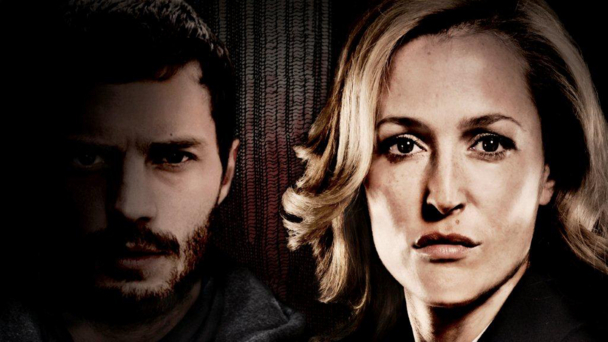
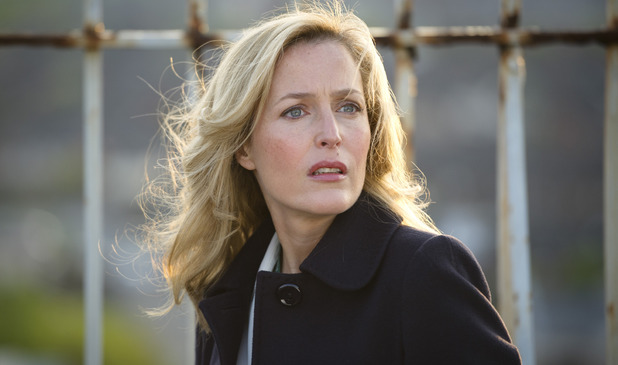
With the news that The Fall has been picked up for a second series, my enthusiasm for this show is at a serious high, aided in no small way by the fact that the third episode was so good, I'd quite happily sit and write an essay about it and the themes it has brought to the fore. I won't, not in this review anyway, but it has impressed me in a way that no police procedural has for quite some time. Rather than a simple whodunnit, with the twists and turns you can spot a mile away, The Fall has opted for the whydunnit approach by following both DSI Stella Gibson (Gillian Anderson) and serial killer Paul Spector (Jamie Dornan) going about their businesses in all their vast differences. Far from just a gimmick, it has proved essential to individualising the show and allowing it to explore more cerebral themes in amongst the autopsies.

The episode began with a lighter atmosphere than we had seen in the previous two episodes, employing some well-pitched gallows humour to allow us to see a little bit more of Gibson. Whip-smart and ready with a handy putdown, Anderson's Gibson has been a great centre to all of the goings-on but I shall return to her shortly. Dornan has been nothing short of a revelation as Spector given that he has very little mainstream acting experience beyond a few episodes in Once Upon A Time and in Sofia Coppola's Marie Antoinette. He may be one of the more outwardly bland serial killers committed to celluloid (especially if you contrast him with Seven's John Doe, who he is starting to have some crossovers with), but Spector is a compelling watch and Dornan captures his two sides brilliantly, without ever losing that edge which makes the character so chilling.

Last week's episode opening was an uncomfortable intercut sequence and these are fast becoming one of the show's most used techniques to connect our two main characters. It displays an assured use of dramatic irony that treads a fine line between rolling our eyes at the obvious points, to becoming so engrossed as to shout at the television when Spector hugged his client. Or was that just me? Personally, I find myself getting worried whenever a brunette in her 30s appears on the screen. The final intercutting sequence as the detectives sat around discussing their profile of the killer whilst Spector haunts the house of his next victim proved the effectiveness of the technique. It provided us some motive exposition for Spector whilst seeing it play out with his movements.

The two intercutting sequences also highlighted one of the key themes that appears to be surfacing as the series progresses and it is one of the more visual aspects that drew my attention first. The majority of the first two episodes seemed to take place in dark, low-lit, moody locations that well befit the dark atmosphere that the series worked hard to create. However, this episode opens in broad daylight and continues to be well-lit for the majority of the action, linking in well with the more humourous aspect of the script that characterised the first few scenes, despite their dark subject matter. As Gibson got closer to working out a profile for the killer and as Spector closed in on his next victim, the scenes got darker until they took place almost entirely at night. A subtle shift, but one that really added to the mood of the third episode.

It is also a theme that appears to be cropping up in the language of the series as well. We see Spector writing in his journals dedicated to his victims about 'the shadow'. Gibson's briefing is full of light-related imagery; she again likens the killer to the dark as he works in the shadows unseen whereas the police operate under the glare of the media. Even the environments in which the two main characters operate are characterised by these differences, for example the sterile, artificially-lit police headquarters where Gibson is most likely to be found in contrast to the muted, domestic tones of Spector's home.

Other binaries were also of the order of the day in this particular episode with plenty of commentary about the way women are portrayed in the media and thought of in society. Cropping up first in the selection of operation names was 'Eden', brushed aside by Gibson because it would ensure that the women were seen to be to blame for the murders. Likewise, in the discussion about whether to call the victim innocent, Gibson observes that the media likes to slot women neatly into the categories of virgin and whore and that it is best not to encourage them. Honestly, these little moments were ones which had me punching the air with perhaps a little too much glee considering what I was watching. Nevertheless, it is this treatment of women, in particular the victims, that should be commended in The Fall.

Linking back to the last episode once again, it featured a large amount of nudity, more than we'd seen on the show so far as Spector washed and cleaned his victim. However, the female body wasn't sexualised in the same way that say, a show like Game of Thrones would have done. Spector even demurely covers her up and this episode revealed that her pregnancy has somehow tainted the murder for him. He likes his victims pure and he is categorising them at the virgin end of the female spectrum. This is clearly going to matter in the series as the religious undertones are slowly coming to the fore; the title itself is an explicit reference to Eve and the repeated mentions of Eden and Genesis cropping up. There is one character who refuses to be defined in any such terms though and in doing so, is fast becoming one of the most intriguing characters on television.

Aided by an impressive performance from Anderson, Stella Gibson is nothing short of a conundrum and I feel like I'm trying to work out her motivations just as much I am with Spector. In an era where it seems that female characters are consistently defined by their home lives (whether they want to be or not), here is a character who doesn't appear to have one. She sleeps out of a hotel or in the office, she seduces men when she feels like it and she is incredibly good at her job which confounds those around her. In one truly amazing exchange, an officer confronts her about her affair with the now-deceased James Olsen and she realises that it is her sexuality that he has a problem with: 'Woman fucks man. Woman - subject. Man - object. That's not so comfortable for you is it?'

It also becomes a wider commentary of the show itself if you remove the sexual activity of the previous quote, it simply becomes 'woman - subject. Man - object'. For Spector, it is the other way around; women are objects for his sexual gratification. However, for the series, Gibson is most definitely the subject hunting down her object which is Spector, the killer. As the police officers working the case observe, he has an issue with women in powerful positions. 'Don't we all' one character wryly observes, but The Fall seems to be reversing this balance. Gibson is the one in power and it is only a matter of time before she succeeds in possessing her object. When she comments that Spector's killing is about 'power and control and the thrill', she could almost be talking about herself. It's a fascinating way of showing this kind of character and I can't wait to see how she develops further.

I've tried not to be too hyperbolic throughout this review as that can often put people off or raise expectations to a stupidly unachievable level, but The Fall really is one of the best shows on television at the moment. I also apologise for it turning into a bit of an essay, despite what I said at the beginning. If you haven't yet caught it, I urge you to head to iPlayer and settle yourself in for the first three episodes. It's as creepy as hell and as bleak as the foggiest of Dickens, but it's something quite special.

- Becky

You can read Becky's review of Episode Two here.

Follow @AssortedBuffery on Twitter
Or like our Facebook page

Sunday, 26 May 2013

FEATURE: Doctor Who - Jen, Becky and the Seventh Series

And here it is, our final instalment of our Bank Holiday Doctor Who special, a discussion of our favourite bits of this series. We've brought you a review of each episode of the seventh series of Doctor Who, complete with Christmas special (you can find them all here) but we thought that, seeing as its a while until the 50th Anniversary and even longer until the eighth, Jen and Becky are going to be looking back at the series as a whole; the highs, the lows, the Rory...


If you're new to our little discussion articles, you can follow who is saying what at the left hand side with our initials. Of course, one day, we're going to confuse you all by changing the system. But that is not this day.

B: I'll kick things off shall I? In the broadest sense, I really liked the seventh series; it had some great individual episodes (as well as some not-so-good ones), but I'm enjoying Matt Smith as the Doctor and he seems to carry me through the worse instalments. His performance has been routinely excellent throughout and I'm loving the smaller moments he has with his companions. There was a really nice chemistry between him, Rory and Amy that had developed in the first half of the series before Christmas, which just made The Angels Take in Manhattan even more tragic.

J: Agreed. I cried for about a week after what I now refer to as 'The Manhattan Incident'. For me, this series has been the one in which I've finally accepted Matt Smith as the Doctor, and stopped wondering how David Tennant would perform in a particular scene. He's really made the role his own, as they say. And he seems to have done it one tear at a time, which is rather unusual for the show and indeed the character. That said, I'd be lying if I said I wasn't beside myself with excitment at the prospect of DT's return in the 50th special. Shame they can't somehow resurrect Rory though...

B: Well you know how I feel about Rory. But I do think Jenna-Louise Coleman has been a fine addition to the TARDIS control room even if I am getting a little annoyed with everyone describing her as feisty as if that is somehow revelatory in a female character. But I digress. I think she has been a great foil for Smith and has a way with Moffat and the other writers' dialogue that completely humanises even the more ridiculous things she has to say in the line of science fiction.

J: I think we all know how you feel about Rory. It's the nose. And ah yes. Feisty Clara. Blackpool's own. I don't know whether it' just because her accent reminds me of home, but I've found her a lot more easy to like than Amy Pond. Who, come to think of it, wasn't exactly a wallflower herself so I'm also clueless as to why fesity seems to have become Clara's personal epithet. I think it's her common sense, to the point nature (you can take the girl out of Lancashire...) which helps with the more baffling bits of dialogue. Ironic really, giving how grand her destiny has turned out to be. 

B: Exactly. And I LOVED how they handled her many appearances through time in The Name of the Doctor. Whilst it hasn't exactly been explained why she was born to save the Doctor (something for the eighth series maybe?), the many Claras actually made logical, coherent sense, which I think we can all agree is remarkably refreshing for a Who finale. It also gave us many a welcome glimpse at Doctors long and not-so-long past. One of the higher points for the series don't you agree?

J: Certainly. I almost thought I'd missed something, it made so much sense. I kept waiting for it twist around and reveal that she was actually The Doctor's long lost Auntie Mildred. I would have liked to have seen her weaved into a few more moments from recent series I think, but it was still very well executed. Do we think her and The Doctor's relationship might develop into something a little more than professional in Series 8? I've heard a few rumours. Especially now that River-Spoliers-Song has now departed back into the confusing web of time from whence she came.


B: I've long thought that there might be something more with the Doctor and Clara. He's very affectionate with her, lots of kisses to the forehead and a lot of hugging. There has been an overabundance with kissing companions since Who returned, but the Ponds were a noticeable shift - I always thought that the Doctor and Amy had chemistry more akin to siblings, but there is definitely another vibe with Clara. I like Coleman and Smith together so I'm not wholly opposed to it, but I do hope that it is something a little more equal, not another Martha-gazing-adoringly-forever at the Doctor. Because that really sucked. So what did we think of the various episodes of Series Seven?

J: Yes the forehead kisses have been very noticeable, along with all the 'my Clara's'. I also half wondered if that's why the TARDIS rejected her a bit. Jealousy? Episodes wise, my personal favourite was The Crimson Horror. Along with Journey to the Centre of the TARDIS. Hide was a bit of a disappointment. I didn't think The Name of the Doctor was as good as The Angels Take Manhattan, in the fullness of honesty, and I also think that all the series breaks we have these days take something of the sense of occasion out of end of series episodes. There'll be a few Doctor Who parties come November, mind.

B: Agreed. I've not liked the way this series has been split up; it felt like it had to pick up momentum all over again after the heartbreaking The Angels Take Manhattan, which was probably one of the best episodes. And I did love The Crimson Horror, it was a great episode, but I think my personal favourite was Hide actually. Although I did have a problem with the ending, I loved the atmosphere it created as it felt like a proper ghost story. Journey to the Centre of the TARDIS had the most wasted potential I think; whilst it was nice to see the library, the swimming pool and a quick glance at the Eye of Harmony, I absolutely hated the ending. Why work on all that character development with Clara if you're not actually going to take it anywhere? Reset buttons are the bane of science fiction and it really, really frustrated me. As you can probably tell.

J: Er yes I can rather. And yes it was the ending of Hide that ruined it for me. Far too much going on, a story within a story within a bizarre heartbroken alien. I'm certainly intrigued to see where we go from here. I notice the two-parters have ceased now, apparently after feedback from Moffat's young children. There's also the potential for several brand new character arcs now we've left a few beyond. Which I'm rather pleased about, as I couldn't stand River. I love the new Scooby Gang though, Madame Vastra, Jenny and Strax are all brilliant characters. Any wild predictions or theories for Series 8? Oh and can we please stop mentioning Manhattan? I've only just come out of therapy.

B: Apologies - consider the Manhattan file closed! I think two-parters need to make a return personally, if only to give some of the stories a little more room to breathe. We've both observed the habit to wrap up things a little too quickly in certain episodes. As for wild predictions and theories, I'm thinking that, post-50th Anniversary episode, we're going to see some interesting developments for The Doctor who will no doubt be dealing with the fallout from it. And perhaps we'll find out who created Clara. Was it River? Was it the Daleks? I personally think they should go for something completely bonkers and have a previous Doctor see the future, realise what the Great Intelligence was going to do, create Clara in a weird timey-wimey sort of way and drop her off in the future for Matt Smith's Doctor to find. And maybe throw in Madame Vestra, Jenny and Strax for good measure. That probably doesn't make any sense. But then again, it probably won't in the show either. How about you? Madder the better.

J: I think the 50th Anniversary Episode will delve a little further into The Doctor's character, which I don't think we've had too much of lately. I actually think Smith's Doctor is more understated than Tennant's, and is often upstaged by his own companions. Fan as I am of Clara, this series has really all been about her, and I'd like more of a Doctor-centric focus, especially as his character has developed so much since the departure of the Ponds. If I could make requests, I'd like to see an episode on the wedding of Vastra and Jenny, a two-parter in which Straz becomnes an unlikely romantic hero and more of The Doctor's pathetic attempts at babysitting. More than that though, after this fairly substantial knock to his invincibility, I'd like Series Eight to involve The Doctor re-writing himself into history after systematically erasing himself in Seven, saving the universe all over again and generally being The Doctor. Which, let's face it, is why we watch it.

B: Definitely. To bring this full circle, Matt Smith has proven time and again that he has the acting chops to handle the weightier dramatic aspects with his curious balance of youth and maturity. I can't wait to see what Moffat has in store for us...

Whatever Series Eight has to offer, you can guarantee we here at Assorted Buffery will be there to watch it. So what do you all think of Series Seven? Agree, disagree, we would both love to know.

- Becky and Jen

You can find Jen's review of The Name of the Doctor here and Becky's retrospective look at Doctor Who (1996) here.

Follow @AssortedBuffery on Twitter
Or like our Facebook page

Saturday, 25 May 2013

TV REVIEW: Doctor Who - The Name of the Doctor


As has been the case with many Moffat –led pivotal Doctor Who finales, ‘The Name of the Doctor’ promised not so much a titbit of information as a huge chunk of home-made baguette, complete with a side order of cheese board and assorted meats. Naturally, as has also frequently been the case, we received nothing of the sort, at least not in terms of the informational morsel we were anticipating. Happily, however, the televisual feast that we did receive, tasted much, much better.
Having received an ill-tasting piece of information herself, the episode opens on Madame Vastra (Neve McIntosh) returning from visiting a convict, urgently needing to psychic link with Jenny (Catrin Stewart), Strax (Dan Starkey) and Clara (Jenna Louise Coleman). The informant told of ‘the Doctor’s biggest secret’, which transpires to be the co-ordinates of his final resting place- his grave at Trenzalore.  Naturally, then, given the magnitude of this information, it isn’t long before- after three everyone, SPOLIERS!- Professor River Song (Alex Kingston) is called upon, to join the psychic- link-anxious-worry-party. It seems the prophecy, "On the fields of Trenzalore, at the fall of the eleventh, when no living creature can speak falsely or fail to answer, a Question will be asked, a question that must never, ever be answered” is to come back to haunt The Doctor. Unfortunately for him, as a time traveller, is grave is somewhere he must never, ever go. Even more unfortunately, after his friends are attacked by the Great Intelligence’s whisper men (Richard E Grant), and with visiting said grave presented as the only way to buy their freedom, he has little choice.
Uncharacteristically, disarmingly frightened of the consequences of his actions, The Doctor must prepare to cross his own timeline, risking his own life, not to mention the majority of time and space, in order to save his friends. Not a bad little premise for a series finale. Add to that the revelation about what made Clara, ‘The Impossible Girl’, quite so impossible, a discovery revealed through a winning combination of poignant scenes and actual real-life, totally not usually how Doctor Who normally operates sense, and you’ve got the makings of a brilliant episode. A memorable performances from Jenna Louise Coleman as the self-sacrificing girl who discovers she was born to save The Doctor, as well as the palpable chemistry between Matt Smith and Alex Kingston in their characters’ final moments together really cemented it as one of the all-time, as it were, greats. They were simply two people saying goodbye, the fact that they are both time travellers on a bizarre unpredictable backwards trajectory didn’t matter a jot.

The whole episode was a welcome departure from the atmosphere of total bafflement usually created by a Doctor Who series finale, with the exception of course of the superb ‘The Angels Take Manhattan’, as everything slotted cosily into place.  That said, however, none of this was a patch on the show’s last 30 seconds, a clip allegedly removed from all press copies of the episode. In an introduction to November’s 50th Anniversary special, we were treated to a sort of icing on the caked dessert, as we caught glimpses of various previous Doctor’s jogging around on their own timelines, going about their business being saved by Clara-Impossible.  Not only that, but a cherry on the top too, as we meet the one version of our beloved hero who broke the rules, the one who doesn’t go by the name of The Doctor, a version to be played by none other than John Hurt. John Hurt!
It seems the 50th special will feature three versions of The Doctor, Matt Smith, David Tennant and John Hurt, as we traverse The Doctor’s timeline back to pre-Eccleston times. I haven’t the foggiest what this will be like, but I think my excitement is best demonstrated by the fact that I know it was exactly 6 months on Thursday, to the date, that we will be finding out.
For what we are about to receive, may we be truly thankful.
I have an inkling we will be.

Jen
Follow @AssortedBuffery on Twitter
Or like our Facebook page.

You can read my own blog here or follow me on twitter here

Friday, 24 May 2013

FEATURE FRIDAY: Doctor Who (1996)

Suffering from TARDIS-related withdrawal symptoms? Already yearning for the 50th Anniversary Special? Well Jen and Becky have decided to do what they can to help by devoting the entire bank holiday weekend to Doctor Who. First up, Becky's look back at the 1996 TV movie, starring Paul McGann as the Eighth Doctor.

Please note, this post will contain spoilers for The Name of the Doctor and also some speculation as a result of this episode. You have been warned!


The first attempt at reviving Doctor Who since its series run ended in 1989, the 1996 version of Doctor Who, starring Paul McGann as the titular Time Lord, was TV movie designed to lead the way into a new, American-produced series. First of all, thank heavens that didn't happen. Second of all, it also isn't wholly terrible and does actually provide a good connecting point in between Classic Who and the current iteration we all know, love and continually shout at. Also, with the ending of The Name of the Doctor sparking all kinds of theories, we've got a feeling here at Assorted Buffery Towers, that Paul McGann's Doctor may somehow be important to the inclusion of Mr Hurt.

Opening with a rather ominous narration from incumbent Doctor McGann, we find out that The Master, rogue Time Lord and general bad 'un, has been tried by the Daleks on Skaro and executed, his remains to be escorted back to Gallifrey by the Doctor. Never a good move that and naturally things go awry and the TARDIS crash lands in San Francisco in 1999 in the middle of a gang war. The Master's liquid snake form escapes the TARDIS and the Doctor is shot and taken to a nearby hospital. 

Of course a man with two hearts does not go unnoticed and his apparent death on the surgery table leads to Dr Grace Holloway (Daphne Ashbrook) asking some awkward questions. One delayed regeneration later, an amnesiac Doctor, now in the form of McGann and in some natty Victorian threads, teams up with a bemused Grace to work out who he is. This startling realisation of his identity returns to him as The Master, now in the form of Eric Roberts, has opened the Eye of Harmony, the power centre of the TARDIS, which spells potential disaster for life, the universe and everything.

Like the most recent iterations of Who, it is action-packed from start to finish and though it begins a relatively calm manner, the narrative soon escalates in to the fast-paced adventure so common in the newer episodes. However, tonally it is all over the place, possibly as a result of its mixed heritage status as an American production of a British property. The shift into a noir style science fiction show in contrast to the quirkiness and whimsy that characterises Who jars and none more so than in between scenes. The quieter ones tend to reflect the eccentricities of the Doctor - his shoes comment with Grace made me giggle - but this doesn't segue well into scenes involving the Action Doctor (no, not the Scott Pilgrim one). 


As a result, the various supporting cast members struggle to hit the right notes depending on what tone the scene is aiming for. Roberts in particular struggles where to pitch his version of The Master, going from T-1000 to Ming the Merciless in just a few short scenes (check out the threads). It doesn't help that John Simm's Master has proved to be an excellent incarnation of the Doctor's nemesis, one who understood the mania and darkness in the character much better. Whereas Simm offered a grim reflection up to the Eleventh Doctor, Roberts chomps through TARDIS scenery and wears funny contact lenses. Menacing isn't the word I'd use to describe him.

Ashbrook's Grace fares a little better, approaching the Doctor with some refreshing cynicism rather than the wide-eyed adoring acceptance that tends to characterise the newer companions. The exchanges between her and McGann strike the right tone throughout the film and provide a solid heart at the centre of it. Not that their relationship was without controversy with the much-discussed kissing that takes place between the two of them. Now with the Doctor locking lips with seemingly every companion bar Rory, it doesn't seem so outlandish, but it must be remembered that prior to this, it was something the Doctor simply didn't do. The new, sexualised tone of Doctor Who began here and arguably, has been a little detrimental to the Doctor's relationship with his companions.

And so we get to McGann. This is his only televised appearance as the Gallifreyan wanderer though he has starred in many fantastic radio productions as the Eighth Doctor. He is the real highlight of this TV movie and though I'm thankful this never did go to a series, it is a shame that we haven't seen more of him on screen. He captures the eccentricities, the humour and the more serious aspects of the Doctor well and copes admirably with the tonal shifts that at times required him to be both Action Doctor and quiet intellectual. He is also granted a good arc over the episode and the amnesiac Doctor idea proves to be a really good device that not only gives existing fans something to root for, but allowing new viewers to get in on the action too. It strips the Doctor of the things that define him (the TARDIS, the sonic screwdriver - thankfully not used as a fix-everything device) and we can watch him claw it back.


The pairing of McGann and Roberts symbolises pretty much everything slightly off about this production; the clash of the old with the new. Just look at the picture on the right to see the marked contrast between the two of them; Roberts looks like he's just walked off the set of a cool 90s action film whilst McGann's wandered in from a quaint British period drama. I know its probably meant to highlight the differences between the two characters, but it never quite works, especially as the Master is supposed to be a darker version of the Doctor. Referring back to John Simm, he was always seen in a suit, like his Tenth Doctor counterpart, David Tennant. It highlighted the parallel and their relationship worked better as a result. Like the two actors, it doesn't seem to be working from the same script, never quite sure whether to produce something dark and edgy, or embrace the quirky and the light-hearted whimsy.

However, whilst McGann performs admirably amidst the production, writer Matthew Jacobs take a few liberties with the source material and offers some interesting and nerdbaiting continuity shifts. The Eye of Harmony, for instance, is supposed to be on Gallifrey (as established in The Deadly Assassin episode in 1976) and not in the heart of the TARDIS. This has since been reworked into the mythos of the current show via the novelisations and fan speculation, but still sticks out a bit like a Sontaran at a peace conference. It also notably cameoed in this year's Journey to the Centre of the TARDIS. Nevertheless, it still demonstrates a certain cavalier attitude to the material that permeates the film, but it is nothing compared to the one that crops up just a few minutes later.

I am, of course, referring to the moment in which The Master reveals that the Doctor is in fact... half human. Now it has been a few years since I last viewed this particular instalment of Doctor Who (I've become much more enthused about it as a show since then) and I had somehow completely managed to erase this particular bit from memory. Because it is stupid. Very stupid. In fact, it is so stupid that it caused me to accidentally choke on the coffee I happened to be drinking at the time in the realisation of how stupid it was. As you can probably tell, I wasn't impressed.

This is primarily because, aside from a plot contrivance, there was little reason for this to actually happen in the episode. Essentially, this entire re-writing of the character exists so that the finale can have two humans in peril in it and are both given something to do, even though the presence of the Master ensures they're in peril and they could have been given something else to do. Could you imagine a revelation like that happening in current Doctor Who? The wrath of Whovians would be so fierce, internet wouldn't be a safe place to go for weeks.

It also smacks of an attempt to make the Doctor more palatable to new audiences; he's half human, so we can totally relate to him now! Except that isn't really the point is it? We love the Doctor precisely because he isn't human, because he possess all of these quirks, this intelligence, this unabashed love of what he does, tinged with the darkness of the responsibility that comes with it. He offers a portal for us as an audience to view humanity in a different light; he is a lens through which we see ourselves . To add this half-human aspect into his character simply doesn't make any sense and takes you right out of the ensuing drama. And that, primarily is the reason that I thanked the heavens that this show didn't get picked up for a series right at the beginning of this post.


It's a good thing because it means we would probably never have got the new run of Who and, flawed and infuriating though it may be, it is also compulsive viewing with a reverence for that which came before. In some ways, this Doctor Who possesses that as well; there are a lot of little affectionate nods to old incarnations, but not interminably so (like say, Star Into Darkness - no I'm not over it yet). My personal favourite is the repeated appearance of jelly babies and McGann's small grin whenever he took out the sweetie bag. It's a neat way of tying in the Eighth Doctor to the wider history of the show.

Speaking of which, I mentioned at the beginning that this article that there would be a little bit of speculation to finish it off. Now, we know from the closing scenes of the last episode that John Hurt is playing the Doctor and the Eleventh Doctor outright states that he is viewing a version of himself but one that did something so heinous he had to renounce the name of Doctor. Now, we all know that there is one Big Bad Thing that the Doctor did, occurring in between McGann's Doctor and Christopher Eccleston as the Ninth Doctor; The Time War. Reportedly his only solution, the Doctor committed a near genocidal act that destroyed both the Daleks and the Time Lords. Now, crucially, we never actually saw McGann regenerate into Eccleston. Could this be the loophole through which Moffat has enthusiastically leaped for the 50th Anniversary Special? McGann has also been remarkably cagey about whether he is returning...

Now Den of Geek have produced this excellent rundown of several theories and include some really rather wonderful spoof Introducing John Hurt pictures. They and their commenters know far more about this than I do and I found their article fascinating. The above paragraph is simply my rather simplistic view of where John Hurt is going to fit in, but they've got various theories going on. It's a great read. 

But, returning to the matter in hand, I enjoyed my trip back in time to this particular incarnation of Who and it does form an excellent midpoint between the two major Who generations. Yes the continuity is a little off and it is tonally as scattered as the Cyberman guarding the Pandorica, but it is a lot of fun whilst its on. McGann proves to be the real highlight and I do hope that he gets to return to the TARDIS on screen at least one more time.

- Becky

Follow @AssortedBuffery on Twitter
Or like our Facebook page.


Thursday, 23 May 2013

TV REVIEW: The Fall - Episode Two


Picking up where last week's excellent first episode left off, The Fall's second instalment begins with what was arguably one of the finest, coldest and downright disturbing moments seen on television for a long time. Once again, parallels are drawn between our two leads, the forthright DSI Stella Gibson (Gillian Anderson) and the methodical serial killer Paul Spector (Jamie Dornan) as they both participated in R-rated late night activities. For Gibson, it's a fling with resident attractive copper DC Olsen (Ben Peel) in a matter-of-fact and perfunctory sex scene that had all the passion of a limp trout. Then, in between, we follow Paul as he bathes and poses his victim, cleaning her bedsheets and painting her nails before quietly vacating the property.

I thought last week's final scenes were about as bad as it was going to get, but I was totally wrong. The opening was just brilliant; played out in almost complete silence, it was chilling in exactly the right way and more than once, I felt I should look away. It was just too uncomfortable. Indeed, that set the tone for the rest of the episode. Like the opener, The Fall was determined to not let you settle into it, not to get comfortable. Each time it felt like you could relax a little, it threw in another shock to jar back out of it again. It's a testament to Alan Cubitt's writing that this doesn't feel forced at all, but rather a natural progression in the show's events.

The first episode mainly concentrated on the two leads, introducing us to their own personal spheres, their ticks and their habits. The second episode then allowed for us to see the wider world in which Gibson and Spector operate, the people they interact with and the events going on in the background. Spending time with characters like Olsen and Paul's wife, Sally-Ann (Bronagh Waugh), gives other actions in the episode more meaning and consequently more impact. I also like the developing sub-plots of police corruption rumbling on and the fact that Belfast is still dealing with various troubles, though not all of the variety you would expect. 

That being said, it is the two leads who continually draw us back in and a sterling job they are doing of it too. As I said last week, Gillian Anderson has the tougher task, keeping our attention as the heroine of the piece. Thankfully, Anderson's a skilled enough actress to carry off the enigma and wonderful frankness that Gibson is imbued with. Like her strangle-happy counterpart, Gibson offers no real reason why she's so determined to solve this case beyond her initial instincts. I'm also very impressed that there has been no desire to give her anything like a back story. 

Dornan is just as good, if not better than Anderson, making the two sides of Spector's character entirely believable. He may be the blandest serial killer out there, but that's the point; Dornan captures the domestic dad versus the killer marvellously. The domestic scenes still prove to be just as jarring as in the first episode; washing his daughter's hair the day after killing someone still proves to be quite the shock, losing nothing in the familiarity of seeing more of these contrasts. I'm still no closer to working out Spector's motivation behind these killings, but then that just makes him all the more chilling. Nothing is more scary than a killer with no motive.

Just from the second episode, I can tell that The Fall is going to be something I watch before going on to view something incredibly cheerful that possibly involves rainbows, sparkles and a frolicking puppy or two. This is no criticism. In fact, The Fall may possibly be one of the best dramas on television at the current moment. It's just so goddamn bleak. 

- Becky

You can read Becky's review of Episode One here.

Follow @AssortedBuffery on Twitter
Or like our Facebook page.