Monday, 31 December 2012

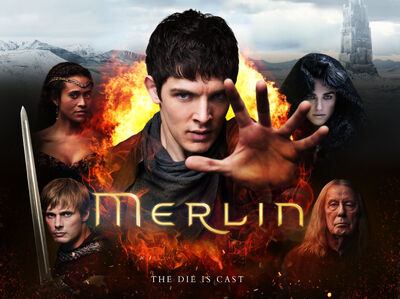
TV REVIEW: Merlin - The Diamond of the Day Parts One & Two

War is declared as Morgana's forces march on Camlann and Arthur and his knights ride out to meet them in order to defend Camelot. Meanwhile, the sorceress has found a way of ridding Merlin of his magic, thus leaving Arthur more vulnerable to attack. And here's your customary spoiler warning.


With Morgana (Katie McGrath) and Mordred (Alexander Vlahos) now allied and the identity of Emrys known as Merlin (Colin Morgan), things are looking dark for Camelot as the Saxons march towards Camelot. Arthur (Bradley James) decides to march for Camlann with his faithful knights at his side, but without Merlin, who has had his magic taken away and must head for the Crystal Cave, the birthplace of magic, in order to get it back. Meanwhile, Gwaine (Eoin Macken) may have given away some of Camelot's secrets and placed Merlin in jeopardy. A face-off with Morgana leaves Merlin trapped as he fights to save Arthur and meet his destiny.

This series of Merlin has been a slightly uneven affair, stalling in a few places but soaring to some really terrific heights in others. If ever there was a finale to reflect the preceding series, then The Diamond of the Day was it. The two episodes promised much; the conclusion of this particular version of the Arthurian legend, the big battle between the forces of good and evil and the moment in which we finally witnessed Arthur finding out the truth about Merlin. All of these things happened, thankfully, but were not necessarily as good as they could have been.

The Battle of Camlann was impressively realised for such a small show, offering up action and violence aplenty for family viewing on a Saturday night. The darker atmosphere of the show has really aided its development and allowed such a grimy battle to take place for the final two episodes. We also got a chance to see what could have been if the knights had been included a little more in the storylines. Eoin Macken's Gwaine has always been the roguish charmer so it came as little surprise that he was won over by Morgana's spy. Macken gave a subtle performance throughout, culminating in his death scene with Tom Hopper's Percival, with whom he had a great, double-act chemistry. It was a shame that we hadn't seen more of the pair since the opening two-parter episodes as they would have rounded out the excellent class well.

Elsewhere, Katie McGrath's Morgana went full evil and proved why she made a much better all-out evil person than a person secretly being evil whilst pretending to be good. If you didn't follow that, basically, I'm really glad that she didn't 'evil smirk' her way through this series. It was also good to see Gwen developing into a queen, though as a small scene reminds us, she has not forgotten how to muck in and get on with work if it needs to be done. Richard Wilson's Gaius also played an integral role in the proceedings, more so than he has been allowed to for the majority of series five. His scene with James' Arthur as he tries to convince the king of Merlin's intentions was quietly played, yet very effective.

Then, there's the conclusion of the legend. One of the most interesting aspects of the series was the way in which it incorporated the existing myths into new and interesting stories. Whilst it took the writers awhile to settle into this, it cannot be denied that we've been presented with some very interesting interpretations. The death of Arthur then, offered even more of this; any Arthurian fan worth their salt knows that the Battle of Camlann is where Arthur bites it at the hand of Mordred. This aspect of the narrative was handled extremely well, particularly Arthur's show of defiance in slaying Mordred almost immediately after being dealt a mortal blow himself. Arthur's attempt to remain standing after being wounded was a great moment for the character, summing up his strength and vulnerability simultaneously.

I was pleased to see that the writers stuck to their guns and actually featured the death of Arthur and his final journey to Avalon as the ending to their series as it had started to look like he might survive. However, this was also one of the worst parts of the show because it left a rather large part of the show's internal logic. Since the first series, both Merlin and the audience have been told that it is Merlin's destiny to save Arthur who will then bring magic back to Camelot. Neither of which happened. Whilst the death of Arthur offered a greater narrative closure in terms of the immediate storyline, in the wider plot, it felt that we, the audience, had been cheated. Although it was hinted that Gwen (Angel Coulby) as Arthur's successor, now knew Merlin's secret and might therefore be more sympathetic to magic in the kingdom, but this was by no means the 'magic returning to Camelot' that we had been promised.


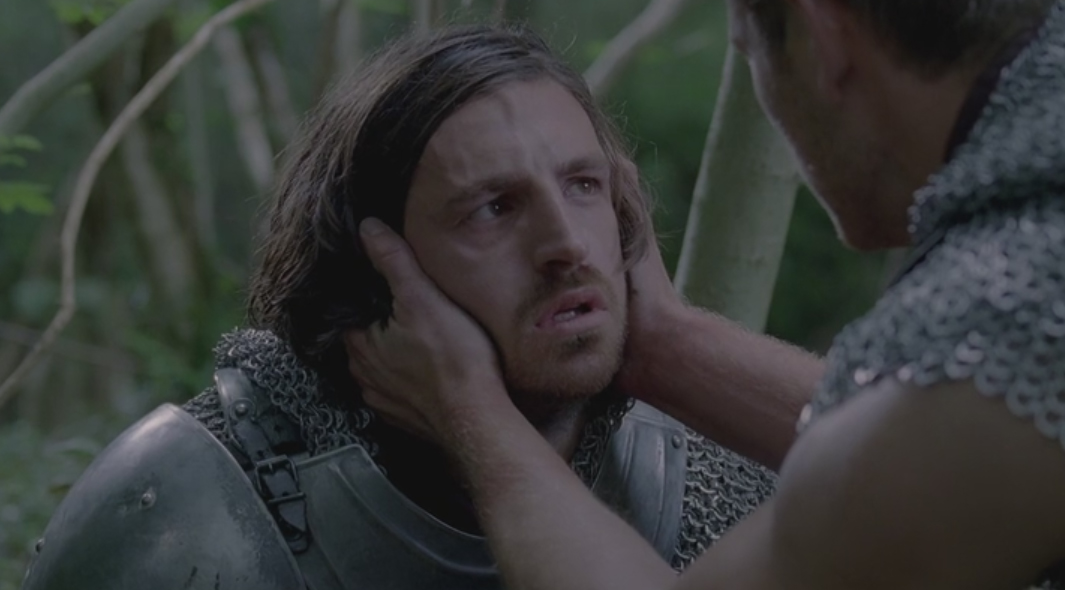
Thankfully, there were two scenes that flew high above the rest of the episodes and highlighted just why I got so involved with this show in the first place. The first, when Merlin revealed that he was a sorcerer to Arthur as the king lay dying, felt like a huge moment of closure for both the main characters and the audience. It was, after all, the moment we had been waiting for since the series began. Morgan and James have consistently been the best actors in the show and once again stole it with two highly emotional performances, with Merlin's relief and Arthur's disappointment both palpable. The second scene was the moment in which Arthur thanked his friend for his continued, and unacknowledged, support, adding even more weight to the parting of the two friends. The relationship between Merlin and Arthur has always been the aspect that the show has got right throughout and it was good to see it get the ending it deserved.

I really, desperately wanted to love this finale, but it felt a little like the writers rushed it all a bit at the end, and forgot a lot of the promises that we had been given as an audience along the way. Despite the fantastic performances from Morgan and James (again), the story did not meet a satisfying and logical conclusion. And they killed Gwaine. They had a lot to do to get me back after that, but sadly, it wasn't quite all I had hoped.

- Becky

Read Becky's review of Merlin - The Drawing of the Dark here.

Follow Becky on Twitter @beckygracelea
Or follow her blog beckygracelea.wordpress.com


TV REVIEW: Downton Abbey - Christmas Special

The Granthams head up to Scotland to visit Rose's parents, but everything is far from idyllic up in the Highlands. Branson is left behind to oversee the running of the house and the remaining servants take advantage of the family not being around. Very major spoilers abound!


Lord and Lady Grantham (Hugh Bonneville and Elizabeth McGovern) travel up to Duneagle in the Highlands to visit the rather hilariously named Shrimpy (Peter Egan) and his wife Susan (Phoebe Nicholls), parents of the wayward Rose (Lily James). Also in the travelling party are a heavily pregnant Mary (Michelle Dockery) and Matthew (Dan Stevens), Edith (Laura Carmichael) with her lovelorn editor in tow, Michael Gregson (Charles Edwards), the Dowager Countess (Maggie Smith) and several servants including Anna (Joanne Froggatt) and Mr Baaates (Brendan Coyle). Back at Downton, a new housemaid Edna (MyAnna Buring) is trying to convince Tom Branson (Allen Leech) that he should be ashamed of his new progression into the family while the other servants prepare to go to the fair. Thomas (Robb James-Collier) finds himself stepping in to defend Jimmy (Ed Speleers) despite the latter trying to avoid him.

Last year's Downton Abbey Christmas Special was very festive and with their engagement, brought joy to the viewers who had shipped Mary and Matthew from the start (and drew weary sighs from those who were just happy for it to be over). This special was considerably less festive and was more of an extension of the third series, following on from the plots established in the final episode, including Branson attempting to fit in with the family, Mary and Matthew trying for a baby and Thomas and Jimmy still reeling from the development of their relationship. From this image alone, we looked like we were going to have the usual Downton scandal:


With so many plot strands on the go and so many people invested in these characters, the festive special should have been action-packed, full of reeling plot developments, inexplicable twists and Maggie Smith's one-liners. It was absent of all these. In the whole 90 minute episode, there was only a good ten minutes where something actually happened. The rest was all furtive glances, limp dialogue and predictable directions for the new series. The entire episode felt like a poorly constructed bridge between three and four; one that was more concerned with setting up a starting block than being an episode in its own right.

There were positives though and a couple of storylines had potential; if you've followed my reviews then you know I'm a big Allen Leech fan and it was great to see him get some scenes to himself that didn't involve being the token outsider. Settling into Downton is a big transition for a character and his development and anxieties felt very real, despite being pushed by a very annoying servant. MyAnna Buring is a good actress, I've liked her in other things, but the character Edna was so irritating that I was really relieved when Mrs Hughes sacked her. Let's just hope she doesn't have a change of heart.

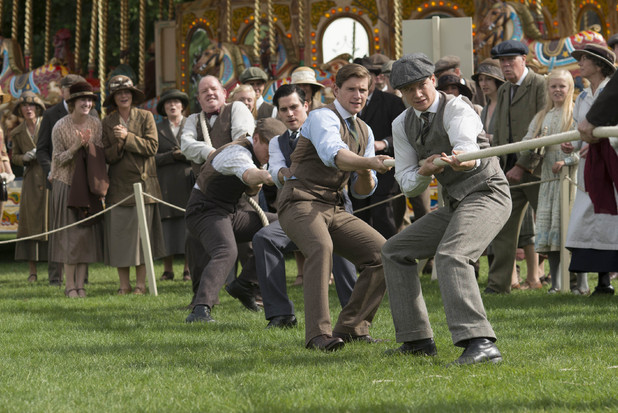
Also, Thomas' development from pantomime villain to a man trying desperately to hide his identity has been well-written and performed beautifully by Rob James-Collier. The character always had the potential to be fairly one-dimensional but since he no longer hangs around O'Brien so much and has become more cautious and fragile since the revelations of last series, he was one of the most interesting characters to watch in this episode. The tug of war was also quite fun.


That being said, it wasn't difficult to stand out in this episode because the rest of it really was quite dull, which is something Downton has never been known for. Even at its most ridiculous and plot-twisty, Downton was always entertaining, whether that came from gasping incredulously at the latest convenient plot twist or laughing at one of Maggie's great one liners. In the last series, the Edith/editor relationship had all the hallmarks of developing into a crazy Jane Eyre-like romance but here was reduced to low-voiced conversations in corners. Let's hope Fellowes gets his Bronte on for next series. This plotline in particular was a good example of the simple fact that Downton seems to have lost its spark in this episode. That is, until the last fifteen minutes or so.

Just in case you missed the first warning, what follows is a MAJOR SPOILER.

Still with me? When Mary declared she would be fine and that going up to Scotland whilst heavily pregnant, you knew something was going to happen. After Lady Sybil's disastrous childbirth, all attention was focused on her. They couldn't possibly kill off another Grantham sister could they? Then the baby was born with no complications and Matthew started making all these declarations about how they were all going to be together forever and thus signed his own death certificate. 

We all knew that Dan Stevens didn't want to return for the fourth series but I must admit, I didn't expect his exit to be just yet, or to be quite so spectacular. Stevens has been a great member of the cast throughout the series' run and it's a shame to see him depart for hopefully bigger and better things. Whether this will detrimentally affect the series remains to be seen but I will definitely miss seeing the developing bromance between Matthew and Branson, it was a thing of beauty. Matthew's death twist was pure Downton, predictable up to a point, completely outlandish and left me sat there speechless as the credits rolled.

Now if the entire episode had managed to capture that same feel, it might have been a lot better. Sure Downton is mocked for its tendency to go from the sublime to the ridiculous in a matter of seconds, but that's what keeps us all watching. In his attempt to set us up for the fourth series, Fellowes seemed to have forgotten that and the result was sadly lacking for this Downton devotee. Let's hope the fourth series fares much better, despite the lack of the ever-charming Matthew.

- Becky

You can read Becky's previous Downton Abbey reviews here.

Follow Becky on Twitter @beckygracelea
Or her blog on beckygracelea.wordpress.com

Thursday, 27 December 2012

TV REVIEW: Doctor Who Christmas Special: The Snowmen


For those of us not overly enamoured with the idea of The Snowman and the Snowdog, there were other snow creatures afoot (adrift?) this Christmas. ‘The Snowmen’, this year’s festive Doctor Who episode, had it all. Scary Christmas monsters, fantastic guest stars, at least half of a sensible plot and it was set in the heart of all things considered by TV land to be appropriately festive – Victorian London.

After an unusual introductory sequence involving a small boy talking to some snow, The Doctor descends on the snowy streets of London, moping about on his own and generally being very Scrooge like, barely showing a cursory interest in Richard E Grant's Dr Simeon and his Great Intelligence institute. Naturally, of all the gin joints in all the world, he happens to walk past the tavern worked in by Jenna Louise Coleman’s Clara, who would have ‘new companion material’ written all over her frock even if we hadn’t already seen her in ‘Asylum of the Daleks’. The two deduce that a nearby snowman has somehow managed to build itself, and must consequently have some sort of intelligent mind. Utterly disinterested in all matters timey-wimey as The Doctor is at this point, he attempts to run away, pursued back to the cloud on which he’s parked the TARDIS by the feisty Clara, who then runs away herself after knocking on his door.

Eventually, and all in the nick of time as usual, The Doctor realises that the Earth is in grave danger from the evil snowmen, and arrives at the house Clara works in as a governess just in time to save the family from a huge, walking ice-cube in the shape of a woman emerging from the garden pond. Battle then ensues, with Clara injured and the Doctor fighting for her, the planet, and above all – Christmas.

Speaking of Clara, I cannot heap enough praise onto Jenna Louise Coleman, and believe me I’ve been trying to for the last couple of days. She’s every bit as fiery as Amy, although without a Rory equivalent in tow, she’s a lot freer to be her own person, a character in her own right rather than a part of a whole. Mind you, the whole itself is worth a mention. The return of Madame Vestra and her wife Jenny not only provides us with some gloriously, hilariously simple Moffat-ian lines such as “Good evening. I am a lizard woman from the dawn of time and this is my wife”, but gives a modern, relevant angle to the story. In fact the theme of old and new ran throughout, with new companion Clara innocently quoting ‘Pond’ as the reason The Doctor should get down from his cloud and save the world, as well as a re-vamped looking Tardis and theme tune managing to look cheerfully retro.

Sad as I am that the flirty Clara doesn’t seem likely to star alongside the equally sexually charged Captain Jack Harkness anytime soon, the chemistry between her and Matt Smith’s Doctor is plenty enough to be going along with. Not since the days of Rose has there been such an obvious attraction between the two characters, and it’s a lot of fun to watch. Now on to his second lot of companions, Smith seems to be more at home in the role than before. Having gone through the rite of passage that all Doctors must, the loss of a companion, the part is now truly his.

That said, The Doctor’s moping at the start of the episode did begin to feel a little too routine. We’ve seen it all before with David Tennant’s Doctor. We know the format. It certainly makes for a good ‘will he step in or won’t he’ plotline, but in terms of character, might it be nice if he coped with things slightly differently for a change? Perhaps The Doctor on the rebound could work? He jumps straight into the TARDIS with another companion and then has a hissy fit and breaks down a few episodes later? Unlikely to catch on as a plot but I thought it worth suggesting.

The only other thing potentially throwing snowy spanners into the works of this Christmas special were the references to Moffat’s other TV franchise, Sherlock. I for one enjoyed The Doctor’s useless attempts at deduction, as well as the suggestion that Vestra and Jenny were the true inspiration for Conan Doyle’s Holmes and Watson, but both references felt a little shoe-horned in. Not necessarily an issue, but when you find yourself wondering whether or not Moffat has linked Sherlock to strong female leads in another show in order to dispel the vicious whisperings that he in fact can’t write strong female leads at all – you realise that you’ve been taken out of the immediacy of the story in front of you. You’ve escaped the escapism. And funny as the references were- that’s not good.

All concerns aside though, this was a fantastically funny and pleasantly scary episode- perfectly placed in the schedules for post-lunch sofa collapse. There’s fun to be had guessing which high profile actor played the part of the snow itself, which took me far longer than it should have to figure out, and Richard E Grant is as much of a joy as ever, especially when he’s being evil. The episode continued the tradition of festive themed monsters, the beasts behind the baubles, as well as setting up the next series’ on going mystery arc, namely, who on Earth or otherwise is Clara/Oswin?

Several critics have pointed out that this episode was unlikely to appeal to the casual Who viewer. Fair point, but I think it more important that it managed to satisfy the dedicated fans whilst still leaving them hungry for more.

Which is not bad going really, considering the majority of the audience were still stuffed full of turkey and roast potatoes at the time.

- Jen

You can read more of Jen's writing here: https://memyselfandtheothers.wordpress.com/

Or you can follow her on twitter here: https://twitter.com/jenniferklarge


Friday, 21 December 2012

FEATURE: A Very Buffy Apocalypse

Well, we all seem to have survived the supposed end of the world... which can only mean one thing: Buffy and the Scooby Gang were on hand to prevent yet another apocalypse. Having to learn the plural of 'apocalypse' pretty damn quickly, Buffy, Giles, Willow, Xander and a whole host of other regulars have faced their fair share of world-enders in their time from trios of demons with bad forehead tattoos to a sisterhood that wanted to open the Hellmouth and bring forth tentacles of doom. In honour of their tireless efforts, in no particular order, I bring you my favourite apocalypse-related episodes of Buffy the Vampire Slayer.


Innocence (Season 2, Episode 14)


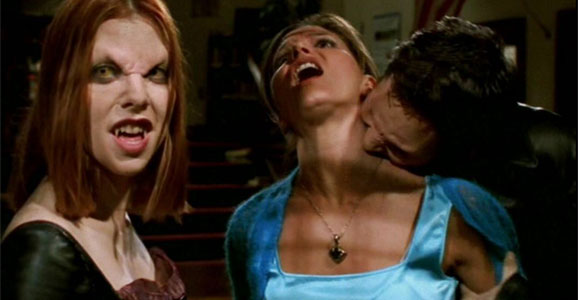
Joss Whedon's intention for the first few seasons was always that demons and vampires should be metaphors for the horrors of high school and Innocence, one of the darkest episodes of the show's run, is perhaps the best example. The second of a two-parter, the first episode Surprise, saw Spike and Dru re-assemble a mostly unkillable demon, The Judge, a being once so powerful that he was only stopped when he was dismembered and his body parts were placed across the world (in the words of Cordelia: 'ew'). Buffy and Angel escape a fierce confrontation and go back to Angel's place where they sleep together for the first time, a momentous occasion for both of them for very different reasons; Buffy loses her virginity while Angel loses his soul and becomes the very extreme version of the post-sex abusive boyfriend. And so Innocence begins.

David Boreanaz woudn't grow into the Angel side of the character until much later when he had his own series but he was brilliant at the Angelus side of things right from the off, portraying instantly the gleeful mania and passion for emotional torture that the world's most brutal vampire is famous for. His scenes with Sarah Michelle Gellar are electric, particularly the scene where Angel (already turned without her knowledge) breaks down Buffy's confidence one insult at a time.

It's the episode in which many a character is forced to grow up and their perceptions are shattered; not only does Buffy see what Angelus really looks like but Willow finds out that current love-of-her-life Xander is making out with Cordelia and Giles sees Jenny's secret identity and discovers that surrogate-daughter Buffy isn't a little girl anymore. It's a big episode for everyone and marks a huge shift in the depth and brilliance of the show. Heartbreaking from start to finish, this is when I really started to care for these characters, tortured by the people they love. Plus, Buffy gets a rocket launcher and kicks Angelus in the nads. What is not to love about that?

Quotage: 

Joyce: What did you do for your birthday?
Buffy: I got older.


Graduation Day Parts One & Two (Season 3, Episodes 21 & 22)


Ok I'm cheating slightly by including both episodes but the two are concerned with the impending doom of the Mayor's ascension. Most Buffy finales deal with a dark apocalypse but this is one of the lightest of the bunch in terms of the material, despite seeing Buffy nearly killing Faith and Angel nearly killing Buffy. It's the last high school-set episode before the gang would depart for UC Sunnydale and marks another big transition - Buffy has to face graduation. The Mayor's big plan has been building since Season 2 (he doesn't appear but is mentioned a lot in terms of strange happenings; a neat bit of foreshadowing there) and throughout Season 3, culminating in his Commencement Address in which he plans to ascend to what is, essentially, a bloody big snake. The effects haven't aged well but hey, who cares?

The final battle between the vampires, big-snake-Mayor and Sunnydale High students is a great set-piece that sees Buffy, Xander and Willow marshall the troupes in one of the only times we actually see non-Scoobies helping the gang out. Then there's the Mayor himself, one of the best villains of the series; polite, intelligent and completely bonkers, he was both terrifying and hilarious in equal measure. We also get the big battle between Buffy and Faith that has been on its way throughout the season, given the added drama of the pair being the only people who could save Angel's life. 

From hereon in, everything changes; the high school setting which worked so well metaphorically is no longer there (and the show sometimes struggles to get that angle back) and it's goodbye to Angel who departs for LA and his very own show. Season 3 is probably the most consistently excellent season of the show's run and the Graduation Day two-parter brings it to a close with a bang. Literally. 

Quotage:

Cordelia: I personally don't think it's possible to come up with a crazier plan.
Oz: We attack the Mayor with hummus.
Cordelia: I stand corrected.

Chosen (Season 7, Episode 22)


Season 7 is, by general consensus, not the best. It suffered from annoying Potentials, endless Buffy speeches and the fact that we all knew it was going to be the end so everything was building to that moment. Joss Whedon came back on board for the finale and thankfully, it managed to bring back everything that made Buffy so great in the first place. Buffy has got the magical scythe she knows she needs for the upcoming end of the world thanks to Angel's help but must face off with the First's representative Caleb. Not to worry though, she manages to split the misogynistic fake-preacher in half, groin upwards. Then it's the final countdown to the big battle against the First and the army of Ubervamps via a complete overhaul of tradition that sees every Potential get their Slayer powers.

Chosen is littered with great moments that remind you why you love the series so much in the first place. Angel returns (involving some wicked jealousy moments from both him and Spike), there's a pre-battle game of Dungeons and Dragons, everyone returns to Sunnydale High for the big battle and, my favourite scene, the original Scoobies, Buffy, Xander, Willow and Giles, stand together and decide what to do tomorrow. It's an echo of the very first apocalypse they faced together way back in Season 1's Prophecy Girl and in both cases, Giles decides that the earth is very much doomed.

Thankfully that's not the case, but it's not without its casualties. One of the most famous tricks in Whedon's arsenal is to kill off characters without the least bit of notice, though it was sort of expected in this episode. Nevertheless, you could never be sure which character was going to make it and even Buffy herself was not safe (she has died twice already after all). Anya meets a sad, sudden end while it is left to Spike to make the ultimate sacrifice for Buffy (though he would later return to bother Angel as a ghost). It's a fitting end to the series, a great tribute to what has gone before and Sunnydale High gets destroyed. Again.

Quotage:

This episode has plenty of fantastic lines but there is no moment greater than Buffy's smile at the very end.

The Wish (Season 3, Episode 9)


This is one of my favourite episodes of Buffy and while it doesn't strictly feature an apocalypse as such, it does feature the end of Buffy's world as we know it. After Cordelia splits up with Xander after illicit Willow kissage, she meets new girl Anya, who is secretly Anyanka, a vengeance demon with the power of granting man-hating-themed wishes. Cordelia wishes us into Bizarro Sunnydale, a world in which Buffy never came to the town. Anyanka gives it the full makeover, creating a nightmarish version of the world we've grown to love; The Master has risen, Xander and Willow are vampires with weird tastes in leather, Angel has been captured and Sunnydale has turned to a dystopic wasteland with fewer humans every day.

This is a fascinating episode for many reasons. I always love an episode that takes characters out of their usual roles and mixes things up a bit and by focusing on Cordelia's dark and twisted consequence, we're offered a glimpse of what might have been. The cast clearly have a lot of fun playing their alternate roles and it's always great to see Mark Metcalf back as The Master. Seeing Buffy as a hard-bitten, scarred and emotionally cut-off young woman offers up a stark 'what might have been' comparison and despite the fact that we know everything will be back to normal somehow by the end, it's horrific to see what happens to the Scooby Gang. Especially as this is the episode where we learn that Nicholas Brendon is a great funny-man. But he really can't do dark and sexy.

Quotage:

Cordelia (on seeing Vamps Willow and Xander kissing): No way! I wish us into Bizarro Land and you guys are still together?!

The Gift (Season 5, Episode 22)


Season 5 is not really high on my 'Best Of' list (despite featuring The Body), but I can't deny that it has a truly excellent, harrowing and tear-filled finale driven by great performances from the cast. The series' 100th episode, The Gift sees Buffy finally face off against the god Glory who has Dawn in her grasp and is making her plans to open a portal to her home dimension, releasing all sorts of beasties into our world. Buffy has to contend with the possibility that she might have to kill Dawn, haunted throughout by the fact that she knows that 'death is her gift'.

Like any big finale, there's the tense build-up to the battle, playing on the human elements of the narrative with perhaps the most heart-breaking being Willow having to deal with Tara and her mental illness. Then there's the fight itself, an impressively-staged showdown on scaffolding as Buffy and Glory fight to get to Dawn. Backing all of it is a terrific score by ever-reliable Christophe Beck, a sorrowful melody that plays when Buffy finally realises why death is her gift and what she must do to stop this particular apocalypse.

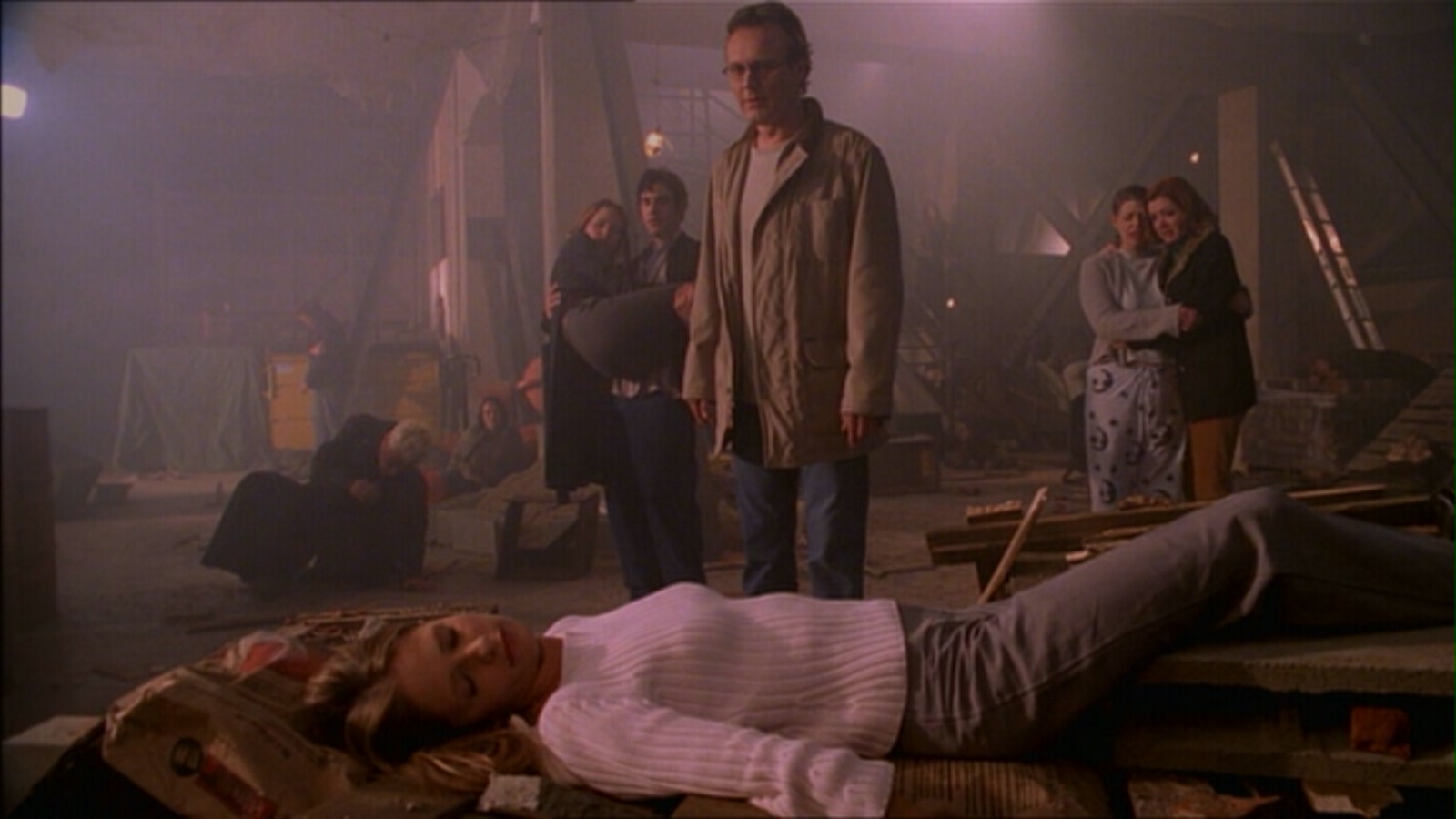
James Marsters frequently gives good performances but this is one of his best, trying valiantly to save Dawn because he made a promise to a lady. The look in his eyes when he's thrown from the scaffolding or his face when he sees Buffy's dead body are some of the saddest moments in a whole episode full of them. If you ever find yourself in need of a good cry and an apocalypse and you've already watched Becoming Part 2 (the one where she kills Angel to stop Alfalfa - I mean Acathla), this is the episode to dig out. And remember, both before and after her death, Buffy saved the world a lot.

Quotage:

Spike: Well, not exactly the St Crispin's Day speech was it?
Giles: We few, we happy few...
Spike: We band of buggered.

Honourable Angel Mention: Not Fade Away (Angel Season 5, Episode 22)


Not Fade Away makes this otherwise-Buffy exclusive list precisely because it's a fantastic apocalypse-themed episode and perhaps one of the best in the Buffyverse. Angel's own series was a much darker being that its big sister show and the members of Angel Investigations faced their own helping of apocalypses over the show's five year run. Continually changing and evolving, Season 5 saw Angel take over the demonic law firm Wolfram & Hart, running it for the senior partners, a move which was a bit odd considering their previous history as nemeses. Sadly, the show was cancelled as it really got going again (the fifth season is one of the best) but Whedon decided to end it on his own terms, much like Angel does when it comes to taking on Wolfram & Hart and their representatives on this universe, the Circle of the Black Thorn.

It's an episode based entirely around the concept of sacrifice, much like Buffy's The Gift, with each character forced to confront that they might not only die in this battle, but lose everything they could possibly gain in the process, particularly Angel. It's a dark episode from start to finish and without the sense of hope that accompanied most Buffy finales. Whereas you usually knew that Buffy would be returning, or at least take the demons with her, Angel & Co. were taking on the biggest, baddest trio there has ever been. And the Wolf, the Ram and the Hart don't really like being slighted.

The main reason this is such a great episode is that there isn't really a massive battle in which everyone gets their heroic moment, but a character study of how each hero faces their impending doom. From the comedy of Spike reading out his poetry (a neat throwback to his flashback in Buffy's Fool For Love), Wesley mourning for the late Fred or Angel seeing his son Connor for potentially the last time, each has their own way of dealing before assassinating their own member of the Black Thorn. And then there's the end. Not everyone makes it to the rendezvous in the alley but then again, none of them expected to, but that's where your big battle is... after the credits; a bold, defiant cliffhanger that works both on the writers' level and at that of the narrative. Angel goes out on a high point, a perfect ending for a brilliant series.

Quotage:

(Last lines)
Spike: And in terms of a plan?
Angel: We fight.
Spike: Bit more specific?
Angel: Well, personally, I kinda wanna slay the dragon. Let's go to work.

So there you have it; six different ways to deal with an apocalypse Buffy style with a little bit of Angel thrown in. The whole Mayan thing really didn't stand a chance.

- Becky

Follow Becky on Twitter @beckygracelea
Or on her blog beckygracelea.wordpress.com

Tuesday, 18 December 2012

FILM REVIEW: The Hobbit: An Unexpected Journey

In a hole in the ground, there lived a hobbit who finds himself swept into an adventure with thirteen dwarves and a wizard, all seeking the lost land of Erebor, taken from them by a fearsome dragon.


Bilbo Baggins (Martin Freeman) finds himself with a wizard (Sir Ian McKellen) and thirteen dwarves on his doorstep, led by the impressive Thorin Oakenshield (Richard Armitage). Seeking to reclaim the lost land of Erebor in the Lonely Mountain from the dragon Smaug (Benedict Cumberbatch), the dwarves enlist Bilbo as a burglar and embark on a quest across Middle Earth that takes in trolls, goblins, a visit to Rivendell and an encounter with Radagast the Brown (Sylvester McCoy) that hints that something evil may be rising in Middle Earth. Bilbo has his own personal encounters too, engaging in a riddle competition with Gollum (Andy Serkis) and finding a small gold ring that carries a mysterious power.

The Hobbit: An Unexpected Journey appears nine years after we last saw Middle Earth on the big screen and has brought along its fair share of baggage. A film that very nearly didn't happen for various reasons, when Peter Jackson announced that The Hobbit was to be screened at 48 frames per second instead of industry standard 24 and then that it was to be three films as opposed to the afore-confirmed two, it's created quite the storm. I didn't see the film in 48fps, just in 3D, so I can't comment as to the effect that the increased frame rate has on the film. I will say though, that the 3D utilised here was the best I've seen, working to enhance the world of Middle Earth rather than detract from it. In fact, it almost made me think that 3D was a good idea. Almost. 

Then there's the issue of The Hobbit becoming a trilogy, despite being only one, quite small book. First of all, let's get the problems out of the way because unfortunately, there are a couple. Nothing major I grant you, but it was inevitable that with the extension into three films, there were going to be some pacing issues. The middle act slows down a little, keen to connect the current Middle Earth events to those of the Lord of the Rings trilogy. The meeting of the White Council, in which Gandalf, Galadriel and Elrond meet with Saruman to discuss a potential rising evil, works well to establish plots of the later trilogy but unfortunately slows its own film down to a snail's pace.

The addition of other material doesn't necessarily always have the same effect. I really enjoyed the inclusion of dwarven history as helped to build a more complete picture of the dwarves' quest, adding an extra dimension to what could just seem like a fun jaunt to Erebor. Then there's the effect it has on the characters in the film, increasing their roles beyond the very brief sketches we get in the novel. It also enhances the relationship between Bilbo and Thorin Oakenshield, rather beautifully summed up in Bilbo's reasonings for remaining to help the dwarves on their quest. 

Now moving swiftly on to the positives, of which there are many. The Dol Guldur sequence with Radagast was a particular favourite of mine, packed full of visual and aural connections to the big brother trilogy and is a perfect example of one of the film's major highlights, the sound and Howard Shore's score. The new material is fantastic stuff, particularly the dwarves' theme which has been in my head ever since that first trailer was released last year and the choral fire-and-brimstone number during the goblin chase really aids the action. Then there's the nods to the LOTR soundtrack; the Shire theme gets a nice twist while the Dol Guldur sequence utilises memory to great effect to really up the chilling atmosphere. Some people may criticise the recycling of the music as unimaginative but it was one of my favourite aspects of The Hobbit and was probably the most effective method, for me, of linking the two trilogies completely.

An Unexpected Journey, despite its darker moments, operates a whole shade lighter than LOTR, embracing the comedic and the ridiculous moments in its source novel. The dwarves are a riot from the moment they appear, handling the comedy (and the inevitable singing) with aplomb though a couple of lines do grate a little. The thirteen actors have an easy chemistry though some do get more the spotlight than others. Gaining a nice Legolas-style transformation is Aidan Turner's Kili, given far more to do as one of the youngest and most adventurous dwarves, turning in a nice performance that balances both naivety and bravado. James Nesbitt's Bofur and Ken Stott's Balin both handle the kindly wise men roles well while Richard Armitage gives good Aragorn as the displaced leader of the troupe, destined to lead his people home.


Despite the strong support, there are still three performances in The Hobbit that stand out from the rest of the cast. Andy Serkis gets back in to the motion capture suit that made his name and brings back everyone's favourite jewellery-addict. It's a virtuoso performance that flits back between the two personalities of Smeagol and Gollum with ease, treading the fine line between the inherent tragedy and comedy of the character. Sir Ian McKellan's Gandalf is another highlight; a complete badass in the goblin scenes and the only one in Middle Earth who actually thinks something bad is about to go down. His flicker of recognition when Bilbo pockets the Ring is subtle, yet mightily effective.

Then there's Martin Freeman, the strong centre of the film who gives a career-best as Bilbo Baggins, presenting a multi-layered hobbit who has yet to achieve his true potential. Freeman naturally excels in the comedy scenes, even if he does play the first few scenes as a pointy-eared Arthur Dent (though the two characters have a fair amount in common) but it is in the later stages of the film, as Bilbo discovers his capacity for bravery and adventure that Freeman really excels. 

Whilst I still remain sceptical as to whether The Hobbit Trilogy will actually work as such, I was delighted by this first return to Middle Earth with its great sense of fun and some stunning set pieces. I'm already planning a return visit and may have to venture out to find a 48fps screening, just to see what all the fuss is about.

****

- Becky

You can follow Becky on Twitter @beckygracelea
Or follow her blog beckygracelea@wordpress.com

Sunday, 16 December 2012

TV REVIEW: Merlin - The Drawing of The Dark

Gwen ceases to be a puppet, Merlin must protect his identity and Mordred is finally given something to do as he must choose between his love for a Druid girl and his loyalty to Arthur; the path he takes will be instrumental in deciding Camelot's fate.


As I have missed my reviews for With All My Heart and The Kindness of Strangers, I shall give you my thoughts on them here, before moving on to The Drawing of the Dark which was possibly one of the best episodes of this series. With All My Heart saw the culmination of Gwen's plot, freeing her from Morgana's grasp and returning her to her one true love. It was, in comparison, a relatively light episode, embracing the comedic as Arthur and Merlin embark on a quest to save Gwen, the funniest moment of which was Merlin appearing in drag to play a rather camp, batty sorceress. And, shock horror, Mordred revealed he could do magic in a fierce confrontation with Morgana that further obfuscates the Druid's motives when it comes to Arthur. 

While the climax of the episode was over-egged and a little sappy, the performances of Angel Coulby and Bradley James sold it. I've never been completely convinced by their relationship as the chemistry between the pair has been virtually non-existant. Nevertheless, it was good to see them back together and with an interesting warning from Old Woman Merlin about the positives that magic can bring. The Kindness of Strangers was another great episode as Morgana edged slowly towards discovering the identity and location of the mysterious Emrys. This episode was predominantly Merlin based and all the better for it. We often see Arthur having to deal with the responsibility of a position in power, but it is easy to forget that Merlin is also placed in that space, a fact highlighted brilliantly here by Finna, the Druid seeking to save her master. Colin Morgan's conflict throughout the episode, particularly at the moment of Finna's self-sacrifice was extremely well done and the scene where he was on his own on the roof highlighted his personal torment.

The Drawing of the Dark, then, had a tough act to follow and was in danger of slowing down the pace that Kindness of Strangers had set in motion. Rather than continue with Morgana's pursuit of Emrys, the writers decided to change tack and focus on Mordred instead. After a confrontation in the woods, a young Druid girl is injured, someone who Mordred (Alexander Vhalos) has known for most of his life. Merlin (Colin Morgan) is still ever-suspicious and accuses Mordred of helping her, threatening to go to Arthur (Bradley James) and report the knight's activities. However, Arthur's tracking skills help him to track down Kara and he captures her, sentencing her to death. Mordred finds himself divided between his two loyalties and after Arthur refuses to change the sentence, goes against his King in order to save Kara. Unfortunately, not everything goes to plan and an angry and grieving Mordred heads for Morgana's fortress with news of the identity of Emrys.

There are now only two episodes left of this final series of Merlin and the tension has been ramped up most effectively. We've been warned for the entire episode run that Mordred is BAD and is key to Arthur's downfall but unfortunately, he's not really done a huge amount. Thankfully, this episode goes some way to repair that damage and has a great central performance from Alexander Vhalos as the raging Druid. Vhalos must be commended for his acting throughout the series actually, playing Mordred completely ambiguously so that even though those of us who knew the mythology could never be quite sure what he was up to. 

One thing that has also been completely consistent throughout Merlin in its entirety is just how stupid Arthur is. And I'm not talking conceivably missing things because he's being a king, but downright, blind-as-a-bat stupid. A case in point was obvious in this episode when Mordred appears to 'apologise', looking as if he could quite happily beat Arthur to death with a wooden spoon and Arthur simply sits back and goes 'oh I knew he'd come around'. Obviously, Arthur being completely unaware of Merlin's magic is a key part to their relationship dynamic but I do think it would have been an interesting plot-line to observe over multiple episodes, rather than perhaps just in the finale. Then again, it may be that Arthur never actually finds out, though I'm fairly certain that I wouldn't be alone in hoping that that doesn't happen.

We've only got two episodes left now and with Morgana knowing who Emrys really is, the stage is set for a truly explosive and no doubt, heartbreaking finale.

- Becky

You can read Becky's review of The Hollow Queen here.

Follow Becky on Twitter @beckygracelea
Or on her blog beckygracelea.wordpress.com