Previously on Angel: The gang are working LA to fight demonic crime and help the helpless. In the process, they find themselves on the wrong side of a bunch of lawyers determined to bring Angel down, resurrecting Darla as part of their plan. Angel has formed an unlikely alliance with a vampire hunter named Gunn.
Since the explosion that destroyed their offices last season, Angel Investigations has been working out of Cordelia's apartment, complete with assistance from Phantom Dennis who has been very keen to help. When Cordy has a vision of a horrific monster, Angel goes on the hunt to track it down, but discovers that, when he kills it, it's not an evil demon. It's protecting a young pregnant woman whose fate is to be decided by a mystical tribunal and Angel just killed her champion. Wracked with guilt, Angel sets about trying to help, taking on the role of protector himself in order to save the young woman and right the wrong he committed.
If ever there was an episode that functions as a microcosm of Angel's ongoing mission, then Judgment is it, boiling down to Angel kills someone and then has to atone for it. One thing Whedon shows (and films) have always excelled at is the reintroduction of the show's MO and key themes, as well as sometimes expanding the world beyond what we're used to. After the Shanshu Prophecy revealed that he will become human again once he achieves his redemption, Angel's been going after the demons in LA hard and fast, but quickly learns over the course of the episode that this isn't about keeping score, but doing the right thing. We're introduced to The Host and his sanctuary nightclub, swiftly confirming the idea that not all demons are evil and that safe places exist within the downtown area.
Within just a few scenes, Angel has reasserted everything we know, reiterated Angel's ongoing quest for redemption and widened the world out to explore something more in how the demon world works. Lorne's introduction and narration is a key part of that, reminding us all of the kind of city LA is in this world (and singing Gloria Gaynor is a cracking joke). Likewise, Angel, Wes and Cordy interrupting the sacrifice in the gym swiftly asserts their respective roles. It's an astonishing bit of exposition that never feels like it, but instead feels like we're cosying back down with a few friends we haven't seen for a while.
Judgment also contains two of the most memorable images of the series' run. The first is David Boreanaz absolutely slaughtering 'Mandy' in order to get information out of Lorne and admitting he's a fan of Barry Manilow's hit because he thinks it's pretty. Then, there's the big joust itself. I've only seen this episode once prior to this rewatch viewing, but the sight of Angel, on a horse and kitted out like a Knight of the Round Table on an LA street is one so incongruous that it sticks like glue in the memory. Not many shows could pull of that kind of image.
The last scene with Faith is a lovely moment to end on. She and Angel share their respective roads to redemption and support each other accordingly, a nice continuation of the relationship that was touched upon back in the third season of Buffy and cemented in Angel's first season. It offers up a different, more vulnerable dynamic to Angel's character that isn't often seen in his more leadership role with the Angel Investigations crew. It fits nicely into the undercurrent of the episode, around second chances and the ability to change your nature and go against it.
A strong return then for Angel in the second season. I didn't even touch on Wolfram & Hart, but their Darla plan is already rumbling along nicely in the background. Now, if you don't mind, I need to go and listen to something catchy to get that damn 'Mandy' out of my head.
Quote of the Week:
Angel: There are three things I don't do; tan, date, or sing in public.
Let's Get Trivial: The closing credits feature outtakes from Angel's hilarious performance of 'Mandy'; stay to the very end post "Grrr, Argh" to hear David Boreanaz's Elvis impersonation: "Thank you, thank you very much."
LA Who's Who: The late Andy Hallett joins Angel's revolving cast of regulars as The Host, later known as Lorne. J. August Richards is bumped up to series regular and Eliza Dushku makes a quick appearance as Faith, her name hidden in the closing credits rather than the opening ones to keep the surprise.
- Becky
You can check out Becky's look at previous episode, To Shanshu in LA, here.
Follow @AssortedBuffery on Twitter
Or like our Facebook page
Tuesday, 31 May 2016
TV REVIEW: Game of Thrones - Blood of my Blood
Spoilers...
Sometimes you just need to slow down, especially considering that this season so far has been a mile a minute. The world of Westeros is turning like it's had several grams of speed, so we needed to stop and reflect, and Blood of my Blood gave us that. This was an episode that had no Jon, no Sansa, no Tyrion, but looked at the other factors either in play now or soon to be.
At King's Landing, there was a surprising outcome that stopped Margaery's walk of atonement, as she appears to have not only joined up with the High Sparrow but also convinced Tommen to do the same, deciding to bring together the crown and the faith. It's a moment that stopped bloodshed, at least for the time being, although Jaime and Cersei are still being their boring old "ooh we'll destroy our enemies" selves. But there's an interesting line here that also links in with the ending, which shows the schism between those still playing the game for the Iron Throne, and those who realise that winter is coming.
Sam and Gilly (and little Sam) made it back to the Tarly home, only for father of the year elect Randyll Tarly to go off at Gilly and his hatred of all wildlings at dinner, which caused Sam to steal his sword (the wonderfully named Heartsbane) and jog off to Oldtown for maester training. I love the way the show (and book) looks at parental units and the influence of them, for good and for bad. And while Bran doesn't have his parents anymore, the closest thing he had appeared this week with the sight of uncle Benjen, coming in heroically to slay a bunch of wights. It was a great moment and I knew within a second that it was him (well sort of - he's kind of undead now), and I guess Bran's visions maybe weren't just building up to R+L=J.
Bran had a quick vision, which went all over time, but interestingly featured the Mad KIng Aerys saying "burn them all". It's hard to ignore this and his parental influence with the episode's end, which saw Drogon return to Dany and a paraphrase of Khal Drogo's speech from A Golden Crown in season one where he said he would take the throne and ride across the salt water in wooden horses. It was another triumphant Dany ending, with her ready to take her Khalasar to take the Iron Throne, but let's also remember Khal Drogo was a barbarian who was ready to have his troops rape every woman in Westeros while general pillaging and so forth. Here we have Dany ready to take deadly fire to those who would stand in her way, while Westeros is about to be hit by the white walkers. The fire versus ice thing is obvious, but who knows what Dany will do when she finds out no one really cares about the throne right now. Or will her parentage make her the "mad queen"?
And with another excellent episode, everything is set up nicely for some big action. Riverrun has been taken by the Blackfish, so Jaime (no longer part of the Kingsguard) is being sent to deal with him. Who knows what will happen when Jon and the wildlings start up, and will Jaime actually see what's going on in the North and see the actual cause that needs to be fought for?
Probably not, but stranger things have happened.
- Charlie
You can read Charlie's look at previous episode, The Door, here.
Follow @AssortedBuffery on Twitter
Or like our Facebook page
Wednesday, 25 May 2016
FEATURE: Buffy the Vampire Slayer - Buffy vs. Dracula
Previously on Buffy the Vampire Slayer: Buffy, Willow, Xander and Giles combined magically to defeat Adam and take down the Initiative, but it wasn't without cost as the vengeful spirit of the First Slayer rose up to kill them in their dreams. Buffy's dream came with a lot of dark warnings.
Buffy's on the prowl for vampires, turning to hunting rather than simple patrolling. On one such hunt, she meets a tall, dark and handsome vampire that isn't Angel. He's got a lilty accent, mysterious ways of speaking and a big ole cape. He's freakin' Dracula. That's right. The Count himself is in town and desires Buffy, preying on her and intent on turning her into a bride. Not only is Buffy enthralled, so too is Xander as one of his minions. It's up to the rest of the gang to disrupt Dracula's plans before it's too late, but all of them underestimate his power and Buffy's own strength.
I do love this episode. As both a Dracula and a Buffy fan, it ticks a lot of boxes for me from the schlocky tone to the Stoker references to Marti Noxon in writing duties. It's a very funny episode, with each character getting a little moment to shine within it; Riley busting out the "you're under the thrall of the Dark Prince!", Anya's fangirl fawning over the undead superstar, Giles tangling with the three sisters and Spike's grudge all spark brilliantly. It's Xander though who steals the show here as Nicholas Brendon gets to do his finest Renfield impression, right down to the sychophantic epithets and bug eating (I couldn't pick a best Xander quote for Quote of the Week so you get three).
Buffy was always one of the most self-aware shows around, but Noxon clearly relishes the opportunity to play with that in this episode. Bringing in Dracula is no mean feat, but she's aware of her genre savvy audience and rather than using it to fill the episode with foreboding, she messes about with the familiar for comedic effect. One of my favourite moments is Riley commenting on the fact that he's never noticed "a great honking castle" in Sunnydale, a nod to the fact that it starts off in the pilot as a one-Starbucks town, but is slowly revealed to have an entire university campus just tucked away somewhere. And now a castle, because obviously.
Cleverly, the episode is used to keep laying the foundations of Buffy's self-discovery, the one that sort of began back in Restless. Dracula echoes Tara's line "you think you know what you are... what's to come... you haven't even begun" hinting at the deep dark mystery at the heart of being a Slayer. Though it will be explored considerably throughout the fifth season, it will also continue into the seventh with the Potentials and Buffy's ultimate battle tactic in defeating The First. Here, it's merely suggestion, confirmed by her heartwarming scene with Giles at the end in which she asks him to become her unofficial Watcher again.
There's a couple more key moments in the episode and I'll get to the 'big' one shortly, but first of all, Riley's continuing downward spiral into Jealous, Masculinity-So-Fragile Douchebag. I think I glossed over much of it in this episode because I was still a fan of the fourth season version of his character. I'm a lot less kind now. He's just a dick. An important one in terms of the various themes that the show explores in relation to masculinity and feminism, but a dick nonetheless. Then, of course, there's the big Dawn reveal. I remember this absolutely flooring me the first time I saw it. It doesn't pack quite the same punch now, but you've got to admire the balls of a show who can pull off the kind of history retcon that we'll soon see.
Buffy vs. Dracula might not rank highly in many people's lists of greatest Buffy episodes. As a regular standalone, it's a solid affair, but as a season opener, it's probably the best of the bunch. It's a "wouldn't it be cool if..." premise that pays off in spades and also sets a lot up for the season to come.
Quote[s] of the Week:
Willow: I think we have Dracula factoids.
Xander: Like any of that's enough to fight the Dark Master...bater.
[Later]
Xander: I wouldn't jump to any conclusions about the Unholy Prince...bater.
Xander: Master, I deliver the Slayer, she who you most desire... Sorry, whom.
Xander: You know what? I'm sick of this crap. I'm sick of being the guy who eats insects and gets the funny syphilis. As of this moment, it's over. I'm finished being everybody's butt monkey.
Buffy: Check. No more butt monkey.
Inventive Kill: Buffy stakes Dracula not once, but twice. Not really effective as he'll later appear in the Drew Goddard story, Antique, but she does get to say that she "eurotrashed" him.
Let's Get Trivial: Dracula wasn't originally set to appear in this episode, according to writer Marti Noxon, who had written in just another cool vampire for the role and comparing him to Dracula a lot. Joss Whedon then asked "why not Dracula?" pointing out that Stoker's legendary character was publc domain and therefore available.
Sunnydale Who's Who: Apparently, it was Sarah Michelle Gellar's husband, Freddie Prinze Jr, lined up to play Dracula, but the role went to Rudolf Martin who had previously played SMG's love interest on All My Children.
- Becky
You can read Becky's look at previous episode, Restless, here.
Follow @AssortedBuffery on Twitter
Or like our Facebook page
FEATURE: The UK Film Blogs Charter
For those of you on Twitter, you may have seen a note on our profile to indicate that we are part of the UK Film Blogs network, one of its founder members in fact. And "what is that?!" we hear you cry. It's a short tale. A tale of a group of writers with blogs of various sizes.
It all started with the idea of having one place through which to share the fantastic work that goes on by film enthusiasts on their blogs or websites, but that sometimes gets lost amongst the plethora of movie writing elsewhere. We're a loose collective of writers with the combined goal across our various specialisms of ensuring our voices are heard just that little bit more out there in the world. We also all have similar ideas of the kind of work we want to produce, the standards we want to adhere to and indeed aspire to.
So, we wrote them down. And here it is, looking all swish. The UK Film Blogs Charter:
In the words of Captain Barbossa, they're more guidelines than actual rules. We aren't going to chase anyone with a stick if they happen to ignore one of them (it's far more likely to be a good old British tut), but it's something to bear in mind when we're producing the work that we want to share with you all. Because, after everything, we would be nothing without our readers and we value both your trust and your time.
If you would like to find out more about the UK Film Blogs Network, you can drop us a line via our Twitter account @UKFilmBlogs or on Facebook - you should probably give us a follow too. The feed is the fastest place to get a tonne of great writing on a wide variety of topics. And we crop up there occasionally too.
- The Assorted Buffs
Follow @AssortedBuffery on Twitter
Or like our Facebook page

Monday, 23 May 2016
TV REVIEW: Game of Thrones - The Door
Spoilers...
With the eventual denouement seemingly edging closer, it seems all bets are off concerning character survival, something which was underlined this week with the heartbreaking death of a fan favourite. It was a powerful ending to the episode, and the ripples will be felt in more ways than one.
But first, an important meeting between Sansa and Littlefinger (with Brienne in tow), where Sansa beautifully called him out for selling her to Ramsay and her making it explicitly clear what he did to her - "he knew he needed my face so he left that, but he committed horrors to the rest of me" (a paraphrase, but you get the idea). Baelish was in begging mode, but Sansa would not accept his please to allow her to have the army of the Vale, but cleverly keeping information from him for her own use. It turns out Brynden the Blackfish (hooray!) has been gathering forces to rally to the Stark cause, and with many other houses joining Bolton, they need all the help they can get.
Arya's story continues to make me sad, with her being given an assignment to assassinate an actress. No ordinary actress however; she is actually playing Cersei in a comedy dramatisation of the first couple of seasons, with Richard E. Grant as Robert Baratheon and the amazing Kevin Eldon as a supremely dimwitted Ned Stark. Arya is forced to watch this while in recon mode, and it's a heartwrenching moment, not least because she's seeing these events replayed but because it reminds her of her family in a time where she's trying to forget to be Arya Stark. And she may not be her, but I still want her to be, to fight with her sister and brother (half-brother).
In Mereen, Tyrion and Varys met up with Kinvana, another red priestess who believes Dany is the promised one. She agreed to help spread the word of Dany's involvement in the current state of peace, but had a lovely spar with Varys, who brought up Melisandre's role in Stannis' downfall. But it turns out she knows a lot, especially about Varys, and he seemed surprisingly unnerved considering his usual constitution. In Vaes Dothrak we saw a probable farewell to another character, as Jorah revealed his greyscale to a distraught Dany. She ordered him to find a cure and return when he did, but it felt more like an excuse for not saying goodbye, almost like an honourable discharge. Will we ever see Jorah again?
The Greyjoy story took an interesting turn at the Kingsmoot, where Euron won the salt throne thanks to a plan to meet up with Dany and offer her support and his fleet. Yara wasn't too happy about this, so scarpered with all the good ships, probably a good idea since Euron's post coronation words were "Where are my niece and nephew? Let's go murder them."
And then it came to Bran, the most consistently interesting story that here took an even more intriguing turn, with lots to unpack. Vision questing all over the place, he discovered that the children of the forest created the white walkers to protect their world against man, and went on a solo warg only to find himself in front of the Night's King. Unfortunately, he grabbed Bran and left his mark on him, allowing him to lead his army straight to the raven's lair, resulting in a fantastic action sequence reminiscent of Aliens, with a child of the forest doing a straight Vasquez to save an escaping Bran, Meera, and Hodor.
Hodor. Hodor. Poor Hodor. What a tragedy. In order to grab Bran to escape, Hodor needed a helping hand, but Bran was deep in a vision at Winterfell, seeing Ned sent to the Vale. But while Meera was able to get through to Bran, he didn't wake up, so warged into Hodor while being back in the past. While this was happening, we saw past Hodor drop to the ground in warg mode, and when they got out of the tree, Hodor needed to stop the remaining wight horde. Meera's words "hold the door" echoed through time, and were repeated by past Hodor to a point where they stopped being the phrase and simply became "Hodor". Thus we had an origin story and a death scene simoultaneously, but a heroic yet tragic ending for Hodor.
Bran's actions introduce a new dimension, something only hinted at previously, namely being able to affect the future through the past. It remains to be seen just exactly how this will come in to play from here on, but it was a fascinating cap to a great episode. There was excellent action, with a wonderful display of actual magic of a kind, with the children of the forest versus the white walkers (fire versus ice), as well as character moments like Sansa standing up to Littlefinger. But still no Lyanna - hopefully with the season at the halfway point they won't wait until the end to return to the Tower of Joy, but there's one question - will Bran be able to have the visions without the Raven?
Hodor, Hodor. Hodor.
But first, an important meeting between Sansa and Littlefinger (with Brienne in tow), where Sansa beautifully called him out for selling her to Ramsay and her making it explicitly clear what he did to her - "he knew he needed my face so he left that, but he committed horrors to the rest of me" (a paraphrase, but you get the idea). Baelish was in begging mode, but Sansa would not accept his please to allow her to have the army of the Vale, but cleverly keeping information from him for her own use. It turns out Brynden the Blackfish (hooray!) has been gathering forces to rally to the Stark cause, and with many other houses joining Bolton, they need all the help they can get.
Arya's story continues to make me sad, with her being given an assignment to assassinate an actress. No ordinary actress however; she is actually playing Cersei in a comedy dramatisation of the first couple of seasons, with Richard E. Grant as Robert Baratheon and the amazing Kevin Eldon as a supremely dimwitted Ned Stark. Arya is forced to watch this while in recon mode, and it's a heartwrenching moment, not least because she's seeing these events replayed but because it reminds her of her family in a time where she's trying to forget to be Arya Stark. And she may not be her, but I still want her to be, to fight with her sister and brother (half-brother).
In Mereen, Tyrion and Varys met up with Kinvana, another red priestess who believes Dany is the promised one. She agreed to help spread the word of Dany's involvement in the current state of peace, but had a lovely spar with Varys, who brought up Melisandre's role in Stannis' downfall. But it turns out she knows a lot, especially about Varys, and he seemed surprisingly unnerved considering his usual constitution. In Vaes Dothrak we saw a probable farewell to another character, as Jorah revealed his greyscale to a distraught Dany. She ordered him to find a cure and return when he did, but it felt more like an excuse for not saying goodbye, almost like an honourable discharge. Will we ever see Jorah again?
The Greyjoy story took an interesting turn at the Kingsmoot, where Euron won the salt throne thanks to a plan to meet up with Dany and offer her support and his fleet. Yara wasn't too happy about this, so scarpered with all the good ships, probably a good idea since Euron's post coronation words were "Where are my niece and nephew? Let's go murder them."
And then it came to Bran, the most consistently interesting story that here took an even more intriguing turn, with lots to unpack. Vision questing all over the place, he discovered that the children of the forest created the white walkers to protect their world against man, and went on a solo warg only to find himself in front of the Night's King. Unfortunately, he grabbed Bran and left his mark on him, allowing him to lead his army straight to the raven's lair, resulting in a fantastic action sequence reminiscent of Aliens, with a child of the forest doing a straight Vasquez to save an escaping Bran, Meera, and Hodor.
Hodor. Hodor. Poor Hodor. What a tragedy. In order to grab Bran to escape, Hodor needed a helping hand, but Bran was deep in a vision at Winterfell, seeing Ned sent to the Vale. But while Meera was able to get through to Bran, he didn't wake up, so warged into Hodor while being back in the past. While this was happening, we saw past Hodor drop to the ground in warg mode, and when they got out of the tree, Hodor needed to stop the remaining wight horde. Meera's words "hold the door" echoed through time, and were repeated by past Hodor to a point where they stopped being the phrase and simply became "Hodor". Thus we had an origin story and a death scene simoultaneously, but a heroic yet tragic ending for Hodor.
Bran's actions introduce a new dimension, something only hinted at previously, namely being able to affect the future through the past. It remains to be seen just exactly how this will come in to play from here on, but it was a fascinating cap to a great episode. There was excellent action, with a wonderful display of actual magic of a kind, with the children of the forest versus the white walkers (fire versus ice), as well as character moments like Sansa standing up to Littlefinger. But still no Lyanna - hopefully with the season at the halfway point they won't wait until the end to return to the Tower of Joy, but there's one question - will Bran be able to have the visions without the Raven?
Hodor, Hodor. Hodor.
- Charlie
You can read Charlie's look at previous episode, Book of the Stranger, here.
Follow @AssortedBuffery on Twitter
Or like our Facebook page
FEATURE: Angel - To Shanshu in LA
Previously on Angel: During a daring raid on Wolfram & Hart with the help of Lindsey McDonald, Angel grabs a scroll for no discernible reason. Meanwhile, Lindsey had the opportunity to leave his employers alive, but instead opted for a considerable raise.
Wesley continues to work on the prophecy that Angel brought back with him from Wolfram & Hart and reveals that it is possibly fated for Angel to die. Rather than worry about it, Angel simply carries on with his usual occupation of saving people. However, the lawyers have a plan on the horizon, something called 'The Raising' and summon a big bad wormy dude to take care of Angel. When he promises to strip Angel of his connection to the Powers That Be, he really goes to town and Wesley and Cordelia's lives hang in the balance.
As finales go, To Shanshu in LA is not your typical, but then, the first season hasn't been particularly typical at any point. There's no real Big Bad to rally against, nor is there a discernible apocalypse to stop. Instead, the focus is on how Angel has now become reliant on his team, having moved from the loner that Doyle clung to in the beginning to the man concerned for his friends and willing to save them at any cost. It's also a pretty big hint towards his growing feelings for Cordelia, something that will bubble under the surface for a while yet.
That intimate focus gives the episode a stronger purpose than simply fighting a bad guy. It makes the world feel bigger, the stakes higher and the consequences more severe. David Boreanaz has to do some emotional heavy lifting here and it really works to illustrate Angel's concern for his friends. I love his final brush off to Kate, partly because it's a good measure of his determination and also because Kate has become such an irritating little role, cropping up at weird crime scenes to pseudo-moralise and look a bit peeved. She's the only weak link in this episode, but thankfully, Angel gives her a good talking to.
The character work elsewhere is lovely and neatly done too. Cordelia, so often seeing her role with Angel as a paycheck rather than a lifestyle, is suddenly subjected to the howls of pain in the city as her mind is opened up by Wormy Dude. It gives her a new sense of perspective, a much more selfless one that shifts her to see her work with Angel as both a necessity and a calling. It's a big development for her. She spent much of her time with the Scoobies resenting her role within the gang, often only helping out begrudgingly when it became clear the end of the world is at stake. Here though, she finally rises to the challenge and even starts making sandwiches.
The wider ramifications of the Shanshu prophecy add to the finale's sense of urgency. Wesley's little mistranslation of it to suggest that Angel is careening towards his death is a brief loss of meaning for Angel. He's already dead so it has no consequences for him and in this frame of mind, redemption is for little more than quenching his own guilt. However, discovering that it might lead to him becoming human again gives both the character and the show something to work towards. It's a positive, heroic endpoint. Naturally it becomes a little complicated as Angel's story to develop, but it gives the show a more concrete focus, something which will only benefit it as it moves forward.
Finally, there's that Darla reveal at the end. It's such a cool season cliffhanger that I almost wish I hadn't seen the rest of the show, just to get really excited about the first episode of the second season. Julie Benz has always been one of the Buffyverse's more memorable recurring characters and I'm looking forward to seeing her around again. Plus, it also means Drusilla will show up some point soon and that's always good for a laugh.
So we have reached the end of Angel's first season. Like the companion fourth season of Buffy, there has been quite the variation in quality, largely due to its need to establish itself as something of the same world, but also very different. Naturally, Angel couldn't go for the same kind of experimentation we see in Buffy''s fourth season, but it's something that has worked well to balance the two shows. The second season will be a little dodgy, but the show does begin to grow in confidence now that it has set out its parameters and darker, bloodier atmosphere. Poor Lindsey eh? Someone give him a hand...
Sorry.
Quote of the Week:
Wesley: Uhh... oops. I may have made a tiny mistake. The word 'shanshu' that I said meant you were going to die? Actually I think it means you're going to live.
Cordelia: Ok as tiny mistakes go, that's not one!
Let's Get Trivial: The episode title is a reference to the film To Live and Die in LA as 'shanshu' is revealed to mean 'to live and to die.'
You can read Becky's look at previous episode, Blind Date, here.
Follow @AssortedBuffery on Twitter
Or like our Facebook page
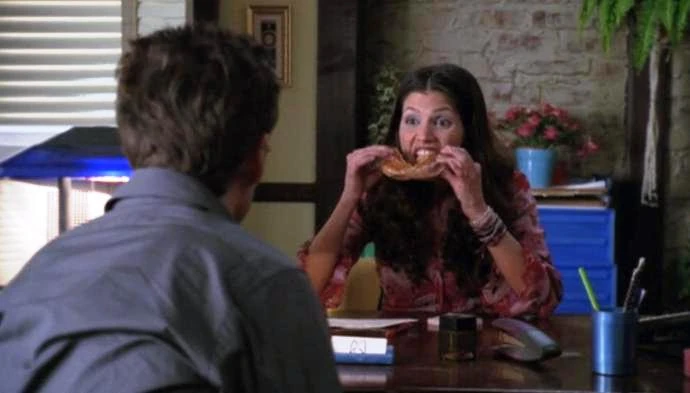
Wesley continues to work on the prophecy that Angel brought back with him from Wolfram & Hart and reveals that it is possibly fated for Angel to die. Rather than worry about it, Angel simply carries on with his usual occupation of saving people. However, the lawyers have a plan on the horizon, something called 'The Raising' and summon a big bad wormy dude to take care of Angel. When he promises to strip Angel of his connection to the Powers That Be, he really goes to town and Wesley and Cordelia's lives hang in the balance.
As finales go, To Shanshu in LA is not your typical, but then, the first season hasn't been particularly typical at any point. There's no real Big Bad to rally against, nor is there a discernible apocalypse to stop. Instead, the focus is on how Angel has now become reliant on his team, having moved from the loner that Doyle clung to in the beginning to the man concerned for his friends and willing to save them at any cost. It's also a pretty big hint towards his growing feelings for Cordelia, something that will bubble under the surface for a while yet.
That intimate focus gives the episode a stronger purpose than simply fighting a bad guy. It makes the world feel bigger, the stakes higher and the consequences more severe. David Boreanaz has to do some emotional heavy lifting here and it really works to illustrate Angel's concern for his friends. I love his final brush off to Kate, partly because it's a good measure of his determination and also because Kate has become such an irritating little role, cropping up at weird crime scenes to pseudo-moralise and look a bit peeved. She's the only weak link in this episode, but thankfully, Angel gives her a good talking to.
The character work elsewhere is lovely and neatly done too. Cordelia, so often seeing her role with Angel as a paycheck rather than a lifestyle, is suddenly subjected to the howls of pain in the city as her mind is opened up by Wormy Dude. It gives her a new sense of perspective, a much more selfless one that shifts her to see her work with Angel as both a necessity and a calling. It's a big development for her. She spent much of her time with the Scoobies resenting her role within the gang, often only helping out begrudgingly when it became clear the end of the world is at stake. Here though, she finally rises to the challenge and even starts making sandwiches.
The wider ramifications of the Shanshu prophecy add to the finale's sense of urgency. Wesley's little mistranslation of it to suggest that Angel is careening towards his death is a brief loss of meaning for Angel. He's already dead so it has no consequences for him and in this frame of mind, redemption is for little more than quenching his own guilt. However, discovering that it might lead to him becoming human again gives both the character and the show something to work towards. It's a positive, heroic endpoint. Naturally it becomes a little complicated as Angel's story to develop, but it gives the show a more concrete focus, something which will only benefit it as it moves forward.
Finally, there's that Darla reveal at the end. It's such a cool season cliffhanger that I almost wish I hadn't seen the rest of the show, just to get really excited about the first episode of the second season. Julie Benz has always been one of the Buffyverse's more memorable recurring characters and I'm looking forward to seeing her around again. Plus, it also means Drusilla will show up some point soon and that's always good for a laugh.
So we have reached the end of Angel's first season. Like the companion fourth season of Buffy, there has been quite the variation in quality, largely due to its need to establish itself as something of the same world, but also very different. Naturally, Angel couldn't go for the same kind of experimentation we see in Buffy''s fourth season, but it's something that has worked well to balance the two shows. The second season will be a little dodgy, but the show does begin to grow in confidence now that it has set out its parameters and darker, bloodier atmosphere. Poor Lindsey eh? Someone give him a hand...
Sorry.
Quote of the Week:
Wesley: Uhh... oops. I may have made a tiny mistake. The word 'shanshu' that I said meant you were going to die? Actually I think it means you're going to live.
Cordelia: Ok as tiny mistakes go, that's not one!
Let's Get Trivial: The episode title is a reference to the film To Live and Die in LA as 'shanshu' is revealed to mean 'to live and to die.'
You can read Becky's look at previous episode, Blind Date, here.
Follow @AssortedBuffery on Twitter
Or like our Facebook page
Saturday, 21 May 2016
BOOK REVIEW: Trio by Sue Gee
Trio is set in 1930s Northumberland and follows a history teacher, Steven Coulter, in the years following the untimely death of his young wife. As grief takes a solid hold, Steven finds himself pulled into the world of his colleague, Frank Embleton, whose sister, Diana, performs in a trio of local musicians with George Liddell and Margot Heslop. Steven slowly starts to form relationships with the new people in his life and finds a way to move on from his grief. However, with war looming on the horizon, their hazy, romantic view of the world is soon shattered.The wonderful thing about being a voracious reader is that you come across an extraordinary variety of novels; some difficult, some tricksy, some light and so on. Sometimes though, you just need the literary equivalent of a comfort blanket. Sue Gee's Trio is exactly that, a poignant look at a group of friends moving through time. There's a nice depth to it at all times, weaving its narrative through its context and exploring both the hazy happy periods and the slow violence of grief and loss.
There are several different layers operating at all times throughout Gee's novel as she traces the development of the relationships within. Various moments in the novel are punctuated by references to the build-up to the Second World War or the ongoing Spanish Civil War. They are short, sharp shocks to the country idyll that you become enveloped within. The various deaths that arrive throughout the narrative operate on a similar level, whether it's the long-awaited and dreaded expiration of Margaret, suffering from tuberculosis, or the suddenness of others elsewhere.
Time beats a rhythm throughout the novel, sometimes flitting ahead at a staccato pace, at others, slowing down to spend time with the characters at a specific moment in their life. It is a relentless progression though, no matter the pace, and a constant reminder that all things must come to an end at some point. It all comes to a wonderful head in the closing chapters of Trio, a conclusion which is at once both melancholic and hopeful, a testament to the endurance of human relationships and the hollow space that can sometimes be left behind.
Another crucial and successful aspect of Gee's narrative is the attention to detail she offers when it comes to the characters' lives. The broad strokes of the military movements form the background to intensely personal moments such as the focal points of Steven's grief; Margaret's coat, still on its hook after her death, forms an anchor throughout Steven's story, something he keeps returning to despite moving on elsewhere. There is also attention paid weird little synergies that life sometimes throws at you, like the similarity between Margaret and Margot's names. These details keep the novel operating on a rich yet personal level.
The elegance with which Gee orchestrates these elements is what makes Trio such a gentle read, both heartwarming and heart-wrenching in equal measure. The focus on those universal experiences of love and grief transcend its period setting to produce something deeply human.
Trio is available from Salt Publishing here.
- Becky
Follow @AssortedBuffery on Twitter
Or like our Facebook page
Wednesday, 18 May 2016
FEATURE: Buffy the Vampire Slayer - Restless
Previously on Buffy the Vampire Slayer: Buffy, Willow, Xander and Giles magically combined to take down Adam and the Initiative, invoking the power of the First Slayer to do so.
Usually this is the point of the review where I give you all a little plot breakdown to remind you of what goes on in the episode. It might not be all the details, but just enough to jog your memory. For Restless, there's not really a whole lot of plot to sum up; Buffy, Willow, Xander and Giles settle in for a night of movies after they take down the Initiative, still feeling wired. Alas, they upset the First Slayer with their spell and she tries to kill them in their dreams. That's pretty much it, but the meat of Restless does not lie within its plot, but rather in everything else.
It would be absolutely impossible for me to talk about all the things I love or that are of note in Restless because it's so densely packed with thematic content, character exploration and that all important Buffy hallmark of foreshadowing. Dreams in this world have always functioned as a form of prophecy, particularly for Buffy herself, so it's fitting that we have one such narrative entirely constructed around what has been and what is coming takes place within a dreamscape. It's an episode that only gets richer on repeat viewings as a result, something which many instalments can boast, but not to quite the same levels. Later watches tend to be reference spotting, but my first watch was mainly revelling in how surreal and comical everything felt. A prime example is Buffy offering Xander popcorn:
"Butter flavour?"
"New car smell."
It's also an episode that gets a lot funnier when you've seen Death of a Salesman. Many dream sequences in television often feel a little too well crafted to really embody the random twists and turns dreams can take. Restless manages to keep that sense of unpredictability for the most part; it's tautly wound chaos, capable of spinning off in different directions as required. Whilst it's very amusing to hear these exchanges and to witness the kind of bonkers delights Whedon comes up with, there's also a lot of deeper work going on when it comes to exploring the characters and their relationships with the world around them.
Willow's dream is positively brimming over with her various neuroses, but also foreshadowing for the character. There's even a nod back to her disastrous performance in Madame Butterfly from the first season episode, Nightmares. The big theme across her dream is the idea of her true self and people (including a cameo-ing Oz) make references to others finding out who she really is. The end of her dream indicates she still feels like the high school geek that everyone makes fun of behind her back. However, in hindsight, it's easy to see those comments as nods towards her future as a powerful, and briefly evil, witch and her addiction to magic that she works hard to keep hidden from everyone. Tara also notes that we don't know everything about her yet, something which will crop up again in the episode Family.
The erotic element to Xander's dream speaks a lot to how he's always treated the women around him, mainly that they're sex objects, even, perhaps disturbingly, Buffy's mom. Additionally, it also demonstrates his own feeling of inadequacy in the face of them, how he feels stuck in his basement and that he's of no help to his friends. The military aspect of his dream builds out from the history of the character as well as becoming another system in which he feels trapped. As if to really make the point that his journey is dark and aimless, there's Snyder at the end of it to confirm how pointless he is in the scheme of things. But he's the 'comfortador', a role that will become increasingly important in the show's later seasons.
Giles' dream is perhaps the clearest, simply because his role in the show is relatively straight-forward. He's the father figure for Buffy and their fairground night out in the cemetery reiterates that for everyone. Even his antagonistic relationships have an element of the paternal in them, such as his scene with Spike on the swings (Spike's wearing the suit he'd later wear in Tabula Rasa as well as Giles commenting that he's like a son to him). His big moment of the episode though is the classic Exposition Song (look out for composer Christophe Beck on the piano - also a quick shout-out to his awesome score), possibly Giles' greatest scene not involving a sombrero. He does his usual role of getting the audience up to speed on the episode bad guy and giving out instructions to the others, but via the medium of song (see Quote of the Week for some lyrics, obviously).
"Come on, put your back into it. A Watcher scoffs at gravity!"
Buffy's dream is the most important one when it comes to foreshadowing and as such, definitely didn't make very much sense upon first viewing. Her conversations with Tara, representing herself and the First Slayer, hint to Buffy's path for the fifth season. She's referred to as 'killer' several times by Riley, who goes on to leave her on her own. A lot of the fourth season has been exploring the successes and weaknesses inherent in being a Slayer with friends. Despite the magical joining spell that saw them all make up and take down evil last week, the message here is that Buffy, at the end, will be on her own. Tara cryptically states: "You think you know... What's to come... What you are. You haven't even begun" hinting towards Buffy's exploration of her Slayer heritage in the coming season.
The source of Buffy's power will become increasingly important now as the seasons develop and of course, there's a new character on the horizon: "Be back before Dawn..." Not only that, but we also have another nod to Buffy's impending demise, something which might not be apparent to any first time viewers of the episode. The focus on the incorrect clock in Buffy's room is a deliberate reference to her death. Back in her Graduation Day dream, Faith warns of something "counting down to 7-3-0." Buffy would die approximately 730 days after that initial warning. When Tara states that the clock is wrong, she is indicating that Buffy no longer has 730 days.
Hush was probably the moment when Buffy the Vampire Slayer truly started to embrace the more experimental aspect, but it's Restless that really runs with it, producing a season finale that is both wholly unconventional and entirely fantastic. It's a bold move to put something like this as a finale and it's a complete oddball of an episode, but it's an experiment that pays dividends for fans returning to the show. And so we come to the end of this season, which is the most consistently inconsistent of Buffy's entire run. When the story has focused on the Initiative, the interest waned, but episodes like Hush, Something Blue and Pangs keep the show going and Restless is the surrealist icing on the cake.
So after saying it would be impossible to talk about everything in this episode, I managed to give it a damn good go. It's hard to do it justice really, so layered is it as a piece of work. But what's this? I didn't mention the Cheese Man. He wears the cheese. It does not wear him.
Quote of the Week:
Giles: "I've got to warn Buffy / there's every chance she might be next / And Xander and Willow / Try not to bleed on my couch / I've just had it steam-cleaned..."
Let's Get Trivial: This is the show's only episode to begin straight away with the opening titles and not with a cold open.
Demonology 101: This is only the first appearance of the First Slayer. She will return later when Buffy embarks on her vision quest to learn more about her origins.
Sunnydale Who's Who: Originally this episode was to feature far more cameos than it eventually ended up with (just Oz, Olivia, Harmony and Snyder). Those supposed to appear were Jenny Calendar, Larry, Faith and Amy, with Angel and Cordelia having been written into the episode only to be taken out again once scheduling with Angel became too difficult.
- Becky
You can read Becky's look at previous episode, Primeval, here.
Follow @AssortedBuffery on Twitter
Or like our Facebook page
Usually this is the point of the review where I give you all a little plot breakdown to remind you of what goes on in the episode. It might not be all the details, but just enough to jog your memory. For Restless, there's not really a whole lot of plot to sum up; Buffy, Willow, Xander and Giles settle in for a night of movies after they take down the Initiative, still feeling wired. Alas, they upset the First Slayer with their spell and she tries to kill them in their dreams. That's pretty much it, but the meat of Restless does not lie within its plot, but rather in everything else.
It would be absolutely impossible for me to talk about all the things I love or that are of note in Restless because it's so densely packed with thematic content, character exploration and that all important Buffy hallmark of foreshadowing. Dreams in this world have always functioned as a form of prophecy, particularly for Buffy herself, so it's fitting that we have one such narrative entirely constructed around what has been and what is coming takes place within a dreamscape. It's an episode that only gets richer on repeat viewings as a result, something which many instalments can boast, but not to quite the same levels. Later watches tend to be reference spotting, but my first watch was mainly revelling in how surreal and comical everything felt. A prime example is Buffy offering Xander popcorn:
"Butter flavour?"
"New car smell."
It's also an episode that gets a lot funnier when you've seen Death of a Salesman. Many dream sequences in television often feel a little too well crafted to really embody the random twists and turns dreams can take. Restless manages to keep that sense of unpredictability for the most part; it's tautly wound chaos, capable of spinning off in different directions as required. Whilst it's very amusing to hear these exchanges and to witness the kind of bonkers delights Whedon comes up with, there's also a lot of deeper work going on when it comes to exploring the characters and their relationships with the world around them.
Willow's dream is positively brimming over with her various neuroses, but also foreshadowing for the character. There's even a nod back to her disastrous performance in Madame Butterfly from the first season episode, Nightmares. The big theme across her dream is the idea of her true self and people (including a cameo-ing Oz) make references to others finding out who she really is. The end of her dream indicates she still feels like the high school geek that everyone makes fun of behind her back. However, in hindsight, it's easy to see those comments as nods towards her future as a powerful, and briefly evil, witch and her addiction to magic that she works hard to keep hidden from everyone. Tara also notes that we don't know everything about her yet, something which will crop up again in the episode Family.
The erotic element to Xander's dream speaks a lot to how he's always treated the women around him, mainly that they're sex objects, even, perhaps disturbingly, Buffy's mom. Additionally, it also demonstrates his own feeling of inadequacy in the face of them, how he feels stuck in his basement and that he's of no help to his friends. The military aspect of his dream builds out from the history of the character as well as becoming another system in which he feels trapped. As if to really make the point that his journey is dark and aimless, there's Snyder at the end of it to confirm how pointless he is in the scheme of things. But he's the 'comfortador', a role that will become increasingly important in the show's later seasons.
Giles' dream is perhaps the clearest, simply because his role in the show is relatively straight-forward. He's the father figure for Buffy and their fairground night out in the cemetery reiterates that for everyone. Even his antagonistic relationships have an element of the paternal in them, such as his scene with Spike on the swings (Spike's wearing the suit he'd later wear in Tabula Rasa as well as Giles commenting that he's like a son to him). His big moment of the episode though is the classic Exposition Song (look out for composer Christophe Beck on the piano - also a quick shout-out to his awesome score), possibly Giles' greatest scene not involving a sombrero. He does his usual role of getting the audience up to speed on the episode bad guy and giving out instructions to the others, but via the medium of song (see Quote of the Week for some lyrics, obviously).
"Come on, put your back into it. A Watcher scoffs at gravity!"
Buffy's dream is the most important one when it comes to foreshadowing and as such, definitely didn't make very much sense upon first viewing. Her conversations with Tara, representing herself and the First Slayer, hint to Buffy's path for the fifth season. She's referred to as 'killer' several times by Riley, who goes on to leave her on her own. A lot of the fourth season has been exploring the successes and weaknesses inherent in being a Slayer with friends. Despite the magical joining spell that saw them all make up and take down evil last week, the message here is that Buffy, at the end, will be on her own. Tara cryptically states: "You think you know... What's to come... What you are. You haven't even begun" hinting towards Buffy's exploration of her Slayer heritage in the coming season.
The source of Buffy's power will become increasingly important now as the seasons develop and of course, there's a new character on the horizon: "Be back before Dawn..." Not only that, but we also have another nod to Buffy's impending demise, something which might not be apparent to any first time viewers of the episode. The focus on the incorrect clock in Buffy's room is a deliberate reference to her death. Back in her Graduation Day dream, Faith warns of something "counting down to 7-3-0." Buffy would die approximately 730 days after that initial warning. When Tara states that the clock is wrong, she is indicating that Buffy no longer has 730 days.
Hush was probably the moment when Buffy the Vampire Slayer truly started to embrace the more experimental aspect, but it's Restless that really runs with it, producing a season finale that is both wholly unconventional and entirely fantastic. It's a bold move to put something like this as a finale and it's a complete oddball of an episode, but it's an experiment that pays dividends for fans returning to the show. And so we come to the end of this season, which is the most consistently inconsistent of Buffy's entire run. When the story has focused on the Initiative, the interest waned, but episodes like Hush, Something Blue and Pangs keep the show going and Restless is the surrealist icing on the cake.
So after saying it would be impossible to talk about everything in this episode, I managed to give it a damn good go. It's hard to do it justice really, so layered is it as a piece of work. But what's this? I didn't mention the Cheese Man. He wears the cheese. It does not wear him.
Quote of the Week:
Giles: "I've got to warn Buffy / there's every chance she might be next / And Xander and Willow / Try not to bleed on my couch / I've just had it steam-cleaned..."
Let's Get Trivial: This is the show's only episode to begin straight away with the opening titles and not with a cold open.
Demonology 101: This is only the first appearance of the First Slayer. She will return later when Buffy embarks on her vision quest to learn more about her origins.
Sunnydale Who's Who: Originally this episode was to feature far more cameos than it eventually ended up with (just Oz, Olivia, Harmony and Snyder). Those supposed to appear were Jenny Calendar, Larry, Faith and Amy, with Angel and Cordelia having been written into the episode only to be taken out again once scheduling with Angel became too difficult.
- Becky
You can read Becky's look at previous episode, Primeval, here.
Follow @AssortedBuffery on Twitter
Or like our Facebook page
Tuesday, 17 May 2016
FEATURE: Angel - Blind Date
Previously on Angel: Angel's been causing problems for some shadier-than-normal lawyers from Wolfram & Hart whose previous efforts to stop him have been thwarted. Angel's also made an unlikely ally in the form of homeless street fighter, Charles Gunn.
Angel's on a routine patrol when he witnesses a blind woman, Vanessa Brewer, assassinate a man in front of him. He finds out that she's on trial and attempts to demonstrate her abilities by throwing her sunglasses back to her, which she catches without seemingly ever knowing they're coming. Of course, she's represented by Wolfram & Hart, Lindsey specifically, and she is acquitted of all charges. It turns out Lindsey's a bit of a rising star in the firm and as a result of this victory, he's offered another case when he's told that Vanessa will be employed to kill three children for undisclosed reasons. It's a step too far for the lawyer and he turns to Angel for help.
One of the main reasons I like this episode so much is that it gives me a chance to talk about Lindsey. Lindsey is one of the more fascinating characters of Angel's world, simply because he never quite operates within the same boundaries as everyone else. He can move freely between being good and evil as his situation dictates, but in the end, he will always be a slave to his ambition. Take this episode for instance; standing by whilst kids are killed is not something his rather dubious morality can tolerate, so he switches sides. However, in doing so, he witnesses the real power over life and death that his bosses wield and when they offer him a second chance, he takes it, returning to the darker side of the fence because it's tactically advantageous to do so.
It makes him unpredictable as the show continues because his boundaries are never quite clear to anyone but himself. He knows what he does is wrong, but he also knows what standing by looks like as this episode illustrates. He's a child of poverty and misfortune, someone who has had to claw their way out of a hole in order to have the kind of freedom denied to him. He's the dark, twisted embodiment of the American Dream, one of the few examples of this that the show offers us.
Blind Date is a more sombre affair than we've seen recently, but it has a couple of really cool set pieces at its heart. The big one is of course the Wolfram & Hart heist that we see Angel and Lindsey pull off with the help of the returning Gunn. It's an elegant mix of comedy (mainly from Gunn's angry black man routine) and the kind of suave burglary you'd expect from Angel. Rather than beat up the demon guarding the vault, he simply blows a Wesley-concocted powder at it and tips it over. It's a nice comic beat in the heart of an otherwise dark episode, but one which will also prove to be a defining one.
Yes, as he goes to exit the vault, Angel notices an old scroll and picks it up for no other reason than he thinks he should. As Wesley reveals at the end of the episode, it contains writings on a vampire with a soul and possibly more information about Angel's place in the world. It's something that he's been struggling to find, particularly since his return from Hell, and this could point him in the way. Earlier in the episode, he finds himself frustrated by the powerlessness he feels in the face of a human world that Wolfram & Hart have got rigged. His vampirism hampers him from doing the best he can, but it also allows him to operate outside that system.
Somewhat helpfully, it's the first episode in a while where all successful parts of Angel have been firing at the same time (it certainly gives me far more to talk about than War Zone did). Though we don't see much of Cordy and Wes, they're both settled into their respective roles and work their way through the exposition with ease. But it's in the dark morality at the heart of the episode that the show really finds its feet. Angel chooses to fight his fight because he can and because it can offer him the redemption he seeks. Lindsey fights only when he has to. Their different views clash spectacularly here, but the two final scenes, where Lindsey accepts his new job and Angel watches over his city, is a perfect encapsulation of both.
Quote of the Week:
Lindsey: I get myself killed, that'll convince you I've changed?
Angel: It'll be a start.
Inventive Kill: Angel suspends a vampire by the neck with a chain and then uses the pulley system to stake the vampire on a slat sticking out of a pile of pallets. Mad skillz.
LA Who's Who: Jennifer Badger, who plays Vanessa Brewer, was a stunt double for both Charisma Carpenter and Eliza Dushku across both series.
The Sunnydale Connection: When Cordelia comes up against encrypted files, she naturally calls in the wiz, Willow. The half-heard conversation is lovely; "Willow says hey!"
- Becky
You can check out Becky's look at previous episode, War Zone, here.
Follow @AssortedBuffery on Twitter
Or like our Facebook page
Angel's on a routine patrol when he witnesses a blind woman, Vanessa Brewer, assassinate a man in front of him. He finds out that she's on trial and attempts to demonstrate her abilities by throwing her sunglasses back to her, which she catches without seemingly ever knowing they're coming. Of course, she's represented by Wolfram & Hart, Lindsey specifically, and she is acquitted of all charges. It turns out Lindsey's a bit of a rising star in the firm and as a result of this victory, he's offered another case when he's told that Vanessa will be employed to kill three children for undisclosed reasons. It's a step too far for the lawyer and he turns to Angel for help.
One of the main reasons I like this episode so much is that it gives me a chance to talk about Lindsey. Lindsey is one of the more fascinating characters of Angel's world, simply because he never quite operates within the same boundaries as everyone else. He can move freely between being good and evil as his situation dictates, but in the end, he will always be a slave to his ambition. Take this episode for instance; standing by whilst kids are killed is not something his rather dubious morality can tolerate, so he switches sides. However, in doing so, he witnesses the real power over life and death that his bosses wield and when they offer him a second chance, he takes it, returning to the darker side of the fence because it's tactically advantageous to do so.
It makes him unpredictable as the show continues because his boundaries are never quite clear to anyone but himself. He knows what he does is wrong, but he also knows what standing by looks like as this episode illustrates. He's a child of poverty and misfortune, someone who has had to claw their way out of a hole in order to have the kind of freedom denied to him. He's the dark, twisted embodiment of the American Dream, one of the few examples of this that the show offers us.
Blind Date is a more sombre affair than we've seen recently, but it has a couple of really cool set pieces at its heart. The big one is of course the Wolfram & Hart heist that we see Angel and Lindsey pull off with the help of the returning Gunn. It's an elegant mix of comedy (mainly from Gunn's angry black man routine) and the kind of suave burglary you'd expect from Angel. Rather than beat up the demon guarding the vault, he simply blows a Wesley-concocted powder at it and tips it over. It's a nice comic beat in the heart of an otherwise dark episode, but one which will also prove to be a defining one.
Yes, as he goes to exit the vault, Angel notices an old scroll and picks it up for no other reason than he thinks he should. As Wesley reveals at the end of the episode, it contains writings on a vampire with a soul and possibly more information about Angel's place in the world. It's something that he's been struggling to find, particularly since his return from Hell, and this could point him in the way. Earlier in the episode, he finds himself frustrated by the powerlessness he feels in the face of a human world that Wolfram & Hart have got rigged. His vampirism hampers him from doing the best he can, but it also allows him to operate outside that system.
Somewhat helpfully, it's the first episode in a while where all successful parts of Angel have been firing at the same time (it certainly gives me far more to talk about than War Zone did). Though we don't see much of Cordy and Wes, they're both settled into their respective roles and work their way through the exposition with ease. But it's in the dark morality at the heart of the episode that the show really finds its feet. Angel chooses to fight his fight because he can and because it can offer him the redemption he seeks. Lindsey fights only when he has to. Their different views clash spectacularly here, but the two final scenes, where Lindsey accepts his new job and Angel watches over his city, is a perfect encapsulation of both.
Quote of the Week:
Lindsey: I get myself killed, that'll convince you I've changed?
Angel: It'll be a start.
Inventive Kill: Angel suspends a vampire by the neck with a chain and then uses the pulley system to stake the vampire on a slat sticking out of a pile of pallets. Mad skillz.
LA Who's Who: Jennifer Badger, who plays Vanessa Brewer, was a stunt double for both Charisma Carpenter and Eliza Dushku across both series.
The Sunnydale Connection: When Cordelia comes up against encrypted files, she naturally calls in the wiz, Willow. The half-heard conversation is lovely; "Willow says hey!"
- Becky
You can check out Becky's look at previous episode, War Zone, here.
Follow @AssortedBuffery on Twitter
Or like our Facebook page
BOOK REVIEW: Bodies of Water by V.H. Leslie
Bodies of Water splits its narrative between two women and their respective time periods. Evelyn has been working with fallen women in Victorian London, but the work and the relationships she forms within it have taken their toll. She is sent to be treated at Wakewater Hall, a hydropathy establishment nestled alongside the Thames. In the present day, Kirsten has recently split from her boyfriend and has bought an apartment in the ongoing conversion of Wakewater Hall. As she learns more about the history of the building and of the fates of Victorian drowned women, she finds herself haunted by a mysterious figure and enraptured by the water that surrounds her.Bodies of Water is V.H. Leslie's debut novel, though she is already a veteran of the short story, releasing a collection entitled Skein and Bone just last year. The ability to create a world in a smaller space is an advantage here as Leslie quickly establishes both women, their respective plights and, most importantly, the cloying atmosphere that dominates much of the narrative. She has a clear and keen understanding of the virtues of the Gothic genre and clearly revels in the opportunity to explore it on her own terms.
The richness of the world that Leslie creates, as well as the atmosphere she maintains throughout, leaves you wanting more as a reader to sink down into the depths of Bodies of Water and become completely immersed. There are several moments where it feels as if they should be longer, more drawn out. Leslie does an excellent job of sketching the characters, both past and present, but they and their relationships could be explored further. It's a narrative that you can't put down (I read it in practically one sitting), but equally, it's one that you don't want to end, simply because it's so fascinating to explore.
It's a novel of liminal spaces and blurred boundaries, where Victorian restrictions intersect with the relative freedoms of contemporary living. In the wrong hands (and forgive the pun), the waters could have easily become muddied and confusing. Instead, Leslie acknowledges that the same environments would hold different meanings for both Kirsten and Evelyn whilst also demonstrating their similarities. They both see a figure loitering on the riverbank, but her presence signifies a deeper horror for Evelyn than it does for Kirsten. That figure is one of three things to freely travel between the two time periods, the others are the water that flows through the novel and the shared location of Wakewater Hall. The three work in tandem with each other to tease out Kirsten and Evelyn's respective experiences of this haunted little corner of the Thames.
The water is a mercurial presence throughout the novel, pouring through the pages and seeping into every aspect of the story. It's neither friend or foe, but capable of acting as both a weapon or a refuge depending upon what is needed. The character of Manon functions as an expository figure, opining on the cultural link between water and femininity as well as the way in which men have exploited the bodies of women found within the water itself. Both Kirsten and Evelyn find themselves interacting with it in different ways, sometimes as a healing force, but more often as a destructive one. It gives their interactions with the water a sense of unpredictability, something which Leslie utilises throughout the narrative to ensure readers are left guessing until the end.
A chief component of the book's success is the location, Wakewater Hall itself, intimidating, creepy and shrouded in mystery. There's a very traditionally Gothic sense of moral decay, manifested in the dilapidated shell on Kirsten's renovated apartment doorstep. It's a work in progress, but one which seems to be actively resisting improvement with seemingly random leaks and noises in its walls. Leslie imbues the Hall with a real sense of history and menace in both its Victorian and present day form. Though it is never described in minute detail, Leslie gives the reader just enough to let their imagination run, hearing the rumble of the pipes or the fountain jets echoing through its corridors.
Relishing in its genre coding and richly atmospheric, Bodies of Water is a fascinating debut and demonstrates the promise of V.H. Leslie as a novelist. It's a book for reading by the fire with a blanket ready to draw around yourself as the brilliant chill sets in and takes hold.
Bodies of Water is available from Salt Publishing.
- Becky
Follow @AssortedBuffery on Twitter
Or like our Facebook page
TV REVIEW: Game of Thrones - Book of the Stranger
Spoilers...
Well, Dany doesn't call herself "The Unburnt" for fun, something the Khals of Dothraki found out this week in an episode dominated by women in power. To be fair to our white-haired dragonrider, she was given three options: stay in Vaes Dothrak as part of the Dosh Kahleen, be traded to slave masters for a bunch of horses (ten thousand, admittedly), or continually raped by the Khals, their bloodriders, and their horses. Dany went for door number four - flaming death - and burned her male captors alive in their hut, herself emerging from the fire to the rest of the Khalasar, who immediately and familiary bowed to her. I can't wait to see the face on the slavers in Mereen when she shows up with a Dothraki horde.
This episode could have been billed as a family reunion special, with many reconnections both joyous (Sansa and Jon), awkward (Yara and Theon), and pitiful (Margaery and Loras). But the truth is that all of the ladies had the upper hand in terms of strength here, with the boys putting in a pretty poor showing. It was wonderful to see Sansa turn up at Castle Black to see Jon, but there is still something very wrong with him, mainly due to him being haunted of his betrayal. It's not difficult to sympathise, there's something terribly existenstial about being obsessed with the moment that killed you. But after a threatening note from Ramsay saying he wants Sansa back or he'll pretty much do everything evil you can imagine, it was her taking charge and convincing Jon that they need to go and take Winterfell back.
Meanwhile, Margaery finally had a meeting with the High Sparrow who fed her the same junk he's fed others, and she was briefly allowed to see a broken Loras, who was ready to give in. But Margaery is a schemer, and she knows the Sparrow is up to something, as does her mother and Cersei, who along with the small council (i.e. Kevan and Jaime) are planning to make sure her walk of atonement doesn't happen, and the Sparrow and his, um, sparrowlings end up very dead. This sounds like a very stupid plan and confirms that after Tywin's passing they all together have the tactical nuance of Hot Pie.
Poor Theon returned home emasculated (literally) and was immediately and understandably torn down by Yara, who eventually went a bit easier on him when she figured out he wasn't there to get in her way of leadership. About the only men who went unscathed was Tyrion, who admittedly got a rollicking from Missandei and Grey Worm after agreeing to bring back slavery for seven years, and Littlefinger, who told brave Ser Robin that they should pledge the knights of the Vale to Sansa's fight. Considering Jon only has two thousand wildlings, this may be a much needed boost, although obviously Littlefinger is not to be trusted. There's also the question of if the Karstarks etc are actually on the side of the Direwolf or the Flayed Man.
The only thing that was really missed was Bran's vision quest, although I imagine that's been slowed down a bit considering how close they are to revealing R + L = J. But everything else is poised well; Sansa and Jon off to take on Ramsay, the Lannisters about to see if they can stop the High Sparrow, and Dany, who should really start to actually make it westward now she has the Dothraki behind her. Sorry Khal Bongo, but you just happened to be in an episode where the girls rule and the boys drool. Long may that continue.
- Charlie
You can read Charlie's review of the previous episode, Oathbreaker, here.
Follow @AssortedBuffery on Twitter
Or like our Facebook page
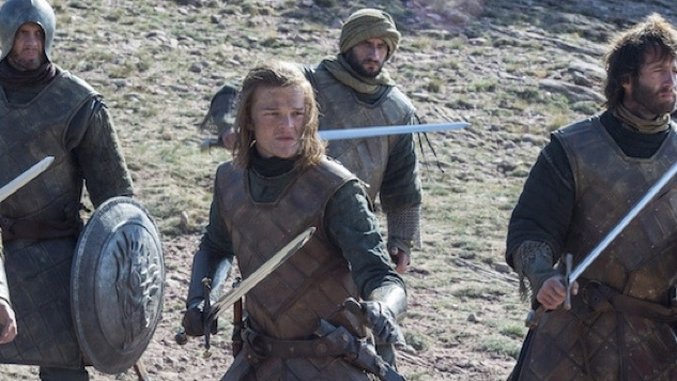
Well, Dany doesn't call herself "The Unburnt" for fun, something the Khals of Dothraki found out this week in an episode dominated by women in power. To be fair to our white-haired dragonrider, she was given three options: stay in Vaes Dothrak as part of the Dosh Kahleen, be traded to slave masters for a bunch of horses (ten thousand, admittedly), or continually raped by the Khals, their bloodriders, and their horses. Dany went for door number four - flaming death - and burned her male captors alive in their hut, herself emerging from the fire to the rest of the Khalasar, who immediately and familiary bowed to her. I can't wait to see the face on the slavers in Mereen when she shows up with a Dothraki horde.
This episode could have been billed as a family reunion special, with many reconnections both joyous (Sansa and Jon), awkward (Yara and Theon), and pitiful (Margaery and Loras). But the truth is that all of the ladies had the upper hand in terms of strength here, with the boys putting in a pretty poor showing. It was wonderful to see Sansa turn up at Castle Black to see Jon, but there is still something very wrong with him, mainly due to him being haunted of his betrayal. It's not difficult to sympathise, there's something terribly existenstial about being obsessed with the moment that killed you. But after a threatening note from Ramsay saying he wants Sansa back or he'll pretty much do everything evil you can imagine, it was her taking charge and convincing Jon that they need to go and take Winterfell back.
Meanwhile, Margaery finally had a meeting with the High Sparrow who fed her the same junk he's fed others, and she was briefly allowed to see a broken Loras, who was ready to give in. But Margaery is a schemer, and she knows the Sparrow is up to something, as does her mother and Cersei, who along with the small council (i.e. Kevan and Jaime) are planning to make sure her walk of atonement doesn't happen, and the Sparrow and his, um, sparrowlings end up very dead. This sounds like a very stupid plan and confirms that after Tywin's passing they all together have the tactical nuance of Hot Pie.
Poor Theon returned home emasculated (literally) and was immediately and understandably torn down by Yara, who eventually went a bit easier on him when she figured out he wasn't there to get in her way of leadership. About the only men who went unscathed was Tyrion, who admittedly got a rollicking from Missandei and Grey Worm after agreeing to bring back slavery for seven years, and Littlefinger, who told brave Ser Robin that they should pledge the knights of the Vale to Sansa's fight. Considering Jon only has two thousand wildlings, this may be a much needed boost, although obviously Littlefinger is not to be trusted. There's also the question of if the Karstarks etc are actually on the side of the Direwolf or the Flayed Man.
The only thing that was really missed was Bran's vision quest, although I imagine that's been slowed down a bit considering how close they are to revealing R + L = J. But everything else is poised well; Sansa and Jon off to take on Ramsay, the Lannisters about to see if they can stop the High Sparrow, and Dany, who should really start to actually make it westward now she has the Dothraki behind her. Sorry Khal Bongo, but you just happened to be in an episode where the girls rule and the boys drool. Long may that continue.
- Charlie
You can read Charlie's review of the previous episode, Oathbreaker, here.
Follow @AssortedBuffery on Twitter
Or like our Facebook page
Sunday, 15 May 2016
FEATURE: Buffy the Vampire Slayer - Primeval
Previously on Buffy the Vampire Slayer: A secret government organisation known as The Initiative have been operating literally underground at UC Sunnydale. Buffy's dating one of their rejects and fighting their Big Bad, Adam, a patchwork monster of human and demon. Meanwhile, the Scooby Gang's feeling the pressure of living apart; Xander and Anya feel excluded, Willow's dating Tara and only just told people, Giles remains unemployed and Buffy's got her hands full. Spike, helpfully, has been pulling their strings.
After the big bust-up at the end of The Yoko Factor, Buffy goes off to find Riley, but of course finds him gone. He's with Adam, finding out that he was a part of the super-soldier program that Maggie Walsh was putting together and that he also has a chip in his nervous system that Adam can use to control him. The Scoobies all set about recovering from their fight, each as upset as the other at what has been said. However, a little bit of communication soon sets them right and they come up with a plan to stop Adam, magically joining themselves into one body. Buffy's.
The fourth season stands as the only that openly flouts convention by not featuring a two-parter finale as the last two episodes. It's a bold move to wrap up everything major in the season in the penultimate episode, but it's probably for the best given the lukewarm reception to the Initiative plotline. Restless ends up embodying a far better season finale than anyone expected, but I'll save my enthusiasm for that one until next week.
The Initiative stuff is still ridiculously blah. I really couldn't care less about Adam's super-race plan because, although it's clear that there is something thematic link between Adam's composite soldiers and the Scooby Gang united in one goal, it's executed so badly. It's not an inherently bad idea by any stretch, but the quality difference between the two thematic plot strands is vast simply because of who is involved. We don't really know (or like) Riley enough to care too much that he might become part of Adam's composite demon army.
The real meat of the episode is the Scooby Gang themselves, the characters we know and properly care about. As I said last week, seeing the Scoobies fight is never fun and the problems between them all have been building all season. The best moments come as a result of the gang rediscovering their friendship. The lift sequence, in which Buffy and Willow have a heart to heart, is adorable, culminating in a hug that brings the gang back together again.
It may make the joining spell a little on-the-nose metaphorically speaking, but it's a neat way to wrap up their combined plotline for the season. I love that it's a natural (albeit magical) way of combining their respective skills and functions within the group versus Adam's biological and scientific way of doing things. Like Buffy says, the Initiative is messing with primeval forces it doesn't understand the final battle between Scooby-Buffy and Adam is that clash made manifest. Let's just ignore the really dodgy sound effects as the spirits combine within Buffy. The voice effect of having them all speak at the same time is very cool though. That moment also points out a key difference between Buffy and the Slayers that came before her; she's never on her own.
After a nice Dr Strangelove board meeting, the Initiative is abandoned and the case closed in a move that feels a little more Mulder and Scully. Let's just be grateful that we got Cabin in the Woods eh? A much better take on the shady government installation type deal.
Quote of the Week:
Willow: Nervous?
Xander: No way. I'm full of that good old kamikaze spirit.
Giles: Xander, just because this is never going to work, there's no need to be negative.
Inventive Kill: Scooby-Buffy rips out Adam's core glowy thingy. Perfect.
Let's Get Trivial: After Nicholas Brendon remembered the established continuity from earlier in the show, the line "see what you get for taking French instead of Sumerian?!" was changed from "see what you get for taking Spanish instead of Sumerian?!"
- Becky
You can read Becky's look at previous episode, The Yoko Factor, here.
Follow @AssortedBuffery on Twitter
Or like our Facebook page
After the big bust-up at the end of The Yoko Factor, Buffy goes off to find Riley, but of course finds him gone. He's with Adam, finding out that he was a part of the super-soldier program that Maggie Walsh was putting together and that he also has a chip in his nervous system that Adam can use to control him. The Scoobies all set about recovering from their fight, each as upset as the other at what has been said. However, a little bit of communication soon sets them right and they come up with a plan to stop Adam, magically joining themselves into one body. Buffy's.
The fourth season stands as the only that openly flouts convention by not featuring a two-parter finale as the last two episodes. It's a bold move to wrap up everything major in the season in the penultimate episode, but it's probably for the best given the lukewarm reception to the Initiative plotline. Restless ends up embodying a far better season finale than anyone expected, but I'll save my enthusiasm for that one until next week.
The Initiative stuff is still ridiculously blah. I really couldn't care less about Adam's super-race plan because, although it's clear that there is something thematic link between Adam's composite soldiers and the Scooby Gang united in one goal, it's executed so badly. It's not an inherently bad idea by any stretch, but the quality difference between the two thematic plot strands is vast simply because of who is involved. We don't really know (or like) Riley enough to care too much that he might become part of Adam's composite demon army.
The real meat of the episode is the Scooby Gang themselves, the characters we know and properly care about. As I said last week, seeing the Scoobies fight is never fun and the problems between them all have been building all season. The best moments come as a result of the gang rediscovering their friendship. The lift sequence, in which Buffy and Willow have a heart to heart, is adorable, culminating in a hug that brings the gang back together again.
It may make the joining spell a little on-the-nose metaphorically speaking, but it's a neat way to wrap up their combined plotline for the season. I love that it's a natural (albeit magical) way of combining their respective skills and functions within the group versus Adam's biological and scientific way of doing things. Like Buffy says, the Initiative is messing with primeval forces it doesn't understand the final battle between Scooby-Buffy and Adam is that clash made manifest. Let's just ignore the really dodgy sound effects as the spirits combine within Buffy. The voice effect of having them all speak at the same time is very cool though. That moment also points out a key difference between Buffy and the Slayers that came before her; she's never on her own.
After a nice Dr Strangelove board meeting, the Initiative is abandoned and the case closed in a move that feels a little more Mulder and Scully. Let's just be grateful that we got Cabin in the Woods eh? A much better take on the shady government installation type deal.
Quote of the Week:
Willow: Nervous?
Xander: No way. I'm full of that good old kamikaze spirit.
Giles: Xander, just because this is never going to work, there's no need to be negative.
Inventive Kill: Scooby-Buffy rips out Adam's core glowy thingy. Perfect.
Let's Get Trivial: After Nicholas Brendon remembered the established continuity from earlier in the show, the line "see what you get for taking French instead of Sumerian?!" was changed from "see what you get for taking Spanish instead of Sumerian?!"
- Becky
You can read Becky's look at previous episode, The Yoko Factor, here.
Follow @AssortedBuffery on Twitter
Or like our Facebook page
Tuesday, 10 May 2016
FEATURE: Angel - War Zone
Previously on Angel: The big guy's had a bit of a bust-up with Buffy over the Faith issue, but his reputation is starting to spread across LA. It's attracting new clients and his fair share of enemies.
Cordelia organises a meeting with a big software billionaire, David, who is having a little issue with the fact he got a bit too into Dungeons and Dragons and went to a demon brothel. Angel takes the case to retrieve any evidence of David's dalliances before his stakeholders can find out. His investigation leads him to a gang of homeless youths in South Central who have been waging a territorial war with LA's vampire population. Trouble is, they think he's a new Big Bad that needs defeating. Hijinks ensue, people are lost in the fight and Angel finds himself with a new begrudging ally in one amateur vampire hunter Charles Gunn.
War Zone suffers from its position in the season, right after the extraordinarily good Faith episodes and prior to the last two episodes, which are decidedly more meaty. It's a bit like Go Fish in the second season of Buffy though thankfully produces something a bit more successful than walking fish men.
In fact, the whole episode is quite the heavy-handed social exploration, covering the gamut of class from the wealth of David to the grinding poverty that Gunn and his gang endure. There's references to race in there too, though, perhaps wisely, they let the casting of Gunn's people do it for them. It's not the show's best attempt at finding a real-world commonality with demon-fighting, but it's admirable of them to try, even if they don't really find any depth within it nor pursue it to any kind of meaningful outcome.
In truth, the biggest occurrence in this episode is the arrival of Gunn, full of rage and violence, markedly different from Angel's brooding, Wesley's repressed desperation and Cordy's openness. J. August Richards hits the ground running in a role that goes on to have one of the most interesting arcs across the series (though it takes until the fifth season to properly go for it). It's a sad introduction and a sobering one, having to stake his recently turned sister to prevent her from killing him. Although I grow increasingly tired of women being sacrificed in popular culture in order for men to learn lessons, I can't deny it tugs at the heartstrings.
I do love the final scene between Gunn and Angel, a twist on the usual 'mentor' type relationship in that Gunn doesn't want any advice and Angel doesn't really need to give it. It's a begrudging alliance, for sure, but it'll prove to be a solid one. It also helps that it isn't a scene in which Angel offers to help Gunn, instead switching the power dynamic to leave Angel as the one who might come seeking Gunn's help in future.
Quote of the Week:
Cordelia: They locked you in, huh?
Angel: No! I just love old meat lockers...
Wesley: You should have tried to call us on your cell phone. You probably forget you had it.
Angel: Those things hardly ever work. Besides, it was a lot easier and quicker to just- Look, I'm the boss here. I say when we use the cell phones and people are gonna die and I have to go.
Cordelia: You're welcome!
Inventive Kill: A badass stake gun on the back of Gunn's truck stakes a vamp from afar.
Let's Get Trivial: Charles Gunn was added to the cast thanks to Joss Whedon deciding that she show needed a character to work with Angel who was very different from either Cordelia or Wesley. It also helped to finally up the Buffyverse's diversity quota, albeit marginally.
- Becky
You can read Becky's look at previous episode, Sanctuary, here.
Follow @AssortedBuffery on Twitter
Or like our Facebook page
Cordelia organises a meeting with a big software billionaire, David, who is having a little issue with the fact he got a bit too into Dungeons and Dragons and went to a demon brothel. Angel takes the case to retrieve any evidence of David's dalliances before his stakeholders can find out. His investigation leads him to a gang of homeless youths in South Central who have been waging a territorial war with LA's vampire population. Trouble is, they think he's a new Big Bad that needs defeating. Hijinks ensue, people are lost in the fight and Angel finds himself with a new begrudging ally in one amateur vampire hunter Charles Gunn.
War Zone suffers from its position in the season, right after the extraordinarily good Faith episodes and prior to the last two episodes, which are decidedly more meaty. It's a bit like Go Fish in the second season of Buffy though thankfully produces something a bit more successful than walking fish men.
In fact, the whole episode is quite the heavy-handed social exploration, covering the gamut of class from the wealth of David to the grinding poverty that Gunn and his gang endure. There's references to race in there too, though, perhaps wisely, they let the casting of Gunn's people do it for them. It's not the show's best attempt at finding a real-world commonality with demon-fighting, but it's admirable of them to try, even if they don't really find any depth within it nor pursue it to any kind of meaningful outcome.
In truth, the biggest occurrence in this episode is the arrival of Gunn, full of rage and violence, markedly different from Angel's brooding, Wesley's repressed desperation and Cordy's openness. J. August Richards hits the ground running in a role that goes on to have one of the most interesting arcs across the series (though it takes until the fifth season to properly go for it). It's a sad introduction and a sobering one, having to stake his recently turned sister to prevent her from killing him. Although I grow increasingly tired of women being sacrificed in popular culture in order for men to learn lessons, I can't deny it tugs at the heartstrings.
I do love the final scene between Gunn and Angel, a twist on the usual 'mentor' type relationship in that Gunn doesn't want any advice and Angel doesn't really need to give it. It's a begrudging alliance, for sure, but it'll prove to be a solid one. It also helps that it isn't a scene in which Angel offers to help Gunn, instead switching the power dynamic to leave Angel as the one who might come seeking Gunn's help in future.
Quote of the Week:
Cordelia: They locked you in, huh?
Angel: No! I just love old meat lockers...
Wesley: You should have tried to call us on your cell phone. You probably forget you had it.
Angel: Those things hardly ever work. Besides, it was a lot easier and quicker to just- Look, I'm the boss here. I say when we use the cell phones and people are gonna die and I have to go.
Cordelia: You're welcome!
Inventive Kill: A badass stake gun on the back of Gunn's truck stakes a vamp from afar.
Let's Get Trivial: Charles Gunn was added to the cast thanks to Joss Whedon deciding that she show needed a character to work with Angel who was very different from either Cordelia or Wesley. It also helped to finally up the Buffyverse's diversity quota, albeit marginally.
- Becky
You can read Becky's look at previous episode, Sanctuary, here.
Follow @AssortedBuffery on Twitter
Or like our Facebook page
TV REVIEW: Game of Thrones - Oathbreaker
Spoilers...
Only a short glimpse of Dany this week, with an introduction to the widows of the Great Khals, who were all seemingly promised glory alongside their Moon and Stars (although presumably none of them had dragons), while in Mereen, Varys talked business with a conspirator of the Sons of the Harpy, with a wonderfully creepy performance from Conleth Hill. Meanwhile, in King's Landing his little birds (children) were being transferred to Qyburn's books, with the small council vacating their seats as soon as Cersei, Jaime, and Ser Gregor (no Robert the Strong) came to visit. I'm a little bored of Cersei now, she's no fun and her threats seem as empty as the Lannister's coffers. And then there's poor Tommen, who went in fierce against the High Sparrow for about a minute before he was convinced everything is hunky dory because his mother loves him. Oh dear. However, Jonathan Pryce is a joy to watch in this role.
We finally had some satisfaction in Braavos, where Arya kicked that smug girl's backside and won her eyesight back, and finally got a glimpse of Samwell and Gilly on their way to homestead Hornhill, although I doubt Randall Tarly will be hugely pleased to see his son. But all of this is small fry compared to more of Max Von Sydow's guided tour of the history of the Starks, where Bran saw his father go up against Ser Arthur of Dayne at the Tower of Joy. Ned was on a rescue mission to save sister Lyanna, and while he had always told Bran that he defeated Arthur bravely, the actual truth of the matter is that Arthur was a wiz with steel who brandished two swords like a medieval Chow Yun Fat and massacred his way through the Stark party, only to be stabbed in the back by Howland Reed (father of Meera and Jojen).
What's interesting is Bran's shocked and slightly disgusted reaction to this, with how we tell stories as parents to our children and what really happens. But while Ned shot off to find Lyanna, Bran shouted out to him, and he seemed to hear him. Is this a clue to some more special powers Bran may possess? And of course the Raven stops the vision as Ned disappears, meaning we have to wait to find out about the tower (I'm pretty confident Ned will reappear with a baby in tow). Talking of Starks, we finally caught sight of Rickon but it wasn't in the happiest of places after he was unveiled to Ramsay Bolton as a gift by Smalljon "fuck oaths" Umber along with Osha. But the most horrific thing was the "proof" that he was Rickon Stark - the severed head of Shaggydog.
BUT WAS IT?!
I'm going with no. That head was way too small to be a direwolf, and I can see this being a double-cross, with the Umbers being incredibly loyal to the Starks previously. Then again, this is Game of Thrones and George RR Martin can be a right bastard. But this is likely to be setting it up for Jon who, after a bit of an understandable shock at no longer being dead, got back to his duties and hung his stabees, including Ser Alliser (yay!) and Olly (aww). However, it was pretty obvious from that act that this Jon Snow is taking no shit, and he proved that by immediately leaving the Night's Watch, leaving Dolorous Edd in charge (he's not deserting - his oath was "until my death"). If he's going to unite everyone against the White Walkers he'll have to unite the North first, and the best way to do that is to fuck up Ramsay Bolton. GAME ON.
Another fine episode, and this season is rollicking along. I'm a bit bored by Cersei and Dany at the moment, but everyone else is stepping up to the plate, and it feels like it's becoming a real worldwide conflict again. So much time was spent with the Starks and the Lannisters, but the pieces seem to be moving in a more satisfying way, and the pace is just tremendous. Let's hope it stays that way, although I know I'll be howling at the skies when the episode ten cliffhanger rolls around.
- Charlie
Read Charlie's review of the previous episode, Home, here.
Follow @AssortedBuffery on Twitter
Or like our Facebook page
Subscribe to:
Posts (Atom)


