Showing posts with label Gillian Anderson. Show all posts
Monday, 22 February 2016
TV REVIEW: The X-Files - Mulder and Scully Meet the Were-Monster
Mulder's having a bit of a mid-life crisis after his return to the X Files, finding many of his cases solved and decidedly on the normal side of para-. When Scully tells him of a new case in which several victims appear to have been killed by what looks like some kind of horned monster, Mulder begrudgingly goes along to investigate. Whilst there, he finds himself confronted with something that tests his faith in all its forms. Scully attempts to go about investigating the episode as normal as her partner chases lizard monsters into the night.
Darin Morgan's episodes, too few as they were, have always demonstrated a beautiful understanding of both what audiences loved about the show and the relationship between Mulder and Scully at its heart. The X-Files could be gloriously silly at times like the classic vampire episode, Bad Blood. There's a similar atmosphere going on here as perspectives shift and beliefs are challenged. Focusing this through the prism of Mulder's waning faith proves to be an inspired move. What happens when a man usually so quick to believe anything loses his desire to do so, but is then confronted with an actual kind of monster?
In short, hilarity. Morgan takes advantage of having an audience so well-versed in the usual codes and signifiers of the show to spin it about, turn it upside down and mess with it completely. And so we get a monster who lives on the edge of human society (not unlike a creature Morgan himself once played, Flukeman), but finds himself forced into becoming a human after he's bitten by one. Rhys Darby's genteel performance as Guy is a highlight of the episode, giving us a sympathetic creature who just wants to be left to his own devices (as long as they're not smartphones).
The episode becomes about Guy's ability to defy Mulder's expectations. Previous X Files cases have taught everyone's favourite conspiracy theorist that monsters will be monsters. They will kill or feed or violate because that's their nature. As Guy tells his story, Mulder's desperate to mould Guy to his expectations and have him be responsible for the murders because that's what Mulder understands. His shaky faith means he can't think outside the box, but it's Guy that proves his newfound cynicism wrong; monsters exist. They've always existed and Mulder finds his desire and his need to believe back again by the end of the episode.
It may be riotously funny all the way through, but the episode works so well precisely because it's using the comedy to do the character work at the same time. As well as renewing Mulder's faith in his life's work, it's also continuing with the focus on how Mulder and Scully are coping with their respective lives as they grow older. Even his inability to use his smartphone properly is used as another way of showing how at odds Mulder is with the world, as well as slaking his incurable thirst for the bizarre (and let's all take a moment to appreciate Mulder putting his head in a fox).
Scully is sidelined somewhat in this episode, but that feels fitting too; it's a running joke that Scully sees all of these amazing, paranormal/supernatural things and still remains cynical. To have her miss all the monstrous action and catch the human bad guy at the heart of it all feels so perfectly X-Files, precisely because it is. It also has to be her that gets Mulder back in the game, despite her own continuing cynicsm about the things in which he believes. She knows what's best for him, as she always has done.
Though it's playing a lot more humourously, Mulder and Scully Meet the Were-Monster is operating on a similar level to last week's Founder's Mutation in its exploration of how they fit together. Their dynamic is messed with; Mulder begins the episode woefully cynical about his life's work with Scully encouraging him to take on the monster case. It's not long before they're back to normal though in a powerhouse of a comedic performance from Duchovny as he goes through the usual Mulder and Scully back-and-forth by himself whilst Anderson gets to pull all the reaction faces she can manage, landing the big one liner at the end: "No! I think you're bat-crap crazy."
The best X-Files episodes, whether they were mythology-based, freak of the week or a bit of both, always made use of the relationship at its heart, their differences and their strengths together. Mulder and Scully Meet the Were-Monster might be silly, but it's also incredibly astute about why we're all tuning back in to see these characters once more, why the show still works and how these characters are affected not only by their own experiences, but also our experiences of them. Darin Morgan weaves it all together into what might be the most quintessentially X-Files episode of the revival so far. It's wonderful.
- Becky
You can read Becky's review of previous episode, Founder's Mutation, here.
Follow @AssortedBuffery on Twitter
Or like our Facebook page
Monday, 15 February 2016
TV REVIEW: The X-Files - Founder's Mutation
After the breakneck, slightly maddening quasi-pilot that was last week's My Struggle, Founder's Mutation finds us in far more familiar, freak-of-the-week territory. Dr Sanjay, a scientist working for the DOD, finds himself plagued with a high pitched noise and, after an episode during a board meeting, he commits suicide by jamming a letter opener into his ear, but not before writing "Founder's Mutation" on his hand. Now Mulder and Scully are back on the X Files, they're sent to investigate. It seems like a routine suicide, but as they dig deeper, it seems they have stumbled on to a secretive mutation experiment and Mulder begins to hear a very high pitched noise.
X-Files vet James Wong is back on writing and directional duties for the episode and the old school feeling starts almost immediately alongside the narrative. The cold open with Sanjay's death is wonderfully familiar, an enigma of a scene that sets up the episode's central mystery with an eery atmosphere and some nastily graphic ear-piercing. It also acts as a settler for the current season. Mulder's ongoing 'project' theory lurks behind much of the narrative, but the focus remains on the mystery at hand and its effects on the returning FBI agents.
In getting back to episodic basics, Founder's Mutation is a huge step up in maintaining the balance between moving the season forward and capturing the factors that made the series so popular in the first place. The central mystery is not without its bumps, but it's a considerable step-up from the info dump that served as the first episode. Now that dynamics have been established, the show feels a little more settled.
Like much of classic X-Files episodes, the horror resides very much in the real world as well as in the paranormal, playing on maternal fears, paranoid conspiracies and the horrible knowledge that a child has been born with a life-limiting mutation. Of course, it's not without some classic ickiness either. Exploding eyeballs, self-Caesarian sections and letter openers as suicide methods all make an appearance and there's a kind of glee in the goriness to it that sits nicely in the narrative.
However, where the episode really flies is in its examination of the characters at the heart of The X-Files. Much of their dynamic in the first episode was based on their sudden reunion, Scully reluctantly drawn back in and Mulder recklessly jumping back into doing what he does best. Here, it's much on the toll that their work has taken on them, particularly in denying them the kind of life with their child that other people enjoy. Thwarted parenthood was a wider theme in the episode, but the scenes with Mulder and Scully talking about their own lost child was
Their respective 'what if...' moments with their son, William, are the episode's best moments, a heartbreaking glimpse into what could have been. There's no one happy family unit still, but there are two parents getting to spend time with their child. It's interesting that the flashbacks still keep them separated, their different expectations of parenthood and their respective fears of how it could end are perfect for their characters. Anderson has always been fantastic at conveying Scully's loss with a simple flicker of emotion, but it's Duchovny who tugs at the heartstrings here, a man denied growing up with his sister and fearful of losing his son in the same way.
It may be a little rocky still, but there's no denying that everyone involved in The X-Files return still understand what is needed to make the show tick and that we're all a sucker from some tragic Mulder and Scully emoting.
- Becky
You can read Becky's review of previous episode, My Struggle, here.
Follow @AssortedBuffery on Twitter
Or like our Facebook page
Monday, 8 February 2016
TV REVIEW: The X-Files - My Struggle
This review contains spoilers...
Opening with a Mulder exposition of his own personal obsession and the history of alien conspiracy theories, the My Struggle once again asks the question of "are we truly alone?" Coupled with the unchanged opening credit sequence, it is a glorious statement of intent; it's a continuation of the story that we loved (and that infuriated us) with the characters we fell in love with. Mulder and Scully are separated and pursuing their own lives, but are dragged back in by an online talking head, Tad O'Malley, a conservative conspiracy nut who also happens to be a Mulder-Scully fanboy. As they begin to investigate, it appears that they're amongst something far bigger and more dangerous than they ever expected. Again.
The length of time since the end of the series and the last movie, I Want to Believe, is a big one, so it's natural that there's some strangeness to the relationships. They've shifted and changed, but the episode seems torn as to whether it wants to brave that rockiness or not. It's a new pilot episode, re-establishing the mythos, the relationships and the world in which it all operates, but in doing so, it's trying to do too much. In both trying to emphasise that displacement and trying to make the episode run as smoothly as possible, Carter creates something mightily uneven.
The scene with Mulder and Skinner in the old X Files office is the best example of this alongside the clash between Scully and Mulder on his porch; it's thudding exposition set-up for the new story whilst trying to recall the past. The personalities and the relationships should be enough, but Carter doesn't seem to have enough confidence that we all remember how these patterns work. A character shouldn't need to say "the truth is out there" for us to know that Mulder still wants to believe.
A lot of the episode naturally gets by just through the sheer thrill of seeing Mulder and Scully back on screen together. Duchovny and Anderson slot back into their roles with ease, like pulling on a slightly irritating jumper and a sharp power suit respectively. Duchovny's sardonic humour is the same as ever, delivered with the lazy charm that he's made his own over the years, whilst Anderson starts utilising her full range of reaction faces almost immediately. Her expression after being mansplained by O'Malley was everything. The pair's chemistry is instantly present and correct too and though the episode is a little clunky in its explanations of their history between I Want to Believe and the present day, there's a weight to their every interaction that conveys a lot.
What it does to the mythology is a brave move and a pretty clever one too, utilising a War on Terror, post-Snowden/Wikileaks world to tap back into the atmosphere of distrust and paranoia that the series initially thrived on. As O'Malley and Mulder explain to Scully how it all fits together, the episode suddenly takes off and everything slots into place. It re-energises a mythology famously impossible to follow (I'm not sure we'll ever straighten everything out) and provides the new fight, the new struggle that brings Mulder and Scully back together. It's a big mess, of course, but what would The X-Files be with sense?
The final scene with the infamous Cigarette Smoking Man (replete with the effects of his eponymous habit) is a cracking slice of dark humour to end My Struggle with. It's another echo of its pilot episode, but handled with more deftness than the rest of the episode combined. It's that scene that gives me hope for the rest of the series. The awkward reintroduction is now out of the way, we can get down to trusting no one.
- Becky
Follow @AssortedBuffery on Twitter
Or like our Facebook page
Saturday, 15 June 2013
TV REVIEW: The Fall - Episode Five
The Fall reaches its final episode, following immediately on from last week's as Spector botches the murder of his next victim and Gibson begins to close in on his profile.
Leaving his victim alive after being interrupted by her boyfriend, Spector (Jamie Dornan) flees the scene but the for the first time, leaves evidence behind. Gibson (Gillian Anderson) becomes even more determined to catch the killer and doggedly begins to pursue all leads, becoming increasingly focused. Spector finds himself going to the police when CCTV footage crops up of him and his daughter at the park near the third victim Sarah Kay and he goes in to 'rule himself out' of the investigation. Oh the irony. Elsewhere, the investigations into the police corruption closes in on the Munro family, but the Chief Constable (John Lynch) finds himself possibly implicated after the suspect flees the country.
First of all, the good points, of which there were many. Technically speaking, this was one of the more interesting episodes for the use of sound. Often non-existent apart from generic background noise, sound has been something not wholly utilised throughout the series in favour of creating a quieter, more suspenseful atmosphere. In this episode on the other, the soundscape was ramped up; Spector's murder attempt here was loud, noisy and chaotic, completely contrasting with his earlier, almost entirely silent killings. Whilst the action on the screen naturally showcased the difference, it was the sound that emphasised it. We're not used to hearing Spector make quite so much noise.
The thematic symbolism was once again present across the episode and with all the analysing I've done of the references across these reviews, there was one gaping hole that I'd missed. Once again, there were plenty of references to light and dark throughout the episode, often contrasted visually with the brightly lit world of Gibson with the shadowy world of Spector. And that's what I'd missed. Throughout each episode, I'd not noticed his name; he's a spectre, a ghost, a shadow that is yet to be caught. I'm slightly ashamed of myself.
Dornan has been the breakout star of this series, not only portraying the underlying psychosis in Spector brilliantly, but also making the other side of his character, the mostly mild-mannered Paul, equally compelling. He's also handled the blending of the two well and it was in this episode that the crossovers became more apparent. Dealing with his wife (Bronagh Waugh) was a tense moment as it was never exactly clear whether she would survive the 'revelation' that he's supposedly been having an affair with the 15 year old babysitter. Speaking of which, his encounter with the babysitter just left me shouting 'Run!' at the screen. Again, another scene in which the outcome was uncertain because Dornan brought both aspects of Spector to the fore.
The idea of the doubling became one of the more overt themes in the episode through a conversation between Gibson and the pathologist. It's not been mentioned outright before but Gibson has since deduced that the killer has a family and therefore must be living two lives, just as she does herself. The comparisons between Spector and Gibson were made explicit by Spector in their conversation. Well-written, tense and beautifully performed by the two stars, the conversation was everything that had made this show so great; a battle of wits, drawn on the lines of both good and evil, but also of gender as Gibson declared the killings to be 'age-old misogyny'. The depiction of female characters in this show has been something to be applauded and it is always refreshing to see a female character like Gibson coming out with such emphatic feminist statements. More please.
And so we come to the ending, which I'm sure left a lot of people feeling slightly disappointed, despite knowing that a second series had been commissioned. Spector drives away with his family, moving to Scotland on a make-or-break trip to fix his broken marriage (poor Sally-Ann, she really doesn't have a clue). Gibson has been told by the killer himself that he is simply leaving, he's finished and there will be no more killings. We know he doesn't like to leave things unfinished and his latest victim is still alive, recovering in hospital from his attack. There is also the unfolding obsession with Gibson herself that may be brought out next series, likewise her obsession with him.
However, it was all a bit anti-climactic. One of the best aspects about The Fall was just how tense it was on any given moment but, apart from the outstanding phone conversation, the final scenes felt a bit flat. Had the series not been re-commissioned, the final shots of Spector driving away with his family and Gibson unsuccessful in her quest to catch the killer would have been outrageously annoying. Neat resolutions may not always happen in the real world but we expect it to in television dramas and I'm grateful The Fall is returning, otherwise that would have been a disappointing conclusion.
I'm still not entirely sure what I make of this episode, which is why this review has been delayed a little. It was good, very good in parts, but it was also quite unsatisfying in others. However, that ending proved a little unsatisfying; had The Fall not been recommissioned for a second series, it could possibly have become one of the most infuriating endings in television, but fortunately it hasn't and so the second series will continue the Spector/Gibson chase.
- Becky
You can read Becky's review of Episode Four here.
Follow @AssortedBuffery on Twitter
Or like our Facebook page
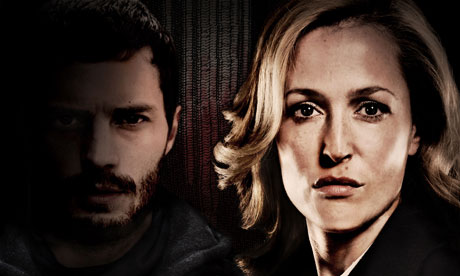
Leaving his victim alive after being interrupted by her boyfriend, Spector (Jamie Dornan) flees the scene but the for the first time, leaves evidence behind. Gibson (Gillian Anderson) becomes even more determined to catch the killer and doggedly begins to pursue all leads, becoming increasingly focused. Spector finds himself going to the police when CCTV footage crops up of him and his daughter at the park near the third victim Sarah Kay and he goes in to 'rule himself out' of the investigation. Oh the irony. Elsewhere, the investigations into the police corruption closes in on the Munro family, but the Chief Constable (John Lynch) finds himself possibly implicated after the suspect flees the country.
First of all, the good points, of which there were many. Technically speaking, this was one of the more interesting episodes for the use of sound. Often non-existent apart from generic background noise, sound has been something not wholly utilised throughout the series in favour of creating a quieter, more suspenseful atmosphere. In this episode on the other, the soundscape was ramped up; Spector's murder attempt here was loud, noisy and chaotic, completely contrasting with his earlier, almost entirely silent killings. Whilst the action on the screen naturally showcased the difference, it was the sound that emphasised it. We're not used to hearing Spector make quite so much noise.
The thematic symbolism was once again present across the episode and with all the analysing I've done of the references across these reviews, there was one gaping hole that I'd missed. Once again, there were plenty of references to light and dark throughout the episode, often contrasted visually with the brightly lit world of Gibson with the shadowy world of Spector. And that's what I'd missed. Throughout each episode, I'd not noticed his name; he's a spectre, a ghost, a shadow that is yet to be caught. I'm slightly ashamed of myself.
Dornan has been the breakout star of this series, not only portraying the underlying psychosis in Spector brilliantly, but also making the other side of his character, the mostly mild-mannered Paul, equally compelling. He's also handled the blending of the two well and it was in this episode that the crossovers became more apparent. Dealing with his wife (Bronagh Waugh) was a tense moment as it was never exactly clear whether she would survive the 'revelation' that he's supposedly been having an affair with the 15 year old babysitter. Speaking of which, his encounter with the babysitter just left me shouting 'Run!' at the screen. Again, another scene in which the outcome was uncertain because Dornan brought both aspects of Spector to the fore.
The idea of the doubling became one of the more overt themes in the episode through a conversation between Gibson and the pathologist. It's not been mentioned outright before but Gibson has since deduced that the killer has a family and therefore must be living two lives, just as she does herself. The comparisons between Spector and Gibson were made explicit by Spector in their conversation. Well-written, tense and beautifully performed by the two stars, the conversation was everything that had made this show so great; a battle of wits, drawn on the lines of both good and evil, but also of gender as Gibson declared the killings to be 'age-old misogyny'. The depiction of female characters in this show has been something to be applauded and it is always refreshing to see a female character like Gibson coming out with such emphatic feminist statements. More please.
And so we come to the ending, which I'm sure left a lot of people feeling slightly disappointed, despite knowing that a second series had been commissioned. Spector drives away with his family, moving to Scotland on a make-or-break trip to fix his broken marriage (poor Sally-Ann, she really doesn't have a clue). Gibson has been told by the killer himself that he is simply leaving, he's finished and there will be no more killings. We know he doesn't like to leave things unfinished and his latest victim is still alive, recovering in hospital from his attack. There is also the unfolding obsession with Gibson herself that may be brought out next series, likewise her obsession with him.
However, it was all a bit anti-climactic. One of the best aspects about The Fall was just how tense it was on any given moment but, apart from the outstanding phone conversation, the final scenes felt a bit flat. Had the series not been re-commissioned, the final shots of Spector driving away with his family and Gibson unsuccessful in her quest to catch the killer would have been outrageously annoying. Neat resolutions may not always happen in the real world but we expect it to in television dramas and I'm grateful The Fall is returning, otherwise that would have been a disappointing conclusion.
I'm still not entirely sure what I make of this episode, which is why this review has been delayed a little. It was good, very good in parts, but it was also quite unsatisfying in others. However, that ending proved a little unsatisfying; had The Fall not been recommissioned for a second series, it could possibly have become one of the most infuriating endings in television, but fortunately it hasn't and so the second series will continue the Spector/Gibson chase.
- Becky
You can read Becky's review of Episode Four here.
Follow @AssortedBuffery on Twitter
Or like our Facebook page
Monday, 10 June 2013
TV REVIEW: The Fall - Episode Four
The Fall continues to unsettle as Gibson rounds in on the killer who just happens to be closing in on his next victim.
The third episode of The Fall has possibly been the peak so far in terms of quality and the fourth episode had a tough act to follow. However, it has more than a few cards up its sleeve as everything in the grim Belfast police station we have become accustomed to seeing starts to unravel. The police corruption subplot has been an interesting addition to what many, including myself, thought was just going to be another slow-burning serial killer drama. The shooting of James Olsen (Ben Peel) as a result of his arrest of a well-known criminal was one of the more shocking moments in the series so far, particularly thanks to his dalliance with main character Gibson (Gillian Anderson). Then came the scene in which Chief of Police Rob Breedlove (Michael McElhatton) chose death before dishonour.
The claustrophobic interview between Matthew Eastwood (Stuart Graham) and Breedlove was technically brilliant, the camera getting closer and closer to McElhatton's face as he found himself increasingly hemmed in by his own corruption. The shooting itself was thankfully off-screen though no less unsettling as we observe the consequences unfold post-suicide. It was also another reminder of Gibson's cold efficiency as she has to deal with the situation, despite not being privy to the details. It tied in well with the previous scene in which she paints her nails with the same colour that was found on Spector's victim in the second episode.
Speaking of Spector, it was another fantastic performance from Dornan this week who has gone from strength to strength has the series has developed. In the first episode, Paul's two lives were kept very separate by his rigid, methodical approach to both killing and parenting (not a sentence I'd ever thought I'd write). However, as the narrative has progressed, the two have begun to slip and slide into each other as his control breaks. His interview with his superior colleagues was a great example of this as he paradoxically protected a woman from her husband whilst displaying some psychotic behaviour to his boss. The letter to his victim's father is another chilling moment; remorse not for the killing, but for the pregnancy.
There was, as is to be expected from this programme now, the intercut sequence in which we learn more information about a possible Spector attack and one actually taking place with disastrous consequences, connected to each other thematically. Unlike the previous crime, this one had the air of panic about it as Spector is caught early by his victim with someone else in the house. Alongside this, we're told about a spontaneous attack on a woman by a man she had had sex with earlier in the night, another unplanned moment lacking the methodical nature of the previous crime we were witness to. And, not to forget, this is where Spector makes his first mistake. He's not wearing gloves.
I'm also really loving how confidently cerebral this show is; last week we had Spector quoting T.S. Eliot and Gibson educating her colleagues in advanced gender studies and perception of women. This week, Spector includes a quote from Also Sprach Zarathustra by Nietzsche in his letter whilst Gibson gives a pertinent anthropology lecture. The references build into the wider themes of the show and there is a lot going on there. Moral conundrums naturally abound in a programme about a serial killer, but we also have analyses on the role of the media, particularly in the representation of women, the value of life and death, sexuality and honour all playing their own parts. It's a heady mix, but a fascinating one to discuss and untangle.
Like Broadchurch before it, The Fall has been largely successful in keeping me completely in the dark as to how the whole thing will unravel; the daughter has got to have something to do with it and of course, Spector's crime went spectacularly wrong this time. With it being renewed for another series and with reportedly all the leads signing on to reappear, I'm not entirely sure whether they will actually wrap up the Gibson/Spector storyline just yet. It's certainly an intriguing relationship and I can stand to see a little more of Dornan in the role.
- Becky
You can read Becky's review of the previous episode here.
Follow @AssortedBuffery on Twitter
Or like our Facebook page
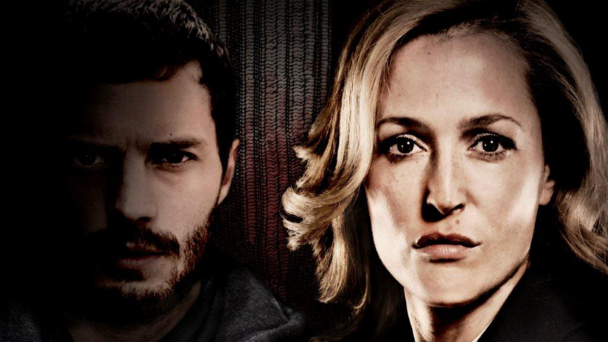
The third episode of The Fall has possibly been the peak so far in terms of quality and the fourth episode had a tough act to follow. However, it has more than a few cards up its sleeve as everything in the grim Belfast police station we have become accustomed to seeing starts to unravel. The police corruption subplot has been an interesting addition to what many, including myself, thought was just going to be another slow-burning serial killer drama. The shooting of James Olsen (Ben Peel) as a result of his arrest of a well-known criminal was one of the more shocking moments in the series so far, particularly thanks to his dalliance with main character Gibson (Gillian Anderson). Then came the scene in which Chief of Police Rob Breedlove (Michael McElhatton) chose death before dishonour.
The claustrophobic interview between Matthew Eastwood (Stuart Graham) and Breedlove was technically brilliant, the camera getting closer and closer to McElhatton's face as he found himself increasingly hemmed in by his own corruption. The shooting itself was thankfully off-screen though no less unsettling as we observe the consequences unfold post-suicide. It was also another reminder of Gibson's cold efficiency as she has to deal with the situation, despite not being privy to the details. It tied in well with the previous scene in which she paints her nails with the same colour that was found on Spector's victim in the second episode.
Speaking of Spector, it was another fantastic performance from Dornan this week who has gone from strength to strength has the series has developed. In the first episode, Paul's two lives were kept very separate by his rigid, methodical approach to both killing and parenting (not a sentence I'd ever thought I'd write). However, as the narrative has progressed, the two have begun to slip and slide into each other as his control breaks. His interview with his superior colleagues was a great example of this as he paradoxically protected a woman from her husband whilst displaying some psychotic behaviour to his boss. The letter to his victim's father is another chilling moment; remorse not for the killing, but for the pregnancy.
There was, as is to be expected from this programme now, the intercut sequence in which we learn more information about a possible Spector attack and one actually taking place with disastrous consequences, connected to each other thematically. Unlike the previous crime, this one had the air of panic about it as Spector is caught early by his victim with someone else in the house. Alongside this, we're told about a spontaneous attack on a woman by a man she had had sex with earlier in the night, another unplanned moment lacking the methodical nature of the previous crime we were witness to. And, not to forget, this is where Spector makes his first mistake. He's not wearing gloves.
I'm also really loving how confidently cerebral this show is; last week we had Spector quoting T.S. Eliot and Gibson educating her colleagues in advanced gender studies and perception of women. This week, Spector includes a quote from Also Sprach Zarathustra by Nietzsche in his letter whilst Gibson gives a pertinent anthropology lecture. The references build into the wider themes of the show and there is a lot going on there. Moral conundrums naturally abound in a programme about a serial killer, but we also have analyses on the role of the media, particularly in the representation of women, the value of life and death, sexuality and honour all playing their own parts. It's a heady mix, but a fascinating one to discuss and untangle.
Like Broadchurch before it, The Fall has been largely successful in keeping me completely in the dark as to how the whole thing will unravel; the daughter has got to have something to do with it and of course, Spector's crime went spectacularly wrong this time. With it being renewed for another series and with reportedly all the leads signing on to reappear, I'm not entirely sure whether they will actually wrap up the Gibson/Spector storyline just yet. It's certainly an intriguing relationship and I can stand to see a little more of Dornan in the role.
- Becky
You can read Becky's review of the previous episode here.
Follow @AssortedBuffery on Twitter
Or like our Facebook page
Tuesday, 28 May 2013
TV REVIEW: The Fall - Episode Three
The Fall continues with another excellent episode, delving further into the show's themes and sliding headlong into the respective worlds of Gibson and Spector.
With the news that The Fall has been picked up for a second series, my enthusiasm for this show is at a serious high, aided in no small way by the fact that the third episode was so good, I'd quite happily sit and write an essay about it and the themes it has brought to the fore. I won't, not in this review anyway, but it has impressed me in a way that no police procedural has for quite some time. Rather than a simple whodunnit, with the twists and turns you can spot a mile away, The Fall has opted for the whydunnit approach by following both DSI Stella Gibson (Gillian Anderson) and serial killer Paul Spector (Jamie Dornan) going about their businesses in all their vast differences. Far from just a gimmick, it has proved essential to individualising the show and allowing it to explore more cerebral themes in amongst the autopsies.
The episode began with a lighter atmosphere than we had seen in the previous two episodes, employing some well-pitched gallows humour to allow us to see a little bit more of Gibson. Whip-smart and ready with a handy putdown, Anderson's Gibson has been a great centre to all of the goings-on but I shall return to her shortly. Dornan has been nothing short of a revelation as Spector given that he has very little mainstream acting experience beyond a few episodes in Once Upon A Time and in Sofia Coppola's Marie Antoinette. He may be one of the more outwardly bland serial killers committed to celluloid (especially if you contrast him with Seven's John Doe, who he is starting to have some crossovers with), but Spector is a compelling watch and Dornan captures his two sides brilliantly, without ever losing that edge which makes the character so chilling.
Last week's episode opening was an uncomfortable intercut sequence and these are fast becoming one of the show's most used techniques to connect our two main characters. It displays an assured use of dramatic irony that treads a fine line between rolling our eyes at the obvious points, to becoming so engrossed as to shout at the television when Spector hugged his client. Or was that just me? Personally, I find myself getting worried whenever a brunette in her 30s appears on the screen. The final intercutting sequence as the detectives sat around discussing their profile of the killer whilst Spector haunts the house of his next victim proved the effectiveness of the technique. It provided us some motive exposition for Spector whilst seeing it play out with his movements.
The two intercutting sequences also highlighted one of the key themes that appears to be surfacing as the series progresses and it is one of the more visual aspects that drew my attention first. The majority of the first two episodes seemed to take place in dark, low-lit, moody locations that well befit the dark atmosphere that the series worked hard to create. However, this episode opens in broad daylight and continues to be well-lit for the majority of the action, linking in well with the more humourous aspect of the script that characterised the first few scenes, despite their dark subject matter. As Gibson got closer to working out a profile for the killer and as Spector closed in on his next victim, the scenes got darker until they took place almost entirely at night. A subtle shift, but one that really added to the mood of the third episode.
It is also a theme that appears to be cropping up in the language of the series as well. We see Spector writing in his journals dedicated to his victims about 'the shadow'. Gibson's briefing is full of light-related imagery; she again likens the killer to the dark as he works in the shadows unseen whereas the police operate under the glare of the media. Even the environments in which the two main characters operate are characterised by these differences, for example the sterile, artificially-lit police headquarters where Gibson is most likely to be found in contrast to the muted, domestic tones of Spector's home.
Other binaries were also of the order of the day in this particular episode with plenty of commentary about the way women are portrayed in the media and thought of in society. Cropping up first in the selection of operation names was 'Eden', brushed aside by Gibson because it would ensure that the women were seen to be to blame for the murders. Likewise, in the discussion about whether to call the victim innocent, Gibson observes that the media likes to slot women neatly into the categories of virgin and whore and that it is best not to encourage them. Honestly, these little moments were ones which had me punching the air with perhaps a little too much glee considering what I was watching. Nevertheless, it is this treatment of women, in particular the victims, that should be commended in The Fall.
Linking back to the last episode once again, it featured a large amount of nudity, more than we'd seen on the show so far as Spector washed and cleaned his victim. However, the female body wasn't sexualised in the same way that say, a show like Game of Thrones would have done. Spector even demurely covers her up and this episode revealed that her pregnancy has somehow tainted the murder for him. He likes his victims pure and he is categorising them at the virgin end of the female spectrum. This is clearly going to matter in the series as the religious undertones are slowly coming to the fore; the title itself is an explicit reference to Eve and the repeated mentions of Eden and Genesis cropping up. There is one character who refuses to be defined in any such terms though and in doing so, is fast becoming one of the most intriguing characters on television.
Aided by an impressive performance from Anderson, Stella Gibson is nothing short of a conundrum and I feel like I'm trying to work out her motivations just as much I am with Spector. In an era where it seems that female characters are consistently defined by their home lives (whether they want to be or not), here is a character who doesn't appear to have one. She sleeps out of a hotel or in the office, she seduces men when she feels like it and she is incredibly good at her job which confounds those around her. In one truly amazing exchange, an officer confronts her about her affair with the now-deceased James Olsen and she realises that it is her sexuality that he has a problem with: 'Woman fucks man. Woman - subject. Man - object. That's not so comfortable for you is it?'
It also becomes a wider commentary of the show itself if you remove the sexual activity of the previous quote, it simply becomes 'woman - subject. Man - object'. For Spector, it is the other way around; women are objects for his sexual gratification. However, for the series, Gibson is most definitely the subject hunting down her object which is Spector, the killer. As the police officers working the case observe, he has an issue with women in powerful positions. 'Don't we all' one character wryly observes, but The Fall seems to be reversing this balance. Gibson is the one in power and it is only a matter of time before she succeeds in possessing her object. When she comments that Spector's killing is about 'power and control and the thrill', she could almost be talking about herself. It's a fascinating way of showing this kind of character and I can't wait to see how she develops further.
I've tried not to be too hyperbolic throughout this review as that can often put people off or raise expectations to a stupidly unachievable level, but The Fall really is one of the best shows on television at the moment. I also apologise for it turning into a bit of an essay, despite what I said at the beginning. If you haven't yet caught it, I urge you to head to iPlayer and settle yourself in for the first three episodes. It's as creepy as hell and as bleak as the foggiest of Dickens, but it's something quite special.
- Becky
You can read Becky's review of Episode Two here.
Follow @AssortedBuffery on Twitter
Or like our Facebook page
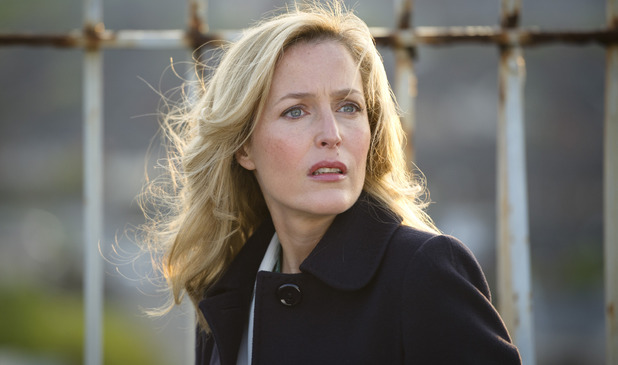
With the news that The Fall has been picked up for a second series, my enthusiasm for this show is at a serious high, aided in no small way by the fact that the third episode was so good, I'd quite happily sit and write an essay about it and the themes it has brought to the fore. I won't, not in this review anyway, but it has impressed me in a way that no police procedural has for quite some time. Rather than a simple whodunnit, with the twists and turns you can spot a mile away, The Fall has opted for the whydunnit approach by following both DSI Stella Gibson (Gillian Anderson) and serial killer Paul Spector (Jamie Dornan) going about their businesses in all their vast differences. Far from just a gimmick, it has proved essential to individualising the show and allowing it to explore more cerebral themes in amongst the autopsies.
The episode began with a lighter atmosphere than we had seen in the previous two episodes, employing some well-pitched gallows humour to allow us to see a little bit more of Gibson. Whip-smart and ready with a handy putdown, Anderson's Gibson has been a great centre to all of the goings-on but I shall return to her shortly. Dornan has been nothing short of a revelation as Spector given that he has very little mainstream acting experience beyond a few episodes in Once Upon A Time and in Sofia Coppola's Marie Antoinette. He may be one of the more outwardly bland serial killers committed to celluloid (especially if you contrast him with Seven's John Doe, who he is starting to have some crossovers with), but Spector is a compelling watch and Dornan captures his two sides brilliantly, without ever losing that edge which makes the character so chilling.
Last week's episode opening was an uncomfortable intercut sequence and these are fast becoming one of the show's most used techniques to connect our two main characters. It displays an assured use of dramatic irony that treads a fine line between rolling our eyes at the obvious points, to becoming so engrossed as to shout at the television when Spector hugged his client. Or was that just me? Personally, I find myself getting worried whenever a brunette in her 30s appears on the screen. The final intercutting sequence as the detectives sat around discussing their profile of the killer whilst Spector haunts the house of his next victim proved the effectiveness of the technique. It provided us some motive exposition for Spector whilst seeing it play out with his movements.
The two intercutting sequences also highlighted one of the key themes that appears to be surfacing as the series progresses and it is one of the more visual aspects that drew my attention first. The majority of the first two episodes seemed to take place in dark, low-lit, moody locations that well befit the dark atmosphere that the series worked hard to create. However, this episode opens in broad daylight and continues to be well-lit for the majority of the action, linking in well with the more humourous aspect of the script that characterised the first few scenes, despite their dark subject matter. As Gibson got closer to working out a profile for the killer and as Spector closed in on his next victim, the scenes got darker until they took place almost entirely at night. A subtle shift, but one that really added to the mood of the third episode.
It is also a theme that appears to be cropping up in the language of the series as well. We see Spector writing in his journals dedicated to his victims about 'the shadow'. Gibson's briefing is full of light-related imagery; she again likens the killer to the dark as he works in the shadows unseen whereas the police operate under the glare of the media. Even the environments in which the two main characters operate are characterised by these differences, for example the sterile, artificially-lit police headquarters where Gibson is most likely to be found in contrast to the muted, domestic tones of Spector's home.
Other binaries were also of the order of the day in this particular episode with plenty of commentary about the way women are portrayed in the media and thought of in society. Cropping up first in the selection of operation names was 'Eden', brushed aside by Gibson because it would ensure that the women were seen to be to blame for the murders. Likewise, in the discussion about whether to call the victim innocent, Gibson observes that the media likes to slot women neatly into the categories of virgin and whore and that it is best not to encourage them. Honestly, these little moments were ones which had me punching the air with perhaps a little too much glee considering what I was watching. Nevertheless, it is this treatment of women, in particular the victims, that should be commended in The Fall.
Linking back to the last episode once again, it featured a large amount of nudity, more than we'd seen on the show so far as Spector washed and cleaned his victim. However, the female body wasn't sexualised in the same way that say, a show like Game of Thrones would have done. Spector even demurely covers her up and this episode revealed that her pregnancy has somehow tainted the murder for him. He likes his victims pure and he is categorising them at the virgin end of the female spectrum. This is clearly going to matter in the series as the religious undertones are slowly coming to the fore; the title itself is an explicit reference to Eve and the repeated mentions of Eden and Genesis cropping up. There is one character who refuses to be defined in any such terms though and in doing so, is fast becoming one of the most intriguing characters on television.
Aided by an impressive performance from Anderson, Stella Gibson is nothing short of a conundrum and I feel like I'm trying to work out her motivations just as much I am with Spector. In an era where it seems that female characters are consistently defined by their home lives (whether they want to be or not), here is a character who doesn't appear to have one. She sleeps out of a hotel or in the office, she seduces men when she feels like it and she is incredibly good at her job which confounds those around her. In one truly amazing exchange, an officer confronts her about her affair with the now-deceased James Olsen and she realises that it is her sexuality that he has a problem with: 'Woman fucks man. Woman - subject. Man - object. That's not so comfortable for you is it?'
It also becomes a wider commentary of the show itself if you remove the sexual activity of the previous quote, it simply becomes 'woman - subject. Man - object'. For Spector, it is the other way around; women are objects for his sexual gratification. However, for the series, Gibson is most definitely the subject hunting down her object which is Spector, the killer. As the police officers working the case observe, he has an issue with women in powerful positions. 'Don't we all' one character wryly observes, but The Fall seems to be reversing this balance. Gibson is the one in power and it is only a matter of time before she succeeds in possessing her object. When she comments that Spector's killing is about 'power and control and the thrill', she could almost be talking about herself. It's a fascinating way of showing this kind of character and I can't wait to see how she develops further.
I've tried not to be too hyperbolic throughout this review as that can often put people off or raise expectations to a stupidly unachievable level, but The Fall really is one of the best shows on television at the moment. I also apologise for it turning into a bit of an essay, despite what I said at the beginning. If you haven't yet caught it, I urge you to head to iPlayer and settle yourself in for the first three episodes. It's as creepy as hell and as bleak as the foggiest of Dickens, but it's something quite special.
- Becky
You can read Becky's review of Episode Two here.
Follow @AssortedBuffery on Twitter
Or like our Facebook page
Thursday, 23 May 2013
TV REVIEW: The Fall - Episode Two
Picking up where last week's excellent first episode left off, The Fall's second instalment begins with what was arguably one of the finest, coldest and downright disturbing moments seen on television for a long time. Once again, parallels are drawn between our two leads, the forthright DSI Stella Gibson (Gillian Anderson) and the methodical serial killer Paul Spector (Jamie Dornan) as they both participated in R-rated late night activities. For Gibson, it's a fling with resident attractive copper DC Olsen (Ben Peel) in a matter-of-fact and perfunctory sex scene that had all the passion of a limp trout. Then, in between, we follow Paul as he bathes and poses his victim, cleaning her bedsheets and painting her nails before quietly vacating the property.
I thought last week's final scenes were about as bad as it was going to get, but I was totally wrong. The opening was just brilliant; played out in almost complete silence, it was chilling in exactly the right way and more than once, I felt I should look away. It was just too uncomfortable. Indeed, that set the tone for the rest of the episode. Like the opener, The Fall was determined to not let you settle into it, not to get comfortable. Each time it felt like you could relax a little, it threw in another shock to jar back out of it again. It's a testament to Alan Cubitt's writing that this doesn't feel forced at all, but rather a natural progression in the show's events.
The first episode mainly concentrated on the two leads, introducing us to their own personal spheres, their ticks and their habits. The second episode then allowed for us to see the wider world in which Gibson and Spector operate, the people they interact with and the events going on in the background. Spending time with characters like Olsen and Paul's wife, Sally-Ann (Bronagh Waugh), gives other actions in the episode more meaning and consequently more impact. I also like the developing sub-plots of police corruption rumbling on and the fact that Belfast is still dealing with various troubles, though not all of the variety you would expect.
That being said, it is the two leads who continually draw us back in and a sterling job they are doing of it too. As I said last week, Gillian Anderson has the tougher task, keeping our attention as the heroine of the piece. Thankfully, Anderson's a skilled enough actress to carry off the enigma and wonderful frankness that Gibson is imbued with. Like her strangle-happy counterpart, Gibson offers no real reason why she's so determined to solve this case beyond her initial instincts. I'm also very impressed that there has been no desire to give her anything like a back story.
Dornan is just as good, if not better than Anderson, making the two sides of Spector's character entirely believable. He may be the blandest serial killer out there, but that's the point; Dornan captures the domestic dad versus the killer marvellously. The domestic scenes still prove to be just as jarring as in the first episode; washing his daughter's hair the day after killing someone still proves to be quite the shock, losing nothing in the familiarity of seeing more of these contrasts. I'm still no closer to working out Spector's motivation behind these killings, but then that just makes him all the more chilling. Nothing is more scary than a killer with no motive.
Just from the second episode, I can tell that The Fall is going to be something I watch before going on to view something incredibly cheerful that possibly involves rainbows, sparkles and a frolicking puppy or two. This is no criticism. In fact, The Fall may possibly be one of the best dramas on television at the current moment. It's just so goddamn bleak.
- Becky
You can read Becky's review of Episode One here.
Follow @AssortedBuffery on Twitter
Or like our Facebook page.
Tuesday, 14 May 2013
TV REVIEW: The Fall - Episode One
Crime dramas are the series du jour at the moment with Broadchurch standing out as one of the biggest recent successes whilst quieter affairs like Assorted Buffery favourite Scott and Bailey continue to impress. The Fall then has a lot of work to do to stand out from an already packed genre. Thankfully, it seems to be doing so through its central quirk; we already know who the killer is. In fact, we spend just as much time with the killer as we do with the investigator, a neat twist which already establishes The Fall on solid ground.
Sent to review a murder investigation in Belfast, Detective Superintendent Stella Gibson (Gillian Anderson) sees a pattern between two murders and believes there is a serial killer on the loose. However, her superiors have other ideas and urge her to just do the job she was sent to do. Elsewhere in the city, we are introduced to Paul Spector (Jamie Dornan), a psychologist, happily married with two adoring children and a nice family home. He also happens to be a serial killer with a penchant for tall brunettes who strikes again over the course of the episode, stalking his victim whilst taking his daughter for a walk in the park.
It is these central juxtapositions that make the first episode of The Fall an intriguing watch. First of all, the contrast of the hunter and the hunted is established in the opening scenes; both Gibson and Spector are seen going through the motions of their own routines, one in her own home, the other in someone else's. These scenes appear throughout the episode, tying the two characters together even if they don't realise it themselves yet. It also makes for an interesting dynamic as an audience member, employing a healthy dose of dramatic irony to produce a rather unsettling effect.
The rest of the episode was no less uncomfortable, particularly in the scenes with Paul as he goes about his two lives. Returning from stalking the house of his next victim, Paul comes home to find his young son waiting for him on the stairs, worried about where his father was gone. As shocks go, it was most extreme and unexpected, hammering home that this is a drama in which the domestic is every much linked to the criminality. Dornan's performance captures the two aspects well though with a hollow-eyed link between the two. He may smile with his kids, but it never goes to his eyes. I'll be interested to see if Paul manages to keep the two lives separate successfully because it already appears as if they're beginning to bleed into each other.
As for Gillian Anderson, it's a welcome return to investigation for her (though I do still expect Mulder to show up any second - it's just habit). Arguably given the harder task of playing the hero opposite an intriguing villain, Anderson gives a solid, if not showy performance, as Gibson and it is her scenes that provide a measure of security and comfort from the unsettling nature of Spector. It is also once again great to see a lead female role in such a drama, following on from the considerable performance of Olivia Colman in Broadchurch.
Though slow-burning, The Fall's central conceit of a 'whydunnit' as opposed to a 'who' makes this a compelling watch and I'll be interested to see whether it can maintain the uncomfortable atmosphere that it has established so well in the first instalment.
- Becky
Follow @AssortedBuffery on Twitter
Or like our Facebook page.
Subscribe to:
Posts (Atom)
