Beware: this review contains spoilers...

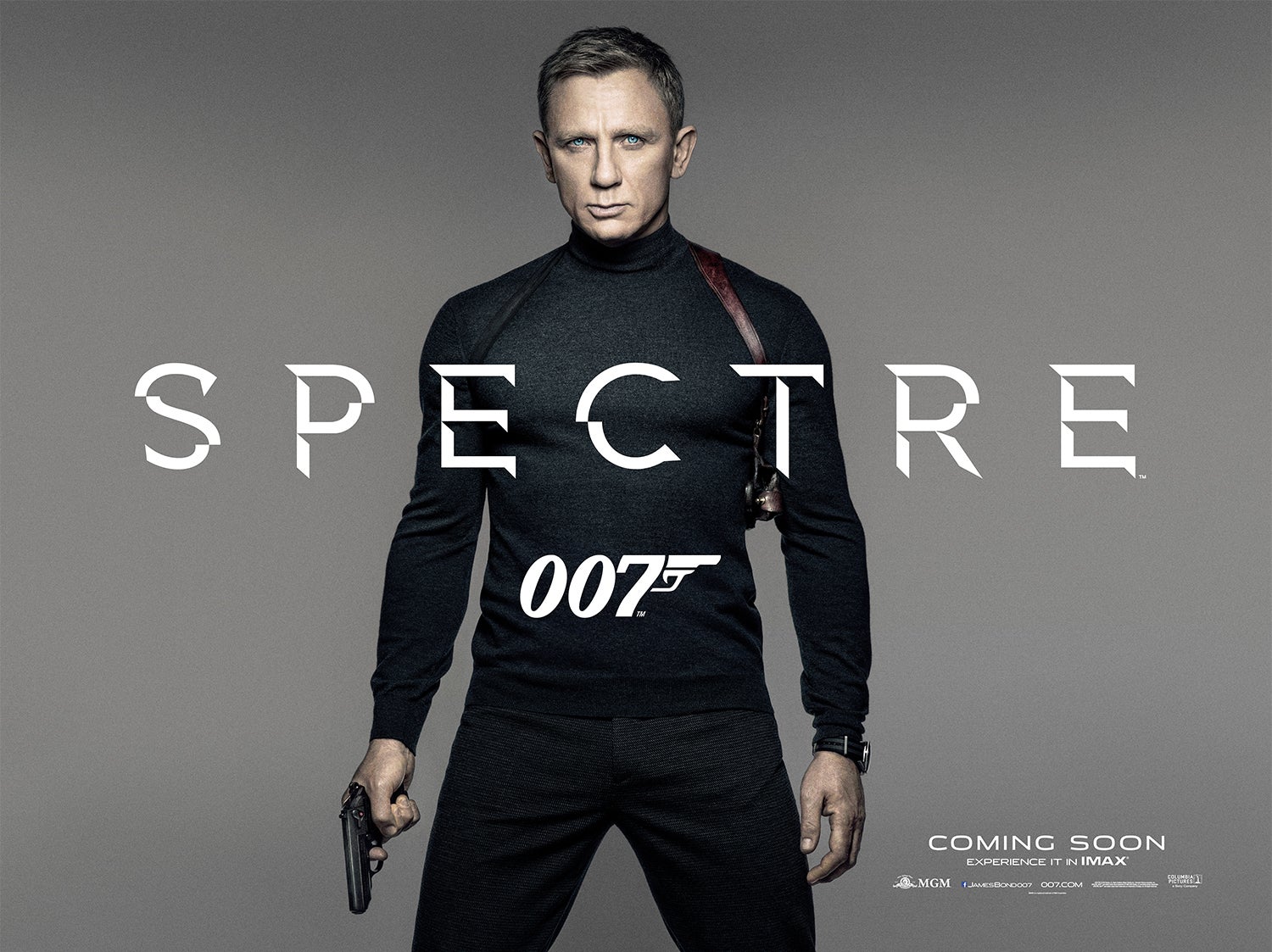
For someone who calls himself a 007 geek, I didn't see Spectre at the pictures. This was double strange considering I loved Skyfall, and Daniel Craig is my second favourite Bond*, but the marketing didn't grab me at all and the early opinions from people I trusted were anything but glowing. But now it's out on home video, I decided to give it a chance.
Everything seemed back to normal at the end of Skyfall - a new M, Moneypenny, and a chance for Bond to get back in the saddle for some new adventures away from Quantum. Oops. After a decent pre-credit sequence in Mexico during the Day of the Dead celebration, Bond finds himself grounded in London while MI6 merge with MI5, and new boss C wanting to shut down the 00 program. Thing is, Bond was in Mexico to kill someone on the orders of Judi Dench's M (making a post-death appearance on a VHS), but this person again seems to be a part of something bigger. Spectre.
Spectre is the weirdest film. Imagine a corridor at EON: from the left comes someone carrying the script to Thunderball, from the right another person carrying the script to Moonraker. They collide, and both scripts are hopelessly entangled without rhyme or reason. It follows the previous exploits of Craig's 007, with the hard-edged action barely stepping back from the parody line, but has a bunch of weird comedy moments straight out of the Roger Moore back catalogue. However, Craig doesn't really seem like he wants either, and just looks very bored throughout the whole thing.
The scenes involving women are worse; Bond's lover/companion Lea Seydoux is pretty unconvincing. Craig and Seydoux themselves have less romantic chemistry than Hayden Christensen and Natalie Portman, and Seydoux's tired "I don't want to be rescued, I can handle myself" shtick is worse considering she keeps being Bond's Olive Oyl, with Dave Bautista's Mr Hinx a quite good Bluto. Bautista is probably the most interesting character in the film, especially after gouging someone's eyes out at the Spectre AGM. Being served a worse fate than ol' no-eyes is Monica Bellucci, the supremely talented actress who is ickily seduced by Bond in his old ways of fucking women to get information and not really caring if they get killed or not (the latter is funnily addressed at one point). And Moneypenny is back at being Bond's info stooge, although we do see she has a life outside MI6, and when I say life, I mean someone else in her bed.
And then there's Christoph Waltz. Yes, of course he is Ernst Stavro Blofeld, although previously he was Franz Oberhauser who mysteriously died along with his father. Turns out orphaned Bond grew up with them, and, well - you remember that bit in Robin Hood: Prince of Thieves where Christian Slater tells Kevin Costner that he hates him because their father liked him more? This is basically the whole deal with Blofeld, who not only has a fluffy white cat but ends up at the end with a big facial scar and cloudy eye. And Waltz is terrible. So boring. It's a horrible waste - he's such a fine actor, and he's just given these dreadful cliched lines and weird plot which basically amounts to him taking away Bond's memories. Spectre itself never really figures in the plot, just being placed as a shadowy organisation whose other head honcho is a dead giveaway from the moment we meet him.
Oh, and the action sequences are so dull. There's a in-helicopter fight that goes on for ages, a car chase with Bond's brand new Aston Martin that feels like it's going at 10mph, and, well I've forgotten what else. Everything seems half-hearted, be it Thomas Newman's okay (I guess) score (although maddeningly he's still using that ten-year old Bond theme arrangement by David Arnold) or the cinematography. Remember Deakins and that silhoutte fight? The fire on the Scottish moors? All we get here is an oddly yellow filter and little else to recommend. Oh, and that fucking Sam Smith song? DIRE.
The funny thing is, I enjoyed it for a while, in the same way I enjoy Octopussy. But after a while it just grinds on you, especially as it goes on forever - two and a half hours is far too long for something this half-baked. The third act in particular is absolute rubbish, and the denouement is a damp squib. The best thing about Spectre is that it finally begins with the gunbarrel, but from there everything is downhill.
The rumours are flying about that Spectre will probably turn out to be Daniel Craig's last venture as James Bond. As someone who adores Craig's Bond, this is a terrible prospect, that after such success he could go out on such a bloody awful note. A lot of people disliked Skyfall, but at least it felt fresh, it felt different. It felt like it wasn't afraid to try new things, and it's hard to believe both Skyfall and Spectre have the same director. There was a track on the Skyfall soundtrack called 'Old Dog, New Tricks' - reverse that and you have Spectre. Same old shit, different day.
*After DALTON, of course.
- Charlie
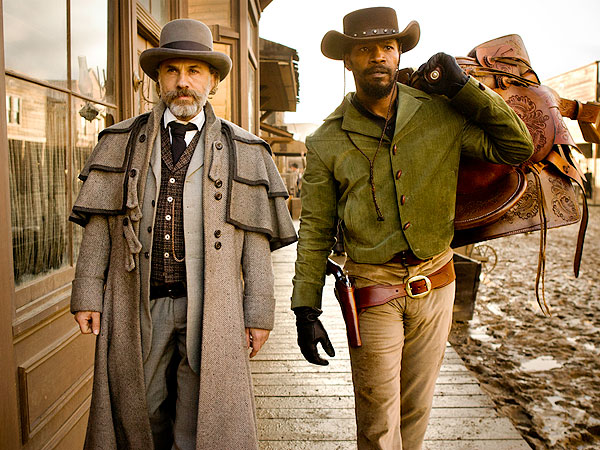
After altering the history of World War II in Inglourious Basterds, Quentin Tarantino has turned his unique attentions to nineteenth century America and the slave trade. Django Unchained follows the story of titular slave Django (Jamie Foxx), freed by Dr King Schultz (Christoph Waltz), a bounty hunter seeking Django's help in catching a quarry. The pair then team up and work towards rescuing Django's wife, Broomhilda (Kerry Washington) from extravagant plantation owner Calvin Candie (Leonardo DiCaprio) at his home, Candieland.
The structure of the film is set up early in an exchange between Django and Schultz in which the German bounty hunter reveals the story of Broomhilda's namesake, a princess in German legend who is imprisoned atop a mountain and guarded by both hellfire and a dragon before being rescued by the hero Siegfried. From this point on, we're treated to a Spaghetti Western (or Southern as Tarantino prefers) rewriting of this fairytale and as such, gives us probably the most structurally conventional Tarantino we've ever had. There are the odd illustrative flashbacks, but for the most part, the narrative plays out in a linear fashion. Tarantino's love of the spaghetti genre is present in every single frame, from the fast zooms into characters' faces or the brief appearances of stock characters like the Sheriff or the U.S. Marshall, though they are re-worked into the wider fairytale narrative rather than simply hitting the usual beats of the genre.
One of the film's best aspects is its excellent cast; from the brief cameos to the starring roles, each actor performs their roles with relish. DiCaprio in particular looks like he's having a whale of time as Candie, a man who is both a gentleman and a brutal killer. Likewise Waltz has a flair for performing Tarantino's dialogue and was given some wonderful speeches while Foxx gives a strong, mostly silent performance that imbues Django with a dangerous physicality. It is Samuel L. Jackson though whose performance as Stephen, Calvin's right-hand man, that lingers long in the memory afterwards. He's given the most complex character, a slave who believes in slavery and who cannot comprehend Django's freedom or attitude.

The film has also been subject to plenty of controversy for its depiction of a highly sensitive issue, but whilst it wasn't necessarily sensitively handled (this is Tarantino after all), at no point did it feel as if the violence against the slaves was glorified or glossed over. Violence in the film was often cartoon-like, explosions of blood bursting all over the place after someone is shot, but this is predominantly utilised for the white characters' deaths, not the slaves. In fact, any violence against the slave characters made for extremely uncomfortable viewing, particularly the 'mandingo' fight that takes place in Candie's first scene. Tarantino naturally doesn't shy away from depicting the brutality of the fight, but he is clearly focussing in on it, not to glorify or gloss over, but to make you uneasy.
There are some truly brilliant moments in here, particularly in the first third of the film which was uniformly excellent. In particular, the Ku Klux Klan raid against Django and Schultz was a masterpiece of comic structuring with the drama of the raid itself providing a starkly dramatic contrast to the hilarity of the gang beforehand, debating the practicality of their masks. It's a Blazing Saddles-level of humour, taking a group as horrific and evil as the KKK and reducing them to a laughing stock in just a few lines. It was by far my favourite moment of the film, but unfortunately, the rest didn't quite match up.
Part of the problem was that the film was just too long, and many of the scenes within it needed trimming down (which makes you realise just how good Tarantino's partnership with Sally Menke was). Once the characters set off for Candlieland, the film slowed to a snail's pace and only recovered in brief moments towards the end. The dinner scene in Candieland was a classic example, building up to a tension akin to that of the tavern scene in Inglourious Basterds. The plot also took an illogical turn, with an over elaborate scheme for getting Broomhilda back and an extra half an hour of narrative that simply didn't need to be there. As a result, the film is uneven, flashes of brilliance tempered with scenes that are simply too long and too overwrought.
However, there is one element of the film that is consistently excellent throughout and that is the soundtrack. Tarantino has always been famous for selecting brilliant musical accompaniments for his films and here is no different. Once again, the anachronistic songs work well, giving Django in particular a timeless quality, fitting in well with the timeless quality that the fairytale structure provides, despite the specific mid-nineteenth century setting. Ennio Morricone's contributions also ensures that it is set firmly within the spaghetti western tradition by providing an aural link that everyone associates with this particular genre. It's a brilliant soundtrack and is likely to be considered one of the director's best.
It's just a shame that Django Unchained in its entirety is a wildly uneven film, hampered by a final half that operates on a slow pace, yet featuring some fantastic moments and brilliant performances. It had the potential to be great, but unfortunately, never quite hits a consistent high and also features probably the worst Quentin Tarantino cameo yet.
***
- Becky
Follow Becky on Twitter @beckygracelea
Or find her on her blog beckygracelea.wordpress.com