Every once in a while, a show comes along that is constructed so brilliantly, it is very easy to get lost in its world. You fall for its characters, you love the little references it drops or the sense of humour it has. In The Flesh is one such show, expanding the world of its mini-series beginning to produce something truly and consistently astonishing.

Last week's episode saw several of Roarton's finest get ready to complete their own personal quests as the village gears up for the Winter Fete. Simon is back in Roarton after he received his orders from the Undead Prophet to sacrifice the First Risen, which he believes to be Kieren, and kickstart the Second Rising. Maxine has discovered the identity of the true First Risen and is hoping that Simon will complete the job for her own personal ends. Kieren himself is under house arrest after being falsely accused of releasing the rabids and under threat of being sent back to the treatment centre in Norfolk at the behest of his parents. He also has to deal with a paranoid and violent Gary. Amy, meanwhile, is feeling again and going through the first flush of romance with unlikely hero Philip.
The final episode's narrative allows for the entire spectrum of emotion to be covered, often extremely moving, funny and horrifying all at the same time.. There's that same blackly comic thread running through in the confrontation between Gary and Kieren or the use of the cattle prod to halt Martin in her tracks. Most overwhelming, though, is the sense of tragedy at the death of Amy. It's long been clear that someone was for the chop this series and Amy's fan favourite status put her at the forefront and so it occurred. The true First Risen, there's a cruel irony in Amy discovering her heart beaten only for it to be stabbed by a crazed Maxine Martin to bring about the Second Rising. It's a horrible moment, thanks in no small part to Emily Bevan's continually excellent performance and the shocking and violent nature of the attack. Bevan's capable balance of Amy's vulnerability coupled with a steely determination to enjoy life has firmly planted her in fan favourite territory (which of course means she has to die).
The threat of the Second Rising has been building throughout the series, something which Maxine Martin and Simon have been both working towards from their opposite ideologies. The conviction of belief in a wide variety of forms has been one of the most prevalent themes so far and is brought in to this episode as the major narrative drive. Shown in another one of the parallel sequences that have been excellent throughout, Gary, Simon and Maxine are seen praying before going into action. Over the course of the episode, these prayers and beliefs are challenged and each react in a completely different way, fuelling a gloriously tense sequence as everybody's different missions come to a head in the old and new Roarton graveyards.
Rather than go for the dramatic, mythological development, Dominic Mitchell (back on writing duties for this episode) chooses to do something much more effective in disproving the entire mythology of the Second Rising. That undercutting of the mythology which has defined much of the second series proves to be much more in keeping with the more understated elements of the show and more welcome than a grandiose reveal. It may bring the village together briefly as they mourn Amy and resent Maxine, but this is Roarton. Things don't change overnight. The pub-based scenes at the end of the episode showed that brilliant public face of acceptance of normality and tolerance before revealing the PDS sufferers are firmly with the Undead Prophet and the living members of Roarton continue with their prejudice.
Maxine Martin has been the weakest link in the series, beginning the narrative as an enigmatic and complex figure before transforming swiftly into a two-dimensional villain that seem to exist just to put spanners in various works. This episode goes some way to rectify that as she takes matters into her own hands in killing Amy and then giving a nicely unhinged speech to everyone gathered at the village fete. With a personal stake in the Second Rising, the complete absence of it sends her over the edge, pushing her religious and prejudice fervour into something more dangerous. Though still not as well drawn or complex as her narrative parallel Simon, Martin's demise does stir up some sympathy for her in the final moments.
It is here that Simon and Martin's paths finally diverge; he too is pushed to the limits by his beliefs, committed to killing Kieren in order to fulfil the Undead Prophet's wishes. However, when Kieren is threatened, he chooses to save him instead. Unlike Martin, Simon is able to pull back from the brink and sacrifice his beliefs for Kieren. Emmett Scanlan has been one of this series' greatest strengths as its gone on and the enigmatic quality he brought to Simon kept everyone guessing right up until the reveal that he had taken the bullet for Kieren. With it looking likely that he will stay and winning over Kieren's parents in the process, a post-religious fervour Simon is a very interesting prospect indeed.
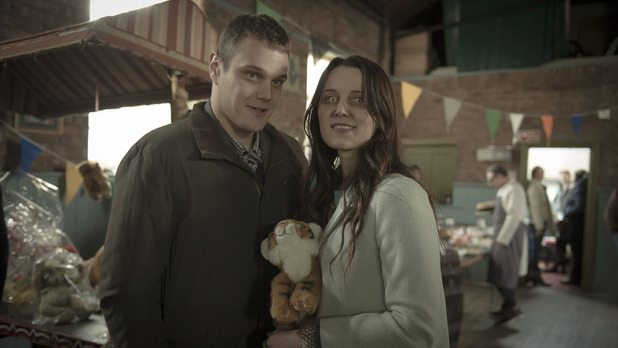
The separate character arcs across this series have been largely brilliantly drawn. Philip in particular has undergone quite the transformation from weaselly ambitious politician to a romantic idealist who stands up for what he believes in. His final moments with Amy, unable to let go of the tiger he won for her until the last moment is just heartbreakingly sad. It's these quieter background arcs, like that of Freddie and Haley in an earlier episode, that make Roarton feel so expansive and yet so insular at the same time. The focus may be on the undead triumvirate of Amy, Kieren and Simon, but around them, a convincing collection of people are going through their own experiences, of which we get the occasional welcome glimpse.
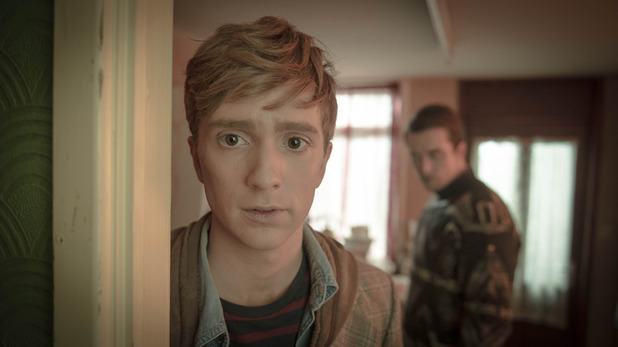
Luke Newberry has been the not-quite-beating heart of the series and is again fantastic here as Kieren finally comes to terms with himself. Having been constantly at war with his image, his status and the way society perceived him, Amy's death allows him to come to some sort of acceptance as he decides to stop running and stay in Roarton. He's also exhibiting the shakes that kickstarted Amy's transformation, which is another promising narrative should the show continue. The happiest part of the episode is when he is finally able to talk to each member of his family, even convincing Jem to get the help that she needs to overcome her trauma.
With that, another fantastic series of In The Flesh comes to a close. There's no confirmation yet as to whether it will receive a third series (it should), but the ending ties up enough loose threads and leaves plenty dangling to continue the narrative should Dominic Mitchell be afforded the chance. I'm particularly intrigued by the arrival of Weston and Halperin representatives in Roarton, which I haven't even got round to mentioning it here though they promise a lot. These six episodes have been an enthralling exercise in world-building and character development and with the mythology steadily building, it would be a shame to not see any more of it. Well-deserving of its BAFTAs and a continued run, In The Flesh is an absolute triumph.
- Becky
You can read Becky's reviews of the previous episode here.
Follow @AssortedBuffery on Twitter
Or like our Facebook page
The fourth episode of In The Flesh opens with Philip's hilariously twee fantasy of Amy, an idyllic vision (for him) that is quickly interrupted by the concerns of the outside world. It sets the bar for the rest of the episode that sees people continually held back by the world around them until they decide to break out a little and forge their own path. Philip's own narrative forms the spine of the wider story as his frequenting of the brothel is discovered and he is forced to choose between his own ambition and standing up for what is right. His layered characterisation, advanced only through a few short scenes so far in the series, gives this episode its heart. It also adds a bittersweet note to the proceedings as the sacrifice of his reputation leads to a union with Amy at the close.
As ever, there are moments which offer a wider social commentary through the events in Roarton. There's a scene which finds that Simon's preaching is already starting to be misinterpreted by his followers as two of the PDS-sufferers go off on a rogue mission of their own devising. Unleashing two rabids, the pair believe they are doing Simon's work when in fact, he has advocated no such action. Elsewhere, the small community attitudes displayed in the meeting go a long way to satirising many issues from homophobia to racism. As we're now living in a country where senior politicians are found espousing attitudes of a similar ilk, the satire never felt keener.
It all comes to a head in a dinner scene, which, in true In The Flesh fashion, weaves together the more fantastical elements of the show's mythology with the humdrum events of a family meal. The conversation about the upcoming village fete (which looks to be the setting of the major showdown, of course) and the awkward humour that arose out of everyone's attempts to get to know each other was achingly familiar. So too was the clash of family attitudes as Kieren reached breaking point at the dinner table. Following on from Gary's monologue with a graphic account of his own rising, which Simon quickly deduces means he is the first to have done so. Luke Newberry excels in this scene, channelling all of Kieren's pent-up frustration at having avoiding conflict for so long that he erupts in spectacular fashion.
Simon is proving to the show's most difficult mystery to unravel, thanks in no small part to Emmett Scanlan's brilliantly enigmatic performance. He also gets the best line as he informs Kieren's parents that they became friends at work because Simon "liked the way he gave back." There's a bit of a clanger when Simon declares "there's what I believe... and then there's you", but it does quickly get to the heart of what is an upcoming conflict. The end of the episode sees Simon declare to a mystery person on the end of a telephone that he has found the First Risen, but his devotion to Kieren in the rest of the episode seems quite genuine.

The fifth episode once again puts Simon and Maxine Martin on opposite ends of the spectrum with the same goal, though with different motivations. Simon's mission to sacrifice the First Risen for the Undead Prophet and kickstart the Second Rising also appears to be Maxine's though for motivations as yet unclear to the rest of us. The parallels drawn between Simon and Maxine have been a consistent thread throughout the series and Maxine gets her own mysterious phone conversation in the beginning of the fifth episodes. However, unlike Simon, Maxine Martin continues to be the only characterisation that jars with the rest of the show. Wunmi Mosako's performance is not to blame, she's doing the best she can with what she has been given, but Maxine has been reduced to a simple villain without the moral dilemmas that make everyone else so interesting.
Simon's heartbreaking background story in this episode reveals a Frankenstein's Creature-esque tale as he is used as an experimental test subject in the creation of the drug (one of the doctors is even called Victor). The flashbacks are well utilised to shade in the missing aspects of Simon's life before Roarton and the way in which he received his scars, both physical and mental. The scenes with his father are beautifully understated, stripped back to two family members trying to find common ground again. The shot of Simon in his old bedroom showed just how incongruous he was to his surroundings now and compounded the isolation seen in the earlier treatment centre moments.
Scanlan's performance is once again excellent, physically reducing the younger Simon into a more unsteady, hunched against the world figure, twisted by his recent experiences. This contrasts sharply with the confident and brash swagger with which he is usually seen in Roarton, an aspect which seems to begin following his first call to the followers of the Undead Prophet. In the present day scenes in the hotel room after he believes he must kill Kieren, his physicality retreats back to that smaller self, backed into a corner. These flashbacks also call back to the religious aspect of Simon's ongoing quest as the undead followers appear first in a Last Supper-esque tableau upon his entering the room. It's a clever visual trick and one which Alice Troughton pulls off swiftly and with an understated flourish.
Kept apart for the episode, Kieren and Simon nevertheless have their shared experiences, albeit at different points in time. As we see the flashbacks of Simon's family leaving him isolated, we see it occurring in the present day as Kieren is punished for a crime he didn't commit and everyone in Roarton, including the usually reliable Steve and Sue, believe that he did it. Newberry's performance shows Kieren reacting in a different way to Simon, reacting out of disbelief rather than acceptance. Kieren's struggles throughout this episode are a fascinating exploration of the way in which mob mentality becomes infectious and the Roarton community display a similar dogged determination to tear people down as the rabids that were let loose.
Despite the stellar work of Scanlan and Newberry, this episode belongs to Emily Bevan as Amy, going through her own bout of loneliness like those of her friends. Simon and Kieren are off dealing with their own abandonment issues, not realising that their friend is going through something much bigger. That final, dramatic scene in the tent with Philip confirms what many have theorised about Amy's decay; she's slowly coming back to life and feeling again. Her relationship with Philip, given a melancholic finality in the crazy golf scene (another wonderful blend of the banal with the tragic), continues in the same bittersweet vein here. Amy believes that she is dying and her every thought in this scene is affected by that and Bevan plays it beautifully, just as she does in the elated moment of discovering she can feel the reign.
The episode ends on this moment with Simon resolute in his actions, Amy enjoying the rain and Kieren feel helpless in the face of the community anger. However, it is with Maxine that an intriguing revelation comes forth as her eyewitness to the Rising confirms who is the First Risen. Simon is seemingly sure, as we all were, that it was Kieren, yet there is no secondary confirmation here. Could Amy's secondary resurrection be the Second Rising as the PDS sufferers return to life and not, as everyone previously assumed, another zombie uprising? Does that make her the First Risen? Will Simon discover this in time or will his conscience get the better of him? Many questions remain unanswered as we head towards the final episode of what has been an outstandingly good series of In The Flesh and I can't wait to see what it brings us.
- Becky
You can read Becky's review on Episode Three here.
Follow @AssortedBuffery on Twitter
Or like our Facebook page
It's an episode of a slower pace than the previous two instalments, focusing on the relationships that have been both developing and fracturing since the beginning of the series, picking up from where the last episode left off. Jem is still reeling from killing Henry and attempts to confess to MP Maxine Martin, who instead works with Gaz to cover up the death though his motives are more personal than merely keeping the status quo. Simon and Kieren are placed together in the Give Back Scheme at the local surgery where the treatment of rabids angers Simon. As he makes moves to do something, Kieren talks him down, leaving Simon disappointed in him. Elsewhere, Freddie tries to make amends with his ex-wife Haley in their home, despite her being in a relationship with someone else in that very house. However, all of this falls to the wayside when Freddie skips a dose and goes rabid with Haley trapped inside with him
Fresh off the back of winning the BAFTA for Best Mini-Series at this year's awards, In The Flesh continues to demonstrate its key strengths, namely that of putting character development at the forefront of everything supernatural that is going on. The tragic tale of Freddie, the small business owner forced into the Give Back Scheme, and Haley's relationship breakdown forms the spine of this episode. It opens with their wedding video and a mournful Freddie reminiscing about happier times. It's easy to forget that Freddie is a PDS sufferer at the beginning of the lock-up scene; it's a classic post-break-up attempt at getting the girl back, complete with apologies and promises to change. Haley's confession that she has grown up and wants something more stable from a relationship wouldn't look out of place in a romantic drama, but here, it's given the added danger of Freddie forgetting his dose.
In a beautifully tense sequence, Freddie starts to turn with a jammed door preventing Haley from escaping. The space that had seemed so adorable during its initial moments with its fairy-lights and over-eager romanticism suddenly becomes a claustrophobic ticking time bomb. Camera angles close in on Freddie's decaying face contrast sharply with the wide shots of people trying to get in to the lockup. A seemingly innocuous scene that threatens to erupt into something considerably more dangerous is one of In The Flesh's greatest strengths and it's a moment that sends ripples across the episode, impacting on both developing and fracturing relationships alike as well as both the pro-life and pro-death sides of the argument.
Simon and Maxine each represent an extreme of this and Dominic Mitchell has so far been keen to demonstrate their parallels despite their differences. Early in the episode, we get a glimpse of both characters on their own. Simon's prayer alludes to his faith, confirmed later in the episode when he begins to take on a preacher role within the PDS sufferers group. Meanwhile, Maxine's is glimpsed voyeuristically through a keyhole; the audience is not yet welcome into her privacy in the same way that we are afforded Simon's. There have never been outright good and evil characters in In The Flesh; Mitchell's writing has been far too nuanced for such black-and-white interpretations. However, there is a sense that Maxine is losing some of that as her scene portrays her as a little unhinged. There's clearly something in her back story that has caused her to become so extreme, but it appears to be pushing her towards a more two-dimensional antagonist that would jar with the rest of the show.
For Kieren, it's another pivotal moment that brings him ever closer to Simon as he becomes increasingly more capable of standing up to those around him. It's been building since the first episode when he stood up to Gaz and gives up his job at the pub to defend Amy and Simon. He's clearly working up to some kind of explosion, suppressing his frustration at those around him in order to keep the peace. But in moments like this, he shows flashes of the anger that Simon can take advantage of in his quest to get Kieren more on his side. That tension is building further, smack bang in the middle of Simon and Maxine's respective machinations and the episode closes by making sure we know exactly which way Kieren is swaying.
It's not all doom and gloom though. As ever, the marvellous Emily Bevan provided some much needed levity to the proceedings in her sulky interactions with Phillip, who has managed to make sure she's by his side as part of the Give Back Scheme. Her line reading of 'Village of the damned, how may I help you?" was a big laugh out loud moment and her cheery interactions with Kieren are always amusing to watch. However, Bevan's skill lies in keeping Amy the right side of annoying and there is constantly the underlying sense of something more tragic, whether it's the hand tremor or overhearing Kieren arrive and presumably hearing him kiss Simon. She's the heart of the series and I'm very interested to see how that final scene affects the psychology of her character.
Despite the ongoing extension of the show's mythology, this focused episode acts as a stark reminder of the insular brilliance of the first series, entirely enclosed in Roarton itself as the uneasy piece begins to fracture. The use of a slower pace to build to that taut final sequence is an excellent example of the way in which In The Flesh goes from small town character drama to horror in a space of seconds and the series continues to go from strength to strength.
- Becky
You can read Becky's review of the second episode here.
Follow @AssortedBuffery on Twitter
Or like our Facebook page
Kieren's plans to leave Roarton are scuppered when a new government policy designed to bring PDS sufferers back into the community by making them into slaves, sorry, volunteers. Enforced with a grin by Victus MP Maxine, Kieren has no choice but to remain behind. His dissatisfaction brings him closer to Undead Prophet disciple Simon, who may have less than professional designs on Kieren, whilst Amy's shakes get worse and she is forced to see the doctor. Elsewhere, Jem is still struggling with her PTSD and is subjected to a cruel prank by one of her new friends. Facing a personal crisis and drinking crappy booze, she falls in with an old HVF comrade and goes out on a disastrous patrol.
There's a lot going on in this episode, building from the expansion of the show's world that began in the first episode. Dominic Mitchell has established a brilliant mythology for In The Flesh and it is one that keeps growing organically, bringing us further into the quirks of this world without it jarring. It allows him the opportunity to explore various themes across this episode including personal struggles such as depression, PTSD and addiction, as well as wider political issues, the most interesting of which could be the path to extremism on both ends of the spectrum.
Represented by the pro-living Maxine and the undead Simon respectively, the village of Roarton is being pulled both ways depending on your living status. Wunmi Musako and Emmett J. Scanlan are the newcomers to the cast, but it is to their credit that they fit right in with Mitchell's established world. Channelling Professor Umbridge with every sanctimonious grin, Musako has crafted an antagonist that is an absolute joy to loathe. Her bright and shiny disposition, whilst saying some truly awful things, is the perfect counterpoint to Scanlan's calmer and more cryptic Simon.
Scanlan gets the big speech of the episode, a glimpse back into his pre-death self which revealed his drug addiction and nihilistic attitude. It goes a long way to explaining his character and why he buys into the Undead Prophet's teachings as well as keeping him suitably enigmatic. Despite this, it leaves his motivations largely unclear and when he intimates he might have feelings for Kieren later in the episode, I can't quite decide whether it's genuine or another way to get Kieren on side. He's a fascinating addition to the series and his role in Roarton is proving to be one of the most interesting aspects of this expanded world.
The brilliantly on-the-nose satire of the Give Back scheme was the highlight of the episode, particularly the gratingly cheesy government-made video introducing the scheme to a crowd of incredulous PDS sufferers. Little more than slave labour, it's another method of keeping the PDS sufferers in place and ensuring that they are kept track of. The incredulous reactions, particularly Emily Bevan's, provided some great comic moments, but it also illustrated that, in enforcing these restrictive policies, the pro-living are on the way to creating the extremism that they fear. The PDS population are fast becoming more disenfranchised, separating themselves off from the community and turning to drugs (sheep's brains apparently. Mmm). At least it's not Blue Oblivion. Oh, wait...
At the centre of this is poor Kieren who really couldn't have worse luck if he tried. Trapped once more in Roarton and forced into the Give Back scheme, he finds himself increasingly weary and angry with the current events, drawing him ever closer to the charismatic Simon. Luke Newberry's performance underpins that frustration with a desperate sense of hopelessness, allowing Kieren to become the audience's connection to the ULA. Depending on how this storyline develops, this could be a fascinating exploration of why people find themselves drawn into extremist attitudes. Kieren may be able to detach himself from Amy's wackier ideas now, but if he continues to butt heads with Maxine, the Undead Prophet might become more appealing.
I've spent much of this review talking about the PDS characters because, let's face it, it's very rare that the zombie characters in a supernatural show are the most interesting. However, Mitchell's strength with In The Flesh is that it manages to balance the zombie and human stories. Jem is at the forefront of the human side of things, still reeling from the after-effects of her time in the HVF. Harriet Cains has always been one of the outstanding actors and continues to be so here, reminding us that Jem was only a child when she was forced to take on something violent and dangerous to survive. When she kills poor Henry (who distractingly reminded me of 'cheesy peas!'), it's another trauma to process and considering she's not doing so well with the others at the moment, Jem's path is set to get darker, pulling her closer to Maxine as Kieren gets closer to Simon.
The best supernatural shows thrive on being able to create a world that feels organic and immersive and believable characters operating within that. In The Flesh captures both brilliantly as well as threading in some fascinating thematic developments, which the second episode has in spades.
- Becky
You can read Becky's review of the previous episode here.
Follow @AssortedBuffery on Twitter
Or like our Facebook page
The first series of Dominic Mitchell's In The Flesh was a very welcome surprise, a politically-infused small town drama that just happened to be about zombies. Whilst the first series was extremely close in its focus, following Kieren (Luke Newberry), a Partially Deceased Syndrome sufferer who attempts to re-integrate into his former community and finding resistance at every turn. The series was brilliant and heartbreaking from start to finish and Mitchell picked up a well-deserved BAFTA in the process.

The second series begins several months after the events of the first. Roarton exists in a fragile state, peaceful for the most part but with outside threats spilling into the village every now and again. The wider country is also in turmoil with factions set up as a reaction to the Rising; extremist attacks are carried out by the Undead Liberation Army whilst the pro-living political party Victus is making ground. Kieren is desperate to leave Roarton for Europe where he believes people to be more tolerant of PDS sufferers, but this is complicated when his best friend Amy (Emily Bevan) returns from a commune with her new boyfriend Simon (Emmett J Scanlan), a disciple of the Undead Prophet.
The expansion of events to include the wider political landscape proves to be a masterstroke, further highlighting the microcosmic nature of Roarton whilst also building an atmosphere of unease. The presence of Victus feels particularly astute, especially considering the amount of publicity a certain intolerant, right-wing political party is getting. Maxine Martin (Wunmi Mosaku) looks set to be an antagonist for this series, considering the way she allowed Kenneth Cranham's vitriol-spouting reverend to die in his own garden. She's collecting the names of the risen for some as yet undisclosed reason, but it seems to be to do with the rumour that the first to rise were the dead of Roarton village. Her reactions to PDS sufferers makes your skin crawl and her intolerance and discomfort in the face of Kieren is uncomfortable.
However, Mitchell doesn't let the other end of the spectrum off the hook either. The opening attack on the tram is a blistering first scene, tying events back to Roarton with Ricky Tomlinson's Kenneth Burton (who also provides some handy exposition). The tram attack is chillingly realised; the sudden transformation of the Undead Liberation Army is as shocking as any zombie horror movie, made all the more so by the claustrophobic location of the train. Much like Victus, it also carries uncomfortable parallels to our own reality in a post-9/11 society where we're constantly told to be on the alert for potential threats.
Despite their continued affirmations that PDS sufferers and the living are very different, both extremes are remarkably similar, chiefly through the use of religious rhetoric. The Undead Liberation Army's attack is preceded by paraphrased extracts from the Book of Revelation. Roarton's right is characterised by their belief that this rising has somehow prevented the real Judgement Day from happening. Then there is the Undead Prophet, a Jesus-figure complete with his own twelve disciples, one of which happens to be Amy's boyfriend. The religious aspect builds into the social commentary that is inherent within In The Flesh as well as the uneasy atmosphere. In both extreme factions, there is a sense that it irrationalism rules and it makes them all the more predictable.
With this background, it could be easy for the personal aspects of the story to get lost in amongst it. However, Mitchell creates the perfect anchor in Kieren, helped by Luke Newberry's melancholic yet warm performance. In Kieren, the conflicts become more focused; he is still struggling psychologically with who he is, unable to confront himself in the mirror without his mousse on and refusing to take out his contact lenses which hide his undead eyes. His desire to escape is particularly relatable, especially as Roarton has swept most things under the carpet in that very Middle England way, and he has no one with which to share his torment now that Rick is gone.
The return of Amy and his repaired relationship with his family particularly his sister, Jem, go some way to repair that, but they are not without their complications. Jem is clearly suffering her own mental anguish from her militia days and his father, though better at sharing his feelings, is perhaps sharing them a little too much. Amy's return, along with the arrival of Simon, offers Kieren a form of escape, but one that he doesn't wholly agree with. They are more in favour of Kieren embracing his undead self, stopping him from using words like 'zombie' and standing up to those who are prejudiced against him.
Setting up several threads and themes to explore over the next six episodes with ease, it's a fascinating opening for In The Flesh. The expansion of the social and political landscape around Roarton proves to be an inspired decision and the show expands its mythology organically and quickly whilst losing none of the emotional power that made the first series so special.
- Becky
You can read Becky's reviews of the first series here: Episode One, Episode Two, Episode Three
Follow @AssortedBuffery on Twitter
Or like our Facebook page