Friday, 28 June 2013

FEATURE FRIDAY: Supernatural - The Road So Far


Being a fan of a genre themed American network show not wholly familiar with UK audiences can be really tough. You have no idea whether the next season of your new favourite show will be renewed (nor do you have the power to help make that happen - Fringe was torture around renewal season) or even make it across the pond (unless of course it's a biggie like Buffy the Vampire Slayer, or more recently, Game of Thrones). 

Supernatural is one such show, beginning its first season by airing over here on ITV2 as part of its new programming schedule to try and capture the teen audience. It never picked up the biggest audience though and ITV2 has now turned its tastes to such giddy heights as Celebrity Juice. Make of that what you will. Now, thankfully, Sky Living has stepped in and for the first time in the show's run, I will actually be able to watch this season, the eighth on television on a channel I can actually access and will be reviewing it for this very site. I wouldn't recommend jumping straight in if you've never seen it before because the show's history is rich and complex. Yet it is not a show to be missed and, as all seasons up to 7 are now available on DVD, here are few paragraphs as to why Supernatural is one to sit down to.

For those of you who may have missed it, Supernatural follows the Winchester brothers, Sam (Jared Padalecki) and Dean (Jensen Ackles), who are hunters, though not of the game variety, travelling across America fighting demons, ghosts and various other supernatural creatures. The series begins when Sam and Dean were very young children and their mother is killed by a demon; subsequently, their father John (Jeffrey Dean Morgan) trains them up to be hunters. Cut to a fair few years later, Sam is in college and has turned his back on his family with a lovely girlfriend and an interview for Stanford. That is until Dean comes back into his life to tell him that John has gone missing on a 'hunting trip' so Sam joins him to track their father down. However, they don't find him and return to find Sam's girlfriend killed by the same demon who killed their mother. Sam and Dean reunited, they set off to find John and hunt things along the way.

From there, the show only goes from strength to strength, particularly for the first five seasons, building a vast mythology that takes in angels, demons and everything in between. Initially, Supernatural was based around ghosts and urban legends which made for an interesting, low-fi X-Files take on American folk stories. Early episodes saw the Winchesters take on a wendigo, a Bloody Mary (not the drink) and the classic staple of campside horror stories, the hook man. The first season's format as such tends to get a little repetitive; the boys take on ghost after ghost with the odd creature thrown in whilst attempting to track down the elusive John Winchester. However, it lays in good foundations for future seasons and it was known early on that creator Eric Kripke had a five season plan (the show will begin airing the ninth season in the autumn). As such, there is always a constant progression, a wonderful array of returning characters and some very interesting episodes along the way.

At its heart though are the two brothers, Sam and Dean; Sam's the strait-laced, by the book nerdy type who researches and enjoys it, eats healthily and is generally a bit whiney. Dean, in contrast, drinks hard, plays hard, eats nothing that could be classed as good for him and enjoys a healthy amount of classic rock. He also owns possibly the sexiest car to grace the small screen with his black Chevy Impala, nicknamed the Metallicar by fans of the show. The soundtrack in particular made it stand out from the usual shiny, indie band fare peddled by other shows on the CW (Buffy was also not wholly immune from this) in favour of Creedence Clearwater Revival and Kansas.

The show's strength is the central relationship between the two brothers and the various people we meet along the way, including surrogate father and grouchy badass Bobby Singer (Jim Beaver). I'm aware that Sam has a large fanbase, but I don't understand these people as Dean is clearly the one to watch. Not only is Dean a classic rogue figure, he also has the most interesting character arc across the series, often finding himself in the position of being the only person who can save the world. Whereas in Buffy the Vampire Slayer for example, there was always a support group waiting, Dean very often finds himself isolated and does not cope with it well. It leads to heavy drinking, a reckless attitude and more quips than you can shake a stick at. Jensen Ackles is often the standout in most episodes and to re-watch the series, the changes Dean goes through are believable and sometimes heartbreaking.

And, as with all the best dramas, Supernatural is also capable of some hysterically funny episodes particularly when it messes with convention in order to highlight the absurdity of some of the scrapes the brother gets into. It has also some well-written metafictional moments which not only takes pot shots at the show itself, but also at the expense of its fans, especially those advocating 'Wincest' (yes, that's actually a thing). Not all of the episodes like this work, but it's always good to see a show that will take risks and mess with its usual formula. 

The last couple of seasons may have taken a bit of a downturn when the plots became a little messier, bad guys were a lot less than threatening and the boys spend too much time apart. However, when Supernatural gets it right, it is still one of the best shows around at the moment and well worth checking out if you're a fan of things that go bump in the night.

Supernatural starts on Sky Living on Wednesday 3rd July.

- Becky

Follow @AssortedBuffery on Twitter
Or like our Facebook page


Thursday, 27 June 2013

FEATURE: Buffy the Vampire Slayer - Witch

Previously on Buffy the Vampire Slayer: Buffy Summers has arrived in Sunnydale, stopped one apocalypse, found a Watcher in Giles and managed to make two friends and two enemies, only one of them vampiric. The other's Cordelia.

Witch, the third episode of Buffy the Vampire Slayer's seven season run, is not one of its best. In fact, I've seen a fair few people make a solid case that it is one of the worst and I'm not wholly disagreeing. However, I do have a soft spot for Witch and will defend it because, without doubt, it is no I Robot, You Jane (more on that later in the season). The episode follows Buffy's attempts to grab hold of a normal life by the pom pom and inspire people to cheer with chirpy dance moves and the ability to chant in high-pitched rhyme. Yes, Miss Summers is trying out for the cheerleaders, that bastion of high school comedy dramas, and trying to make her mark at Sunnydale High. However, there may just be something a little magical going on as the school's cheer squad start coming down with mysterious ailments. 

The cold open here is a fairly standard affair it seems at the beginning; Buffy is peppy and upbeat, despite being told off by Giles for trying out, Willow is supportive and Xander is trying to not get distracted by all the girls in mini-skirts. Needless to say, it doesn't last as talented cheerleader and potential Laker Girl spontaneously combusts during her gymnastic routine. Buffy steps in with a handy banner and stops the girl from going completely up in flames. Giles has got his Exposition Tweed on once again and he tells us that spontaneous combustion is incredibly rare and usually results in a pile of ashes. It turns out that this is the work of a particularly spiteful witch who is desperate to get on the cheerleading squad and with new friend Amy showing increasingly erratic behaviour and a hitherto unseen passion for cheerleading, suspicion falls on her. It does turn out to be Amy, who is not entirely herself, but has in fact been bodyswapped by her mother in a more demented version of Freaky Friday. 

The first episode not to be written by Joss Whedon, the main writer credit goes to Dana Reston and her sole Buffy contribution isn't wholly terrible, it's just a bit like being bludgeoned repeatedly over the head with a pom pom. Its heavy-handed approach to the 'we all turn into our parents' saying means that sometimes, a lot of the subtlety in parent/child relationships is lost. We have scenes in which Joyce tells Buffy to do what she did in high school and reacting angrily when Buffy disagrees or surrogate father figure Giles remonstrating her for doing something as irresponsible as taking up cheerleading. Then of course, there is the central body-swap, the living, terrifying embodiment of turning into your parent/reliving their glory days fear which does tap into that anxiety. It just then hammers it home with all the gentleness of an axe without little to no exploration of the actual consequences of this. Contrast to the second season's Innocence and the emotional fallout in that episode to the nice sweet scene with Joyce at the end of Witch and you'll see exactly what I mean.

However, I did say I was going to be defending Witch and, despite the previous paragraph, I still like the episode as one of the more irreverent entries into the series. Yes, it's a fairly run of the mill Monster of the Week, but it actually proves to be an important foundation in widening the world of Buffy mythology and several developing storylines that crop up throughout the entire series run. Not one vampire appears for the entire run time, introducing audiences to the idea that Buffy's job isn't just to fight the fang gang, but also 'the forces of darkness' that is spoken about in the show's introduction. 

Also, it is here that we meet Amy for the first time, who goes on to have an impact on the lives of the Scooby Gang. We get a sweet insight into the unrequited love of both Xander and Willow as they look longingly after Buffy and Xander respectively. It may not be the best standalone episode, but it gives good filler, easing the audience gently into this world where witches use their powers to get on the cheerleading squad and a librarian proves to be a dab hand with magic. So no, it's not completely awful.

Next Time: Teacher's Pet

Quote of the Day: Xander - "I laugh in the face of danger! And then I hide until it goes away..."

Let's Get Trivial: Keep an eye out for the re-appearance of 'Catherine the Great' in Season Two's Phases.

Demonology 101: The relationship between Willow, Amy and magic goes on to become increasingly important as the series develops. It's also the very first dabble into the supernatural for Miss Rosenberg. 

- Becky

Previously: The Harvest

Follow @AssortedBuffery on Twitter
Or like our Facebook page

Tuesday, 25 June 2013

TV REVIEW: Dates - Week 2, Episodes 4 & 5


Dates, Brian Elsley’s drama series currently showing as part of Channel 4’s ‘Mating Season’, seems focused on portraying unusual, difficult and even borderline taboo first dates.

In Episode 4, we meet Erica (Gemma Chan), a shyly beautiful lesbian girl from a strict Chinese background, and watch as she meets Kate (Katie McGrath), a confident woman slightly more used to getting her own way. Despite Kate’s clear suspicion from the outset about how public Erica’s sexuality is, the date gets off to a good start, with the two flirting and drinking cocktails in a trendy bar. A spot of sexy dancing and a roll around in the sheets later, the narrative starts to focus much more on Erica, and the profound effect that her family background is having on her love life. Kate’s hostile reaction and the events that ensue provide one of the more dramatic, yet poignant, episode endings of the series so far. Chan and McGrath are both excellent and playing the coy and ballsy characters respectively, although the episode did feel a little thrown together and under-developed in places.

Episode 5 saw the return of David (Will Mellor) who, still not over Mia (Oona Chaplin) heads out on a date to cheer himself up on his birthday. This time, he meets Ellie (Montanna Thompson) a young, in fact rather younger than she said she was, woman who, despite her charming naiveté, has an apparent and uncomfortable habit of getting right to the point. Needless to say, the date is not all either of them hoped it would be, although David does seem to have a good time despite himself, leading to a level of friendship, if nothing else. Ellie’s insight then in turn causes some rather unexpected consequences. Mellor is awkwardly brilliant as the man caught on a date with someone more than a decade his junior, with Thompson adorably doe-eyed as the unemployed teenager with big ideas. This felt slightly akin to a filler episode, although still well executed and enjoyable to watch.

Despite the slight mid-season slump feel to these episodes, although I hasten to point out that this only means that they are marginally less fabulous than the others, so well written are they all, we’re really starting to grow attached to the characters as an audience, particularly now that we’ve grown used to the series’ premise. This is only added to along the way by the high quality of the writing and performances. Not to mention the relief at times that we’re not stuck on some of these awkward meetings ourselves.

Dates continues this evening with the return of Erica.


Jen


Follow @AssortedBuffery on Twitter
Or like our Facebook page.
You can read my own blog here or follow me on twitter here

Thursday, 20 June 2013

FEATURE: Buffy the Vampire Slayer - The Harvest


Previously on Buffy the Vampire Slayer: Buffy Summers has moved to Sunnydale and isn't keen to begin her slaying duties once again, despite being warned that something called The Harvest is coming. However, once her friends are in danger, she rises to the occasion but is caught up in a deadly fight with the vampire Luke.


Following straight on from series opener Welcome to the Hellmouth, Buffy faces off with Luke before he gets scared off by her necklace and allows her to get away, but sadly Jesse remains trapped in the sewers with Darla. This is the episode in which Buffy not only faces her first apocalypse (the first of oh so many) in The Harvest and, because Sunnydale is on the Hellmouth (a fact we find out from Expositionary Giles this week), it's a hotbed of supernatural activity. Basically, Luke, the Vessel, needs to drink a whole lot of blood for the Master to rise. I'm not entirely sure how that's supposed to work even after seeing the episode god knows how many times, but there we go. 

Mark Metcalf's The Master may not be as fondly remembered as some of the other Big Bads, but it really is quite a performance. His poor maiming of Colin - "you have something in your eye" - is a nicely shocking moment and a memorable one for a second episode. He does tend to ham it up a little, but with the corny nature of the show, it sort of works and gives Buffy a nice pantomime villain to go up against in her first season. Luke's posturing also provides a grandiose antagonist for the first double bill, all speechifying and big words, building in a clash of the old and the new in Buffy that often crops up through the series.

It's not all positive though; The Harvest displays some of the ticks that would go on to characterise Season One with a few hokey plot moments, bombastic and overly dramatic music and a couple of cheesy performances from the other vampires. The score in particular is a distraction I'd not noticed before but there are whole lot of crashing organs and over the top brass sections. And the prosthetics work is not yet the show's best.

However, this episode does contain one of my favourite scenes of the first season; Buffy returns home to pick up supplies only to face her mother, Joyce (the wonderful Kristine Sutherland) and her new age parenting techniques. After Buffy skipped class in the first episode, Joyce gets the call from the principle to let her know and now Buffy's grounded. The confrontation they have typifies so much about the early half of the show's run with the metaphor of high school as a life or death situation. Buffy knows that on this occasion it is, but for Joyce, it's simply just another case of teenage melodrama.

The episode is also key in establishing the Scooby Gang (though not so called yet) as Buffy relies on Giles, Xander and Willow to help her out in the final showdown, urging them not to go 'all Wild Bunch' on her. It becomes one of the show's most enduring themes, that no slayer is an island and survival is simply not possible without a good support team. Much like high school really. 

Next Time: Witch

Quote of the day:

Buffy: Well, I've got to look on the bright side. Maybe I can still get kicked out of school?
Xander: Oh yeah, that's plan. Because other schools aren't on Hellmouths.
Willow: Maybe you could blow something up? I hear they're pretty strict on that.
Buffy: I was thinking something like excessive not studying.
Giles: The Earth is doomed.

Sunnydale Who's Who: Goodbye Jesse, we barely knew ya! And apparently, despite being friends with him for years, neither did Xander and Willow. He's never mentioned again.

- Becky

Follow @AssortedBuffery on Twitter
Or like our Facebook page

Tuesday, 18 June 2013

TV REVIEW: Dates - Week 1, Episodes 1-3


 Dates, the new drama series on Channel 4 which is essentially what it says on the tin, is a neat little concept. Created by Brian Elsley, the man behind E4 teen powerhouse Skins, the show consists of a series of two-handers, depicting the different ways people behave when on a first date.

The first episode, or ‘date’ of the week saw David (Will Mellor), a kind-hearted Northerner new to London and Mia (Oona Chaplin) a sophisticated woman about town, meet for an initially frosty dinner in what transpires to be David’s first venture in the world of internet dating. Far more of an old hand at it, Mia bluntly tells him how it is, growing rather fond of the Yorkshire-man in the process, despite herself. Through this, we also learn about different attitudes to dating and relationships on either side of the North-South divide, as David believes Southern women are a ‘nightmare’, never knowing what they want, and Mia just sees David as a naïve country bumpkin who hasn’t yet grasped the art of conversation.

Date two, was that of Jenny (Sheridan Smith) a sweet Shepherd’s Bush primary school teacher originally from Rotherham, and Nick (Neil Maskell), a ruthless city trader with more than a few secrets to hide. Bubbly Jenny is recovering from the breakdown of her engagement, whilst trying to settle in London at the same time, whilst Nick knows the city well, likes to throw his cash around and generally show-off. Having made ‘a few mistakes’ in his life, he is recently divorced. This sounded like a match made in Hell, and it largely was, although it was apparent that good-natured Jenny endeavoured to see the best in him, whilst Nick found her relatively pretty and adorable. Without spoiling it for anyone, however, the reasonably pleasant date takes an unexpected turn for the worse towards the end, and true colours are shown on both sides.

On the final date of the week we were once again with socialite Mia (Oona Chaplin), who this time has dinner with charming but jaded surgeon Stephen (Ben Chaplin*). He’s thinking of quitting the profession, and wants to charm the pants off a beautiful girl, quite literally, for a bit of a distraction from his ennui. It transpires, however, that Mia won’t be so easily manipulated- at least not until she’s had another couple of glasses of wine. We learn that she is an e-escort, and that Stephen once, er, used her services shall we say. This doesn’t exactly set things off on the right foot, but one this bombshell has been side-stepped, the two have a startling amount of chemistry on what becomes rather an unconventional date, and there is the suggestion that they might perhaps see each other again.

Each and every story so far has been compelling, engaging and written extremely competently. They’re paced rather unlike typical TV shows, with more of a slow, stagey feel to them. Which can only ever be a good thing in our world of fast edits and quick fix, adrenaline fuelled cuts. Each character is fully fleshed out by the actor in their shoes, with Will Mellor sweet as ever, and Stephen Chaplin sleazy and misunderstood in equal measure. It’s the girls, however, that have really shone so far. Oona Chaplin nails it as the sexy, all-knowing girl about town who, underneath all her sass and bravado, really just wants to be swept off her feet and fall in love. Sheridan Smith is equally perfect as primary school teacher Jenny, suitably awkward as well as totally adorable, despite some of her more unusual tendencies.

Next week sees a lesbian date, an appearance by the extraordinary talented Andrew Scott, and hopefully just more of the same. 


Jen

Follow @AssortedBuffery on Twitter
Or like our Facebook page.
You can read my own blog here or follow me on twitter here

Sunday, 16 June 2013

FILM REVIEW: Much Ado About Nothing


Often described as the original romantic comedy, Much Ado About Nothing is one of Shakespeare's most beloved plays. Don Pedro (Reed Diamond) celebrates a victory over his wayward brother Don John (Sean Maher) by visiting his friend Leonato (Clark Gregg). He brings with him the self-proclaimed eternal bachelor Benedick (Alexis Denisof), who has a history with Leonato's niece, the quick-witted Beatrice (Amy Acker) and his friend Claudio (Fran Kranz) who soon falls in love with Leonato's daughter Hero (Jillian Morgese). A wedding is quickly arranged, but in the build-up to the big day, Don John conspires to tear apart the romantic relationship of Claudio and Hero whilst the rest of the company plot to unite the sparring Benedick and Beatrice, both using the cunning ruse of eavesdropping with a touch of voyeurism.

Much Ado About Nothing was shot by Joss Whedon over 12 days during a break from The Avengers, filmed in his own house with a cast handpicked from his assorted company of players. The results are nothing short of wonderful as the film is a witty, sexy and entertaining update of the Bard's romantic comedy. The use of predominantly one location works well within the context of the play and this is also helped in no small part by Whedon's house. The open plan architecture allows for plenty of eavesdropping opportunities whilst also building familial atmosphere as we look in on the lives of the central family and their friends. 

The modern setting could have been incongruous with the classical text, but Whedon has put a lot of thought into making the combination work. The sheer amount of alcohol drunk by the characters over the course of the film makes the paranoia more plausible, the pratfalls more comical. The score composed by Whedon well befits the shifts in mood and his arrangements of songs from the original text sound and feel like modern pop songs, particularly the beautiful Sigh No More. 

Shooting in black and white proves to be an inspired choice, giving the film a classical look that enhances the action, particularly the noirish elements of Don John's plot. There are a couple of moments that jar with the modern setting, particularly the emphasis on the female characters' virginity towards the end of the film. Especially as we've seen a glimpse of Beatrice's past that tells us something entirely different. However, this is a relatively small gripe and has very little impact on the quality of the film.

It is also one of the more accessible Shakespearian productions, aided by a cast who clearly understands what they're saying, a blessing in any adaptation of the Bard. If you're a fellow fan of the Whedonverse then one of the biggest delights is seeing the vast array of actors plucked from the director's various shows and it certainly adds to the family feel of the proceedings. There is an easy ensemble chemistry that ensures all are working well towards the vibrant atmosphere of the production; even Sean Maher as a deliciously evil Don John can't help but have a twinkle in his eye. There are a few performances that stand out, particularly Clark Gregg's Leonato; his scene with Morgese's Hero after the revelations is heartwrenching, particularly because of the comedic scenes leading up to it. Kranz' Claudio also manages to be one of the more sympathetic interpretations of the character and his double act with Diamond's Don Pedro has some great comic moments.


However, the stage will always belong to Beatrice and Benedick in this particular play. They exchange some of the best barbed conversations and have one of the most prickly yet adorable relationships in the Shakespeare oeuvre. Acker and Denisof rise wholly to the challenge, bringing their charm, comedy and dramatic ability to the fore to give us a Beatrice and Benedick for the ages. Denisof balances the buffoonery inherent in the character well with the maturity that emerges more in the latter stages of the film and his chemistry with Acker still crackles like it used to in Angel (yes Angel fans, seeing Wesley and Fred back together is every bit as good as it sounds).

Then there is Amy Acker at the centre of it all, bringing the audience a Beatrice that is at times spiteful, witty, venomous, charming, vulnerable and wicked all at once. The addition of the opening scene of a tryst between her and Benedick at some point in the past (hinted at but never confirmed in the text itself) gives Acker an excellent platform from which to launch her interpretation of Beatrice and grants an added layer to her relationship with Benedick. Her showstopping moment is naturally the 'If only I were a man' speech and Acker gives it her all, delivering with such passion that she completely steals the film. It's an impressive performance, one that I hope is recognised in amongst the usual Oscar bait fare.


One of the best Shakespeare adaptations of recent times, Much Ado About Nothing is a joy from start to finish, as capable of making you cry as it is of making you laugh. What elevates it above the rest is just how accessible it is from every conceivable angle; fans of the Whedonverse get to see the Whedon Company Players, Shakespeare fans can delight in the interpretation and those are neither can just enjoy the ride. Masterful.

*****

- Becky

Follow @AssortedBuffery on Twitter
Or like our Facebook page

Saturday, 15 June 2013

TV REVIEW: The Fall - Episode Five

The Fall reaches its final episode, following immediately on from last week's as Spector botches the murder of his next victim and Gibson begins to close in on his profile.


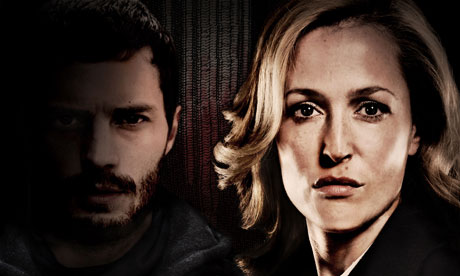
Leaving his victim alive after being interrupted by her boyfriend, Spector (Jamie Dornan) flees the scene but the for the first time, leaves evidence behind. Gibson (Gillian Anderson) becomes even more determined to catch the killer and doggedly begins to pursue all leads, becoming increasingly focused. Spector finds himself going to the police when CCTV footage crops up of him and his daughter at the park near the third victim Sarah Kay and he goes in to 'rule himself out' of the investigation. Oh the irony. Elsewhere, the investigations into the police corruption closes in on the Munro family, but the Chief Constable (John Lynch) finds himself possibly implicated after the suspect flees the country.

First of all, the good points, of which there were many. Technically speaking, this was one of the more interesting episodes for the use of sound. Often non-existent apart from generic background noise, sound has been something not wholly utilised throughout the series in favour of creating a quieter, more suspenseful atmosphere. In this episode on the other, the soundscape was ramped up; Spector's murder attempt here was loud, noisy and chaotic, completely contrasting with his earlier, almost entirely silent killings. Whilst the action on the screen naturally showcased the difference, it was the sound that emphasised it. We're not used to hearing Spector make quite so much noise.

The thematic symbolism was once again present across the episode and with all the analysing I've done of the references across these reviews, there was one gaping hole that I'd missed. Once again, there were plenty of references to light and dark throughout the episode, often contrasted visually with the brightly lit world of Gibson with the shadowy world of Spector. And that's what I'd missed. Throughout each episode, I'd not noticed his name; he's a spectre, a ghost, a shadow that is yet to be caught. I'm slightly ashamed of myself.

Dornan has been the breakout star of this series, not only portraying the underlying psychosis in Spector brilliantly, but also making the other side of his character, the mostly mild-mannered Paul, equally compelling. He's also handled the blending of the two well and it was in this episode that the crossovers became more apparent. Dealing with his wife (Bronagh Waugh) was a tense moment as it was never exactly clear whether she would survive the 'revelation' that he's supposedly been having an affair with the 15 year old babysitter. Speaking of which, his encounter with the babysitter just left me shouting 'Run!' at the screen. Again, another scene in which the outcome was uncertain because Dornan brought both aspects of Spector to the fore.

The idea of the doubling became one of the more overt themes in the episode through a conversation between Gibson and the pathologist. It's not been mentioned outright before but Gibson has since deduced that the killer has a family and therefore must be living two lives, just as she does herself. The comparisons between Spector and Gibson were made explicit by Spector in their conversation. Well-written, tense and beautifully performed by the two stars, the conversation was everything that had made this show so great; a battle of wits, drawn on the lines of both good and evil, but also of gender as Gibson declared the killings to be 'age-old misogyny'. The depiction of female characters in this show has been something to be applauded and it is always refreshing to see a female character like Gibson coming out with such emphatic feminist statements. More please.

And so we come to the ending, which I'm sure left a lot of people feeling slightly disappointed, despite knowing that a second series had been commissioned. Spector drives away with his family, moving to Scotland on a make-or-break trip to fix his broken marriage (poor Sally-Ann, she really doesn't have a clue). Gibson has been told by the killer himself that he is simply leaving, he's finished and there will be no more killings. We know he doesn't like to leave things unfinished and his latest victim is still alive, recovering in hospital from his attack. There is also the unfolding obsession with Gibson herself that may be brought out next series, likewise her obsession with him.


However, it was all a bit anti-climactic. One of the best aspects about The Fall was just how tense it was on any given moment but, apart from the outstanding phone conversation, the final scenes felt a bit flat. Had the series not been re-commissioned, the final shots of Spector driving away with his family and Gibson unsuccessful in her quest to catch the killer would have been outrageously annoying. Neat resolutions may not always happen in the real world but we expect it to in television dramas and I'm grateful The Fall is returning, otherwise that would have been a disappointing conclusion.

I'm still not entirely sure what I make of this episode, which is why this review has been delayed a little. It was good, very good in parts, but it was also quite unsatisfying in others. However, that ending proved a little unsatisfying; had The Fall not been recommissioned for a second series, it could possibly have become one of the most infuriating endings in television, but fortunately it hasn't and so the second series will continue the Spector/Gibson chase.

- Becky

You can read Becky's review of Episode Four here.

Follow @AssortedBuffery on Twitter
Or like our Facebook page