Showing posts with label Kristine Sutherland. Show all posts

Thursday, 24 March 2016

FEATURE: Buffy the Vampire Slayer - This Year's Girl

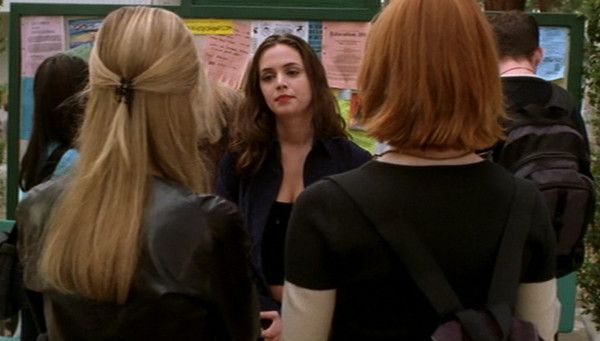
Previously on Buffy the Vampire Slayer: When Kendra was killed by Drusilla, Faith was called, a Slayer from Boston with some mental health issues and a passion for turning to the dark side. Buffy put her in a coma before the big fight with the Mayor and there she's remained. The Initiative is crumbling with Adam on the loose and Riley's hospitalised.


Buffy is still reeling from Riley being taken away from her and Adam running loose around Sunnydale, dissecting demons and generally being a bit horrible. However, a more immediate problem is on the way. Faith, in a hospital since her scrap with Buffy before Graduation Day, has woken up and has escaped. The rogue Slayer is on the move and after Buffy, reeling from finding out that not only has she been in a coma for eight months, but Graduation Day has failed and Buffy succeeded in killing the Mayor. She goes after our little Buffster with a neat weapon the Mayor managed to leave her.

After the considerable awfulness that has been the last two episodes, I've been so looking forward to getting to the Faith episodes because a) they have a real classic Buffy feel about them and b) Eliza Dushku is awesome in this role. She slips back into it fast, a riot of pent-up energy and rage that's directed in the Scoobies' direction. Her first scene with Sarah Michelle Gellar also snaps back into the antagonistic relationship their characters' share with their quips and begrudging respect for each other. It's amazing how quickly the Initiative stuff falls away once she arrives and the quality of the season once again soars. Plus, Joyce comes back!

Kristine Sutherland's absence has been notable from this season, a voice of reason to counter Giles and the others with wit and style. Donald Petrie's script acknowledges this by having Faith use it to get to Joyce, mocking her with hypotheses that Buffy has forgotten them both because she's so damn selfish. Of course, Joyce gives as good as she gets and takes the piss out of Faith with glee. Glorious. I do feel a little sorry for the 1630 Revello Drive though; it's been months since it had to have any repairs done to it. It must have been so peaceful. Poor house.

An interesting element of the episode, amongst others, is seeing into Faith's dreams. Buffy's prophetic dreaming crops up as needed, but This Year's Girl allows us to see into another Slayer's psyche and it's Faith's so it's twisted. Obviously. It positions Buffy as the bad guy, a Terminator-like presence determined to ruin her life. It's a swift way of reacquainting us with their antagonistic relationship, as well as clueing us in to the eventual topsy-turvy nature of the follow-up episode, Who Are You. 

Christophe Beck's ethereal score in the sequences are truly amazing, especially the horror-esque vocal refrain that haunt Faith as she's being chased by Buffy. It gives the dreams an even more wacky quality, removed from the rest of the episode but highly important for what's to come. Hello, Dawn foreshadowing; it's the second reference we get from Faith about her after the Little Miss Muffet line in Graduation Day Part 2. He's a canny bugger, is that Whedon.

Most of all though, and it's something the worst episodes of the fourth season are missing, is that it's so damn entertaining. Dushku seizes her return with gusto and reminds everyone why we all love to hate Faith in these pre-redemption and her fights with Buffy are scrappy and dramatic. Those fights are also ones for the longterm fans; we know how good both of them are so there's no pauses, no need for orchestrated dynamic shifting. It's just two skilled fighters going at it and you're never quite sure which one is going to come out on top in each one. 

This Year's Girl is the first of a two-parter and ends on one heck of a cliffhanger. I remember watching that for the first time, hearing "five by five," realising what happened and then being ridiculously angry that I need to wait another week for the resolution. Fortunately, the power is in my hands to watch it right now. You guys have to wait another week for what I think of it, but I'm sure not many of you are particularly angry about that.

Five by five.

Quote of the Week:

Giles: Well, we have to find [Faith].
Willow: What about Adam?
Xander: I'd hate to see the pursuit of a homicidal lunatic get in the way of pursuing a homicidal lunatic.

Inventive Kill: Adam, unseen for the episode, dissects a demon and leaves it hanging between trees for the Scoobs to find. Lovely.

Let's Get Trivial: The shop where Faith stops to admire the knives in the window is the same shop that she and Buffy broke into back in Bad Girls.

- Becky

You can read Becky's look at previous episode, Goodbye Iowa, here.

Follow @AssortedBuffery on Twitter
Or like our Facebook page

Wednesday, 10 September 2014

FEATURE: Buffy the Vampire Slayer - Gingerbread

Previously on Buffy the Vampire Slayer: Joyce has found out about her daughter's identity as the Slayer and is keen to remain an active role in Buffy's life.

A surprise Bring Your Parent To Work Day doesn't go so well for Buffy when Joyce joins her on a patrol to better understand the ways of the Slayer only to discover two murdered children in the park. With a mysterious symbol painted on their hand (and one that would go on to adorn my high school planner for many years to come), witchcraft is soon assumed to be the cause of the murder. Joyce turns her grief into a crusade, uniting the Sunnydale mob into a feeding frenzy and embarking on a quite literal witch hunt. However, things are not all as they seem as the Scoobies continue to investigate and discover that there is something manipulating the situation from behind the scenes.

It may be one of the less well-loved episodes of the third season and on the surface, it does look like a bit of a filler episode. However, it does happen to do some quite clever things with the themes that so often appear in the fairytale source material as well as being packed with references to other similarly-themed works like The Crucible. It's not the first fairytale adaptation to explore the mob mentality, something which Disney's Beauty and the Beast did beautifully in the unexpectedly violent The Mob Song. Writers Thania St. John and Jane Espenson use every opportunity to tear Mothers Opposed to the Occult, or MOO for short, down, whether it's their ridiculous acronym or the frankly medieval way of going about their anti-witchcraft business.

The central exploration of this mob mentality and the dangers of censorship in Buffy's world are expertly done, but there are several other explorations of fairytale tropes going on within the episode. So, if you'll indulge me, it'll be a slightly different post this week. Rather than talking about everything I liked or didn't in the episode, it's going to be a slightly closer reading of the way in which the episode takes these fairytale tropes and themes and remoulds them into something more fitting for the show's feminist leanings.

The narrative specifically references Hansel and Gretel; the two children are a split form of one demon which exists to sow discord amongst communities like Sunnydale. As Buffy says, a twist on their story is that Hansel and Gretel run home to tell everyone about the mean old witch and then sit back and watch as women are persecuted in the name of that very witch. This is what happens over the course of this episode, but there are several other subversions of fairytales. Perhaps the funniest is Xander and Oz taking on the Prince Charming rescue role, fighting their way through the building to save Buffy and Willow only to fall through the roof after everything has all been sorted out.

Often in fairytales (particularly in nineteenth century ones), the women who don't conform (ugly/old/outspoken/too clever/too inquisitive - basically, any that aren't silent or asleep) are the ones who are threatened with punishment by their respective narratives, or killed as a result of their actions, like Karen of The Red Shoes, vain and spoiled, who dances to her death. Buffy's non-conformism has long been one of her defining characteristics, just as it is for both Willow and Amy. They actively reject the straight and narrow path that society expects of them and go their own way, whether that's to do with being a Slayer, having a brain or actually being a witch. That these are the three picked to burn at stake is a direct nod back to the moralistic aims of the original tales.

As part of this whole suppression of non-conformist women thread, older women didn't tend to get off so lightly. The episode weaves the two threads nicely together; the actions of the younger women are directly influencing the actions of the older women and vice versa. If you were the nice, maternal older woman sort who told cuddly stories and looked after your kids, you were probably all right. The only trouble is biological mothers don't tend to last too long either; most mothers are already dead by the time the stories begin, leaving it to the evil stepmother to sweep in and torture the kids with abandon. The evil stepmother is not only so-called because she dislikes children (but is perfectly happy to marry a man with them), but because she's a disturbance of the traditional family order, subverting the traditional maternal role. In the original tale, it's Hansel and Gretel's stepmother who forces their father to send them into their forests to their deaths.

Now, in Buffy, there aren't any visible stepmothers around, but the events of the episode put a huge amount of pressure on the existing maternal relationships, most notably for Buffy and for Willow, subverting that aspect of the original fairytales. The episode opens with that surprise bonding session between Buffy and Joyce as the former is out on patrol. Since discovering her daughter's identity, Joyce has been attempting to come to terms with Buffy being the Slayer and her decision to join Buffy is one of many ways to get closer to her daughter; she could almost be accused of over-parenting. In contrast, Willow's relationship with her mother is remarkably distant. Sheila Rosenberg is, unsurprisingly, an academic and that seems to take priority over having anything to do with what is going on Willow's life.

Cut to the discovery of the two children and these maternal relationships rapidly shift into active antagonism as the two mothers suddenly see their daughters as part of Sunnydale's occult problem. The demon clearly targets maternal figures, knowing that they are pre-disposed to feeling sorry for victimised and murdered children and it's Joyce, chief matriarch here, who creates Mothers Opposed to the Occult. The demon causes the pre-existing maternal relationships to break down to the point of these women casting out their daughters, much like the evil stepmothers of fairytales did to their unwanted offspring. However, the demon fails because its true nature and its manipulation are revealed to all involved, even if they don't choose to remember it. 

Like the fairytale evil stepmother, there's an external force at work here to try and break down these relationships. For Buffy, her relationship with her mother is a key foundation for her whole lifestyle (just look at The Body to see just how much Joyce's death impacts on her) and to see it break down puts Buffy in an extremely vulnerable position where she is relying on others to rescue her. However, once the demon is stopped, the relationships go back to the way they were or, in Willow's case, even improve as a result. 

There's an undercurrent here about the way female relationships are presented in society; everyone is always quick to comment on how women are just as eager to trip each other up. In this episode, it's the external forces acting on these women that cause that breakdown, just like the societal pressure to remain beautiful forces the Evil Queen's hand against Snow White. It's a familiar narrative; the older women are threatened by the young women coming up through society, but in Buffy, it's just a hairy old demon with a misogynist streak. This is coincidentally how I tend to look at a lot of the mainstream media peddling these stupid narratives of female antagonism.

The episode still may not live up to the heights of some of the rest of the third season, but it's an interesting twist on fairytales (even if I may have read a bit too much into it). Thanks for joining me on this particular rambling. The next post will be shorter, I promise.

Quote of the Week:

Cordelia [to Giles]: How many times have you been knocked out anyway? I swear, one of these days you're going to wake up in a coma.

Let's Get Trivial: As Cordelia willingly illustrates, this marks the umpteenth time that Giles gets knocked out in the series, something which he becomes increasingly famous for amongst the group.

Inventive Kill: Buffy uses the stake she's supposed to burned at to impale the demon through the throat. As you do.

Sunnydale Who's Who: Shawn Pyfrom, who plays the little boy, would go on to play Andrew Van de Kamp in hit series Desperate Housewives.

- Becky

You can catch Becky's look at Amends here.

Follow @AssortedBuffery on Twitter
Or like our Facebook page

Wednesday, 18 June 2014

FEATURE: Buffy the Vampire Slayer - Band Candy

Previously on Buffy the Vampire Slayer: An old friend of Giles, Ethan Rayne, had previously used Sunnydale as his own chaotic playing ground, scarpering after a demon came after them. Mr Trick is now working with Mayor Wilkins on the Slayer problem after Slayerfest '98 and Buffy is still dealing with the consequences of running away.


There are some episodes of Buffy I can watch over and over again and never get bored with. Band Candy is one such episode. It's just a whirligig of fun from start to finish, one that picks up the magic as metaphor theme and runs the finest sprint you will ever see with it. The third season has a few such episodes, along with season four (yep, I'm a season four defender, sorry guys) and Band Candy shifts the focus on to the responsible adults being anything but, whilst the younger Sunnydale population are forced to deal with the consequences. Plus, there's a fairly gratuitous Angel topless shot. And he's sweaty. You're welcome Angel fans.

The gang are forced to sell candy on behalf of the Sunnydale Marching Band who are in need of new uniforms. Reluctantly, Buffy touts chocolate to Joyce and Giles whilst also playing them off against each other in order to have a bit of time with Angel. They soon discover her ruse and decide to meet to discuss a way in which Buffy can be supervised. However, that's no ordinary candy. The addictive bars start regressing those consuming them until the adults being acting like their teenage selves. As it's Ethan's plan, naturally chaos ensues as it's really just a cover so the Mayor can offer a load of babies as tribute to an underground demon snake thing called Lurconis.

The central concept of this episode already means that the potential for success is considerably high, but what is brilliant about Band Candy is how much fun everyone, from writers to actors, have fun with it. It's a classic 'be careful what you wish for' situation as Buffy, in the middle of revising for her SATs, begs to be given more responsibility from the authority figures in her life. It also provides endless comedy moments for the older actors in the Buffy troupe, particularly Kristine Sutherland and Anthony Head who look like they're having an absolute blast, both of them allowed to stop being the authority figures for a while.

Although much of Giles' past has been hinted at before, it's our first chance to get to see what Ripper was really like and it doesn't disappoint. The RP accent disappears, he opts for a grungy jeans and t-shirt combo, starts smoking and threatens policemen. His animosity towards Ethan is a particular highlight as well as any scene he shares with Joyce. They play well off each other, making the most of their simmering chemistry that has gone on through much of the series so far. Kristine Sutherland is great as a younger version of Joyce who in turn feels like a dorkier version of Buffy; they share some of the same vocal patterns and humour. It's a keen observation from Sutherland, just one of many smaller aspects that make up to a more satisfying whole.

The masterstroke of the episode is how deftly it shades in the backgrounds of each of the older characters without resorting to any exposition-based monologues, as well as building the older versions themselves. Snyder is easier to understand as the commandant of Sunnydale High when you realise he was a completely insecure dweeb with little to no social skills, now relishing the opportunity that authority affords him. Joyce's insecurities as a parent are founded in her insecurities as a teenager, desperate for Ripper's approval and hiding her true likes and dislikes to be more impressive.

Jane Espenson is on first-time writing duty and the script characteristically sparkles. In fact, picking a quote of the week proved to be very difficult because it's witty from start to finish and references abound (including a great Death of a Salesman nod, which will appear later in Restless). There's always a better atmosphere when the show's dialogue is at its tip-top best and whilst it might not be as quotable as others we could mention, it's consistently hilarious.

Certainly one of the best standalone Buffy episodes, particularly of the third season, Band Candy is one that has never diminished in my eyes. It's damn near perfect.

Quote of the Week:

Cordelia: At first it was fun, you know? They seemed like they were in this really good mood--not like parents--and then...
Willow: Badness?
Cordelia: Mom started borrowing my clothes. There should be an age limit on lycra pants. And Dad, he just locked himself in the bathroom with old copies of Esquire.


Inventive Kill: Buffy fashions a makeshift blowtorch and sets fire to dodgy-effects Lurconis.

Let's Get Trivial: This episode is referred back to multiple times; Giles and Joyce now avoid each other for a few episodes, Buffy discovers they actually did have sex in Earshot and Giles plays the Cream song Tales of Brave Ulysses after Joyce's funeral in Forever. Sob.

- Becky

You can catch Becky's look at Homecoming here.

Follow @AssortedBuffery on Twitter
Or like our Facebook page
Thursday, 1 May 2014

FEATURE: Buffy the Vampire Slayer - Dead Man's Party

Previously on Buffy the Vampire Slayer: Buffy skipped town and ran away to LA after saving the world, but killing Angel in the process. The Scoobies try to pick up where she left off, but struggle to cope without the Slayer. Buffy soon returns to Sunnydale and has to face up to everything she's missed.


Younger readers of this feature, I'm going to offer you a little advice. I'm sure the older readers will back me up here. If your friendship group is going through a tough time (with each other/because of exams/because the world just doesn't get you when you're 16), don't throw a party. And if you do throw a party, don't have alcohol. It's a recipe for disaster, frankly. You all bottle up your emotions because you're 16 and you don't really know what to do about them yet. You get irrationally angry at the smallest things because your body decides to throw a tonne of hormones at you. And then there's the whole being attracted to people and awkwardly attempting to fumble. Throw in a friendship group ready to fall apart and you could find yourself leaning on a doll house crying your eyes out for no apparent reason (been there). Or worse. You could have to fight off undead hordes.

Ok, maybe not that last bit.

Yet that is exactly what Buffy faces in Dead Man's Party; she returns from LA to find it really difficult to get back in with everyone after her time away. Her relationship with Joyce is fractured, not helped by the neighbourhood class-taking do-gooder, Pam. With her friends, it seems even worse. After the initial honeymoon period of all being back together, Buffy finds herself isolated further, even while her friends are attempting to throw a party with lots of people she doesn't actually know. Everyone starts arguing, but soon, zombies crash the party, activated by a Nigerian mask in Joyce's bedroom.

That feeling of being isolated from your loved ones is a situation that is achingly familiar; your friends are too busy doing their own thing and you feel too rude to try and interrupt. The scene at the party where Buffy asks Willow if everything is ok only to get what amounts to a brush-off makes me sad every single time. It's the perfect rendering of one of the worst conversations you can have as a teenage girl, especially when someone, who is obviously avoiding you, decides to lie. However, as with all arguments of this nature, Buffy too is at fault. When they all start yelling at each other, they all have perfectly legitimate reasons and, for once, they are all being entirely honest with each other.

Prior to this, the characters feel as if they're in a sort of limbo, much like they did in the previous episode. None of them are progressing because they can't until the status quo is restored. Buffy arriving brings it back into focus, but because everyone is determined to bury the emotions they are feeling, conversations with Buffy occur euphemistically. The second anyone gets close to actually be honest with her, they step back and cover it with humour or brush her off completely. Xander comes the closest, but even then it's only in the library with everyone else.

The party happens because nobody actually wants to talk to each other so they quickly arrive at the 'hey loud music = lack of talking' decision. Remember that first paragraph, guys? Yeah, that's what happens. Symbolically representing all of the squashed feelings, zombies crash the party and as is the tradition with the gang, they stop squabbling and unite to stop the undead menace. The whole zombie mask thing is really secondary to the character moments in this episode, but it doesn't stop the action from being top notch in a house-wide fight to the death with the dead. Also, Pam has to be one of the least sympathetic victims in Buffy history. You're better than Pam, Joyce.

It may be largely quite sad, but the episode is full of heartwarming moments too, like Buffy and Xander's hug once the zombies have been defeated or Willow and Buffy's insult exchange in the final scene. However, my absolute favourite has to be the scene in which Giles is making tea for everyone. As Xander and Buffy exchange silly banter, Giles has a private, emotional moment to himself in the kitchen, the relief etched across his face as he smiles at Buffy's return. Their relationship remains one of the most developed and interesting of the series and it's in these early moments, where it has progressed beyond the formative stages, demonstrate just how deep that bond goes.

Building on the success of Anne, Dead Man's Party is also one that has grown with meaning over time. When I first watched it, I had no comprehension of the emotional party disaster nor the emotional fallout that comes with your first big friendship row. Now, a little older and a little wiser, it's a wonderful depiction of some of the awful things friends can do to each other without saying much at all. Plus, Dingoes Ate My Baby/Four Star Mary play in this episode, so it's almost automatically great.

Quotes of the Week (can't decide so I'm cheating this time):

Oz: Well, a gathering is brie, mellow song stylings. Shindig - dip. Less mellow song stylings, perhaps a large amount of malt beverage. And hootenanny? Well, it's chock full of hoot, just a little bit of nanny.

Giles: "Have you seen my mask? Isn't it pretty? It raises the dead!" Americans...

Inventive Kill: Buffy uses the same shovel she used to bury Patches the cat to stab Demon Zombie Pam through the eyes.

Demonology 101: Although zombies were seen in the background during Nightmares, this is the first time that they have appeared in the 'verse as a fully fledged foe.

- Becky

You can read Becky's look at previous episode, Anne, here.

Follow @AssortedBuffery on Twitter
Or like our Facebook page

Thursday, 27 March 2014

FEATURE: Buffy the Vampire Slayer - Killed by Death

Previously on Buffy the Vampire Slayer: Angel's gone all evil after sleeping with Buffy and has stepped up the psychological torture, killing Jenny who is the only person who could have restored his soul. Said ritual is now on a floppy disc (remember those?!) down the side of her desk. 

Buffy is struck down with a severe bout of flu which seriously impacts on her slayage. In a confrontation with Angel, she is nearly killed and collapses at the scene. Whilst in the hospital, she learns that children have been dying mysteriously and a boy named Ryan tells her that Death is coming for the children. In feverish dreams, she sees a grotesque figure stalking the children and comes to the conclusion that there is something malevolent at work in Sunnydale General.

I have a small confession to make. I haven't watched Killed by Death since the first time I saw it when I was eleven years old. It was the only Buffy episode to have ever scared me silly. And when I say silly, I mean 'kept the light on, didn't sleep very well, was determined Der Kindestod was coming to get me type' silly. I never went back to watch it again, even on my other re-watches. You see the sacrifices I'm willing to make for you, dear Reader? 

Watching it back, it isn't quite so scary as I remember, though there is a very definite sense of dread creeping throughout the episode (it helps not being a child anymore and therefore not a key part of Der Kindestod's diet). The prospect of Buffy being off her game and weak is already a bad one; we're so used to her being indestructible that seeing her nearly killed by Angel early on establishes the high stakes of this particular instalment. This is also aided by following on from Passion; we've seen Angel kill someone close to the gang now and it means that he feels even more dangerous as an adversary now. He's predatory too, cropping up at the hospital with flowers only to be warded off by a defiant Xander. On top of all of this, the foe that Buffy needs to fight is largely unseen, appearing in doorways and snickering in the background.

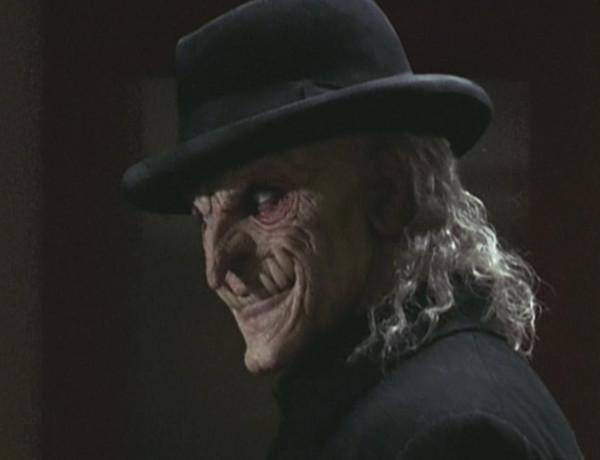
Der Kindestod is a great example of the special effects and design work that goes into making a Buffy villain. There's clear nods ahead to the design of the Gentlemen who appear later in the series; his elegant, long fingers and bowler hat giving him the oddest air of a banker with a bad skin problem and an underbite the Druids could use as a place of worship.* Similarly to the aforementioned Gentleman, there's a fairytale quality to Der Kindestod that adds to his creepiness; like Freddie Kreuger or Goethe's Erlking, he preys and feeds on children, taking them from under the watchful gaze of the adults. That the children must be ill and therefore even weaker makes him a truly despicable villain and surely one of the worst in Buffy's considerable list of adversaries.

The rewatch of Killed by Death also happened to coincide with me reading Stephen King's It, something which is thematically similar to the narrative here. In both stories, it is a monster who preys on children who cannot be seen by adults, forcing the children to take their own action and confront their fears. As King writes, 'The fears of children are simpler and usually more powerful' and this gets to the heart of why both It and Killed by Death are so scary. Children always possess vivid imaginations when it comes to scary things. Pennywise the Clown can easily be dismissed as the project of an over-active fear complex, likewise, because the adults can't see Der Kindestod, they ignore his existence. Cordelia even states outright that Buffy is making it up in order to have something to fight. Children aren't believed when they say there is a scary monster under their bed.

Watching this episode when I was eleven, I wasn't just seeing something for Buffy to fight, I was seeing a demon that was tailored specifically to get me. The fact that he lurks in doorways and has weird creepy eye tentacle things just made it that much worse. I had nightmares about Der Kindestod for a good couple of weeks after the episode aired and as I said before, I never went back to it. I've just finished reading It and I've also been scared stupid by it. There's something powerful in both narratives' ideas of facing your childhood fears and overcoming them. Der Kindestod may have been a small, fleeting one for me (compared with my ongoing battle with porcelain dolls), but even just going back to this episode felt like I'd said goodbye to something that used to scare the crap out of me.

Another link between both this episode and King's novel is the theme of survivor's guilt, faced by both Buffy and Bill Denborough in their respective stories. For Buffy, it's the double whammy of not being able to kill Angel before he killed Jenny and not being able to save her cousin Celia when she was younger. If there's a problem with Killed by Death, then it's here because it just doesn't push that psychology with Buffy enough. We get a few fleeting references as to how Celia died and that it affected Buffy by giving her a lifelong fear of hospitals, but there are very little consequences to this. It should have been entirely about Buffy overcoming this fear, learning that she can't save everyone and saving children in the process. In It, Bill eventually comes to terms with his brother's death over a long, troubled period from childhood to adulthood when he is forced once again to face the thing that killed it. Obviously, the novel has more room to explore this (and at 1400-odd pages, does so very well), but it felt like Buffy dropped the ball a little on the thematics of this episode.

That aside, it's still a chilling episode and one that I don't think gets enough credit in the Buffy fandom. I may be slightly biased as this is the first time I've seen it in thirteen years and I had quite the visceral reaction to it the first time round, but it's more than just a filler episode. It's just a shame that it only hints towards some strong character development, rather than actually following it through.

* Always wanted to link Buffy and Red Dwarf somehow. There'll be another one in Season 6 - props to people who can tell me what and in which episode.

Quote of the Week:
Xander: You don't know how to kill this thing.
Buffy: I thought I might try violence.

Let's Get Trivial: One of the things I loved on seeing this episode again was the reference to DC Comics' Power Girl and Buffy playing her in games with Celia. Our Summers has always been a superhero

You can read Becky's look at Passion here.

- Becky

Follow @AssortedBuffery on Twitter
Or like our Facebook page
Wednesday, 5 February 2014

FEATURE: Buffy the Vampire Slayer - Bad Eggs

Previously on Buffy the Vampire Slayer: Buffy and Angel's relationship is intensifying, Cordelia and Xander's is also yet still very closet based and Buffy's having difficulty hiding her identity from her mum.


Bad Eggs finds the gang each looking after eggs as part of their sexual health education, learning about the responsibility of having their own offspring. Only these eggs are offspring of something a whole lot nastier than a chicken as the Bezoar Mother takes over Sunnydale High one student at a time. Buffy sets out to deal with the problem, but also has to contend with two vampire brothers, Lyle and Tector Gorch, who have set their sights on a showdown with the Slayer.

Bad Eggs is another one of those episodes, like last week's Ted, which I had written off long ago and simply never went back to. It's still one of the lesser outings for the Scooby Gang but there's a lot to like about it as well. The script has plenty of laugh out loud moments; there's Giles' reaction to the eggs, Buffy's incredulity at becoming a single mother and Xander and Cordelia's sparring to name but a few. It's also notable for its quieter moments, particularly the scene between Buffy and Joyce at the beginning of the episode in which the latter bemoans her daughter for not taking responsibility and despairing when Buffy quips about saving the world from vampires. Sarah Michelle Gellar and Kristine Sutherland have such a wonderful chemistry that any scene in which its just the two of them is welcome and it's refreshing to still be in the 'Joyce doesn't know' section of the series.

So then to the rest of the episode; when I watched it as a wee 'un, I simply didn't have the science fiction knowledge that this episode requires; it's packed full of references (as you'd expect from a Whedon-penned script) with Alien and Invasion of the Body Snatchers being the most notable. Later in the same year, Robert Rodriguez' The Faculty would hit cinemas which tackles a similar parasite in a high school premise that Bad Eggs does and it would be remiss of me not to compare the two. 

The Faculty remains one of my favourite teen horror/sci-fi combinations and the film and Buffy share a fair amount of the same DNA. The Faculty features a group of misfits (amongst them Buffy alum Clea DuVall as well as Elijah Wood and Josh Hartnett) who realise their school is being overrun by alien parasites and attempt to kill the queen before their world is lost. Remarkably similar then to Buffy's own tale, but actually a whole lot better. Given more room to breathe, the concept is allowed to affect each character in turn whilst a lot of Buffy's supporting cast are relegated to minor spots in the episode; Angel, Willow and Cordelia in particular. The Faculty is also more knowing with its references and with Kevin Williamson on screenplay duties, it crafts darkly witty take on the bodysnatcher sub-genre. 

The film also benefits from a bigger budget and the reveal of the queen is rather impressive, remaining so to this date, despite the 16 years which have passed (oh dear God). However, for Bad Eggs, it's an episode which betrays its budget, particularly in the school basement scene. The styrofoam pieces of concrete and the one eye representing the Mother Bezoar look really cheap whilst the bezoars themselves manage to get away with looking rubbery through sheer ick factor. That said, the scene in which the bezoar first releases itself and wraps its tendrils around Buffy is really creepy and the confrontation in the bathroom channels the post-chestbursting moment from Alien particularly well.

If you haven't seen The Faculty, I heartily recommend it (if you hadn't guessed) but in the meantime, Bad Eggs is no bad substitute. A better episode than I gave it credit for previously, it's more notable for its quippy dialogue and quieter moments than it is for this instalment's feature creature.

Quote of the Week: Xander - 'Can I just say geeeurgggh?"
                              Buffy - "I see your geeeurgggh and raise you a nnnyaaaargh"

Inventive Kill: Xander inadvertently boils his Bezoar alive by attempting to cheat his assignment.

Demonology 101: Lyle Gorch will be back in the third season episode Homecoming.

- Becky

You can read Becky's look at Ted here.

Follow @AssortedBuffery on Twitter
Or like our Facebook page

Wednesday, 29 January 2014

FEATURE: Buffy the Vampire Slayer - Ted

Previously on Buffy the Vampire Slayer: Cordelia and Xander got the smoochies on during the showdown with I-Am-The-Bug-Man from the Order of Taraka, Jenny is still reeling a little from everything that went on in The Dark Age and Buffy's identity as the Slayer still remains a secret from her mum Joyce.


Ted finds Buffy having to deal with the fact that Joyce is in a relationship with a man named, you guessed it, Ted. He gives her the wiggins but everyone else seems entranced by him; he cooks a mean mini pizza and gives Willow free software for her computer. When Ted threatens her during a game of mini-golf, Buffy employs the gang to do a bit of snooping. However, Ted does some snooping of his own leading to a showdown with Buffy which doesn't end so well for Ted. Well, until it turns out he's actually an android serial killer with a penchant for his wives.

The last time Buffy attempted a technological episode, it was the laughable I Robot, You Jane which has not aged well at all in the eyes of this discerning viewer. Ted on the other hand feels like a completely different episode to the one I watched when I was younger. This was always an instalment I skipped (along with Bad Eggs - next week's offering) because I just didn't think it was very good; I didn't like the premise, there was a lack of fighting and Ted just irritated the hell out of me and not in the way he was supposed to.

Now, however, I beg to differ (I will never use that phrase again. It gives me the creeps). I actually think this may be one of the scariest episodes Buffy has ever produced, a domestic nightmare with, until the end, very little to actually fight. Rather than make this a lesser episode, as I thought before, it actually makes it far more tense and makes the fight between Buffy and Ted seem all the more important. 

First let's look at the character of Ted; seemingly perfect human being who makes great food, works really well at his job and seems to love the hell out of Joyce. In reality, he's a serial killing robot and, because this is Buffy, he's a woman-hating serial killing robot with domestic violence tendencies. John Ritter's performance is so perfect as Ted that I can actually feel my skin crawl as I'm writing about him. His turns of phrase, his benign facial expressions and the tension that runs through his body when Buffy and Joyce start to stand up to him is measured brilliantly; he's a figure it is so easy to hate and that is where the episode's power lies. Also, I have to mention SMG's reaction expressions in this episode, which beat those of What's My Line by a country mile.

Like many other episodes in this season, Ted is a metaphorical glance at the life of a teenager through the eyes of monsters. Here, Buffy is forced to confront an evil that might be entirely human and might become her stepfather. She feels powerless because no one else can see quite what she does thanks to her Slayer sense. When she thinks she killed Ted, her world is rocked (just as it will be when Faith dispatches the Deputy Mayor in Season Three) because Buffy's moral code does not allow for the harming of humans, even those she doesn't happen to like a whole bunch.

The domestic violence angle lends an interesting dynamic to that problem. Does the fact that Ted hit her first and threatened her further make it ok that she strikes back? Well, prior to the robot discovery, no not really. Buffy really goes for him and uses her abnormal strength against him, something which she only does with humans in extreme situations (like when Larry attempts to grope her or attack Xander). It adds another dimension to Buffy's tenure as the Slayer - she's very good at killing demons but will never use her powers against another human unless she has to. It's this moral dilemma that will make Faith so tricky to deal with next season.

And elsewhere in the episode, for balance, Xander and Cordelia are carrying on in secret and Giles and Jenny rekindle their relationship with some smoochies in the library (boy am I dreading Surprise).

A complete 180 on this episode then; Ted may not be full of action, but as a slow-burning domestic thriller involved robots, it's pretty damn good.

Quote of the Week: Xander - "Can we say over-reaction?"     
                                Buffy - "Can we say sucking chest wound?"

Let's Get Trivial: Both John Ritter and Sarah Michelle Gellar were horrendously ill when filming their fight scene, which might also explain why the climactic fight is more Indiana-Jones-esque and involves just a couple of whacks with a frying pan.

Demonology 101: Ted may be the first human robot hybrid on the show, but he certainly won't be the last and it will become an interesting exploration of similar themes to this episode later in the series.

- Becky

You can read Becky's look at the What's My Line two-parter here.

Follow @AssortedBuffery on Twitter
Or like our Facebook page

Thursday, 10 October 2013

FEATURE: Buffy the Vampire Slayer - School Hard

Previously on Buffy the Vampire Slayer: The Anointed One has survived into the second season and has put together another posse of vampires to ritualistically take on the Slayer. Also, Principle Snyder is totally gunning to get Buffy kicked out of school

Ladies and gentlemen, the talent has arrived, crashing into the Welcome to Sunnydale sign with a cool car, a reckless attitude and a knack for killing slayers. Yes people, Spike's in town.


I think it's fair to say that School Hard is where Buffy really kicks it up a notch and starts hinting at not only the bigger picture, but the highs that this season in particular is about to hit. Buffy faces the prospect of Parent-Teacher Night and organising the whole event with fellow delinquent student Sheila (I heard she ate a live duck once). Snyder is determined to prove Buffy's inadequacy and Joyce is out to find out just what is going on in Buffy's school life. Not only that, but the Night of St Vigeous is coming up and the Anointed One is gunning for the Slayer. It's the one night of the year that vamps' abilities are heightened and they actually stand a chance of cutting down everyone's favourite blonde bombshell. It never comes again mind, this St Vigeous thing, so maybe when Spike shows up, he really does ruin it forever.

So called because it's Die Hard in a high school (something I only actually realised a couple of months ago), School Hard sets a whole bunch of stuff up for the coming series in one handy 45 minute slot. First up, and the most obvious, is the arrival of Spike and Dru, the Buffyverse's very own Sid and Nancy, mad, bad and dangerous for just about everyone. Spike's entrance to the factory, all posturing and kickass attitude, was exactly the shake-up the show needed in terms of its bad guys. The Master's dogmatic nature may have worked to set up the Buffyverse in the first season, but let's face it, there's only so much ritualising you can take and Spike demonstrates the punky, subversive attitude that Buffy will become known for. This also happens to set up two of the Big Bads for the season with bonkers Dru in toe.

The third is but glimpsed in this episode as Angel uses his former self and friendship with Spike to get into the school once the hostage situation has arisen. With Boreanaz' voice shifting up an octave for play-acting Angelus and offering Xander as bait, it's a hint at what is on the way for the season, another bit of foreshadowing to go along with that in When She Was Bad. It also introduces us to the concept of a sire (the process of making a vampire) and though this would go on to be proven factually incorrect (Drusilla sires Spike), Spike yelling 'you were my sire man' at Angel hints at a deeper connection between the two as well as an expansion of Buffy's vampire lore.

As far as the human characters go, it also proffers some foreshadowing in the form of Joyce attending Parent-Teacher Night and seeing Buffy in action. Well, sort of. Buffy's very careful to make sure she doesn't see all that much, just enough for Joyce to give her a week and a half's grace. It's a great episode for their relationship, one that hints at Joyce discovering the truth about her daughter later in the season whilst also demonstrating Buffy's desire to retain her mum's approval. Oh and Joyce does get her very own Ripley moment when she bashes Spike over the head with an axe. So that's nice.

The dialogue is characteristically snappy, with James Marsters announcing his unique presence on the show immediately with a series of quips about vampire boasting; "If every vampire who said he was at the Crucifixion was actually there, it would've been like Woodstock." Spike's bravura also makes him a good villain; as it's his first appearance, and other characters are emphasising just how good he can be, it lends a degree of tension to the episode (let's just ignore the worst stunt-doubling EVER). Without this, the concept of everyone being held hostage in the school by a load of vampires could have fallen completely flat. 

As it stands, School Hard is the first truly great episode of the second season, thanks in no small part to a blistering performance from Marsters, who was initially only supposed to be in a few episodes. Think how different the mythology would have been then.

Next Time: Inca Mummy Girl

Quote of the Week: Spike - "From now on, we're going to have a little less ritual and a little more fun around here.

Inventive Kill: Spike wacks the Anointed One in a cage and hoists him up into a beam of sunlight. Mmm. Crispy.

Let's Get Trivial: Spike casually mentions/brags that he has killed two Slayers. He only mentions the one in the Boxer Rebellion, Xin Rong, and later he will talk about Nikki in New York (both seen in Fool For Love)

- Becky

You can read Becky's bumper Frankenstein edition of Some Assembly Required here.

Follow @AssortedBuffery on Twitter
Or like our Facebook page.

Saturday, 24 August 2013

FEATURE: Buffy the Vampire Slayer - Nightmares

Previously on Buffy the Vampire Slayer: The Master remains trapped beneath Sunnydale with the Anointed One and Buffy's parents divorced before the move to Sunnydale while her dad remains in Los Angeles. 

Dreams are a big deal in Buffy the Vampire Slayer; Buffy has prophetic dreams when the plot requires it and whole episodes are dedicated to them, such as this week's Nightmares and Season 4's excellent final episode Restless. Nightmares deals with that awful concept of having your worst fears realised, which, as Giles points out, can be deadly in this particular world, given the monsters that Buffy and the gang have to deal with. 

The students of Sunnydale High start seeing their worst nightmares in daylight as a textbook reveals a load of spiders and then a girl is attacked while on a smoking break in the basement (witnessed the blackly comic Smoking Kills poster as she's beaten). Buffy keeps seeing a young boy around campus when these moments happen, prompting her to find out what has led Billy to astral project from his comatose body.

I'd always remembered this as one of the best episodes of the first season, but I think there may have been a certain rose-tinted nostalgia attached to this particular instalment. It's not a bad episode by any stretch of the imagination and it certainly has an intriguing and scary concept from a Joss Whedon story and a script by stalwart David Greenwalt, it just has a lot going on. Several of the nightmares provide the comedy for the episode, particularly Cordelia's vanity-based horrors or the badass biker who gets visited by his mum in school. Yet for an episode in which the plot deals with child abuse, the veering between levity and drama can sometimes feel a little misjudged.

It sets up some major character points for our Scooby Gang, particularly the fears of the central foursome; Giles unable to read and his fears for Buffy, Willow getting stage fright and Buffy's fear of death and resurrection as a vampire. Again, some foreshadowing going on with Giles revealing that one of his worst fears is Buffy dying on his watch. Of course, he'll have to face this fear head on. Twice. Buffy's scenes are particularly important as so far, she's largely been too quippy and offhand to really understand just how scared she is underneath. Even in Witch when threatened with death, the one-liners kept coming. 


Now however, we start to see more of the vulnerability which makes the character so interesting and will be particularly important when we get to the season finale. The scenes with Buffy's nightmares also form the horrors of the episode, though not in a traditional scary way; she's told by her father that she is the reason behind her parents' divorce. It's a cold, cold scene and the hurt is written all over her face as it slowly dawns on her what her father is saying. Gellar gives a fantastic performance in this scene and it tugs at the tear ducts every time I see it.

The nightmares of the various characters also mean that the plot for this episode is actually quite weak, despite the thru-line of Billy's nightmare coma causing the manifestations. Because we flit from dream to dream, the episode itself can feel quite episodic and fractured, not unironically, like a dream itself. It's an atmosphere that Whedon would go on to capture in Restless but, it doesn't quite work on this occasion.

Despite its faults, Nightmares hints towards the better times to come with its commitment to a bold concept that doesn't just affect the Scooby Gang this time around. It also sets up a fair bit for the last couple of episodes of the season.

Next Time: Out of Mind, Out of Sight

Quote of the Day: Xander: I'm not worried. If there's something bad out there, we'll find, you'll slay, we'll party.

Sunnydale Who's Who: This episode marks the first appearance of Hank Summers, Buffy's dad. He appears every now and again in the next few seasons before disappearing entirely with his new wife.

Let's Get Trivial: Billy will be referenced again in musical episode Once More With Feeling as one of Willow's theories (and one of her only lines): "Or maybe, some kid is dreaming and we're all stuck inside his wacky Broadway nightmare?"

There is also a forecasting in which Giles declares that if it were happy dreams, it would be a 'comedy musical version'. Holy Whedon.

- Becky

You can read about the previous episode, The Puppet Show, here.

Follow @AssortedBuffery on Twitter
Or like our Facebook page


Thursday, 27 June 2013

FEATURE: Buffy the Vampire Slayer - Witch

Previously on Buffy the Vampire Slayer: Buffy Summers has arrived in Sunnydale, stopped one apocalypse, found a Watcher in Giles and managed to make two friends and two enemies, only one of them vampiric. The other's Cordelia.

Witch, the third episode of Buffy the Vampire Slayer's seven season run, is not one of its best. In fact, I've seen a fair few people make a solid case that it is one of the worst and I'm not wholly disagreeing. However, I do have a soft spot for Witch and will defend it because, without doubt, it is no I Robot, You Jane (more on that later in the season). The episode follows Buffy's attempts to grab hold of a normal life by the pom pom and inspire people to cheer with chirpy dance moves and the ability to chant in high-pitched rhyme. Yes, Miss Summers is trying out for the cheerleaders, that bastion of high school comedy dramas, and trying to make her mark at Sunnydale High. However, there may just be something a little magical going on as the school's cheer squad start coming down with mysterious ailments. 

The cold open here is a fairly standard affair it seems at the beginning; Buffy is peppy and upbeat, despite being told off by Giles for trying out, Willow is supportive and Xander is trying to not get distracted by all the girls in mini-skirts. Needless to say, it doesn't last as talented cheerleader and potential Laker Girl spontaneously combusts during her gymnastic routine. Buffy steps in with a handy banner and stops the girl from going completely up in flames. Giles has got his Exposition Tweed on once again and he tells us that spontaneous combustion is incredibly rare and usually results in a pile of ashes. It turns out that this is the work of a particularly spiteful witch who is desperate to get on the cheerleading squad and with new friend Amy showing increasingly erratic behaviour and a hitherto unseen passion for cheerleading, suspicion falls on her. It does turn out to be Amy, who is not entirely herself, but has in fact been bodyswapped by her mother in a more demented version of Freaky Friday. 

The first episode not to be written by Joss Whedon, the main writer credit goes to Dana Reston and her sole Buffy contribution isn't wholly terrible, it's just a bit like being bludgeoned repeatedly over the head with a pom pom. Its heavy-handed approach to the 'we all turn into our parents' saying means that sometimes, a lot of the subtlety in parent/child relationships is lost. We have scenes in which Joyce tells Buffy to do what she did in high school and reacting angrily when Buffy disagrees or surrogate father figure Giles remonstrating her for doing something as irresponsible as taking up cheerleading. Then of course, there is the central body-swap, the living, terrifying embodiment of turning into your parent/reliving their glory days fear which does tap into that anxiety. It just then hammers it home with all the gentleness of an axe without little to no exploration of the actual consequences of this. Contrast to the second season's Innocence and the emotional fallout in that episode to the nice sweet scene with Joyce at the end of Witch and you'll see exactly what I mean.

However, I did say I was going to be defending Witch and, despite the previous paragraph, I still like the episode as one of the more irreverent entries into the series. Yes, it's a fairly run of the mill Monster of the Week, but it actually proves to be an important foundation in widening the world of Buffy mythology and several developing storylines that crop up throughout the entire series run. Not one vampire appears for the entire run time, introducing audiences to the idea that Buffy's job isn't just to fight the fang gang, but also 'the forces of darkness' that is spoken about in the show's introduction. 

Also, it is here that we meet Amy for the first time, who goes on to have an impact on the lives of the Scooby Gang. We get a sweet insight into the unrequited love of both Xander and Willow as they look longingly after Buffy and Xander respectively. It may not be the best standalone episode, but it gives good filler, easing the audience gently into this world where witches use their powers to get on the cheerleading squad and a librarian proves to be a dab hand with magic. So no, it's not completely awful.

Next Time: Teacher's Pet

Quote of the Day: Xander - "I laugh in the face of danger! And then I hide until it goes away..."

Let's Get Trivial: Keep an eye out for the re-appearance of 'Catherine the Great' in Season Two's Phases.

Demonology 101: The relationship between Willow, Amy and magic goes on to become increasingly important as the series develops. It's also the very first dabble into the supernatural for Miss Rosenberg. 

- Becky

Previously: The Harvest

Follow @AssortedBuffery on Twitter
Or like our Facebook page

Thursday, 20 June 2013

FEATURE: Buffy the Vampire Slayer - The Harvest


Previously on Buffy the Vampire Slayer: Buffy Summers has moved to Sunnydale and isn't keen to begin her slaying duties once again, despite being warned that something called The Harvest is coming. However, once her friends are in danger, she rises to the occasion but is caught up in a deadly fight with the vampire Luke.


Following straight on from series opener Welcome to the Hellmouth, Buffy faces off with Luke before he gets scared off by her necklace and allows her to get away, but sadly Jesse remains trapped in the sewers with Darla. This is the episode in which Buffy not only faces her first apocalypse (the first of oh so many) in The Harvest and, because Sunnydale is on the Hellmouth (a fact we find out from Expositionary Giles this week), it's a hotbed of supernatural activity. Basically, Luke, the Vessel, needs to drink a whole lot of blood for the Master to rise. I'm not entirely sure how that's supposed to work even after seeing the episode god knows how many times, but there we go. 

Mark Metcalf's The Master may not be as fondly remembered as some of the other Big Bads, but it really is quite a performance. His poor maiming of Colin - "you have something in your eye" - is a nicely shocking moment and a memorable one for a second episode. He does tend to ham it up a little, but with the corny nature of the show, it sort of works and gives Buffy a nice pantomime villain to go up against in her first season. Luke's posturing also provides a grandiose antagonist for the first double bill, all speechifying and big words, building in a clash of the old and the new in Buffy that often crops up through the series.

It's not all positive though; The Harvest displays some of the ticks that would go on to characterise Season One with a few hokey plot moments, bombastic and overly dramatic music and a couple of cheesy performances from the other vampires. The score in particular is a distraction I'd not noticed before but there are whole lot of crashing organs and over the top brass sections. And the prosthetics work is not yet the show's best.

However, this episode does contain one of my favourite scenes of the first season; Buffy returns home to pick up supplies only to face her mother, Joyce (the wonderful Kristine Sutherland) and her new age parenting techniques. After Buffy skipped class in the first episode, Joyce gets the call from the principle to let her know and now Buffy's grounded. The confrontation they have typifies so much about the early half of the show's run with the metaphor of high school as a life or death situation. Buffy knows that on this occasion it is, but for Joyce, it's simply just another case of teenage melodrama.

The episode is also key in establishing the Scooby Gang (though not so called yet) as Buffy relies on Giles, Xander and Willow to help her out in the final showdown, urging them not to go 'all Wild Bunch' on her. It becomes one of the show's most enduring themes, that no slayer is an island and survival is simply not possible without a good support team. Much like high school really. 

Next Time: Witch

Quote of the day:

Buffy: Well, I've got to look on the bright side. Maybe I can still get kicked out of school?
Xander: Oh yeah, that's plan. Because other schools aren't on Hellmouths.
Willow: Maybe you could blow something up? I hear they're pretty strict on that.
Buffy: I was thinking something like excessive not studying.
Giles: The Earth is doomed.

Sunnydale Who's Who: Goodbye Jesse, we barely knew ya! And apparently, despite being friends with him for years, neither did Xander and Willow. He's never mentioned again.

- Becky

Follow @AssortedBuffery on Twitter
Or like our Facebook page