Friday, 11 May 2012

TV REVIEW: Game of Thrones

I offer my most sincere apologies, having been so lax in my Westeros-based reviews of late (I blame real life getting in the way) but now, here's a bumper look back at the last four episodes of everyone's favourite quick-witted, drama-filled and semi-nude fantasy drama. As always, spoilers after the dramatic title banner.


Plotwise, things are beginning to speed up in the battle for the Iron Throne. Robb is gaining victories all over the place and is attempting to ally himself, through Catelyn's emissary work, with Renly Baratheon. Stannis is Westeros-bound and, thanks to Melisandre, looks set on gaining some major victories for himself. Arya and Gendry have fallen in with Lannister forces at the creepy melted castle Harrenhal while Jon is journeying even further north in search of the wildlings. Dany has found refuge finally in the walled city of Qarth, though it may cost her a lot to stay. Back in King's Landing, Tyrion is revelling in his role as the King's Hand, playing the game of thrones with an assured hand, exhanging one-liners with Bronn and generally making his sister miserable. Oh, and Joffrey is still a shit.


While the third episode, What Is Dead May Never Die, was a little too pedestrian for some tastes (including my own), it was necessary to ensure that the audience was completely aware of everyone's motives, otherwise a lot of the upcoming plot points will have made little sense. As The Clash of Kings, the novel upon which this season is loosely based, is a massive set-up for its sequels, it does make sense that the showrunners spent so much time setting all the characters and locations up. One scene that particularly deserves a mention for both its technical and performing brilliance was the one in which Tyrion decides to root out the small council mole. Deftly-handled, it was a joy to watch Peter Dinklage go toe-to-toe with the other fantastic actors, particularly Aiden Gillen and the editing between the three was just seamless. However, I was starting to worry that the pace was becoming just a bit too slow - there's only so many times you can listen to a conversation about how dangerous the whole game of thrones is getting before you actually just start yelling at the television and baying for blood yourself. Thankfully, the show is in such good hands that when the action began to ramp up, it really took off. 


Episode four, Garden of Bones, did cause a bit more of a ruckus than previous episodes, mainly because of that birthing scene, but I'll get to that in a bit. What the Garden of Bones episode did for me, was to push the boundaries both for the characters in the show and for the members of the audience and sadly, it wasn't always successful. There were great scenes, Dany's takedown of the Thirteen in Qarth was particularly memorable, reminding you just why so many people follow her and what a queen she could become. Likewise, the scenes at Harrenhal with the torture in front of Arya and Gendry was an excellent way of reminding everyone of the peril all around for the youngest female Stark. Yet there were other scenes that seemed mainly there to shock you as much as possible. 


The main one to which I am referring is the one with Joffrey and the prostitutes. It seems to have become an episode staple that, at some point, the audience must be reminded that Joffrey is evil and needs to die. As if we need that. He killed Sean Bean. The first scene in which he mentally and physically humiliates Sansa was necessary to the plot - you get to see just how well she's playing the game and, as Tyrion observes, she's one of the most capable survivors in this world. That would have been enough. But no, instead we get an overlong, disturbing scene in which Joffrey gets one prostitute to beat the crap out of the other. The whole thing was just deeply disturbing and didn't really offer much more of a development in Joffrey's psyche; we all know that he's a misogynistic power-hungry twerp. This scene was just another excuse to see Ros naked and throw things at Joffrey's face. I would have much rather have seen something that developed one of the other characters a little more, or something that furthered the plot. 
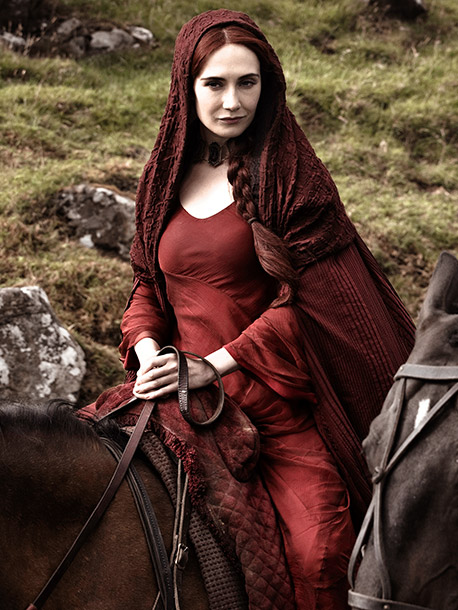

Speaking of which, the other outrage-inducing scene had to be Melisandre's maternal moment. In the book, the passage in which Melisandre gives birth to a shadow-creature that looks like Stannis remains to this day one of the most jaw-dropping moments in the entire Ice and Fire series. And I have to admit, I loved the fact that they kept it in all its deeply shocking glory. Kudos must go to Carice van Houten for her courageous performance in this scene and also to Liam Cunningham for reacting exactly as most audience members were no doubt reacting in their sofas. Twitter went a little mental, some people proclaiming the graphic nature of the scene to be the outrage, which by all accounts, is an expected reaction. 


I knew what was coming and I was still amazed that they managed to get away with showing as much as they did. But then, there was the other outcry against it, that of the overwhelming amount of magic the series had all of a sudden developed. Only, this isn't really the case is it? Although the writers did play down the magical side to this particular fantasy epic in Season One so as not to put off any prospective viewers, it was always there. We had zombies, dragons, witches and gigantic wolf creatures right through the ten episodes. Yes, it is one of the more 'realistic' fantasy series out there but it was always engrained within the narrative of show. And you'd be really disappointed if they got rid of the dragons wouldn't you?


Like Season One's episode, The Lion and the Wolf, which saw the proverbial excrement really hit the rotor blades, episode five, The Ghost of Harrenhal, saw the plot lurch forward in such an exciting way, I barely stopped for breath for the entire episode. As the title suggests, it was a little more Arya-focused this time as we saw her developing relationships between both Gendry and the mysterious Jaqen H'ghar. We also saw a scene that was practically dripping in dramatic irony as Arya served water to Tywin Lannister as he goes on about what a nuisance her elder brother Robb is being. The reactions of Maisie Williams to hearing this news were perfectly pitched and she really is one of the most consistently brilliant performers in the show. 


Back in Highgarden, we also saw the consequences of the weird shadow birth from the previous episode. Poor old Renly. No one ever took him seriously, not Ned Stark or his enemies and especially not his brothers. And he never really stood a chance, despite his startlingly practical wife. Now, Renly's been murdered by a shadow man-thing and Brienne of Tarth is to be blamed, running off with Catelyn Stark. I had my reservations about the transfer of Brienne from page to screen. She's one of my favourite characters and is described as being so aesthetically unpleasing that I thought there was no way she'd be portrayed accurately in a glossy, good-looking production. But thanks to Gwendolyn Christie and some less than flattering make-up, it's like Brienne just got up and walked on to set; Christie captures her earnestness and naivety perfectly, as well as the fact she could cut you in half without really making an effort. She's an excellent addition to the cast and I can't wait to see her development for rest of this season and into the next.


Finally in this bumper review section, it's the most recent episode, The Old Gods and the New that has raised the stakes even more than those that have gone before. More explicitly violent than previous episodes, it felt like the showrunners are now starting to crank it up in the run up to the season finale. First of all, Joffrey got hit with a cow pat. YES! Although it's not really the cathartic torture scene we're all hoping for, it's certainly nice as an audience member to see someone so evil get hit with crap. All is not well in King's Landing; the people are starving and decide that the best way of showing this is to throw stuff. Which is fair enough really. Sadly, Joffrey has a characteristic over-reaction and decides to behead everyone which results in some dismemberment and Sansa getting a little closer to the locals than is perhaps strictly legal. The near gang-rape in this scene was really hard to watch and was an expert example of tension and nail-biting fear for a character who's winning a few more people over now. Poor Sophie Turner has been bashed about this season but is selling Sansa's journey from simpering moron to natural born survivor really well.


But the biggest development in this episode though has to go to Theon Greyjoy's decision to invade the North. Oh Theon, so many daddy issues and so little time, but attacking Winterfell was the worst decision since Ned Stark decided that Littlefinger was just trying to help him out. Not only are his actions going to royally piss off most people of importance in Westeros, he also completely hamfists it in one of the most uncomfortable beheading scenes ever committed to celluloid. Like Renly Baratheon, Theon's never really taken seriously by anyone, even Bran doesn't quite believe him when he says he's taking over Winterfell and almost everyone thinks they can convince him to stop being a fool. Sadly not though as poor Rodrik Cassel found out. Alfie Allen's performance has been one of the weaker in the season so far but he's starting to settle into it, conveying the turmoil of character torn between two families and not really knowing what to do about it. 


Thankfully, we had some comic interludes to cope with all the violence. We spent longer with Jon north of the Wall as he is learning, rather unsuccessfully so far, that being a Ranger isn't all sword-swinging and posturing. Despite some early tension with a wildling fight, it's Jon's introduction to Ygritte that provides a chuckle or two as they hunker down in the snow together to cope with the cold. Though the cold isn't really what Jon's got to worry about... Another comical scene is back in the gloomy towers of Harrenhal between Arya and Jaqen when she calls in another death for his debt after being discovered sneaking information away from Tywin's table. Compared to the escalating violence elsewhere in the episode, Amory Lorch's death was both unexpectedly quick and played completely for laughs. While a dry sense of humour is always present throughout, it's often very welcome to have explicitly comical moments, breaking the tension on what was otherwise an incredibly nerve-wracking episode.


What continues to amaze about this second season is how real everything feels. One of the big marketing themes in the run-up was all the new locations in Westeros that we'd be travelling to. The landscape of the show got a whole lot bigger and thankfully, it hasn't lost anything by having to travel all over the fictional map. Whether it's the ports of the continually damp Iron Islands or the oasis of Qarth, each location feels completely authentic. This sense of authenticity develops the show so much, allowing you as an audience to get totally sucked into everything that's going on to the point of feeling your skin crawl when you're wandering the streets of King's Landing with Tyrion and Bronn. The winner of the Best New Set award (which I have just made up) though has to be Harrenhal which is just fantastic, creepy and terrifying all at the same time. It's one of the weirdest locations in the books and the set designers have captured it perfectly. The world of Game of Thrones, in its entirety, looks beautiful and it's a testament to the production team that I actually want to explore Westeros and see it for myself. Well, I'd go and wander round if I was armed, preferably with a large machine gun. You know, just in case.


-Becky

Thursday, 3 May 2012

FILM REVIEW: Avengers Assemble

When the Asgardian god of mischief, Loki, returns to Earth with his very own brand of villainy, SHIELD works to unite several superheroes into one team, the Avengers, in order to put a stop to him bringing the world to its knees.


The Avengers (I'll call it this throughout the review as it sounds less like a vendetta against furniture instructions) has been a long time coming, building across five films to form a Marvel Universe the likes of which many comic book fans had only ever dreamed of seeing on screen. Though I'm relatively new to the full extent of the Marvel mythology, I've always grown up with the cartoons, the stories and the iconic characters. The Avengers was a bit of a fantasy; something that was a good idea and would be amazing to see on the big screen but that would probably never happen. It would just be too big. Then Iron Man happened. Ever since Nick Fury (Samuel L. Jackson) showed up in the Iron Man post-credits sting talking about the Avengers Initiative, Marvel have been building towards this moment, a film that saw several superheroes, stars in their own right, come together to form Earth's Mightiest Heroes. After an expert marketing campaign that meant the (already considerable) hype had been ramped up to the maximum, The Avengers finally hit the big screen last week. And it's fantastic.


The plot centres around your friendly neighbourhood macguffin, the Tesseract, a Cosmic Cube of pure, self-generating energy that holds the key to a lot of things for a lot of people, last seen in Captain America: The First Avenger. SHIELD (i.e. Nick Fury and Clark Gregg's Agent Phil Coulson) are currently in possession of the Cube but with Loki (Tom Hiddleston) on the move, this isn't the case for very long. Soon, Bruce Banner/The Hulk (Mark Ruffalo), Tony Stark/Iron Man (Robert Downey Jr.), Natasha Romanoff/Black Widow (Scarlett Johansson), Clint Barton/Hawkeye (Jeremy Renner), Steve Rogers/Captain America (Chris Evans) and Thor (Chris Hemsworth) are brought together to try and stop Loki from destroying Earth as we know it.


First things first, director and co-writer, Joss Whedon really did have a hell of a job on his hands. Being able to juggle seven main characters, four of whom with super-powers and all with their own baggage, a villain with more angst than the average episode of Dawson's Creek and a decent plot with good action sequences then making sure that all of this makes a good film is no easy task. Thankfully, the screenplay Whedon and fellow writer Zak Penn have put together manages all of these things and more. Despite having to contend with a huge cast of major characters, every single one gets a moment in the spotlight and the cast seize each chance with both hands. Although many people are claiming that the Hulk steals the show (he is brilliant), for me, it's Tom Hiddleston's Loki who really shines in this film. As with his appearance in Thor, Hiddleston manages to create a villain that is thoroughly evil, compelling and yet still a little sympathetic. His desire to rule essentially comes from a place of low self-esteem thanks to some serious daddy issues and Thor's explanation for this is one of my highlights of the film. 


That's not to say the other actors do badly, in fact, I'd go so far as to say there wasn't really a dud performance in the film. Thanks to some classic Whedonesque one liners, the interplay between the superheroes offers each one a chance in the spotlight. Whether you want to see Thor going ten rounds with Captain America, Tony Stark verbally sparring with Bruce Banner or the Black Widow taking on the Hulk, every scene between the heroes is great to watch. Naturally with a film of this magnitude, a couple of characters are going to get a little less attention and in this case, it was Cobie Smulders' Agent Maria Hill and Renner's Hawkeye. The script does give both of them a chance to shine in their respective roles but I didn't feel like they got the same amount of development devoted to the other characters. That being said, it never felt that they were included simply to be filler, both playing an integral part in the story as the eyes and ears of the operation. Whedon is used to handling big casts of big characters with his experience on ensemble shows like Buffy the Vampire Slayer and Firefly and the same skill is transferred here.


As always with a superhero film of this magnitude, the action scenes were going to have to be big and bold. Thankfully the action scenes are both necessary for the story and extremely well put-together. Not once did I lose track of what was happening or who was fighting who, a welcome feeling in an action film. Every scene was entirely organic to the developing narrative, never once feeling as if it was inserted just to kickstart the plot as the pacing was also well-handled. As with the interplay between all the characters, the fight scenes between the various heroes were every bit as thrilling as they should have been. The Chitauri, the alien race employed by Loki to take over the Earth, didn't exactly live up to the fearsome reputation that had been talked up earlier in the film. As they practically had 'canon fodder' stamped on their grisly foreheads, it makes enough sense that they could be dispatched without great difficulty but they could have a little more threatening. That's a very minor criticism though as these action sequences were really all about seeing the Avengers throw down. Even with the slightly dodgy foe, the final action sequence barely let you stop for breath with all the heroes pulling their weight in one of the most epic battles in recent history. It's a testament to both the writers and the cast that these action scenes actually further both plot and character development rather than merely being mindless violence for a few minutes at a time.


The Avengers always had the potential to be something revolutionary, a film that finally realised the full grandeur that the Marvel Universe had to offer but then it could also have been a complete flop. Thankfully in the hands of Joss Whedon and a truly committed cast, it's the former, a rollercoaster ride of action, comedy and spectacle from start to finish. It took all my strength to not clap and cheer loudly at several moments during the film and, for me, that's a sign of a truly great superhero film.


*****


- Becky

Monday, 30 April 2012

NEWS FEATURE: Scott & Bailey


We won't keep you long, but just a brief heads-up: Series 2 of ITV1's Scott And Bailey draws to a close this evening, in about an hour, in fact.

Tonight's finale sees the return of Nasty Nick Savage, the slimeball corrupt barrister who tried to have Rachel Bailey (Suranne Jones), murdered upon her discovery of the extent of his illegal proceedings. What will happen when they meet? Did Rachel assault him? Will anybody actually be in any real peril for longer than an episode? Well I could be wrong, but probably not.

That's the thing about Scott and Bailey. It is a bit predictable. The murderers are so obvious that the suspect may as well wander in with a bloody dagger shouting "yeah an' 'e deserved it an' all!", although of course in a more suitably Manchester accent.

The plotlines are predictable. It's all too often screamingly obvious which conversations are happening for the sole reason of setting up the next episode. Certain characters who I shall not name (Sean) may as well have 'I am a plot device' scrawled across their foreheads in permanent marker, and that's not to mention the overwhelming sense that every murder will inevitably involve a male misdemeanour along the lines of what he could or could not keep in his trousers at some juncture.

The female characters are unusually strong, granted. Amelia Bullmore's Godzilla, also known as DCI Gill Murray, is particularly fabulous, Pippa Haywood's DCI Julie Dodson comes a close second, and of course no discussion of Scott & Bailey would be complete without its Scott, Lesley Sharp's Janet.

But again, predictably, and sadly in this case, the men they are surrounded by, with the exception of the odd, well none, actually, are a collection of increasingly gormless twerps, barely able to string a coherent sentence togther let alone solve a Major Police Incident. Which is a shame, as there is little point having strong female characters when there is no one for them to satisfactorily outshine.

All this said, however, and I do feel I am being a tad critical, the show is, to put it blunty, bloody brilliant. It's predictability really doesn't matter a jot once you get more than a couple of episodes in, in fact, it's all part of the fun. All that really matters is Janet, Gill and Rachel, and what's happening in their personal lives is usually of far more interest than any actual crime storylines anyway.


All jibes and criticisms aside, Scott and Bailey is engaging, fun, and comes complete with a script so full of razor sharp one liners you'd think the producers' hands would be covered in Elastoplast by now.

And sometimes, that really is all you need.


Scott & Bailey finishes tonight, on ITV1 at 9pm.


- Jen

Monday, 23 April 2012

FEATURE: Shakespeare's Unsung Heroes


As you may or may not be aware by the sudden influx of productions, parades and celebrations, it's William Shakespeare's birthday. That's right, 448 years ago today, Shakespeare was brought kicking and screaming into this world to write in 52 years what it would theoretically take a lot of monkeys on typewriters an eternity to do. This blog post comes to you in conjunction with www.happybirthdayshakespeare.com, a blogging project all over the world to get everyone celebrating the good old Bard. For the Assorted Buffery part of the festivities, we're taking a look at the unsung heroes of the Shakespearian canon with tongue stuck firmly in cheek. We love those characters who don't hog the limelight (Hamlet, I'm looking at you) or aren't remembered for being the comic relief or that person who dies in Act 3. They're the ones who work alongside our heroes, going predominantly unnoticed, or not even appearing at all. Yet we can guarantee the plays would be a whole lot different if they weren't there. So without any further ado (about nothing), here's our top ten Unsung Heroes.


10). Poins

Perhaps a point in his favour, in terms of his position on this list at least, is that at least three of you reading this (out of the four of you) haven’t a clue who Poins even is. And nor would you, unless you’d taken it upon yourself to read or see Henry IV Part 1. Which again, not many have. To give you the briefest of summaries, Henry IV Part 1 is not actually about Henry IV at all, it’s about his son, Prince Hal, who will later become Henry V in the play of the same name. So he, in effect, gets two plays. 4, if you count the different parts. Which strikes me as a little greedy to say the least. Poins, to get back to the point and move the limelight away from the Prince for just a second, is Hal’s sidekick. His right hand man, his buddy. He goes everywhere with Harry for 4 plays, joins in all his mischief, goes to battle with him, eats and drinks with him, plays at highwaymen with him and is, at least in the productions I’ve seen, just as devilishly sexy as him. By rights, he should be as well known a character as Horatio, or Banquo perhaps, yet still no one has the faintest idea who he is. Whenever I think of Poins, I’m reminded of Gretechen Weiner’s now youtube-infamous speech in Tina Fey’s Mean Girls, which states “Brutus is just as cute as Ceasar…everyone totally likes Brutus just as much as they like Ceasar”… both of which are true of Poins. It’ just that, somehow, like Brutus, he’s just not the one you’re going to remember. Bless him. 


9). Diana


All's Well That Ends Well is one of the lesser known of Shakespeare's plays but it contains another one of our unsung heroes, Diana, a woman pursued by wayward Bertram as he attempts to run away from his wife Helena. The central story is one of unrequited love; Helena loves Bertram but she isn't of noble birth and he isn't interested, but after saving the life of the King, Helena is given the choice of any man at court. Naturally she picks good old Bertie who promptly runs away to war saying he will only be truly married once Helena bears him a child and wears his ring. This is a bit difficult whilst he's off fighting battles but, thanks to a cunning bed-switch scheme, Diana helps Helena get her man. Not that anyone really praises her; everyone's all about Helena's cunning. Like the other women on our list, Diana is feisty, independent and knows exactly what she doesn't want to do... which is sleep with Bertram. Thanks to her desire to remain pure and virginal, Helena gets her man and everyone lives happily ever after.


8). The King Of France

Yes. The King of France we say. From which play, we hear you cry. Why King Lear, of course. Is the King of France actually in King Lear? Would no doubt be your next query. No, we would reply, he’s not. Well, he is, obviously, but only for approximately half a scene. He swoops in, all regal and French, and is the only suitor willing to marry the youngest of the Lear family girls, Cordelia, despite knowing that he won’t be getting any financial reward for it. I think it’s worth stressing at this point that in Shakespeare’s day, that was a bloody big deal. Especially for a King. And especially for a King who’s just heard two other Kings reject her, and heard her own father and sister tell him not to bother. Good on him, you might say. Except, no, he then disappears off from the play entirely, with Cordelia, and is never seen again. Admittedly he does go back to France, being, after all, the King of it, but it has always struck me as odd that he does not return with his beloved to help her fight her evil sisters. (Cordelia/Cinderella anyone? Just occurred to me…) A decision which ultimately results in her death. Full marks, King of France, full marks. Oh well, he never was going to be the most memorable King in King Lear, we suppose.


7). Peter Quince


A Midsummer Night's Dream is one of the most beloved of all of Shakespeare's plays, a heady mix of romance, magic and the downright weird. The Mechanicals, a troupe of craftsmen getting together to put on a performance of Pyramus and Thisbe for the King's wedding, are the most grounded characters, getting swept up in all the madness without any real clue about what is going on in the Athenian forest. Bottom the weaver, the donkey-eared fool of the group who thinks he's the Greek Laurence Olivier, is clearly the most memorable of the group with his romance with Titania being one of the weirdest moments in an entire play of them. But what about the man who made it all possible? Peter Quince is a carpenter, just an ordinary soul trying to put on a play that he wrote himself but all this fairy nonsense gets in the way. Without Peter Quince we wouldn't have had what is, without doubt, one of the most riotously funny scenes in the canon. The performance of Pyramus and Thisbe is a fantastic end to a wonderful play and, thanks to Peter, we get to see how well a moon can shine and a second-to-none appearance by a wall.


6). Portia's Father

The only character on this list to never actually appear in the play in question, Portia's father is nevertheless one of the most crucial in The Merchant of Venice. Now we can hear your snorts of disbelief from here and your questioning glares are practically burning through your computer screen. But Portia's father, both unnamed and already dead at the play's opening, does much to influence proceedings for he constructs the Casket puzzle, the test for all of Portia's suitors, one that she manipulates with the greatest of ease in order to secure Bassanio's love. It also has a great effect on the other plot of the play, the power games between Shylock and Antonio that was brought about through Bassanio's pursuit of Portia and leads to the infamous court scene at the end. Which of course, Portia cleverly resolves through an exceedingly good bit of logic. So in our own burst of exceedingly good logic, Portia's father sorts out a fitting marriage for Portia, also sorts out a marriage for Portia's handmaiden through this and saves Antonio from being deprived of a crucial pound of flesh, all without appearing in the play, saying a word and in fact, being dead the whole time. Now that's what we call inadvertent heroism.


5). Lavinia

Quite literally the most unsung heroine in Shakespeare, Lavinia doesn't half suffer for her art. Over the course Titus Andronicus, she's told she can't marry the man she loves, watches him get brutally murdered, then she's raped, her hands are cut off and her tongue cut out. And that's all in the first two acts of the play. She spends the rest of the play being led about by various family members, all attempting to speak for her and getting it impressively wrong every single time. Before her unfortunate dismemberment, Lavinia was on track to be one of the most badass of all Shakespearian females, running off with her lover, standing up to evil Goth queen Tamara (no, not that kind of Goth) and generally being pretty darn feisty. Sadly, losing a tongue does tend to lessen one's impact in a play and Lavinia becomes a grim, slightly bloody reminder of the dangers of this Roman world. Despite the stumpy opening, Lavinia gets a place on this list because it's her efforts, despite the lack of hands and tongue, that enables her father to learn the truth about those conspiring against him. Not that that helps her as Titus promptly kills her to prevent her from feeling her shame. Charming.


4). Emilia

The characters in Othello are all fairly conflicted people, divided between love and loyalty or driven downright insane by a jealous friend. Emilia is no different, caught between her devotion to charismatic but mad-as-a-box-of-frogs Iago, her husband, and the beautiful but doomed Desdemona, her mistress. Although initially an accomplice in her husband's schemes, she's never entirely made aware of just how evil he's being. Once she realises what's going on however... Well, you remember that old phrase, 'hell hath no fury like a woman scorned'... Seeing Desdemona's prone body, she quickly pieces everything together and screams her lungs out, telling everyone in the near vicinity, including Othello, just what her husband has been up to, revealing to everyone what the audience has known all along. She's quickly dispatched by Iago in attempt to silence her but it is too late. Brave enough to go against her psychotic husband and loyal enough to die for her mistress, Emilia is one of the fiercest female characters across Shakespeare and well deserving of a place on this list. Our favourite part of Emilia's story is that the misogynistic Iago is completely undone by his own wife in a piece of delicious Shakespearian irony.


3). Queen Margaret

The absolutely stonkingly fantastic Queen Margaret is again possibly not a character you would necessarily have heard of. She pops up for a bit in Richard III, as well as couple of the other Histories I believe, shouts a few profanities and then stomps off again. At least that’s the situation as I understand it. In terms of the plot, apart from giving Richard several golden witty retort opportunities, she doesn’t really do a lot. The little known fact about her though, and it’s a pretty good one, is that she was actually Shakespeare’s favourite character. Of all the ones he’d ever written. And he wrote a lot. In fact, he liked her so much, that whenever he graced the stage in one of his own productions, she was the character he would insist on playing, every time. Maybe he just liked to curse people? Maybe she had the nicest frocks? We’ll never know. But she deserves a place on this unsung heroes list because that’s exactly what she is. She’s in the background, is quirky and mysterious, we don’t really know a lot about her and critics all too often don’t really know what to do with her. Just like the man himself. I can’t help thinking that, on some level at least seeing as, for all his talents, he could hardly have predicted the future, that that’s exactly why he liked her so much. 


2). The Bear

Yes, (Exit, pursued by a bear) is the most famous stage direction in the whole of the Shakespeare canon and it only makes no more than a fleeting appearance. The Bear doesn't come under the not-remembered part of our list because, let's face it, you're going to remember a wacking great bear chasing poor Antigonus off the stage. But think about it. The Bear is actually a crucial component in The Winter's Tale, heralding in the new pastoral half of the play, violently killing off the tragic first half that sees a queen die and a baby abandoned on the shores of Bohemia. As a symbol of the destruction of Leontes' unfounded anger, it's a fairly obvious one and we could go into all the things that the Bear represents. For sheer spectacle, and for stealing a highly interesting play without saying a word, it is one of the greatest of all unsung heroes in the Shakespearian oeuvre simply because everyone knows it. Whether you choose to have a man in a bear suit, a puppet or, if you're really brave, a very real big old grizzly, it's likely to be one of the most memorable moments of the play. 


1). Macbeth

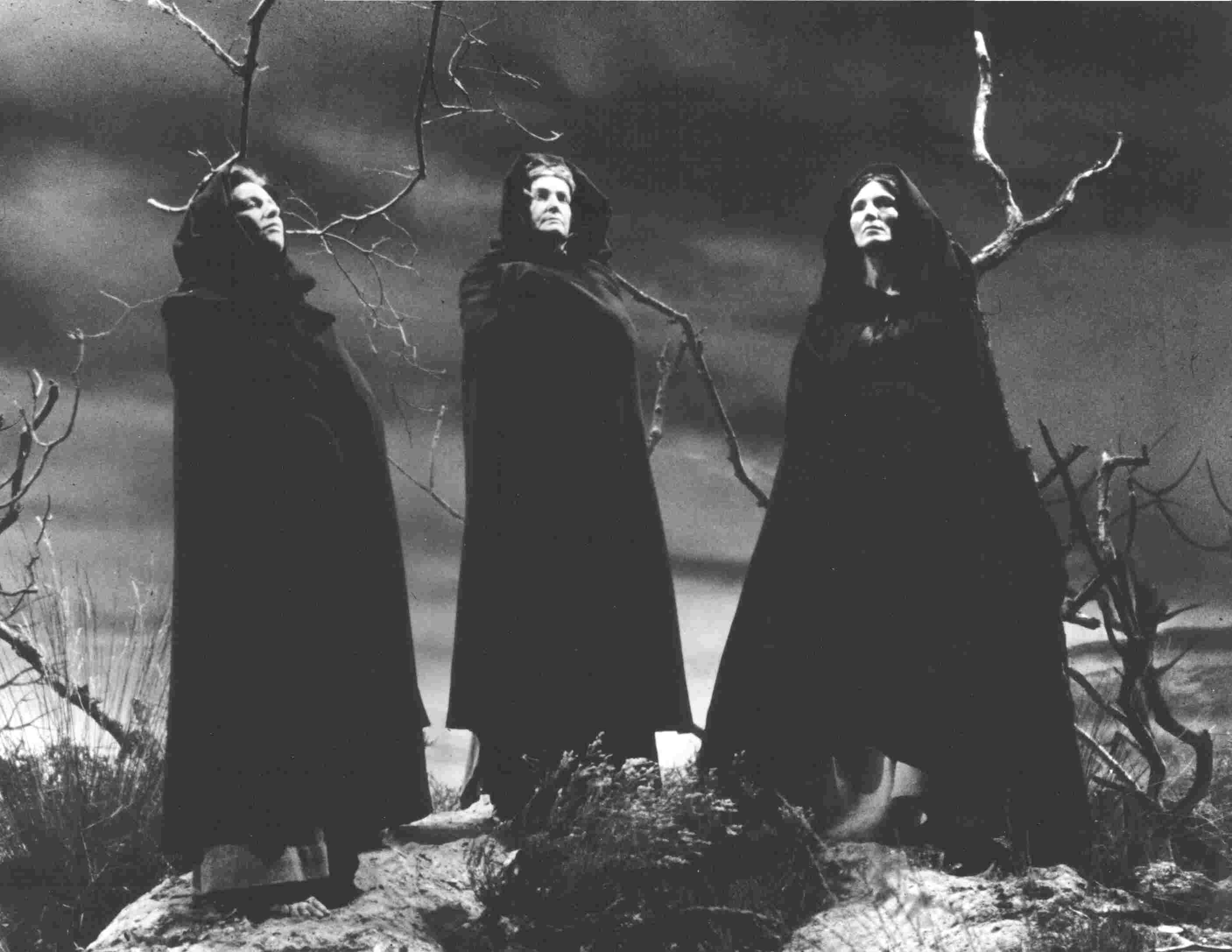
Macbeth, in our opinion, is the greatest unsung hero of the Elizabethan canon, never mind the Bard’s works. Admittedly, like several of the other big characters, he does have a whole play all to himself in which to royally cock things up. And he does it fairly well. Quite a few people die, making it at least a successful tragedy, and he briefly manages to be King of Scotland, have the odd banquet and make a lovely couple of speeches whilst he’s at it. But which character from Macbeth sticks in your mind? Because I bet you a couple of comedy codpieces it isn’t Macbeth. Is it his wife, perhaps? Sure, he does all the ‘is this a dagger’-ing and all the actual killing, but at who’s bequest? His wife’s of course. And aside from said ‘Is this a dagger?’ speech, I’m also willing to bet that ‘Out, out damned spot’ is more famous than any of Macbeth’s lines, no matter how many times he says ‘Tomorrow’. She also has a much cooler exit. No waiting to be attacked by a bunch of overgrown Christmas trees for her, oh no. She’ll chuck herself off a balcony before anybody else gets the chance, thankyou very much. But, bad-ass as Lady Macbeth is, she’s not the only character in Macbeth, other than Macbeth, who we remember. Call to mind the three witches, possibly the most famous old hags in the whole of literary history, and first utterers of the now much-used, thanks to Warner Brothers, ‘Something wicked this way comes’. Banquo, too, is a hugely memorable character. In fact I think it’s fair to say that even Banquo’s ghost makes more of an independent impact than Macbeth, and he’s invisible. 

Whilst Macbeth is outdone by pretty much every other character in his own play, there is still one more reason why we think he’s the greatest unsung hero of Shakespeare’s works. And it’s probably the most significant one. Macbeth may have a play named after him, granted, but, our pointis that, crucially, we’re not even supposed to say it. Macbeth is more commonly referred to these days as The Scottish Play, as his name is considered to be an omen of such terrible luck that many actors won’t even say it. That’s right, the very actors set to be bring poor old Macbeth’s story to life on a stage, won’t even say his name in the very venue they’re about to bring him to life in. In fact, in some anthologies these days, the play is actually listed as Macbeth, or The Scottish Play so as not to offend any sensitive thespians. Before long, Macbeth may even be phased out of his own title without so much as a by your leave. 

No wonder his missus gave up on him. 


- Jen and Becky

Monday, 16 April 2012

FILM REVIEW: The Cabin in the Woods

The Cabin in the Woods has been involved in something of a review furore over the past week with certain reviewers revealing spoilers and causing consternation for those people who want to go in and see the film cold. So I'm issuing a disclaimer straight away: This review will not contain any spoilers whatsoever, other than information that has appeared in the trailer for the film. 


Directed by Cloverfield's Drew Goddard, produced by Joss Whedon and written by both, Cabin in the Woods has been stuck on the shelf for awhile after MGM's financial difficulties. Now the film is finally with us, 18 months late but thankfully, just as fresh and as relevant. I heard about this project when it was first being produced back in 2009 and was ridiculously excited for it then. With all the anticipation for the film, mostly on my part, it could have easily become just another horror movie dud, but in the hands of genre mash-up extraordinaires Goddard and Whedon, we've got something that could be just as revolutionary as Scream was back in the 90s.

The film follows five college kids, Curt (Chris Hemsworth), Dana (Kristen Connelly), Holden (Jesse Williams), Marty (Fran Kranz) and Jules (Anna Hutchinson), off for a long weekend to Curt's cousin's cabin in the woods. On the way, we get the five meeting your stereotypical country hick (played brilliantly by Tim de Zarn) and being warned away from the cabin at the end of Tillerman Road. Instead of doing the sensible thing and turning around, the quintet of canon fodder head off to the remote location and proceed to awaken something that wants to slice and dice them one by one. But is there all there is to it? And just what do Sitterson (Richard Jenkins) and Hadley (Bradley Whitford) have to do with it all?

Now I can't stress enough that if you want to enjoy this film as fully as possible, it's essential to avoid all the spoilers you can. The primary reason for this is because The Cabin in the Woods is a film that demands to be viewed with very little prior knowledge and that's part of the joy of the experience; you think you know what's coming but trust me when I say you really don't.

Every twist, shock, surprise, laugh etc. comes from not being able to expect anything because you honestly have no idea what's about to happen. There were moments in the film where I jumped at something scary, laughed really hard at something funny, back to jumping, back to laughing again, all in the space of about 60 seconds of the film. It's a fantastic cinematic experience and it's really refreshing to attend a film where you haven't worked out the plot within about thirty seconds.

As you'd expect from Whedon and Goddard, the writing is brilliant, treading the fine line between horror and comedy throughout. It's a testament to both writers that, with a genre so tired and a format so familiar that the audience always knows what's coming, they inject new life into it, reminding us all why we love horror films so much in the first place. In the first half an hour, the cliches come thick and fast but the deconstruction of them comes just as quick, never once letting you forget that what you're watching is a horror film that is aware of exactly what it is.

Praise must also go to the excellent cast that were assembled for the film. The five actors portraying the college kids each fit their roles well, playing the horror archetypes that we're all used to seeing. The standout in this part of the ensemble is Fran Kranz as the stoner fool of the group, given some of the best lines in the film and stealing most scenes from the others. 

A pre-Thor Hemsworth does the supposedly dumb jock well while Connelly's virginal Dana is played with all the wide-eyed innocence you'd expect from that particular character. The best performances in the film though are Richard Jenkins and Bradley Whitford as the mysterious pair you see right at the beginning of the film. The chemistry between the two actors is a joy to watch and their appearances are a real highlight. 

Films that are meta in their construction often run the risk of being too clever for their own good. We've of course had the meta horror film before in Wes Craven's Scream but The Cabin in the Woods blows it away, simply because it's a lot more fun. Where it succeeds is that it has a considerable amount of love for the films it's poking fun at. The film knows it's extremely clever and self-aware, but, importantly, it doesn't take itself too seriously, making it one of the most fun films I have seen in a long time.


*****

- Becky

Saturday, 14 April 2012

TV REVIEW: Game of Thrones, Episodes 1 & 2

The first season of Game of Thrones, based on George R.R. Martin's A Song of Ice and Fire series, was a massive hit both here and across the pond, delighting us with courtly intrigue, battles of wits, violence, drama and, being HBO, copious amounts of gratuitous sex. It feels like it has been a very long wait since Westeros last graced our scenes but if the opening episodes are anything to go by, it's like we never really left. As always, here be spoilers... and dragons.


Episode One: The North Remembers:


Because the end of the first season saw more twists and turns than a twisty-turny thing, The North Remembers is clearly about getting you back into the goings-on of the Seven Kingdoms and reintroducing you to the characters you love and loathe. Thankfully, this didn't reduce the episode into an hour of exposition but was more akin to watching a manoeuvre being carefully planned in a game of chess (or cyvasse if you're familiar with the Westeros version). The audience was moved from piece to piece, carefully establishing where the fallout from last season, namely the execution of Ned Stark, had left the various characters.


First of all to King's Landing where we see evil-incarnate, King Joffrey, demonstrating just why it probably isn't good to be on the wrong side of him. Through a series of humiliations and mood swings, it's brought back into focus just why we're meant to hate Joffrey. With a fiery, fiery passion. Poor Sansa Stark is still stuck in King's Landing, and still betrothed to the blonde-haired demon, but has clearly been learning how to play the game, successfully manipulating Joffrey into letting someone live who was about to have his head impaled on a spike. I cannot praise Jack Gleeson's performance enough as Joffrey; he really is quite terrifying and unpredictable, and that's coming from someone who has read the books. Simiarly, Sophie Turner's Sansa is granted layers beyond the stroppy teenage girl that she was for most of the first season.


We also get re-introduced to the Small Council, the men responsible for much of the politics and manipulation that goes on around King's Landing. The newest addition, Tyrion Lannister (played by Emmy award-winning Peter Dinklage) is naturally going to shake things up and, as the most interesting character in all of Westeros, I'm not ashamed to admit I cheered when he took on Cersei Lannister (Lena Headey) and won. Elsewhere in one of the standout scenes of the episode, Littlefinger (Aiden Gillen), is shaken up by Cersei after he insinuates that he is aware of Joffrey's questionable parentage and that he is quite prepared to use this against her should she step out of line. The only King's Landing moment to beat this one though had to be the confrontation between Cersei and Joffrey in which there is just a flicker of emotion across Headey's face as Cersei realises what a monster she has created.


The episode also brings the audience into the War of the Five Kings, still raging since the first season and showing no signs of slowing down. Robb Stark (Richard Madden), declared the King in the North, and defeating Lannisters left, right and centre, is the most dangerous of the bunch currently. Having captured Jaime Lannister (Nikolaj Coster-Waldau) in Season One, he's currently enjoying taunting him with his wins and his direwolf, Grey Wind, snarly in CGI. Then there's Stannis Baratheon (Stephen Dillane), the direct heir to the throne, beginning to make a move. The scenes at Dragonstone were somewhat stolen by Carice Van Houten in her performance as the Lady Melisandre, which was suitably chilling.


The outskirts of the show's geography have always struck me as the safer places for characters to be, away from the snake pit of King's Landing and the violence of the wars. That doesn't necessarily mean they're out of danger though. Across the Narrow Sea, we're given a first glimpse of the dragons since Season One as Dany (Emilia Clarke) and the remains of her Dothraki khalasar travel off in search of armies to boost her campaign to reclaim her throne in Westeros. But Dany is losing people to thirst and hunger, lacking the supplies to make the trip. Meanwhile, beyond the Wall, Jon Snow (Kit Harington) is journeying further into the most dangerous place in Westeros, the unmapped north, in which all manner of nasties are waiting to travel South.


What is perhaps most impressive about the first episode is the confidence with which the show takes us through all these various storylines, never really stopping to allow the audience to breathe. Instead of ramping up the narrative and pushing ahead into the meatier storylines, we're allowed to get re-acquainted with the characters and the locations. Also, there are more of the genre elements moving into view, rather than hiding in the background as they did in the first season, such as the dragons for example, and the magic side of things that Melisandre's introduction brings with it. Now that the audience is in place, both fans of the books and those just of the TV show, it's allowing the producers to really ramp up the fantasy without turning people off the story.


Episode Two: The Night Lands:


The audience didn't need any further proof of Joffrey's evil nature, but now it seems that the rest of Westeros is cottoning on, particularly the residents of King's Landing who are still reeling from the murder of King Robert's bastards. In his capacity as the King's Hand, Tyrion has begun making changes and is not winning any favours with his sister, Cersei. Meanwhile, the War of the Five Kings continues with Stannis and Melisandre making their alliance physical. Up beyond the Wall, Jon is forced to make a decision about one of Craster's many wives that causes a rift with best friend Sam while continuing his confrontation with Craster himself. Then there's Arya, only glimpsed briefly last week, given more scenes with Robert's bastard Gendry (who doesn't know who his father is) and continuing her journey north to the Wall.


One of the key developments in this episode is Theon Greyjoy's trip home. The Iron Islands always seem to be the most depressing place in the whole of George R.R. Martin's universe and as always, the show didn't disappoint in its portrayal. Everything is damp, clammy and not quite friendly, as Theon discovers upon his return. It also allows the series to return to one of its creepiest elements, that of incest, with Yara, Theon's sister, deceiving her brother while he indulges in some inappropriate groping. I'm glad that the series is devoting time to this storyline as it becomes one of the most interesting in the books, especially when Theon learns of his father's ambitions of stirring up rebellion... again.


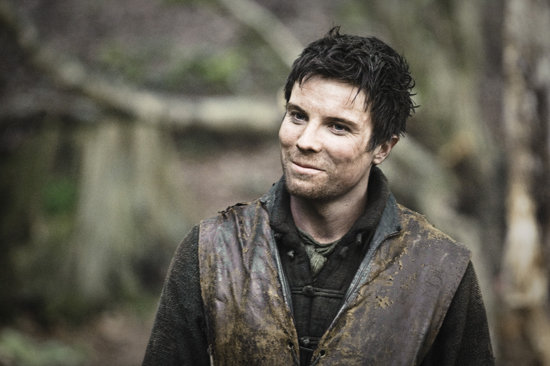
As always, the performances in the episode are fantastic, each cast member filling out their role brilliantly no matter how small the part. I especially enjoyed the scenes with Arya and Gendry as it is one of the nicest relationships in the books and Maisie Williams and Joe Dempsie have done a great job of portraying it. I've been a fan of Dempsie since his scene-stealing role as Chris in Skins and it's good to see him doing the same in another series. The moment in which he reveals he knows Arya's secret and promises to keep it was just lovely. And it's not very often you can say that about Game of Thrones. That being said, it was of course Peter Dinklage who stole the show completely with his re-assigning of Janos Slynt and the rearrangement of the City Watch. Him and Jerome Flynn, as sellsword Bronn, make a great double act and I look forward to the rest of the series if those two keep getting moments like this.


The writing of this series so far has been a real highlight; whether it's journeying with Dany across the Narrow Sea or discovering what Littlefinger is up to in King's Landing, I never felt short-changed with the scenes given. Even the smallest scenes are of the greatest importance and, with an epic like this, it's even more important to keep everyone engaged with every single narrative taking place and they're doing a sterling job in this respect. I have my favourite characters, as you'll probably discover over the course of these reviews, and I'm sure most of the audience do as well. But it's good to see a show that is more concerned with the overall narrative than making sure the favourites shine brighter. Another slow-paced episode this week, but there's so much going on in Westeros that I don't think you ever notice it at the time.


Roll on next week.


- Becky

Sunday, 1 April 2012

FILM REVIEW: 21 Jump Street

Channing Tatum and Jonah Hill star as two under-achieving cops who are sent to Jump Street, a revival of an 80s programme which saw young-looking police officers infiltrate high schools in order to crack down on youth crime. The original series is perhaps more famous for giving a certain Johnny Depp his first break and was high on dramatic action, rather than comedy. Directors Phil Lord and Chris Miller adopted a very different approach for this particular revival, aiming for comedy and thankfully, it succeeds.


I don't want to give away too many of the jokes here so I'm going to remain deliberately vague as to even know some of the build-up to the punchlines would give it away. As with all adult comedies, crude humour and profanity are utilised throughout, but not to the extent that they overshadow the humour and rarely get in the way of a clever joke. Safe to say though that the quickfire gag rate means that the few jokes that don't work are quickly replaced by a dozen or so that do.


The film's strength lies in its self-deprecating quality and there's a sense of knowing that permeates throughout, starting with the captain's rant about how all anyone ever seems to be doing is reviving old 80s programmes and hoping no one notices. How very meta. In some cases, this could get tired; a film that's clever enough to know it's unoriginal can sometimes go past being suitably amusing to ever so slightly pretentious. 21 Jump Street treads a fine line but it never tips over into the latter, and knowing that's a big cliche is probably one of the high points of the film.

By combining the buddy cop and high school film genres, it gives the film plenty of targets to spoof and it does so with aplomb. Right from the off, with the Eminem intro and the police academy training montage, the film starts building up the cliches; we get mismatched cops, the angry black captain, a car chase, a high school hierarchy and even a slow-motion entrance to some cool music. Rather than just present the cliches however, Lord and Miller build them up only to knock them down again. Never taking itself too seriously, the film revels in the audience's expectations; we see a car chase, we know something is going to explode. Rather than going for the cheap spectacle though, it's built into an extended joke with a very funny punchline. This is the same for the high school cliches, cleverly observing that school has changed from the regimented hierarchy it used to be to a place where the popular kids are environmentally conscious, gay and drug dealers. Jenko's theory as to why this is the case is perhaps my favourite joke of the entire film. And, as with all good high school films, it ends at the prom. Though it's probably not any prom you'd like to attend.


Performance wise, the central duo are perfect in their respective roles. I'm not the biggest fan of Jonah Hill because in every film I've seen him in, he plays... well, Jonah Hill. His character Schmidt is your typical nerd in high school, unable to ask a girl to the prom or run 100 yards particularly quickly. His character arc is actually quite sweet given that he's able to relive his high school years only this time on the popular side of the crowd. This helps to overlook the slightly weird romantic subplot with Molly (Brie Larson), a high school senior. The real revelation in this film though has to be Channing Tatum in his first real comic role. Previously seen glowering in either romantic dramas or explodey-actioners, Tatum has rarely been given a chance to present anything other than an overhanging forehead macho character. Jenko could have just been another dumb jock, seen in countless other films, but instead, Tatum gives the role depth, combining the dumb jock with the kid who just wanted to be popular in high school. He also demonstrates great comic timing and is trusted with a lot of the best lines in the film. Plus, he mimes a mean lightsaber battle.


Elsewhere, Ice Cube puts in a great performance, nearly stealing the show with his 'angry black captain' speech. Dave Franco, younger brother of James, as main drug dealer Eric sends up the popular kid stereotype brilliantly and I don't think it will be long before we see much more of him. Then of course, there's the cameos. We knew from the start that Johnny Depp had agreed to cameo and, though a long time coming, it's well worth the wait. When he does appear, alongside fellow Jump Street alumnus Peter Deluise, it's one of the most hilariously meta gags in the whole film, ushering in the new Jump Street era with some knowing references.


As with all comedies, Jump Street falls apart slightly when it comes to the plot. Although the central plot of infiltrating the high school drugs ring works and the ultimate reveal of the dealer is suitably surprising, the film does have a couple of pacing issues. Because of the melding of action and comedy, it was always going to be a struggle to make sure the story held up all the way through the film. The plot inevitably gets in the way of the fast-paced gag rate and everything slows down as a result. Thankfully, the entrance to the prom reinvigorates it all and instead of a limp third act that could have reduced the film to mediocre, we get a suitably hilarious finish to a great comedy.


If you're in need of a hearty giggle or craving a spoof of several genres all at once, 21 Jump Street makes for a very funny evening and, if you've already seen it and want more, be comforted to know that the inevitable cash-in sequel is most definitely on the way.


****


- Becky