Showing posts with label Henry IV. Show all posts

Wednesday, 18 July 2012

TV REVIEW: The Hollow Crown - Henry IV Part Two

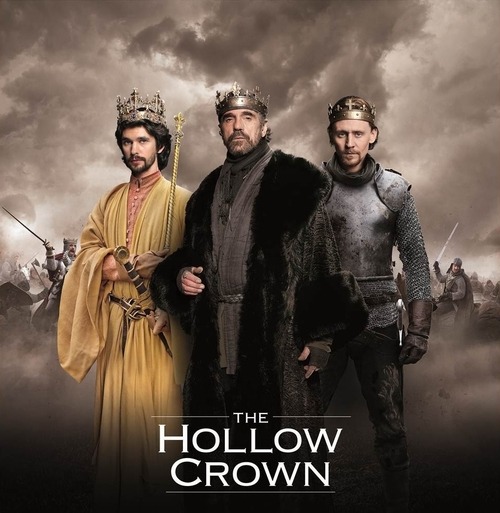
The third episode of The Hollow Crown and the second part of Henry IV follows the aftermath of the Battle of Shrewsbury, the decaying relationship between Prince Hal and Falstaff and the King dealing with the rebellions which continue to flourish in an uneasy England.


Lord Northumberland learns of Harry Hotspur's death and flees to Scotland for safety. The Archbishop of York plots another rebellion against Henry IV who is weakening after the toll of the battle. Hal is still torn between his old life and his new role as the heir apparent and has to come to terms with the fact that he soon might be King. Meanwhile, Falstaff is being chased by the Lord Justice, determined to keep him away from corrupting the young prince once again, but Falstaff is confident in Hal's love for him, believing that once Hal is King, he will bestow Royal offices upon his portly friend.


While still possessing the bawdy comedy and the slapstick of the first part of Henry IV, Part Two is a much more serious piece of work, dealing with the complications of growing up and accepting your responsibilities. The journey here is Prince Hal's, begun in Part One, but reaching its destination in Part Two as he cements his position as the honourable heir apparent and shedding the rebellious youth who we saw in the previous play. Tom Hiddleston, reliable as ever, manages to avoid falling into the trap of playing the two as very different halves of the same person, but instead gives us a nuanced performance that captures the development of Hal. The cheeky prankster is still there but is measured by his realisation that shedding Falstaff and the other residents of East Cheep is the way to go. The coronation scene in which Hal finally banishes Falstaff from his life and the country was emotional, both in terms of seeing finally become King Henry V but also the act of banishment itself. Simon Russell Beale has portrayed one of Shakespeare's most famous characters with a great balance of both the comic and tragic elements that Falstaff possesses.


As always with Shakespeare, a lot of the very important character developments are shown through the use of soliloquy and the two most powerful scenes in this episode were those given over to Henry and Hal as they contemplate the effects of kingship, for as Henry mournfully observes, 'uneasy lies the head that wears the crown'. Both Jeremy Irons and Hiddleston capture your attention in their separate moments and the setting of both scenes in the throne room really develop the sense of the inevitablity of kingship. Hal is very aware that his father's death is necessary for him to become King and the internal conflict of this was well-pitched and enhanced the emotional weight of the scene. The focus isn't all on the kingly pair though with Hal's younger brother John also getting a look in on the action. His takedown of the rebellion alongside Westmoreland was a properly triumphant moment and whilst not entirely honourable, it was a well-handled bait-and-switch for both the audience and the doomed rebels.


The episode's shortcomings are few but can probably be traced back to the play itself. Nowhere near as famous as the plays that come before or after, it is also not as strong structurally or dramatically. The few standout scenes I've mentioned are just that, exceptional pieces of theatre that provide great moments for actors and audiences alike. However, those in between lack some of the punch of the other moments. Whilst the farcical chase between the Lord Justice and Falstaff culminating in all out street brawl would probably work very well on stage, on screen it felt out of place with the more sombre tone that Part Two took. I'm well aware of the necessity to further separate the characters of Hal and Falstaff, but the jumps in tone sometimes felt a little jarring. That being said, I would watch Julie Walters in anything and her take on the beleaguered Mistress Quickly was one of the highlights of both plays.
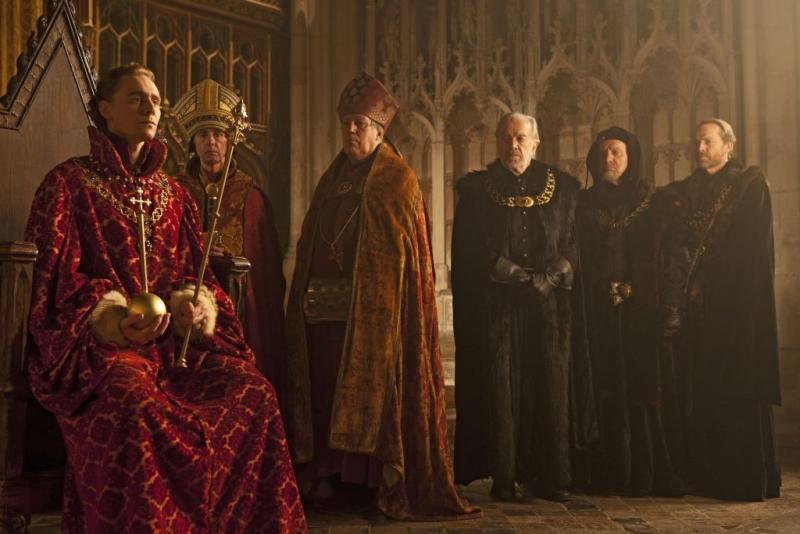

The Hollow Crown is one impressive piece of television and I'm already eagerly awaiting the next instalment. Whilst Part Two didn't quite match up to the dizzying heights set by the truly brilliant Henry IV Part One, it held its own for the most part and gave Irons, Hiddleston and Beale plenty of moments to shine. Next week, we get to see Hal as Henry V in all his St. Crispin's Day glory and I'm already feeling just that little bit more patriotic.


- Becky


You can read both Becky's and Jen's reviews for Henry IV Part One here and here.
Or follow Becky on Twitter @beckygracelea

Monday, 9 July 2012

TV REVIEW: The Hollow Crown - Henry IV Part One: A Thoroughly Modern Monmouth


Having been a fan of Henry IV Part 1 for many years now, I feel obliged to present my own addition to Becky’s already ample review.

You’ve already read Becky’s review (and if you haven’t, go do so here) and so assuming you’ve got the Henry basics down by now, I’m just going to jump straight in.

Crucial to this tale of a wayward prince’s return to honour in defence of his father, is the Bard’s slick use of contrast. Much like a modern day domestic soap opera, no sooner have we settled into one group dynamic, be it that of the court, the rebels or the tavern, than some imaginary narrator figure clicks their fingers and we’re propelled headlong into a whole new atmosphere, usually one the total antithesis of the place we’ve just left.

The play just wouldn’t work without it, and Richard Eyre’s version captures it beautifully. I’m not usually one to praise scene shortening in adaptations, primarily because it means I then feel the need to explain the missing bits to everyone else in the near vicinity, but here, the editing marries the different plotlines together in a way which does not take away from the original pattern, but adds to it. Moving slyly from scene to scene, Eyre’s adaptation catapults Hal’s coming of age (and sobriety) story into something more epic, clever, heartfelt and ultimately more modern than I’ve seen this play before.

The magic of cinema, as it were, and as Becky has already mentioned,  allows it a bigger scale than previously, the real terror and grit of war coming across in the frost bitten, blood soaked battle scenes. The wardrobe and set decisions fit the brief, too. In fact I’d like to take my hat off immediately to whoever had the idea of putting Hal in a vaguely Elizabethan leather jacket, and you can almost smell the beer from the tavern scenes and feel the laughter reverberating from the walls.

It all feels generously updated, cinematic and well thought out.

Ultimately though, it’s the performances in this production that make it feel as thoroughly modern as it has long deserved to be.  Eyre’s shift in focus from the history of the play to the relationships within it puts to bed my one traditional criticism of this play- the slightly two dimensional nature of its main characters.  All too frequently they are concepts and symbols for directors to play with before they are people, and we can only guess at their inner world.  Not so here. Eyre’s cut and paste approach to the longer speeches comes into its own, and we’re given much needed proof that there’s more in the heads of Hal and Falstaff than big ideas, ego and booze.

Speaking of Hal, kicking the notable performances list off in style is Tom Hiddleston’s Prince. I’ve long thought Harry Monmouth the original lovable rogue, and Hiddlseton shows him off for exactly what he is. He’s sexy, suave and self-centred but with enough of a prankster’s cheeky streak to make you fall head over heels for Shakespeare’s most dapper royal regardless. Here he’s a joy to watch, with Hiddleston’s inclusive and charismatic performance making you not only want to be a part of his gang, but really feel that you’re in on the joke, whichever one it is at the time, every step of the way.
Eyre also goes to town on the gleeful closeness and camaraderie of Hal and best pal Poins (one of our beloved Unsung Heroes), who, through a combination of careful direction and well-timed close-ups, is finally brought to the foreground not as a plot device, but as an accomplice in his own right. (Hooray!)  


 The pivotal relationship between Hal and Falstaff is just as spot on, with the score brought in at key moments to highlight their tragic co-dependence. It’s not hugely subtle, but it does the job, and again, they all feel like real people you could meet down your local of a Friday night, rather than stuffed up Received Pronunciation cut outs. 
 
 Hostpur, I had a few initial problems with. Apologies, Becky. Brilliant though Joe Armstrong’s performance is, I just didn’t feel the parallels between himself and fellow Harry, Prince Hal, were as obvious as they should be for the play’s intricate design to be seen at its best.

But then I decided that I’d missed the point. It does happen, from time to time. I decided that Eyre’s Hotspur wasn’t an obvious parallel, not in error, but precisely because he wasn’t supposed to be. You wouldn’t get two similar looking kids, both born of power, born on the exact same today and mirroring each other’s stance and booming voices in a modern drama or in reality for that matter, and so you don’t here. Hotspur suitably rants and raves enough to do his name proud, but again he’s a character in his own right, with his own motivations and merriments- not just there as a mirror image of his adversary.   

Oh and Julie Walters? A born Mistress Quickly, a fantastic casting coup and a great excuse to have her sat in a pub with an equally grubby looking Maxine Peake.

The effect of all of the above is that this production feels more like an action film, the story of which could have been thought up last week, not an adaptation of a play from four hundred years ago, based on an even older story. Its blend of domestic drama, friendship and battle drama is alive and well here, and as a result we can empathise with its characters and see ourselves and our friends in them more than we ever have.

It’s gritty, edgy and even tragic, but most of all it’s just gloriously good fun.

And you can’t say fairer than that for a play set in a tavern. 

- Jen


You can read more of Jen's writing here: www.memyselfandtheothers.wordpress.com 
And can follow her on twitter here: www.twitter.com/jenniferklarge

Sunday, 8 July 2012

TV REVIEW: The Hollow Crown - Henry IV Part One

The Hollow Crown continues this week with Henry IV Part One, the second in the tetralogy of history plays and a personal favourite of both of us here at Assorted Buffery. With Richard II establishing Henry Bolingbroke as King, Shakespeare moves into showing the events of his troubled reign.


Henry IV Part One follows the rise of Prince Hal (Tom Hiddleston) from drunken reprobate to warrior heir apparent after his father, King Henry (Jeremy Irons) faces an uprising from the Welsh rebel, Owen Glendower (Robert Pugh) and Harry Hotspur (Joe Armstrong). Beginning in East Cheap with Poins, Shakespearian Unsung Hero Number 10 (David Dawson), Mistress Quickly (Julie Walters) and the excessive drinker and cowardly storyteller, John Falstaff (Simon Russell Beale), Hal must grow up from playing pranks to leading his father's army and, as this is Shakespeare, we get tragedy, fearsome confrontations and more than your usual amount of debauchery.


As with Richard II, the action flits between several places as the play follows the King, his son and the rebellious Hotspur throughout, but unlike the previous episode, the cuts in between felt a lot more measured and well-judged. The tavern scenes in particular were a highlight, providing much of the comedy as Hal and Poins humiliate Falstaff repeatedly for no particular reason other than that they can. The battle scenes towards the end of the play did betray the episode's budget somewhat as, rather than being treated to extensive armies a la Lord of the Rings, we got close-ups of twenty men crammed into a shot to make it look like there's a lot. Thankfully, it didn't detract too much from the drama itself as once the fighting started, the frenetic battling was enough to hold your attention. My only complaint was that they didn't include the hilarious scenes in which Hotspur's ally, the Douglas, marches round the battlefield attempting to kill the King, only to repeatedly discover he's just killed another man dressed like the King. However, when you've got Falstaff bumbling through the battle trying not to die, the laughs were still there to be had.


It's safe to say that there is not one bad performance in this entire episode. The minor characters, particularly those in the tavern, provide a great background for the central figures to shine, supporting them well. Even Maxine Peake managed to steal a scene without saying more than one or two lines. Simon Russell Beale's Falstaff was every inch the drunken, bombastic figure that we all know and love, combining the comic and tragic inherent in the character well, especially in the scene in which he is 'playing' Hal. His plea to not leave Falstaff behind was heartbreaking, a man desperate to cling on to what little vicarious glory he has left. As the wilful and aptly-named Hotspur, Joe Armstrong was a forceful presence and never resorted to simply playing the villain. Hotspur in the play provides an opposite character arc to Hal, beginning as noble and honourable before falling too far from grace to be truly redeemed and Armstrong captured his inner conflict perfectly. Michelle Dockery, as his wife Kate, provided a great foil to her husband with excellent chemistry between the pair showing a fiery marriage based on a mutual respect, adding to the tragedy of the play's outcome. 


But Part One belonged very much to Jeremy Irons and Tom Hiddleston as the central father and son who begin in conflict but end united. Hiddleston's star is firmly in the ascendancy after fantastic performances in big blockbusters like Avengers Assemble, but here he proves he can play the conflicted hero too. In the afore-mentioned play scene in the tavern, the moment in which he realises that he must re-take his place at the heir apparent was excellently pitched with just the loss of a smile to convey a key character development. Also, his impression of Jeremy Irons was brilliant, spot-on in everything from intonation to posture, providing extra comedy to an already funny scene. Irons' acting talent has long been something to be reckoned with and their confrontation scene was a masterclass to watch. As a king struggling to hold on to a legacy that was never his to begin with, Irons lets the conflicted emotions come to the forefront, the guilt at his own situation and the rage towards his son filling every single line. 


My expectations were particularly high as it is the play I've been most looking forward to seeing adapted, but Henry IV Part One more than surpassed them, offering all of the themes that make the play so compelling. Next week, we're into the sequel, Henry IV Part Two, as we see a father and son united and Hal moves further away from Falstaff to his destiny as the future King of England.


- Becky


You can read Becky's review of The Hollow Crown - Richard II here.

Monday, 23 April 2012

FEATURE: Shakespeare's Unsung Heroes


As you may or may not be aware by the sudden influx of productions, parades and celebrations, it's William Shakespeare's birthday. That's right, 448 years ago today, Shakespeare was brought kicking and screaming into this world to write in 52 years what it would theoretically take a lot of monkeys on typewriters an eternity to do. This blog post comes to you in conjunction with www.happybirthdayshakespeare.com, a blogging project all over the world to get everyone celebrating the good old Bard. For the Assorted Buffery part of the festivities, we're taking a look at the unsung heroes of the Shakespearian canon with tongue stuck firmly in cheek. We love those characters who don't hog the limelight (Hamlet, I'm looking at you) or aren't remembered for being the comic relief or that person who dies in Act 3. They're the ones who work alongside our heroes, going predominantly unnoticed, or not even appearing at all. Yet we can guarantee the plays would be a whole lot different if they weren't there. So without any further ado (about nothing), here's our top ten Unsung Heroes.


10). Poins

Perhaps a point in his favour, in terms of his position on this list at least, is that at least three of you reading this (out of the four of you) haven’t a clue who Poins even is. And nor would you, unless you’d taken it upon yourself to read or see Henry IV Part 1. Which again, not many have. To give you the briefest of summaries, Henry IV Part 1 is not actually about Henry IV at all, it’s about his son, Prince Hal, who will later become Henry V in the play of the same name. So he, in effect, gets two plays. 4, if you count the different parts. Which strikes me as a little greedy to say the least. Poins, to get back to the point and move the limelight away from the Prince for just a second, is Hal’s sidekick. His right hand man, his buddy. He goes everywhere with Harry for 4 plays, joins in all his mischief, goes to battle with him, eats and drinks with him, plays at highwaymen with him and is, at least in the productions I’ve seen, just as devilishly sexy as him. By rights, he should be as well known a character as Horatio, or Banquo perhaps, yet still no one has the faintest idea who he is. Whenever I think of Poins, I’m reminded of Gretechen Weiner’s now youtube-infamous speech in Tina Fey’s Mean Girls, which states “Brutus is just as cute as Ceasar…everyone totally likes Brutus just as much as they like Ceasar”… both of which are true of Poins. It’ just that, somehow, like Brutus, he’s just not the one you’re going to remember. Bless him. 


9). Diana


All's Well That Ends Well is one of the lesser known of Shakespeare's plays but it contains another one of our unsung heroes, Diana, a woman pursued by wayward Bertram as he attempts to run away from his wife Helena. The central story is one of unrequited love; Helena loves Bertram but she isn't of noble birth and he isn't interested, but after saving the life of the King, Helena is given the choice of any man at court. Naturally she picks good old Bertie who promptly runs away to war saying he will only be truly married once Helena bears him a child and wears his ring. This is a bit difficult whilst he's off fighting battles but, thanks to a cunning bed-switch scheme, Diana helps Helena get her man. Not that anyone really praises her; everyone's all about Helena's cunning. Like the other women on our list, Diana is feisty, independent and knows exactly what she doesn't want to do... which is sleep with Bertram. Thanks to her desire to remain pure and virginal, Helena gets her man and everyone lives happily ever after.


8). The King Of France

Yes. The King of France we say. From which play, we hear you cry. Why King Lear, of course. Is the King of France actually in King Lear? Would no doubt be your next query. No, we would reply, he’s not. Well, he is, obviously, but only for approximately half a scene. He swoops in, all regal and French, and is the only suitor willing to marry the youngest of the Lear family girls, Cordelia, despite knowing that he won’t be getting any financial reward for it. I think it’s worth stressing at this point that in Shakespeare’s day, that was a bloody big deal. Especially for a King. And especially for a King who’s just heard two other Kings reject her, and heard her own father and sister tell him not to bother. Good on him, you might say. Except, no, he then disappears off from the play entirely, with Cordelia, and is never seen again. Admittedly he does go back to France, being, after all, the King of it, but it has always struck me as odd that he does not return with his beloved to help her fight her evil sisters. (Cordelia/Cinderella anyone? Just occurred to me…) A decision which ultimately results in her death. Full marks, King of France, full marks. Oh well, he never was going to be the most memorable King in King Lear, we suppose.


7). Peter Quince


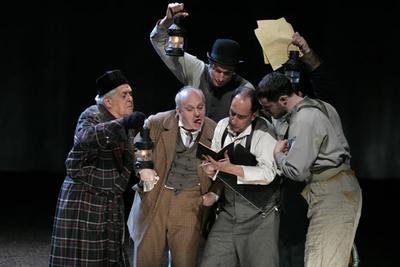
A Midsummer Night's Dream is one of the most beloved of all of Shakespeare's plays, a heady mix of romance, magic and the downright weird. The Mechanicals, a troupe of craftsmen getting together to put on a performance of Pyramus and Thisbe for the King's wedding, are the most grounded characters, getting swept up in all the madness without any real clue about what is going on in the Athenian forest. Bottom the weaver, the donkey-eared fool of the group who thinks he's the Greek Laurence Olivier, is clearly the most memorable of the group with his romance with Titania being one of the weirdest moments in an entire play of them. But what about the man who made it all possible? Peter Quince is a carpenter, just an ordinary soul trying to put on a play that he wrote himself but all this fairy nonsense gets in the way. Without Peter Quince we wouldn't have had what is, without doubt, one of the most riotously funny scenes in the canon. The performance of Pyramus and Thisbe is a fantastic end to a wonderful play and, thanks to Peter, we get to see how well a moon can shine and a second-to-none appearance by a wall.


6). Portia's Father

The only character on this list to never actually appear in the play in question, Portia's father is nevertheless one of the most crucial in The Merchant of Venice. Now we can hear your snorts of disbelief from here and your questioning glares are practically burning through your computer screen. But Portia's father, both unnamed and already dead at the play's opening, does much to influence proceedings for he constructs the Casket puzzle, the test for all of Portia's suitors, one that she manipulates with the greatest of ease in order to secure Bassanio's love. It also has a great effect on the other plot of the play, the power games between Shylock and Antonio that was brought about through Bassanio's pursuit of Portia and leads to the infamous court scene at the end. Which of course, Portia cleverly resolves through an exceedingly good bit of logic. So in our own burst of exceedingly good logic, Portia's father sorts out a fitting marriage for Portia, also sorts out a marriage for Portia's handmaiden through this and saves Antonio from being deprived of a crucial pound of flesh, all without appearing in the play, saying a word and in fact, being dead the whole time. Now that's what we call inadvertent heroism.


5). Lavinia

Quite literally the most unsung heroine in Shakespeare, Lavinia doesn't half suffer for her art. Over the course Titus Andronicus, she's told she can't marry the man she loves, watches him get brutally murdered, then she's raped, her hands are cut off and her tongue cut out. And that's all in the first two acts of the play. She spends the rest of the play being led about by various family members, all attempting to speak for her and getting it impressively wrong every single time. Before her unfortunate dismemberment, Lavinia was on track to be one of the most badass of all Shakespearian females, running off with her lover, standing up to evil Goth queen Tamara (no, not that kind of Goth) and generally being pretty darn feisty. Sadly, losing a tongue does tend to lessen one's impact in a play and Lavinia becomes a grim, slightly bloody reminder of the dangers of this Roman world. Despite the stumpy opening, Lavinia gets a place on this list because it's her efforts, despite the lack of hands and tongue, that enables her father to learn the truth about those conspiring against him. Not that that helps her as Titus promptly kills her to prevent her from feeling her shame. Charming.


4). Emilia

The characters in Othello are all fairly conflicted people, divided between love and loyalty or driven downright insane by a jealous friend. Emilia is no different, caught between her devotion to charismatic but mad-as-a-box-of-frogs Iago, her husband, and the beautiful but doomed Desdemona, her mistress. Although initially an accomplice in her husband's schemes, she's never entirely made aware of just how evil he's being. Once she realises what's going on however... Well, you remember that old phrase, 'hell hath no fury like a woman scorned'... Seeing Desdemona's prone body, she quickly pieces everything together and screams her lungs out, telling everyone in the near vicinity, including Othello, just what her husband has been up to, revealing to everyone what the audience has known all along. She's quickly dispatched by Iago in attempt to silence her but it is too late. Brave enough to go against her psychotic husband and loyal enough to die for her mistress, Emilia is one of the fiercest female characters across Shakespeare and well deserving of a place on this list. Our favourite part of Emilia's story is that the misogynistic Iago is completely undone by his own wife in a piece of delicious Shakespearian irony.


3). Queen Margaret

The absolutely stonkingly fantastic Queen Margaret is again possibly not a character you would necessarily have heard of. She pops up for a bit in Richard III, as well as couple of the other Histories I believe, shouts a few profanities and then stomps off again. At least that’s the situation as I understand it. In terms of the plot, apart from giving Richard several golden witty retort opportunities, she doesn’t really do a lot. The little known fact about her though, and it’s a pretty good one, is that she was actually Shakespeare’s favourite character. Of all the ones he’d ever written. And he wrote a lot. In fact, he liked her so much, that whenever he graced the stage in one of his own productions, she was the character he would insist on playing, every time. Maybe he just liked to curse people? Maybe she had the nicest frocks? We’ll never know. But she deserves a place on this unsung heroes list because that’s exactly what she is. She’s in the background, is quirky and mysterious, we don’t really know a lot about her and critics all too often don’t really know what to do with her. Just like the man himself. I can’t help thinking that, on some level at least seeing as, for all his talents, he could hardly have predicted the future, that that’s exactly why he liked her so much. 


2). The Bear

Yes, (Exit, pursued by a bear) is the most famous stage direction in the whole of the Shakespeare canon and it only makes no more than a fleeting appearance. The Bear doesn't come under the not-remembered part of our list because, let's face it, you're going to remember a wacking great bear chasing poor Antigonus off the stage. But think about it. The Bear is actually a crucial component in The Winter's Tale, heralding in the new pastoral half of the play, violently killing off the tragic first half that sees a queen die and a baby abandoned on the shores of Bohemia. As a symbol of the destruction of Leontes' unfounded anger, it's a fairly obvious one and we could go into all the things that the Bear represents. For sheer spectacle, and for stealing a highly interesting play without saying a word, it is one of the greatest of all unsung heroes in the Shakespearian oeuvre simply because everyone knows it. Whether you choose to have a man in a bear suit, a puppet or, if you're really brave, a very real big old grizzly, it's likely to be one of the most memorable moments of the play. 


1). Macbeth

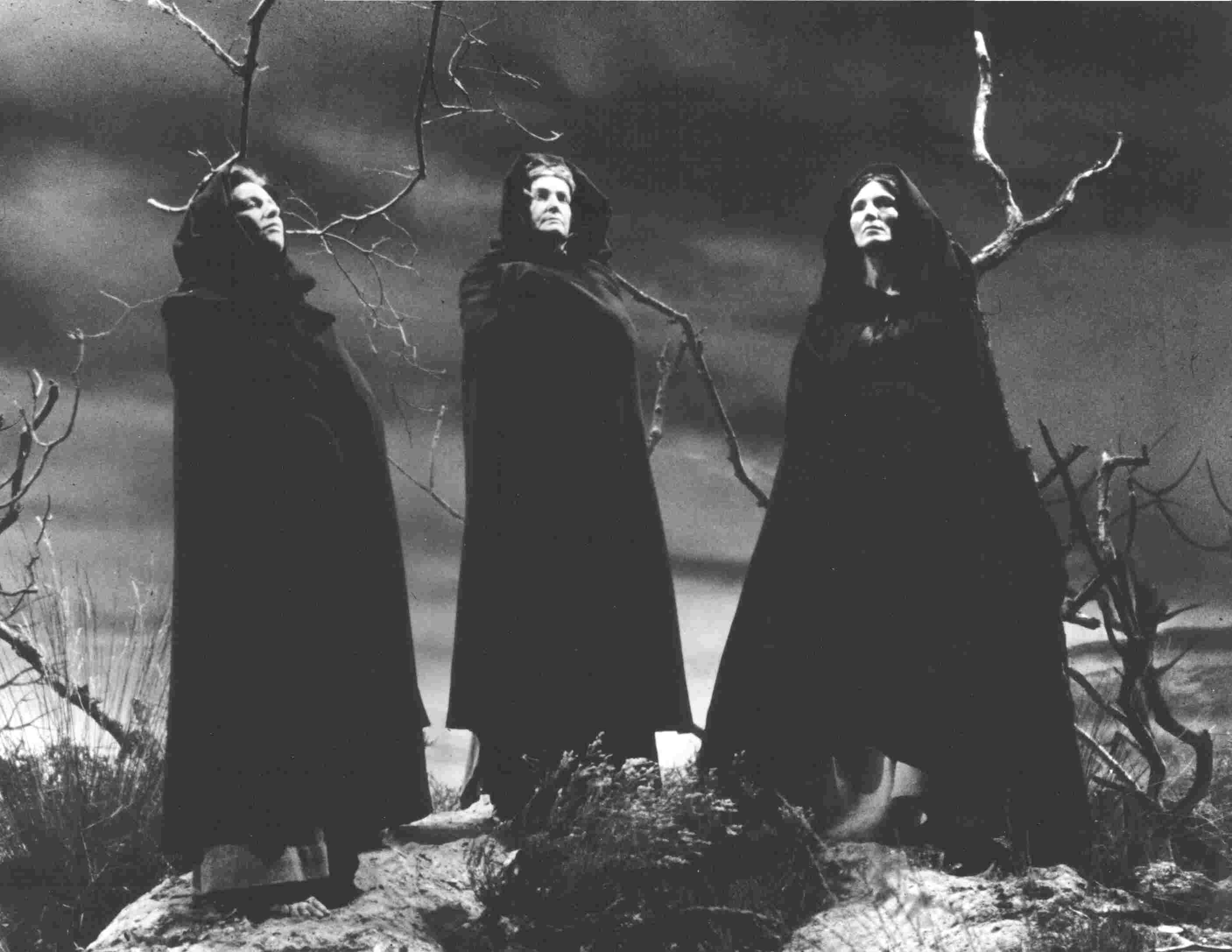
Macbeth, in our opinion, is the greatest unsung hero of the Elizabethan canon, never mind the Bard’s works. Admittedly, like several of the other big characters, he does have a whole play all to himself in which to royally cock things up. And he does it fairly well. Quite a few people die, making it at least a successful tragedy, and he briefly manages to be King of Scotland, have the odd banquet and make a lovely couple of speeches whilst he’s at it. But which character from Macbeth sticks in your mind? Because I bet you a couple of comedy codpieces it isn’t Macbeth. Is it his wife, perhaps? Sure, he does all the ‘is this a dagger’-ing and all the actual killing, but at who’s bequest? His wife’s of course. And aside from said ‘Is this a dagger?’ speech, I’m also willing to bet that ‘Out, out damned spot’ is more famous than any of Macbeth’s lines, no matter how many times he says ‘Tomorrow’. She also has a much cooler exit. No waiting to be attacked by a bunch of overgrown Christmas trees for her, oh no. She’ll chuck herself off a balcony before anybody else gets the chance, thankyou very much. But, bad-ass as Lady Macbeth is, she’s not the only character in Macbeth, other than Macbeth, who we remember. Call to mind the three witches, possibly the most famous old hags in the whole of literary history, and first utterers of the now much-used, thanks to Warner Brothers, ‘Something wicked this way comes’. Banquo, too, is a hugely memorable character. In fact I think it’s fair to say that even Banquo’s ghost makes more of an independent impact than Macbeth, and he’s invisible. 

Whilst Macbeth is outdone by pretty much every other character in his own play, there is still one more reason why we think he’s the greatest unsung hero of Shakespeare’s works. And it’s probably the most significant one. Macbeth may have a play named after him, granted, but, our pointis that, crucially, we’re not even supposed to say it. Macbeth is more commonly referred to these days as The Scottish Play, as his name is considered to be an omen of such terrible luck that many actors won’t even say it. That’s right, the very actors set to be bring poor old Macbeth’s story to life on a stage, won’t even say his name in the very venue they’re about to bring him to life in. In fact, in some anthologies these days, the play is actually listed as Macbeth, or The Scottish Play so as not to offend any sensitive thespians. Before long, Macbeth may even be phased out of his own title without so much as a by your leave. 

No wonder his missus gave up on him. 


- Jen and Becky