Showing posts with label Joe Armstrong. Show all posts

Saturday, 4 May 2013

TV REVIEW: The Village - Episode Five


Once again, it seems that times have not improved for the residents of The Village. But then you weren’t really expecting them to, were you? On the plus side, however, it can perhaps be said that the point of this laugh a minute chuckle fest (and the Sarcasm of the Week Award goes to…) is now slowly becoming apparent.

Episode 5 saw the shell-shocked Joe Middleton (Nico Mirallegro), clearly suffering terribly from post-traumatic stress syndrome, reach the end of his latest period of leave. Knowing he must go back to the front line, he struggles to hide his distress from his family, in actual fact breaking down before making it over the borders of the farm. Collapsing in a heap in the middle of a field, he is helped back home in no fit state to return to duty. Naturally, the terrifying red-capped military police have other ideas, meaning harrowing consequences for Joe, and distressing viewing for us. Meanwhile, young Bert (Bill Jones), blaming himself for the mental state of his older brother, runs off into the night, injuring himself in the process. Grace (Maxine Peake) meets with union leaders in an attempt to secure better working conditions for the factory women, Martha (Charlie Murphy) continues her flawless performance in the role of irritating busybody and John (John Simm) continues to do little with his time but pray.

Unsurprisingly, all is not well up at the Allingham household, either. The family, still reeling from the suicide of its patriarch, must continue with business as usual. Business as usual, however, means shady dealings for Edmund (Rupert Evans), as his employment of Detective Bairstow (Joe Armstrong) as a spy grows complicated, dredging up the private life of Arnold Hankin (Anthony Flanagan) in the process. As it were. Caro (Emily Beecham) is still lost to the spell of Britain’s creepiest and most unprofessional psychiatrist, Wylie (Jonny Phillips), with even her mother, Clem (Juliet Stevenson) beginning to show her suspicions. Poor, poor George (Augustus Prew), ever the Assorted Buffery favourite, is now also a soldier, thanks to good old Wylie, and is distraught that he wasn’t able to come home sooner after the death of his father, but he did not wish to desert his men. God love him.

The horror of war was the key theme this week, with Caro and Grace’s storylines very much taking a back seat. Nico Mirallegro was outstanding as the traumatised Joe, and even Augustus Prew’s George (aww) carried with him a quiet, frightened dignity- a chilling contrast to his pre-war personality, and an excellent device for highlighting the sheer extremity of Joe’s own condition. Two female performances also shone through this week, and they belong to Maxine Peake and Juliet Stevenson. The former’s anger at God, the world and specifically Martha at the suggestion that Joe’s illness was somehow God’s will, and that she herself had no part in the saving of her husband from alcoholism was perfectly judged, and showed a far tougher, almost more admirable side to Grace’s character, as did her stunning response to the military police. She’s gone from downtrodden alcoholic’s wife to campaigning, self-confident superwoman in just five short episodes. She looks good on it, too. Not that it will get her anywhere in this village. 
 The same for Juliet Stevenson’s Lady Clem. Suddenly much more assertive, not just in name only but in her own opinions, we saw her make jokes over dinner about impotence and her husband’s suicide. To the outside observer she’d lost the plot. However, as she said herself, things can’t get any worse, and ‘that, in itself, is a form of freedom’.

These words actually sum up rather nicely how I’ve come to feel about The Village as a whole. Expect the worst, and not only will you never be shocked, but you can step back and appreciate the show for what it is. It’s been a sharp, if bleak, human condition commentary, highlighting the terrible effects of war, poverty and contemporary attitudes upon peoples’ lives. It hasn’t been a cheerful ride, but it’s been a profound one.

I’m looking forward to the final episode next week, half because of a genuine desire to watch it, and half out of sheer delight that this televisual ordeal is coming to a close.

Although I dread to think what the writers are going to throw at us for the big finale.


The Village is next on tomorrow night, 9pm, BBC One.


Jen

You can read my own blog here or follow me on twitter here

Sunday, 28 April 2013

TV REVIEW: The Village - Episode Four


 Apologies for the slight delay in posting this review. However, as is often the case with The Village, I’ve only just managed to pull myself out from the depths of misery and despair long enough to have the energy to type.

I’ve made no bones so far about the fact I find the show rather misery ridden, but this week took matters about seventeen steps further. Mary, the daughter of John (John Simm) and Grace’s (Maxine Peake) develops scarlet fever, a terrifying and life threatening disease at the time, especially for such a small child. Margaret (Annabelle Apsion), the mother of a soldier killed in battle receives unfair hostility from certain village members regarding her inability to accept the circumstances of her son’s death.  Meanwhile John is, we suspect, wrongfully imprisoned for fatally injuring a cow when ‘borrowing’ medicine kept in the big house’s cowshed, leaving Assorted Buffery favourite, George (Augustus Prew) very upset about the cow, and Grace very upset about John. Understandably.  All this whilst their young son Bert Bert (Bill Jones), paralysed with fear about elder brother Joe (Nico Mirallegro) 's fate in a rumoured battle, determines to win the annual village wheelbarrow race in a bizarre yet sweet attempt to somehow keep his brother safe.

None of these storylines, however, felt like contenders for the episode’s main focal point, as this accolade undoubtedly went to the plight of Caro Allingham (Emily Beecham). Having had her child taken away from her to protect the family reputation, poor Caro is now being treated for hysterics- that uniquely ‘female’ disease seen at the time as simply a combination of attention seeking, self- pity and a lack of appropriate response to male authority. Or that’s how her doctor, Doctor Wylie (Jonny Phillips) describes it, anyway. Making the family hand full authority over to him, Wylie decrees that Caro be bed bound, allowed to do nothing but simply lie there unless he says otherwise, forbidden from talking to anyone and being fed a mixture of veal and milk seven times a day, finishing all of it without fail. This results in a truly harrowing scene in which the distraught woman is force fed through a tube, with Wylie seeming to enjoy breaking her spirit just a little too much, particularly relishing informing the haplessly well-intentioned George that it was his poetry about his sister’s diet which revealed to the doctor that she had been talking to him. 


This enjoyment seemed particularly, disturbingly apparent in what looked to be a scene of suggested rape, with Wylie seen locking the door and unbuckling his belt, whilst the broken Caro looked on in a terrifying, apathetic sort of fear. We do not know this for sure as yet, but given the echo in the episode’s other sexually brutal scenes involving Detective Bairstow (Joe Armstrong) – another male authority figure, and that this is The Village, a show where everything is every bit as nasty as it appears – it certainly seems likely.

The show’s commitment to a lack of sentimentality towards life in the time of its setting 
is certainly to be admired, particularly as we live in a world in which we’re frequently encouraged to look back through the nostalgic lens of ‘things were better, back then’. Well no, says The Village, they weren’t. Young men were sent to war, we had fewer cures for diseases, families and older men had absolute authority over vulnerable young women and lower class people had to face the wall when passed in the street by one of their betters. Oh and there were a lot of grey skies and mud. Admirable, in concept though this is, it doesn’t half make for a bleak hour of television. I’m all for Naturalism, and think the show has taken a good deal of inspiration from the likes of Emile Zola, ‘Germinal’, in particular, however I’m no longer convinced that the relentless misery, without much of a let-up, ever, is especially realistic.

Surely things weren’t this bad, all the time back then? Perhaps they were, perhaps they weren’t. Either way, we’ll find out soon enough in the next episode.


The Village is next on tonight, BBC One, 9pm.

  Jen


You can read my own blog here or follow me on twitter here


http://www.facebook.com/AssortedBuffery
@AssortedBuffery

Monday, 9 July 2012

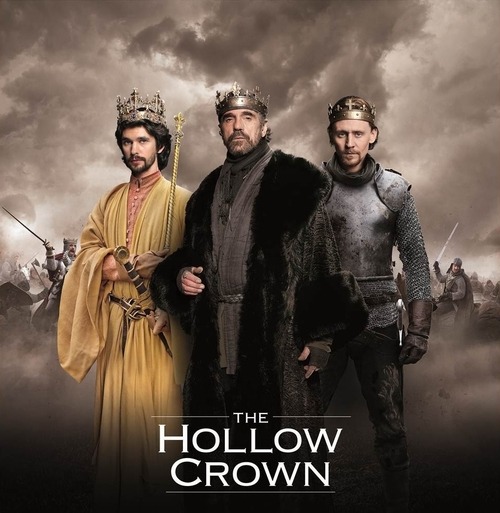
TV REVIEW: The Hollow Crown - Henry IV Part One: A Thoroughly Modern Monmouth


Having been a fan of Henry IV Part 1 for many years now, I feel obliged to present my own addition to Becky’s already ample review.

You’ve already read Becky’s review (and if you haven’t, go do so here) and so assuming you’ve got the Henry basics down by now, I’m just going to jump straight in.

Crucial to this tale of a wayward prince’s return to honour in defence of his father, is the Bard’s slick use of contrast. Much like a modern day domestic soap opera, no sooner have we settled into one group dynamic, be it that of the court, the rebels or the tavern, than some imaginary narrator figure clicks their fingers and we’re propelled headlong into a whole new atmosphere, usually one the total antithesis of the place we’ve just left.

The play just wouldn’t work without it, and Richard Eyre’s version captures it beautifully. I’m not usually one to praise scene shortening in adaptations, primarily because it means I then feel the need to explain the missing bits to everyone else in the near vicinity, but here, the editing marries the different plotlines together in a way which does not take away from the original pattern, but adds to it. Moving slyly from scene to scene, Eyre’s adaptation catapults Hal’s coming of age (and sobriety) story into something more epic, clever, heartfelt and ultimately more modern than I’ve seen this play before.

The magic of cinema, as it were, and as Becky has already mentioned,  allows it a bigger scale than previously, the real terror and grit of war coming across in the frost bitten, blood soaked battle scenes. The wardrobe and set decisions fit the brief, too. In fact I’d like to take my hat off immediately to whoever had the idea of putting Hal in a vaguely Elizabethan leather jacket, and you can almost smell the beer from the tavern scenes and feel the laughter reverberating from the walls.

It all feels generously updated, cinematic and well thought out.

Ultimately though, it’s the performances in this production that make it feel as thoroughly modern as it has long deserved to be.  Eyre’s shift in focus from the history of the play to the relationships within it puts to bed my one traditional criticism of this play- the slightly two dimensional nature of its main characters.  All too frequently they are concepts and symbols for directors to play with before they are people, and we can only guess at their inner world.  Not so here. Eyre’s cut and paste approach to the longer speeches comes into its own, and we’re given much needed proof that there’s more in the heads of Hal and Falstaff than big ideas, ego and booze.

Speaking of Hal, kicking the notable performances list off in style is Tom Hiddleston’s Prince. I’ve long thought Harry Monmouth the original lovable rogue, and Hiddlseton shows him off for exactly what he is. He’s sexy, suave and self-centred but with enough of a prankster’s cheeky streak to make you fall head over heels for Shakespeare’s most dapper royal regardless. Here he’s a joy to watch, with Hiddleston’s inclusive and charismatic performance making you not only want to be a part of his gang, but really feel that you’re in on the joke, whichever one it is at the time, every step of the way.
Eyre also goes to town on the gleeful closeness and camaraderie of Hal and best pal Poins (one of our beloved Unsung Heroes), who, through a combination of careful direction and well-timed close-ups, is finally brought to the foreground not as a plot device, but as an accomplice in his own right. (Hooray!)  


 The pivotal relationship between Hal and Falstaff is just as spot on, with the score brought in at key moments to highlight their tragic co-dependence. It’s not hugely subtle, but it does the job, and again, they all feel like real people you could meet down your local of a Friday night, rather than stuffed up Received Pronunciation cut outs. 
 
 Hostpur, I had a few initial problems with. Apologies, Becky. Brilliant though Joe Armstrong’s performance is, I just didn’t feel the parallels between himself and fellow Harry, Prince Hal, were as obvious as they should be for the play’s intricate design to be seen at its best.

But then I decided that I’d missed the point. It does happen, from time to time. I decided that Eyre’s Hotspur wasn’t an obvious parallel, not in error, but precisely because he wasn’t supposed to be. You wouldn’t get two similar looking kids, both born of power, born on the exact same today and mirroring each other’s stance and booming voices in a modern drama or in reality for that matter, and so you don’t here. Hotspur suitably rants and raves enough to do his name proud, but again he’s a character in his own right, with his own motivations and merriments- not just there as a mirror image of his adversary.   

Oh and Julie Walters? A born Mistress Quickly, a fantastic casting coup and a great excuse to have her sat in a pub with an equally grubby looking Maxine Peake.

The effect of all of the above is that this production feels more like an action film, the story of which could have been thought up last week, not an adaptation of a play from four hundred years ago, based on an even older story. Its blend of domestic drama, friendship and battle drama is alive and well here, and as a result we can empathise with its characters and see ourselves and our friends in them more than we ever have.

It’s gritty, edgy and even tragic, but most of all it’s just gloriously good fun.

And you can’t say fairer than that for a play set in a tavern. 

- Jen


You can read more of Jen's writing here: www.memyselfandtheothers.wordpress.com 
And can follow her on twitter here: www.twitter.com/jenniferklarge

Sunday, 8 July 2012

TV REVIEW: The Hollow Crown - Henry IV Part One

The Hollow Crown continues this week with Henry IV Part One, the second in the tetralogy of history plays and a personal favourite of both of us here at Assorted Buffery. With Richard II establishing Henry Bolingbroke as King, Shakespeare moves into showing the events of his troubled reign.


Henry IV Part One follows the rise of Prince Hal (Tom Hiddleston) from drunken reprobate to warrior heir apparent after his father, King Henry (Jeremy Irons) faces an uprising from the Welsh rebel, Owen Glendower (Robert Pugh) and Harry Hotspur (Joe Armstrong). Beginning in East Cheap with Poins, Shakespearian Unsung Hero Number 10 (David Dawson), Mistress Quickly (Julie Walters) and the excessive drinker and cowardly storyteller, John Falstaff (Simon Russell Beale), Hal must grow up from playing pranks to leading his father's army and, as this is Shakespeare, we get tragedy, fearsome confrontations and more than your usual amount of debauchery.


As with Richard II, the action flits between several places as the play follows the King, his son and the rebellious Hotspur throughout, but unlike the previous episode, the cuts in between felt a lot more measured and well-judged. The tavern scenes in particular were a highlight, providing much of the comedy as Hal and Poins humiliate Falstaff repeatedly for no particular reason other than that they can. The battle scenes towards the end of the play did betray the episode's budget somewhat as, rather than being treated to extensive armies a la Lord of the Rings, we got close-ups of twenty men crammed into a shot to make it look like there's a lot. Thankfully, it didn't detract too much from the drama itself as once the fighting started, the frenetic battling was enough to hold your attention. My only complaint was that they didn't include the hilarious scenes in which Hotspur's ally, the Douglas, marches round the battlefield attempting to kill the King, only to repeatedly discover he's just killed another man dressed like the King. However, when you've got Falstaff bumbling through the battle trying not to die, the laughs were still there to be had.


It's safe to say that there is not one bad performance in this entire episode. The minor characters, particularly those in the tavern, provide a great background for the central figures to shine, supporting them well. Even Maxine Peake managed to steal a scene without saying more than one or two lines. Simon Russell Beale's Falstaff was every inch the drunken, bombastic figure that we all know and love, combining the comic and tragic inherent in the character well, especially in the scene in which he is 'playing' Hal. His plea to not leave Falstaff behind was heartbreaking, a man desperate to cling on to what little vicarious glory he has left. As the wilful and aptly-named Hotspur, Joe Armstrong was a forceful presence and never resorted to simply playing the villain. Hotspur in the play provides an opposite character arc to Hal, beginning as noble and honourable before falling too far from grace to be truly redeemed and Armstrong captured his inner conflict perfectly. Michelle Dockery, as his wife Kate, provided a great foil to her husband with excellent chemistry between the pair showing a fiery marriage based on a mutual respect, adding to the tragedy of the play's outcome. 


But Part One belonged very much to Jeremy Irons and Tom Hiddleston as the central father and son who begin in conflict but end united. Hiddleston's star is firmly in the ascendancy after fantastic performances in big blockbusters like Avengers Assemble, but here he proves he can play the conflicted hero too. In the afore-mentioned play scene in the tavern, the moment in which he realises that he must re-take his place at the heir apparent was excellently pitched with just the loss of a smile to convey a key character development. Also, his impression of Jeremy Irons was brilliant, spot-on in everything from intonation to posture, providing extra comedy to an already funny scene. Irons' acting talent has long been something to be reckoned with and their confrontation scene was a masterclass to watch. As a king struggling to hold on to a legacy that was never his to begin with, Irons lets the conflicted emotions come to the forefront, the guilt at his own situation and the rage towards his son filling every single line. 


My expectations were particularly high as it is the play I've been most looking forward to seeing adapted, but Henry IV Part One more than surpassed them, offering all of the themes that make the play so compelling. Next week, we're into the sequel, Henry IV Part Two, as we see a father and son united and Hal moves further away from Falstaff to his destiny as the future King of England.


- Becky


You can read Becky's review of The Hollow Crown - Richard II here.