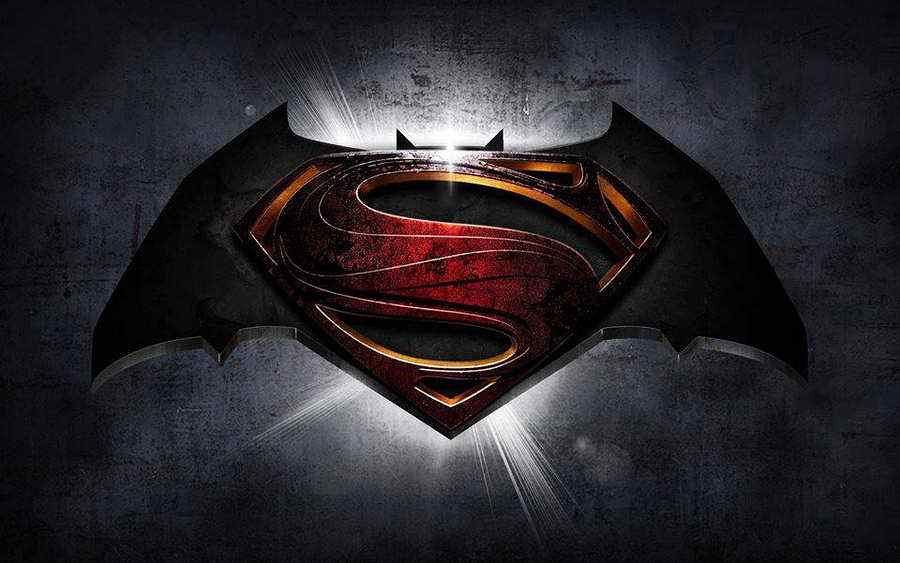
Batman v Superman: Dawn of Justice opens with the same devastation that ended 2013’s Man of Steel, as Supes (Henry Cavill) and General Zod (Michael Shannon) threw down and battled, wreaking destruction upon Metropolis’ skyline. Only this time, it is seen from the vantage point of Bruce Wayne (Ben Affleck), choppered in from neighbouring Gotham City to watch helplessly as his employees are trapped and ultimately killed in the fallout.
It goes to explain away some of his contempt for the Kryptonian but only ever-so slightly. Yet again, we are treated to the now inevitable flashback to Bruce’s parents and their murder, except now they’re played by Jeffrey Dean Morgan and Lauren Cohan, and it’s 1981. There’s another bat sequence too. Necessary? Not remotely but it serves as a heavy-handed reminder that the two main things still driving Bruce are vengeance and fear. Clark is still working at the Daily Planet, loving/saving Lois (Amy Adams) and generally wondering whether Superman can actually exist in a world that doesn’t really know if it wants him or outside of Lois, he really wants it. He also finds himself judging the Bat’s from of vigilante justice. Eventually both are brought together by scheming sycophant Lex Luthor (Jesse Eisenberg) at the opening of a library, no less. Also in attendance is a mystery lady – could she be Wonder Woman? Of course she is, we’ve all seen the trailer.
The action flits between Gotham, Metropolis, the Indian Ocean, Africa and Bruce’s subconscious, all within the first hour or so. Sadly, this lack of focus remains as more subplots give way to some convolution and a few bloated set-pieces, in addition to some rather inexplicable moments which do not serve the overarching plot and feel wholly out of place. For example, Lois having a bath, or a sweaty Bruce hitting a large tyre with a sledge hammer and even the deceased Jonathan Kent atop a snowy mountain are head-scratchers and deserved to have seen the cutting room floor.
Usually, a superhero’s popularity depends upon the context of time and perhaps, due to the darkness of the world as it is, gives way to audiences wanting to see the character as he was - namely the Reeve guise; bumbling geek Clark and the heroic, always got a smile for everyone, Kal-El – or as he is on the page. Snyder has instead used 9/11, terrorism and illegal aliens and has the film(s) reflect this dark, angry, miserable and political world we inhabit. Apparently, in an attempt to ground Superman in some sort of reality; an alien from an extinct planet, who can fly, is indestructible save for interaction with a glowing green rock, and shoots lasers from his eyes… Can he ever really be that realistic? An audience doesn’t need to delve too far to see the potential allegorical readings, they are all fairly obvious.
On the one hand, I miss the red pants, and the confident, almost care-free caped chappy who didn’t really seem to have a temper and was a friend to everyone. Yet on the other, a change is as good as a rest, it worked (mostly) for Batman. The Superman of my childhood is still accessible, and this is the franchise which will see WW onscreen for the very first time so why wouldn’t I give it the benefit of the doubt? Cavill’s Superman is at odds with his alien heritage and human one – as his mother states “you don’t owe the world a thing” but then, when it comes down to it, it is his human side which is the most affected when Luthor finally reveals his play and ultimately his alien self/limitations which helps destroy him. Reeve, interviewed in 1987, told future inheritors of the cape to never lose the humanity of him; “to forget he can fly; [his] super strength. He’s a gentleman.” Cavill’s is a gentlemen but it has to be on his terms and the humanity is there but it has taken a film and a half to uncover it, little to no smiles, and a human Bat to help.
This Bruce is older, greying at the temples, grizzled, tired and so, very angry. There is a ruthlessness to the incarnation; Affleck is actually very good and the irony is, murderous intent aside, this Bruce needs Superman to give his life some (re)purpose. Alfred (Jeremy Irons) is a younger, more sardonic Pennyworth who seems to have less faith in his billionaire brat and wearily (often sarkily) mutters under his breath a lot of the time. The hallucinations/dream sequences (one too many if you ask me) can be read as an alcoholic’s delusions but then a fleeting face from the future may prove integral to the next film but, yes you’ve guessed it, slightly unclear. I like this Bruce. Yes, he’s different, just like all the other actors who have portrayed him, there’s a fury to this one that it great to watch if a little at times growling, ragey and largely unexplained.
As is Luthor’s motive in proceedings – he want Kryptonite for assassination purposes and access to the crash site and Zod’s remains. Why does he need Batman for that? Eisenberg seems to channel Edward Nygma via Mark Zuckerberg – if you’re going to give us Lex then do so, not some weird, obnoxious Riddler-hybrid. He’s a sociopathic teenager hell bent on destroying the one man getting more attention than him. Yes, he’s a villain but he’s irritating rather than intimidating; he is more memorable than Spacey’s turn but not sure how high a bar that is to set, and the hair – why? It’s more distracting than the weird noises he makes.
Which brings me to Wonder Woman, a character I adore, and finally, she’s here. She’s not given nearly enough screen-time, nor given enough dialogue and my expectations were not particularly high following Gadot’s casting but her presence gave me a buzz, people even clapped in my screening for her. I haven’t been lucky enough to see an evolution of character or multiple versions of WW and so, I was happy with the little I saw. She kicks Doomsday’s derriere and seems to thoroughly enjoy doing it and as for the Turkish Airlines bit, SHE GOT OFF THE PLANE (phew) presumably to fly her own invisible one…. But not before she sums up the entire film (and perhaps fanboy-dom in general) in one snarky sentence – about little boys and their lack of inclination to share.
The supporting cast are fine, no real standouts. Callan Mulvey is now Russian arms dealer Anatoli Knyazev, last seen as Jack Rollins in The Winter Soldier (and you thought there could be no DC and Marvel crossovers). Fishburne is back as Perry White and far more flamboyant than the MoS version, Holly Hunter is great as Senator June Finch, who stands in the way of Luthor Jr but whose senate spiel is pointless. “We know what Superman can do” Do we, really? “We haven’t considered what he should do.” What does that even mean? Run every potential saving by the US government? Say, “okay I’ll help those people over there but not those here”? Wait for a phone-call on a flashing red telephone…oh wait. The word unilateral is thrown about several times which is exasperating; as if Superman saving folk is somehow a selfish act. Diane Lane and Amy Adams are, for the most part, bait, or perhaps I’m being unfair. Adams is definitely stronger in her performance here but I am yet to be convinced by her Lois and then there’s all that running about amid rubble and destruction and swimming… all in heels.
Snyder has always been commended for his visuals and there is a depletion of colour (not always as depressing at it sounds) with red, white and blue colour motifs dotted throughout and Affleck’s batsuit appears to riff off of Adam West’s outfit with the black on grey. There are nostalgic nods but let’s face it, these aren’t the characters we grew up with, and as the last week or so have shown, few seem willing to welcome change. I really liked the intertextual links and the Justice League Easter eggs (although, shoehorned isn’t the word) and, obscurely, The Wizard of Oz. It is referenced multiple times and I’m still contemplating why. Perhaps, it is tenuous commentary on American commerce or Lex requires courage, Bruce a brain and Clark a heart and then there’s Dorothy, the infamous orphan as all of our boys here. Plus, 1939, the year of the film’s release and the year Batman was created and joined him in the DC universe and there’s even a witch, sort of but I digress.
By the time the big face off presents itself, it’s not quite worth the wait, actually a little dull and oh so futile but Luthor is the puppet master. When both titular characters realise they should be working together, it should be joyous and not just that they realise they both have mothers named Martha. The score is a little hit-and-miss, Zimmer is renowned for big anthems and when the two titans do finally square up, I was expecting fireworks, not just a damn squib. Lex’s theme (The Red Capes Are Coming) is a standout as is Wonder Woman’s (Is She With You?), that electric cello is really quite something.
All in all, Dawn of Justice plays with some heavy themes; democracy, xenophobia, terrorism – not so terribly far removed from the world we live in, Snyder is determined to make the world as realistic as possible yet removes most of the fun. Truth, Justice and the American way – this *is* the America of today but it all feels too horribly realistic and befuddling – I would have liked Kal to be the beacon of hope his birth parents intended him to be, not least to give Henry Cavill a bit more to do. The religious imagery is still there, Superman is the Messiah (and a very miserable boy) just as in MoS: God v Man, etcetera. There are a multitude of questions and it is left up to the audience to decipher the mess (small children may have difficulty) yet there is levity, nowhere near enough but present.
I’ve accepted the lack of comic-book iconography in Snyder’s interpretation and it’s only a little thing but would it hurt for Supes to smile? I enjoyed far more than I loathed, however, there is just one death that was a little too calculated…Zack, you meanie.
- Hel
Follow @AssortedBuffery on Twitter
Or like our Facebook page