Showing posts with label Mark Gatiss. Show all posts

Wednesday, 25 November 2015

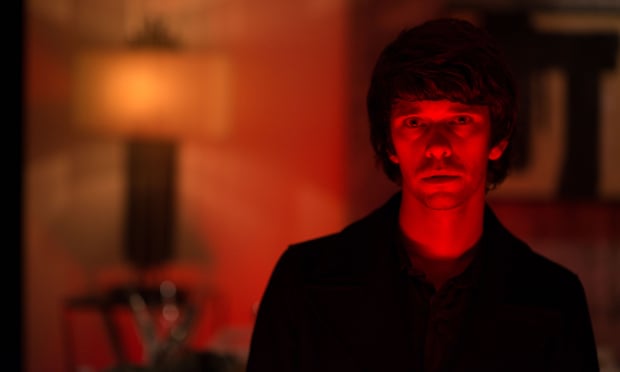
TV REVIEW: London Spy - Blue


After the slower pace of the first two episodes, the violent opening to London Spy's third instalment comes as a bit of a shock to the system as Danny is dragged out of his bed by the police. It turns out the crime scene of Alex's death was littered with various bits of paraphernalia from Danny's earlier life when he was much more carefree and also careless. As the net closes in on him, he turns to Scottie for help, who willingly obliges to take up his friend's cause when he's in dire need. Danny is forced to confront elements of his past in order to start getting answers about a future that is no longer in his control.

Some thrillers make themselves about the mystery at the heart of the narrative and forget the characters operating at the heart of it. One of the best things about London Spy has been that focus on character first with the drama arising out of Danny's experiences, his relationships and the slow erosion of his life by unseen forces. Cleverly though, Tom Rob Smith also knows when to expand that story into one of institutions, prejudice and the establishment. As Danny's search continues, it gets wider in scope and in turn, feels more hopeless than ever. There's no establishment quite like the British one for closing down anyone wayward. As Scottie says towards the end of the episode, they're "quite alone."

The episode reinforces on nearly every level by becoming quite the assault on the senses at times. During Danny's interview with the police, the score punches its way into the scene at uncomfortable levels, mirroring his own desperation. After the emotional fallout of his HIV test, the music that has provided a pulse-like presence throughout is conspicuously absent, allowing his overspill of anxiety to become the only sound we hear. It's a deft combination of sound and silence that constantly unsettles throughout the episode. Moments of relative calm are just that, a brief pause before Danny dives further into the conspiracy around him.

It helps that the series has its heart one of the best actors working today. Ben Whishaw has been a captivating presence since the start, but it's Blue that pushes him further than any of the previous episodes have done. The Danny we met in the first episode - carefree, charming and laidback - has all but disappeared, replaced with a frightened, paranoid man unsure of anything. The scene in which he was told of his HIV infection, forced upon him by those that seek to discredit him, is a performance of heartrending brilliance, remarkable in its restraint and still completely devastating.

In that plot development, the episode also produces a searing criticism of social prejudices still manifesting within our society about sexuality and lifestyle choices. Tom Rob Smith utilises these prejudices to feel every bit as frustrating as the forces currently circling Danny and sealing him off from the truth behind Alex's death. Like the idea of the establishment (not only ours, but our allies now too), the prejudice that Danny will face as a result of his diagnosis feels overwhelming in its scale. One only has to look at the reaction Charlie Sheen's HIV revelation to realise how close to the truth this aspect of Danny's story is.

Elsewhere in the episode, London Spy's impressive supporting cast continue to make their presence felt in the series. Jim Broadbent is ever reliable; please forgive the wild speculation that I'm about to indulge in, but something doesn't feel quite right about Scottie. He's just a little too good to be true and if anyone knows about all the dark secrets of Danny's past that could be used against him, it's Scottie. Following on from Charlotte Rampling's turn, Mark Gatiss gleefully ups the sinister feel of this episode with ease. He used to play the kind of skincrawlingly indecent people every now and again, but this is the first drama I've seen in a while to truly capture the man's extraordinary range as a possible villain.

Having spent the first two episodes building this world, Blue feels like an uncontrollable slide into darkness as Danny's quest continues. Not content with simply functioning as a thriller, the episode's underlying social criticism enhances the plight of its central character and fully exploits the emotional responses of its audience without ever feeling cynical. Superb.

- Becky

You can read Becky's review of previous episode, Strangers, here.

Follow @AssortedBuffery on Twitter
Or like our Facebook page

Tuesday, 17 November 2015

TV REVIEW: Doctor Who - Sleep No More


The Doctor and Clara find themselves on the abandoned Le Verrier Space Station, a research lab orbiting Neptune and run by the scientist Rassmussen. They meet up with a rescue crew that has been sent to the station to find out what happened and soon find themselves 

The current series of Doctor Who has been so good that the first slight misstep registers a bit more than it would in a run of mediocre episodes. Coming after the amazing Zygon two-parter was always going to be tricky so relying on the usually excellent Mark Gatiss should've been a wise move. Sleep No More is another episode that relies on something creepy stalking an abandoned location and picking off crew one by one. Had we not already had Under The Lake, this episode might have been given more of a break. Alas, Sleep No More is a hodge-podge of ideas that never quite come together to form one big sandman of an episode, but should be admired in its ambition to try something different. 

Gatiss is a man extremely well-versed in its genre history and it shows here. The found footage format is one of horror's most prolific sub-genres in recent years, stemming back The Blair With Project. Likewise, these episodes always call to mind films like Alien with its dark corridors and stalking menaces; we even get an Ash style character in Rassmussen (played by Reece Shearsmith, who is easily the best thing in this episode), attempting to preserve the Sandmen. 

We get just glimpses of the creatures, flashes down corridors in night vision or lurking out of the shadows. It's probably the most satisfying element of the episode, one which allows our imaginations to take over, filling in blanks that we know are there. The revelation that the footage is coming from the dust in the air, rather than any cameras, is a neat one, but also feels like a bit of a get out clause so that the episode never fully commits to the found footage idea.

The episode is framed by Rassmussen, functioning as both a narrator and creepy space station overlord, but it also strips away some of the tension of the episode. We realise Rassmussen makes it to at least string together the footage from various cameras across the station and that he's the bad guy doesn't really come as a shock. We also know Clara and the Doctor aren't going to die, at least not yet in Clara's case. The rest of the rescue crew aren't drawn well enough for the audience to care as they fight for their life. Again, going back to Under the Lake, each crew member was recognisably individual and their personalities came across. Aside from Chopra, the others barely get a look at any kind of development over the episode, and his is only brief.

The Zygon Invasion and Inversion took on the War on Terror as its central allegory, using its narrative to comment on events that have shaped our reality, sadly proving ultimately quite timely in its broadcast. At its heart, Sleep No More is attempting to do something similar, but with a criticism of capitalism and exploitation at its heart. The grunts, bred to do the dirty work without the brain capacity for any selfish realisation are pure Brave New World, a creation of humanity at its most basic working level to preserve higher human intelligence. The Morpheus machine is designed to monetise sleep and thus allow employees to now work through the night instead of wasting their time on sleep. The episode pays mere lip service to this rather than really flying with it. 

It's the first single episode story we've had so far and it shows. Too much is thrown together in the shorter episode runtime and the breathing space that other episodes benefitted from is lost. The most frustrating part of this episode though is that its cleverest idea appears right at the very end as a coda to the rushed ending. Rassmussen revealing that he has been a Sandman all along and that he is using the video to transmit signals and turn any viewer into a Sandman should have been a story in itself. A found footage horror movie that transforms you into the horror monster? A much cooler idea than anything presented in the preceding runtime.

I suppose we were due a bit of a duff episode given the quality of the rest of the season, but that doesn't stop Sleep No More being such a disappointment. It's ambitious in a shift of form as well as the amount of ideas that it tries to pack in, but it never allows any of them to take centre stage and leaves the whole episode feeling like a patchwork of references and loose narrative threads. Look, it's even made me mix metaphors.

- Becky

You can read Jen's review of previous episode, The Zygon Inversion, here.

Follow @AssortedBuffery on Twitter
Or like our Facebook page

Wednesday, 14 May 2014

TV REVIEW: Game of Thrones - The Laws of Gods and Men


The first half of this fourth season of Game of Thrones has been decidedly wobbly. I realise I'm in the minority of this thinking, but I've found aspects of really quite dull, which is something I'd never thought I'd say about this show. Last week's episode felt like a step in the right direction with a nifty action sequence and finally some plot development regarding the men of the Night's Watch which had been dragged out beyond belief. Thankfully, The Laws of Gods and Men goes some way to prove that all of that set-up will be worth it come the rest of the season.

Part of the reason that this episode is so strong is because each scene feels connected thematically in a way that earlier episodes haven't. It's all about identity this week, taking on the roles you're supposed to have rather than the ones you necessarily want. Right from the opening scenes in Braavos (which was absolutely stunning and all credit to the visual artists for creating something so beautiful), characters are rebuilding themselves in the only ways that are open to them. For Davos, he has to remake himself as the loyal servant of the true king when faced with Mark Gatiss' deliciously arrogant Tycho Nestoris of the Iron Bank. Stannis also has to constantly re-iterate that he is the rightful King, not Tommen, despite everyone now pretty much ignoring him because he's got no cash. It's still a scene that feels largely like set-up, but the presence of Gatiss and Davos' impassioned speech elevated it to a worthy opening scene for what followed.

The return of Yara Greyjoy is a welcome one as she is one of the more enigmatic and interesting Westerosi female figures. With Theon now decidedly not himself and assuming the identity of Reek, their conflict is not only one of family loyalty, but of an internal, traumatic identity crisis. The violence and claustrophobic nature of the scene added to the turmoil, emphasising Reek's weakened presence in the face of both Ramsay and his more powerful sister. It also harks back to Theon and Yara's relationship; they barely know each other with Theon having been brought up in Winterfell whereas Ramsay has much more power over him. Alfie Allen's performance has been an under-appreciated one, but his journey from arrogant, misguided Theon to broken and tortured Reek has been exceptional. He shares a great chemistry with Iwan Rheon as Ramsay and the pair have gone on to form one of the most interesting partnerships of this season, in a weird Stockholm Syndrome-y way.

After checking in with Dany too (who is unwittingly becoming the tyrannical oppressor she's supposed to have overthrown), we return to King's Landing where things are about to kick off in a big way. It's time for Tyrion's trial and, casting our minds back to his time at the Eyrie, we all know that it's not likely to go well. The build-up to the trial feels like the preparation for Blackwater, albeit on a smaller scale because it feels doomed. Cersei has been steadily manipulating everyone around her and rigging it in her favour, one of the judges is Tywin and Tyrion wasn't exactly the kindest person to Joffrey when he was alive. In short, he's doomed.

Despite this, the trial manages to throw up a fair few shocks along the way, particularly when it comes to the witness testimonies. People like Pycelle and the odious Meryn Trant were always going to testify against Tyrion and take pleasure in doing so, but Varys and Shae? Two wholly different set of variables. Varys has always been somewhat of an ally  to Tyrion and his seeming betrayal of his friend is captured in that great moment when Varys says 'I never forgot a thing'. It's an excellent reminder that Varys has no allegiances, something which his earlier scene with Oberyn (Pedro Pascal once again knocking it out of the park with just a handful of lines).

Many people are rightly praising Peter Dinklage for this scene, particularly the blistering speech he gives at the end, but for me, its his reactions to Shae's testimony that deserve all the plaudits. Betrayal is felt with a simple look and that nuanced performance continues into that brilliant speech to finish it all off becoming the monster everyone thinks he is, if only for a minute. I also enjoyed the performances of those around him. Charles Dance is always on form as Tywin and I enjoy any scene in which Jaime tries to get one over on his father. Nikolaj Coster-Waldau handles Jaime's weakness, his family, so well and his performance captured that desperation and helplessness in the face of Tywin's manipulation. Jaime is another forced to face up to his identity, played by his father into accepting his role as son and heir to Casterly Rock, all in exchange for his brother.

Like many Game of Thrones episodes, this one was bookended by two fantastic scenes, but unlike the rest of this season, the filler has been excellent throughout. It feels less like playing for time now and more as if we're seeing actual narrative progression towards the back half of the season. 

- Becky

You can read Becky's review of the previous episode here.

Follow @AssortedBuffery on Twitter
Or like our Facebook page

Sunday, 19 January 2014

TV REVIEW: Sherlock - His Last Vow

It's been one week since the swishy-coated detective and partner last graced our screens and we're all missing him already. In lieu of a full, in-depth review, we have decided to take you through our conversation following last week's finale, a glimpse at our thoughts if you will. As ever, there are spoilers (and if you have avoided any until now, please accept a generous round of applause).


Becky: If people were worried that Sherlock was becoming too light and fluffy, then surely they must have had their fears eased with this deliciously dark episode, as twisty turny as a twisty turny thing. There were plenty of things I sort of expected (Mary) and plenty of things I didn't (yes, Jim, I did miss you). But overall, what struck me most about this episode was how well the first two in the series built up to it. The time taken to really cement the relationship between John and Sherlock, as well as the addition of Mary, ensured that the second any one of them found themselves in jeopardy, I was a bit of a wreck. 

Jen: Personally I always enjoy a little bit of light and fluffy, but I do understand that this isn't necessarily what one would traditionally either expect or want from a modern re-imagining of a classic detective drama about a clever man incapable of normal social interaction, so in that sense this final episode did rather bring us back on track. Albeit at the eleventh hour. Totally agree about the development of Mary and John's relationship, although I have to admit I was just the teensiest bit disappointed that she didn't go totally rogue and become the villain of the series. But maybe I have just have a dark imagination? Speaking of both dark imaginations and villains, beyond delighted to see the return of Moriarty. He's my favourite, ever.

B: I'm fairly certain that it won't be Moriarty we see back though. Sherlock's resurrection (however it happened) was no mean feat and I'm not sure even Moffat and Gatiss could make lightening strike twice. Perhaps a mastermind using Moriarty to bring Sherlock back into the fold? Speaking of masterminds, how damn cool was Charles Augustus Magnusson? Talk about your skincrawlingly dastardly villain. I'm honestly not sure which was worse; the licking of the face or the flicking of the face? I would have loved to have seen more of him, he was wonderfully intimidating and seemed like such a good foil for Sherlock. I loved that they each had their own version of a mind palace but used them in ways befitting their status.

J: It will be Moriarty, Becky. It will. That is what I am telling and myself and will continue to do so. Agree that lightning doesn't usually strike twice, however I think now that they've brought Sherlock himself back to life, almost anything could happen. Didn't Moriarty keep popping back to life in the books or have I misremembered that? Magnusson was indeed creepy. He was just so rude! That was the main thing I took away from him. Also, that I would like a mind palace. I LOVED the parts when Sherlock was dead, and re-living all the useful bits of information from previous conversations and scenes. 

B: Moriarty dies at the Reichenbach Falls so there's no real precedent for bringing him back. 

Yes the mind palace with Sherlock was such a great piece of film-making, not only dramatically, but technically too; it worked just as well as the onscreen graphics for Sherlock's deducting. I also loved how he used people around him and it added another dimension to the character. He may not be able to show how much he admires them very well in reality, but they all occupy a special place in his head ready to save his life when he needs them. That being said, he also managed to re-assert his utter bastard status with poor Janine. I did that horrible nervous  laugh when he proposed through the camera with that terrifying grin.

J: Is the fact that I love him not enough of a reason? But yes fair enough.

I actually really liked Janine, I particularly enjoyed the way she got her own back on him with her kiss and tell stories to the press, and the way Sherlock reacted to it with something not unlike admiration. I much preferred her to The Woman, in fact I'd quite like to see her again, but I'm not too sure we will. Definitely a great character episode all in all, with a bit more in the way of a sleuth plot than we've seen recently. 

B: I did like that final scene with Janine, the pair had a really nice chemistry. And yes, the character beats worked very well along side the sleuthy aspect. Martin Freeman in particular has been just fantastic this series and broke my heart on more than one occasion. Cumberbatch does get the more demonstrative role, but Freeman puts in a hell of a lot of work as the more reserved half and their relationship felt so much deeper this series than it has I think before, primarily because we have spent so much time with them for the first couple of episodes.

Final verdicts then?

J: Final verdicts, hmm. I think a strong and satisfying end to a great series, one which really stretched the characters and took the show to new emotional levels. My prevailing thought however, is that yes, I did miss Jim, and I think Sherlock did, too. 

B: If it is him (and I'm still not so sure), then it's going to have to be one hell of an explanation to bring him back. But yes, I agree, it's been a different series to the previous too, no doubt, but it's moved everything in a very interesting direction and I can't wait to see what happens next.

- Jen and Becky

You can read Jen's review of The Sign of Three here and Becky's look at The Empty Hearse here.

Follow @AssortedBuffery on Twitter
Or like our Facebook page.

Monday, 6 January 2014

TV REVIEW: Sherlock - The Sign of Three

Do you want the good news or the bad news first? Bad, right. Well the bad news is that, currently resting on the far side of episode 2 as we are, we only have one episode in the current series of Sherlock left. I know, I can’t believe it either. The good news though, is that if episode 3 is even half as good as episode 2, it’ll be an absolute corker.

The Sign of Three saw Sherlock (Benedict Cumberbatch) face a case he never thought possible- the curious case of the unwritten best man’s speech. Having sort of proposed to Mary (Amanda Abbington) in the previous episode, albeit dramatically diverted at the time by the re-appearance of his supposedly dead best friend, John Watson (Martin Freeman)’s wedding day has now arrived. This has left a desperate Sherlock in the tricky situation of having to not only write an entire speech in which he must emotionally connect with a room full of tissue ready wedding guests, but, crucially, this is a situation in which he must act normal, and not like a ‘high functioning sociopath’ for an entire day. Premise established, the episode proceeds to use said speech as a vehicle for well -timed flashbacks on the adventures of groom and best man, from the stag do to an invisible man to a womanising ghost. As the speech trundles on, taking us from laughter to tears in minutes, so too do the stories of the different cases, until Sherlock’s dramatic and somewhat inevitable conclusion that a crime, a murder no less, has been planned for this very day, in this very room.

For now, however, back to the speech. Despite the fact that the speech itself transpired to be nothing short of a masterpiece, touchingly delivered and utterly true to the relationship of the three characters involved, Sherlock’s speech making skills are met with, at best, concern. Perhaps well founded given his previous behaviour towards any member of the opposite sex John has shown an interest in. Mrs Hudson Sherlock’s long suffering landlady, played with a splendid warmth and simplicity, as ever, by Una Stubbs, finds the concept of Sherlock talking about a subject other than grisly homicide in front of so many rapt, normal people so hilarious that she can’t get passed the idea of him reading out the telegrams without breaking down in fits of laughter so over the top she sounds like a woodland bird being poked with something hot and pointy, to paraphrase. Sherlock himself isn’t entirely thrilled with the situation either, with even Watson failing to notice how ‘terrified’ the detective clearly is.

Happily, it falls to the tremendously likeable Mary to save the day, as she cunningly plays the boys off against each other in order for them both to be re-assured that the wedding, and indeed life after it will all end happily, with both feeling all the while feeling comfortably superior that they are doing the other one a favour. A woman who can outsmart Sherlock and Watson to boot without having to take her dressing gown off? Nice. Very nice. In fact nice is exactly what Mary is. As I said a moment ago she really is very likeable. Not so much fortuitous as utterly crucial to the longevity of the series, the success of her character has clearly been meticulously discussed and planned to the nth degree. The requirements were probably something along the lines of, firstly, a character strong enough to hold her own when talking to the infamous sociopath as well as being a person in her own right, and finally not to mention somebody John Watson would want to marry. That’s a lot to achieve in the form of just one fiancée. Fortunately, the writing team, and indeed Amanda Abbington herself, more than achieve this.

I think it’s fair to say that her real life marriage to Martin Freeman goes some way towards making their on screen relationship work, too. The two have a warmth, ease and sense of fun about them on screen through which they manage to create that rare thing in TV partnerships – actual genuine seeming chemistry. Given how hand and glove-like Cumberbatch and Freeman’s performances fit each other, the latter’s relationship with his now wife really had to be absolutely spot on in order to have a chance at working. A fantastic performance here, too from Benedict Cumberbatch, who, whilst allowing us to see a more fragile, silly and ultimately more human side of the socially awkward sleuth remained 100% true to the man himself, even in this most uncharacteristic of situations.

The more detective-like elements of the episode were down played in favour of Sherlock’s old enemy, ‘sentiment’, which may well have angered some die-hard puzzle-solving fans, but for me there was just the right amount of background mystery and intrigue. It was as fascinating and mind-boggling as ever, but didn’t get in the way of either the hilarity of the stag-do flashbacks, in which we were treated to the rare and totally brilliant sight of a drunken Sherlock, nor the poignancy of the day itself and Sherlock’s heart felt congratulations and tributes to the happy couple.

It was the perfect, perfect mix of jokes, tears, laughter and excitement.  Just any wedding speech should be – although most don’t wind up with an attempted murder.

But then, that’s what you get when you pick Sherlock Holmes as your best man.


Jen

Follow @AssortedBuffery on Twitter
Or like our Facebook page.
You can read my own blog here or follow me on twitter here

Friday, 3 January 2014

TV REVIEW: Sherlock - The Empty Hearse

It's been two years since The Reichenbach Fall, but Sherlock has finally returned with a suitably witty and emotional first episode.


Sherlock (the character) has always swaggered about, confident in his own abilities and with a trademark, if often unintentional, biting wit. They are qualities that Sherlock the show has exhibited from its first episode; even A Study in Pink had an inbuilt confidence in its concept and execution thanks to Paul McGuigan's direction. The Empty Hearse was the most self-assured episode to date with Mark Gatiss' script revelling the impact of Sherlock's return and those around him, uniting them all into the big reveal one at a time.

In terms of the wider plot, Sherlock (Benedict Cumberbatch) has almost singlehandedly dismantled Moriarty's criminal network whilst being 'dead' only to find himself faced with his brother Mycroft (Mark Gatiss) in a jail cell. It turns out that there is a terror cell planning an imminent attack on London and Sherlock is required to help foil it. Returning to London, Sherlock is surprised to discover that not only has John Watson (Martin Freeman) moved on, but he is about to get engaged and has, shock horror, moved out of 221B. They are soon forced back together in the name of Mycroft's case, a seasonal plot to blow up Parliament, and the gang are once again reunited.

That confidence that I mentioned earlier permeated every aspect of The Empty Hearse, a fine return for everyone involved. Mark Gatiss' script was one of the wittiest yet, granted Cumberbatch and Freeman some truly brilliant lines. The editing was also nothing short of spectacular, particularly in the cross-cutting for Sherlock and Watson's respective scenes with clients and patients. It gave the episode a quick pace and a knowing air that never fell into arrogance, played with enough humour to keep it light whilst also allowing the more emotional moments to rise to the surface.

The restaurant scene was so beautifully played from the very beginning, not only allowing Benedict Cumberbatch to wheel out his comedy French accent, previously utilised to great effect in the radio series Cabin Pressure (and thus my customary plug for that show is worked in), but also for Martin Freeman to follow up that graveside speech with some of the best reactionary acting in the business. The balance between the comedy and the drama of the situation was perfectly pitched, allowing for the emotional resonance of John's reaction to hit the spot whilst the violent reactions, the changing locations and moustache-related running jokes to re-establish their relationship and the chemistry between the two actors.

It wasn't all about Watson though as Sherlock goes round, alerting his colleagues to his return. A particular favourite was his reunion with Lestrade which featured the best reaction, second only to Watson's. Rupert Graves is one of the unsung heroes of this series, absolutely sublime as the put-upon inspector who always finds himself a little sidelined. Elsewhere, Molly (Louise Brealey) as Sherlock's new sidekick allowed for some of the quieter moments of the episode as Gatiss rattled through seemingly as many textual references as he could. However, it was the expanded relationship with Mycroft that resonated most from the great visual joke of them playing Operation to the clear affection/antagonisation that they share.

These reunions also served to show how the two years on his own have taken their toll on Sherlock himself, as well as those around him. Throughout the series, he has displayed the lack of understanding when it comes to human relationships and does so here, incredulous when he discovers that John is no longer waiting for him to return. However, the fake Jack the Ripper scene has Sherlock hearing John's reactions to his comments and actions; there's a realisation here that he actually needs John by his side. Molly serves as a decent foil for a day, but that relationship isn't one based on challenging Sherlock, but adoring him (despite Molly's insistence that she has moved on). Likewise, in the final confrontation between Sherlock and John, he demonstrated his true reliance on John, but this being Sherlock, it couldn't be said in a genuine fashion, it had to be performed whilst he had the upper hand in knowing the bomb wouldn't go off.

The episode was easily the funniest it has been and acted almost as a love letter to the fans who had been kept waiting by the various delays in production. Anderson acted as the audience within the episode, the Sherlock fan with endless theories as to how he did it, pouring over angles of descent, Derren Brown and acts of derring do like flying through windows and kissing Molly. It was an affectionate nod to the endless, obsessive theorising that we've all gone through since The Reichenbach Fall (yours truly included) and, whilst it could have easily been a snarky swipe at all of us, it was clearly done with the greatest of appreciation. Fan fiction references even snuck in there with the scene with Moriarty on the roof which nodded towards the Moriarty-Sherlock shippers and allowed the brilliant Andrew Scott to return to the role, if only briefly.

Not having a definitive method of escape proved to be a masterstroke, allowing each and every member of the audience to cling on to their own personal theory or see it referenced in Anderson's group. It was probably the only way of dealing with the hype surrounding Sherlock's demise in a satisfying way and somehow, not actually knowing how he did it doesn't seem so awful, it just seems fitting for the character. If anything, the focus on Sherlock's return left the sub-plot about the terrorist attack a little underdone when compared to the rest of the episode, but The Empty Hearse was always going to be about re-establishing the central relationship, rather than having a complicated mystery to solve.

It certainly wasn't the strongest Sherlock episode in terms of driving the plot forward; the parliamentary explosion narrative seemed a little superfluous until the climactic scene in the underground train car. It served its purpose in getting John and Sherlock to be honest with each other in an extreme situation, but just felt a little underdone. The aspect I did like about it though was that it had Sherlock reaching for the most complicated answers when faced with the disappearing passenger or the underground network, only for it to be a ridiculously simple answer that he'd missed. Perhaps we might get slightly simpler mysteries in future, or at least ones whose explanations are a little more understandable.

Bringing Sherlock and Watson back after two years was always going to be a tough ask, but Gatiss managed it with aplomb, a fitting reunion for everyone and one which clearly has a huge amount of love for its audience. It's so good to have them back and with a new antagonist on the horizon too.

- Becky

Follow @AssortedBuffery on Twitter
Or like our Facebook page.


Saturday, 23 November 2013

TV REVIEW: An Adventure in Space and Time

Just a little note, this review does contain spoilers.


An Adventure in Space and Time is one of those new fashionable programmes which takes an affectionate behind the scenes look at the creation and filming of Doctor Who, tracing the story of its inception and the journey of its star William Hartnell (David Bradley) through his time as the First Doctor. What makes this so special is that it's a drama about the people who brought it to life, people working passionately towards a project that they believe in. In this respect, the fact that said project is Doctor Who could have been treated as incidental. Instead, Gatiss treats the heart of his story with the utmost affection and the programme is full of little nods and curios that would warm even the most casual fan's heart. 

There is also a real sense that Gatiss has made this for everyone to enjoy, even people who have never watched an episode but are no doubt aware of the iconography that the show has given the world. I must admit, the Hartnell years are a big gap in my Who knowledge (I'm looking to rectify this, dear reader, never fear) but An Adventure didn't seek to alienate, but include. References weren't obscure, but knowing and I'm sure there were a tonne that I missed but will no doubt rediscover when I'm a bit more clued up on the First Doctor.

An Adventure also captures that attention to detail that fans have come to love over the fifty years; it's the little things that matter. For Hartnell, it is ensuring that each button on the TARDIS panel has a function and worrying that he couldn't just press any old button to open the doors. The wobbly sets and the malfunctioning doors was a great visual joke whilst Hartnell knowing how to work the TARDIS set added not only humour but a poignant moment towards the end of the episode too. 

However, the real triumphs were the performance given by its excellent cast. Jessica Raine (a recent Who star herself in the last series' episode Hide) stars as legendary producer Verity Lambert, here at the very early stages of her career. The only female producer at the BBC at this time and with something of a point to prove, her passion for bringing Doctor Who to the screen was matched well with Sacha Dhawan's Waris Hussein, the director who was less enthusiastic but just as dedicated.

However, An Adventure in Space and Time belongs to David Bradley from the moment in which he first appeared to his final scene. As the programme shifts its focus to Hartnell's story, it steps up a gear, transforming into a story about an old man who was giving a chance to do something completely different towards the end of his career and embraced it with open arms and enthusiasm. Bradley plays Hartnell with a great deal of respect, capturing the alternating grouchiness and passion with which he approached the role of the Doctor. As everyone around him moves on to other careers and he is forced to retire from the show, the sense of grief is palpable and his scene at the fireplace (echoing Ten's sentiments before his regeneration), exclaiming 'I don't want to go' just about broke my heart. 

The final moments of the episode in which the First Doctor came face to face with the Eleventh was not only an inspired nod to the future of the role, but also of the lasting legacy of Hartnell's work. Here was this character who had gone through so many incarnations to the one which currently graces our screens and it was Hartnell who laid those foundations, who established the 'twinkle' and capacity for imagination that the Doctor has become known for. It was a lovely nod to past, present and future and played wonderfully by both Bradley and the cameo-ing Matt Smith.

Doctor Who is a show founded on constant change, the endless possibilities that result from having a title character who can travel through time and space and go just about anywhere he likes. This is naturally to be celebrated as it has resulted in some great moments in not just science fiction, but television in general. However, what makes An Adventure in Space and Time so special is that it looks at the human aspect of this change, the loss that Hartnell feels as everything changes around him. It still celebrates this change, but acknowledges those that it leaves behind in the process.

All in all, An Adventure in Space and Time was a moving, heartbreaking and witty look at the early days of the Doctor and the people who brought him to life; it was a perfect tribute.

- Becky

Follow @AssortedBuffery on Twitter
Or like our Facebook page

Wednesday, 8 May 2013

TV REVIEW: Doctor Who - The Crimson Horror


Lots of planets have a North, they told us several series ago, way back in the days when Christopher Eccleston carried the sonic screwdriver. And if lots of planets have a ‘North’, so too must this one. And it certainly does, as Matt Smith’s Doctor proved this week in ‘The Crimson Horror’, a Mark Gatiss penned episode that sent him up, as it were, to a Victorian factory in Yorkshire.

I’m not usually a fan of my home regions being referred to as “The North”, with implied capital letters and italics suggesting something other, and foreign to the cultural norm, but I found it surprisingly pleasingly to bear here, enjoyable, even.  Having heard about the rapid, and distinctly odd disappearance of most employees of Mrs Gillyflower’s (Diana Rigg) match factory, Sweetville, with several corpses discovered stained a bizarre and ominous crimson colour, The Doctor (Matt Smith) and my fellow northerner, Clara (Jenna Louise Coleman), naturally set out to investigate.  Soon lost to the darker side of the factory themselves, our heroes are joined by old friends Madam Vastra (Neve McIntosh’s) a green lizard woman for those unaware, her wife, Jenny (Catrin Stewart), and  Straxx (Dan Starkey), a battle hungry Sontaran. Mind you aren’t they all? Together they must work out what on earth* is going on at the factory- namely, why do people not come out alive and when they do come out at all they’ve turned red, and who, or rather what, is Mrs Gillyflower’s silent partner, Mr Sweet?

Well-paced and cleverly written, this episode contained much of what has been lacking from the show of late- some truly stand out moments. The ones which, when done well, are later preceded by ‘oh and that bit when…’ in pub conversations up and down the land. Gatiss certainly brought plenty of these to the table. Franken-Doctor (you’ll know what I mean if you’ve seen it), ‘attack of the supermodels’, Matt Smith’s Yorkshire accent and Jenny battling said supermodels in that costume were all particularly worthy of this accolade. Some will have loved the tom-tom joke, some will have hated it, but it certainly stood out too- and creating memorable moments, monsters, characters and even planets is something which has always been important to the world of Doctor Who. With plenty of these to hang your fez on, this was a very tidy and complete episode.

Whilst The Doctor and Clara continue to go from strength to strength as a partnership, it was good to see some old faces. Clever with just enough of a sense of fun, the sharp tongued Madam Vastra and slightly saucy Jenny are always a joy. So too is Strax who, funnily enough given he’s arguably the most alien looking out of the lot of them, gave the episode an oddly human edge, with his, to him, at least, common sense attitudes and sense of sheer confusion at some of the goings on providing a window for the audience. Which isn’t a bad achievement for a sci-fi show, if you ask me.

This was certainly one of the better episodes in recent months, if not the best. Which, naturally, makes it very hard to top. Becky will tell you how next week goes so keep your eyes peeled.


*every time!!


Jen


Follow @AssortedBuffery on Twitter
Or like our Facebook page.

You can read my own blog here or follow me on twitter here

Thursday, 18 April 2013

TV REVIEW: Doctor Who - Cold War

After last week's philosophical and visual feast, the third episode of Doctor Who left me feeling, if you pardon the appalling pun, a little cold. The Doctor and Clara find themselves on a Russian submarine as everything starts to go wrong. Led by an impressively bearded Liam Cunningham as Captain Zhukov, bothered by Tobias Menzies on fine weaselly form as Stepashin and threatened by a pressuring ocean, the submarine also happens to be carrying nuclear warheads. As if the situation weren't already bad enough, we're also in the 80s during the Cold War. So really, the Doctor and Clara could not be in a worse position. Well, until they find themselves dealing with an Ice Warrior who has been frozen for 5000 years and has been recently thawed by a cocky Russian with a blowtorch.

Now, first of all the good points, of which there are a few, despite my low temperature level response. Having been written by Mark Gatiss, I was filled with a certain amount of trepidation approaching Cold War as his previous Whoniverse record isn't exactly glowing; his last outing, Victory of the Daleks, still leaves a bitter taste even with the Jammy Dodger speech and a neat Where Eagles Dare reference. Yet for Cold War, he manages to be on good form, offering us a decent narrative about honour and restraint with some major Hollywood influences.

The episode was notable for its bringing back of an old Doctor Who foe in the Ice Warrior and it was a welcome return for the honourable Martian. Skadlak was an intriguing character too, a Martian out of his time, believing himself to be the last of his race. The parallels to the Doctor were clear, if not explored in great depth, but it was clear enough that a lot of the Doctor's respect for his foe stemmed both from that and his previous dealings with them. It's always good when the show-runners bring back an old foe that hasn't suffered from over-exposure. With the Cybermen showing up later (at the hands of Neil Gaiman no less, colour me excited) and the Daleks having already appeared in the first half of the series, I really enjoyed seeing an old fore back again.

Speaking of the Ice Warrior, I also enjoyed the return to a more traditional Monster of the Week episode without the constant questioning of who Clara is or a wider narrative arc taking away from the events of the episode. It meant that we got a focus on the supporting cast who were all excellent. I'm a fan of Liam Cunningham anyway and he brought the necessary gravitas to the role of a beleaguered submarine captain (with more than a few shades of Sean Connery in Hunt for Red October). Tobias Menzies is another one of those actors who crops up in everything (most recently in Game of Thrones) and he's on fine form again here, as the over-eager yet also slightly cowardly first officer. But it was David Warner is the Walkman-toting Grisenko who stole the show, right from the point in which he burst in singing Ultravox.


However, the major problem with the episode was that it held about as much tension as a lettuce leaf. With clear influences from the likes of Alien and The Thing, it could have been a truly suspenseful, claustrophobic and memorable episode. Alas, once again a victim of the run-time, there was no real build-up in the scenes where Skaldak was on the loose in the submarine. Instead, we got a couple of head-grabby scenes, a couple of off-camera screams and that was about it. The emphasis on the distress signal that the ice warrior sent out also meant that, at the back of your mind, you knew someone was on the way to pick him up.

Like the films it references, Skaldak held much more potential to scare people who hadn't seen the ice warriors before by skulking in dark corners, never to be seen or heard until someone dies. Think of Alien with its monster only being seen in flashes, bursting out of ventilation shafts or grabbing people from the ceiling. Skaldak did the same thing, though without any of the build-up or without the sense of peril. Granted, Doctor Who is going out at primetime on a Saturday evening, but it is a show that doesn't tend to shy away from scares - Blink still terrifies me. Here though, it just didn't seem to be trying.

The first disappointment for me of this new series run, Cold War was less than the sum of its parts though it was probably the best of Gatiss' episodes. Still we have a fair few more episodes to come and next week's looks like a cracker. It has Dougray Scott in it for one thing. 

- Becky

You can read Jen's review of The Rings of Akhaten here.

Follow @AssortedBuffery on Twitter
Or like our Facebook page